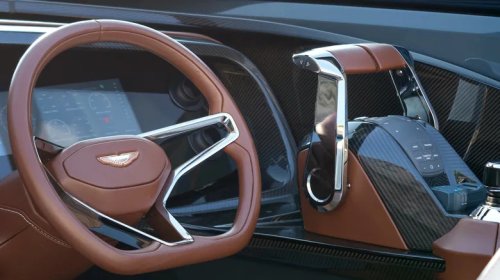
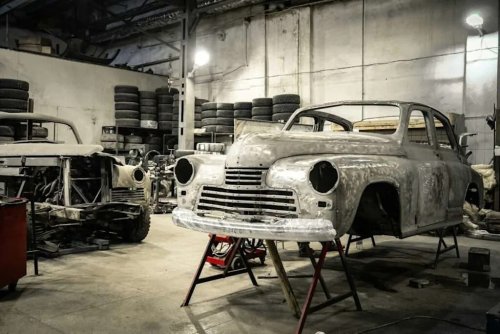
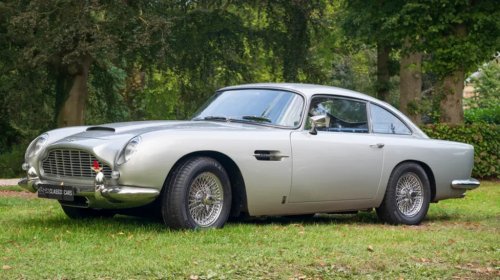
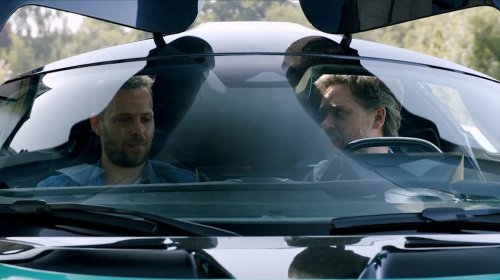
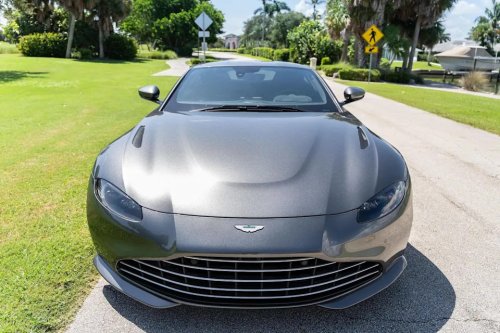
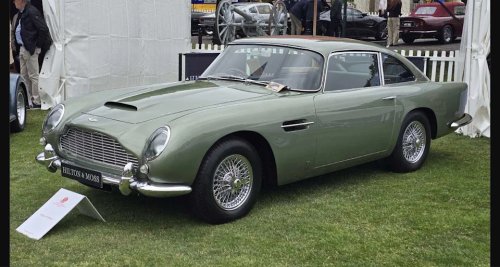
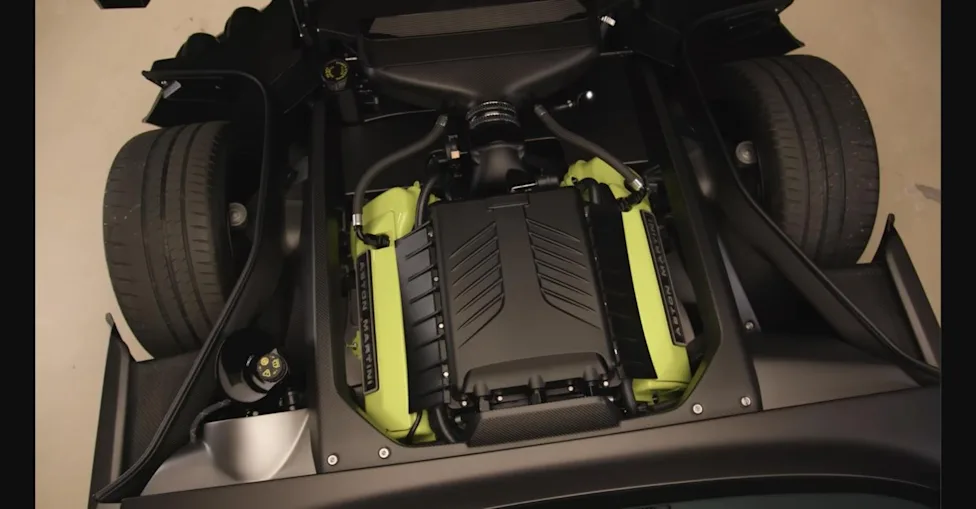
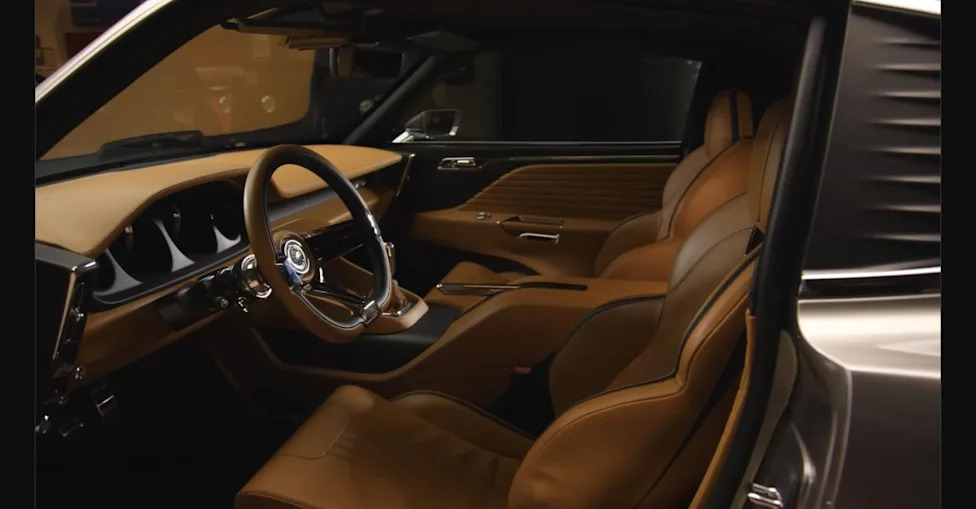
Every restomod shop eventually runs into the same math problem. The more famous a classic car is, the less anyone will let you cut it up. That is the real story behind Ringbrothers' newest build, a 1,100-horsepower carbon-fiber monster called "Octavia" that Jay Leno recently put through its paces on rain-soaked California roads. It is not really a story about horsepower. It is a story about which cars are allowed to be sacrificed, and which ones are not.Ringbrothers didn't reach for a V8-powered DBS or a DB5. They found the Aston Martin nobody was fighting over: a non-running, inline six-cylinder 1971 DBS, the kind of project car that typically trades hands for $50,000 to $80,000 in rough shape. That is closer to the price of a well-optioned pickup truck than a British grand tourer. Three years of work later, that unloved donor car is gone, replaced by a nearly all-carbon-fiber body sitting on a track widened 8 inches up front and 10 inches out back, powered by a supercharged Ford Coyote V8 making up to 1,100 horsepower.That donor-car math is the first thing worth understanding about this build, and it is the kind of detail a press release never explains.Under the carbon-fiber clamshell: a supercharged Ford Coyote V8, built to make up to 1,100 horsepower. Photo courtesy of Jay Leno's Garage.AdvertisementAdvertisementHere is the part most casual fans get backward: the six-cylinder DBS was not a downgrade from a V8 car. It was the original. Aston Martin launched the DBS in 1967 running the same 4.0-liter straight-six from the outgoing DB6, because the 5.3-liter V8 meant for the car was not ready for production. That V8 did not arrive until 1969, and once it did, it became the version everyone remembers. The six-cylinder DBS spent the next five decades as the car people mentally file under "the one before the good one," even though it came first.That is the pattern behind almost every great restomod, not just this one.Builders go looking for the overlooked variant, the unloved sibling, the one nobody will accuse them of ruining, because that is the only car cheap and unimportant enough to justify three years of labor. It is the same logic behind entire categories of forgotten classics suddenly becoming must-haves once someone proves what they can become, and it is why the shops capable of pulling off a build like this one are so few and so trusted with irreplaceable metal.There is also an engineering reality buried in that spec sheet that is easy to skim past. Widening a car's track by 8 to 10 inches is not a bodywork exercise. It means new front and rear subframes, relocated suspension mounting points, and geometry recalculated almost from scratch, because a 1971 unibody was never engineered to carry that much width, let alone 1,100 horsepower. Swapping most of the steel skin for carbon fiber changes the equation again, stripping mass from a structure that also loses some of its original crash and torsional stiffness in the process. That is why a full custom roll cage is not a track-day accessory here. It is doing structural work the factory steel used to do.AdvertisementAdvertisementThe drivetrain tells its own story about where restomod money actually goes. Power comes from a supercharged Ford Coyote V8 rather than anything wearing an Aston Martin badge, backed by a Harrop supercharger built in Australia and a C6 Corvette rear transaxle. None of that is an insult to the original car. It is just math. A crate Coyote is cheap, well documented, endlessly supported by the aftermarket, and does not require anyone to source, rebuild, or reverse-engineer a fragile, low-volume British engine casting. Mounting the transmission at the rear axle, Corvette-style, also pulls weight off the nose of a car that already has a supercharged V8 sitting over its front wheels. British-bred restomods lean on American crate engines and transaxles constantly, not out of disrespect, but because that is where the affordable, reliable horsepower actually lives now.Inside the cabin, hand-stitched leather and machined billet trim make the interior look like a boutique special, right up until you notice the Gentex auto-dimming sun visors.That detail is funnier than it sounds. In a carbon-fiber Aston Martin built to out-accelerate most modern supercars, the single most futuristic piece of technology on board is the same auto-dimming visor you would find in a well-equipped Honda Accord. It is a small reminder that even a 1,100-horsepower one-off still has to solve the boring problems, like glare, right alongside the exotic ones, like where to hide a Corvette transaxle.Jay Leno drove Octavia on public California roads in the rain, rear-wheel drive, with no traction control between his right foot and 1,100 horsepower. That is worth sitting with for a second. A factory hypercar with that kind of power almost always ships with multiple layers of electronic intervention, validated over years of testing. A one-off restomod has none of that. It has the shop's reputation, a roll cage, and a driver willing to trust both. There is no recall program if something goes wrong, and no factory safety rating either. Cars like this typically get titled as reconstructed or specially constructed vehicles, and insuring one usually means an agreed-value policy, because there is no blue book for a carbon-fiber Aston Martin riding on Corvette running gear.AdvertisementAdvertisementLeno also used the moment to talk Aston Martin and James Bond, which is where a common bit of trivia gets scrambled. The DBS is a genuine Bond car, but it belongs to George Lazenby's 1969 On Her Majesty's Secret Service, not Sean Connery. Connery's Bond drove the DB5, in Goldfinger and Thunderball, years before the DBS existed. Two different Astons, two different eras, one badge blurring them together in the popular imagination.None of this is a knock on Octavia. It is a genuinely impressive piece of engineering, and Ringbrothers has earned its reputation for a reason. But the headline number was never the interesting part. The interesting part is the calculation that happens before a single carbon panel gets cut: which car is famous enough to be worth building, and unloved enough to be worth risking.Building 1,100 horsepower is the easy part. Finding a car nobody would miss is the real engineering problem restomodders solve first.Source: Jay Leno's Garage



















 +5 others