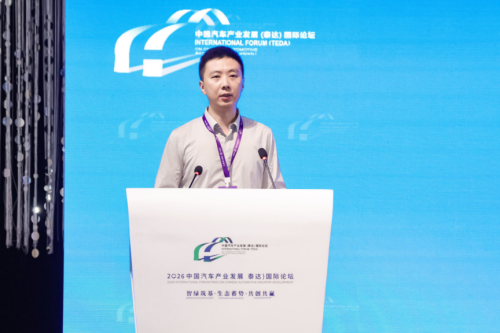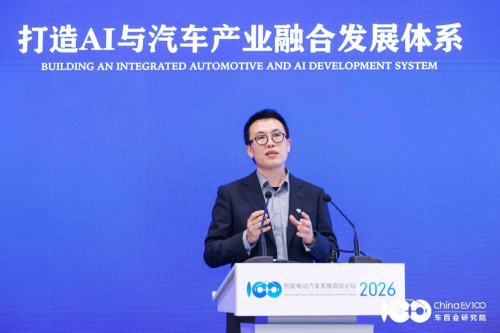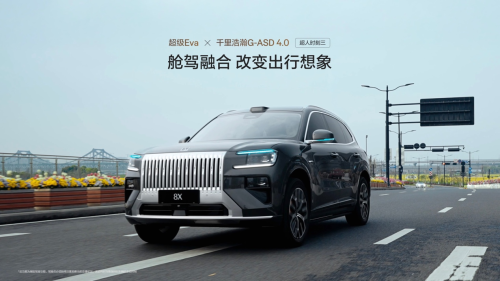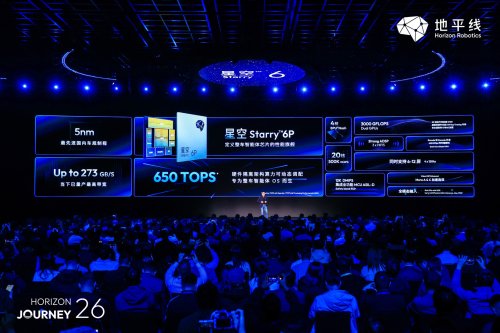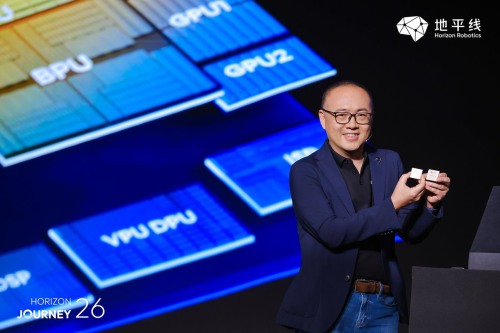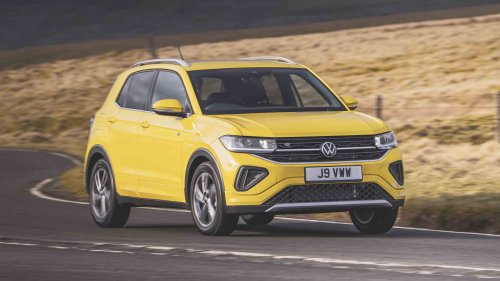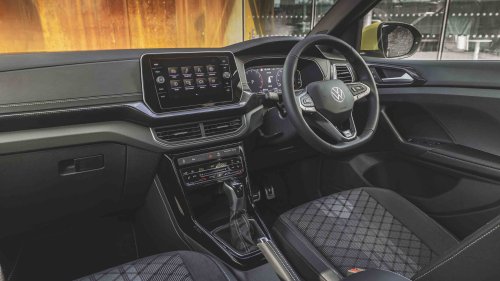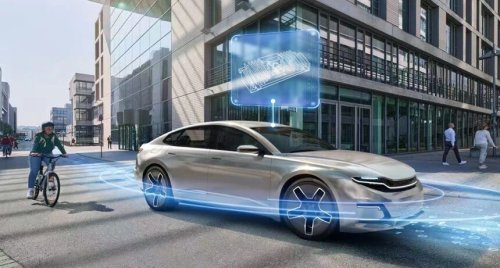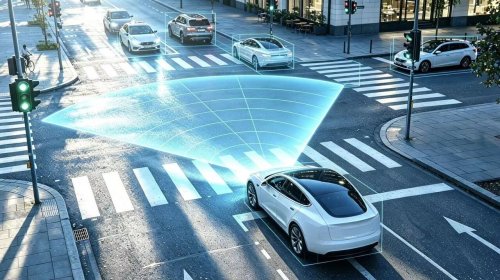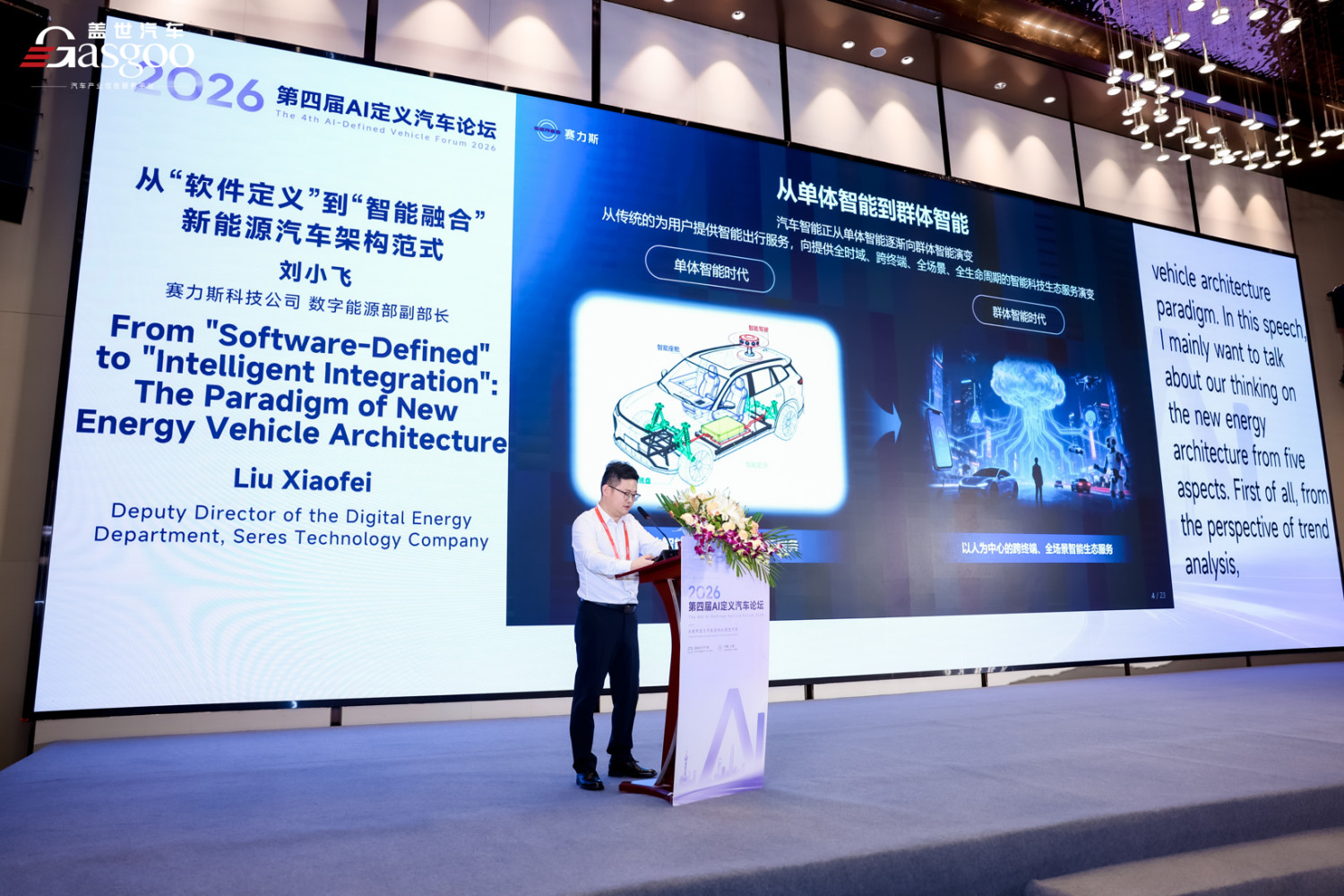
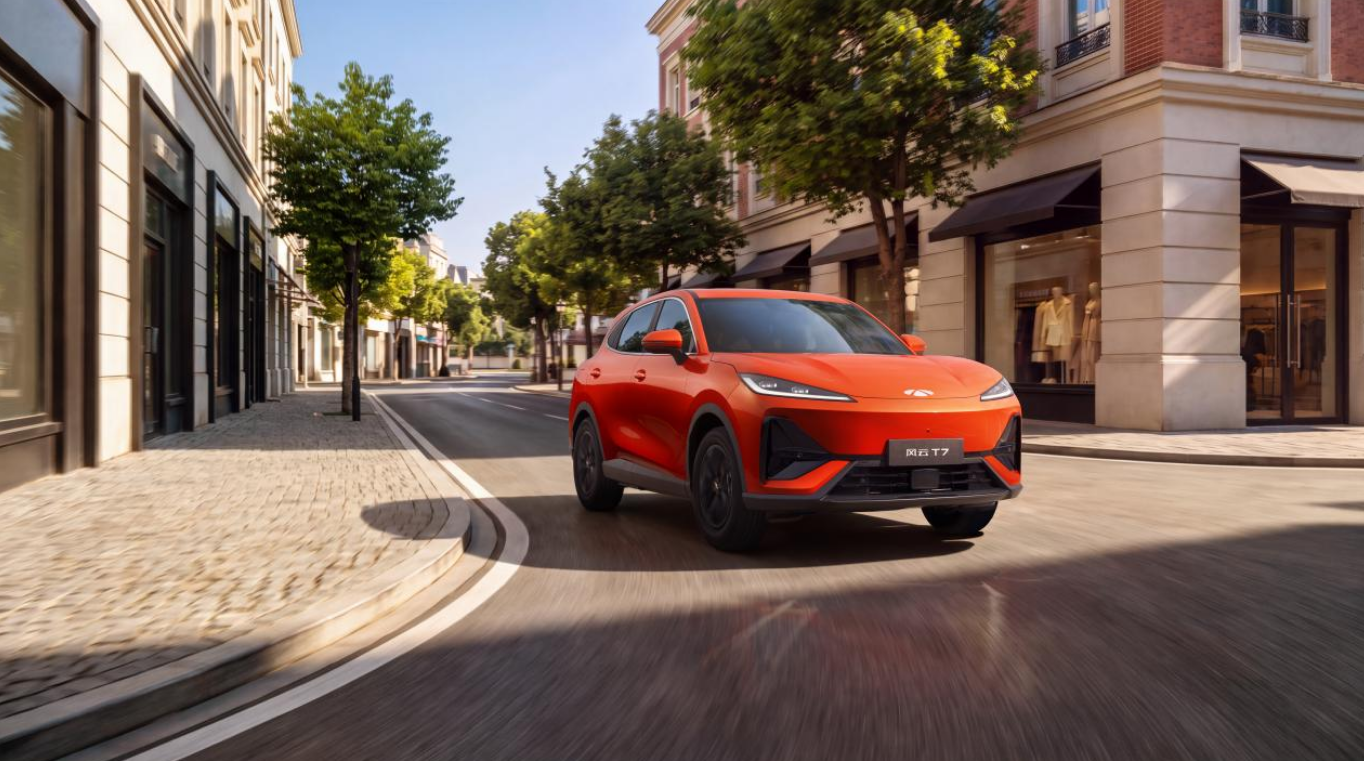
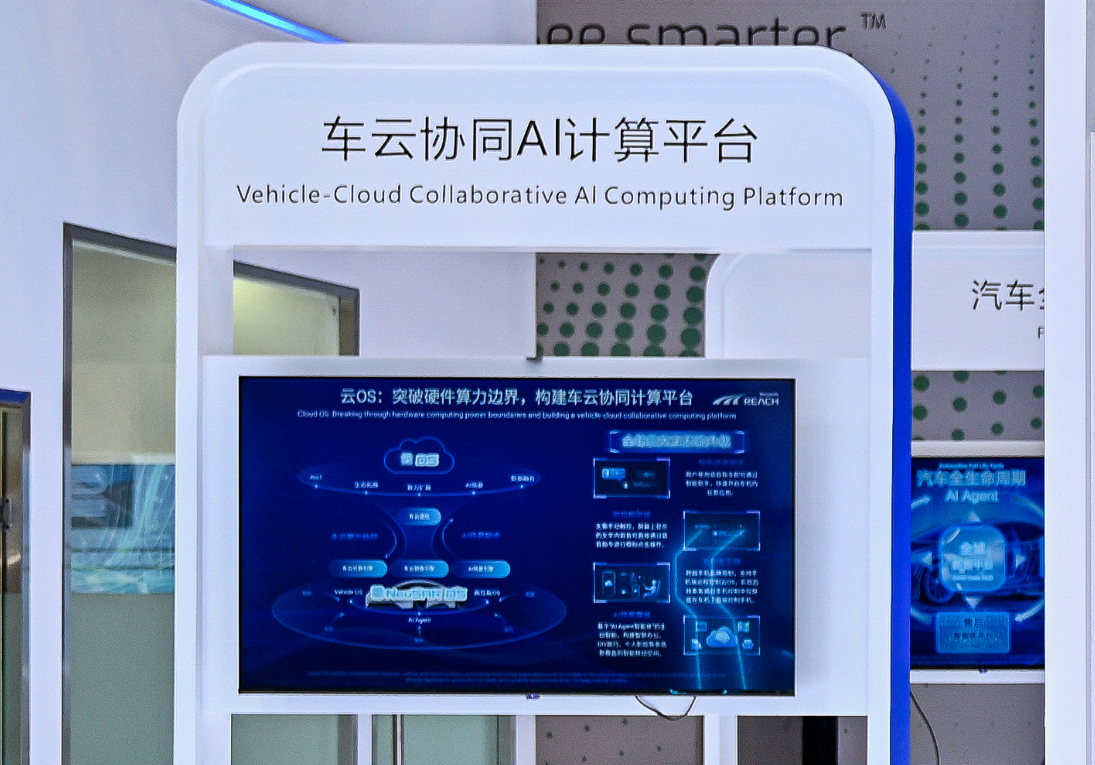


















Gasgoo Munich- On September 18, 2026, at Gasgoo's 4th AI-Defined Car Forum, Liu Xiaofei, deputy head of the Digital Energy Department at Seres Technology, delivered a speech titled "From 'Software-Defined' to 'Intelligent Fusion': NEV Architecture Paradigms." He systematically outlined his team's vision for the next generation of vehicle architecture.This proposition is no accident. Data from the Gasgoo Automotive Institute indicates that automotive software architecture is accelerating its evolution from "software-defined vehicles" to "AI-defined vehicles." The underlying logic is shifting from functional response to active perception, autonomous decision-making, and continuous evolution. Against this backdrop, the practices of Seres, as represented by Liu, offer the industry a case study worth examining.Architecture Restructuring: From "Isolated Intelligence" to "Collaborative Fusion"Liu's core argument is that vehicle intelligence over the past few years has been characterized by "single-point breakthroughs." While smart driving, cockpits, and chassis have each become smarter on their own, the next generation of cars should not rely on isolated intelligence, but rather on collaborative fusion.This judgment aligns with broader industry trends. Authoritative technical reviews point out that the automotive sector is undergoing a fundamental architectural evolution from distributed electronic control units (ECUs) to centralized zonal computing platforms—a paradigm shift reshaping the industry's entire technical foundation.The central computing platform is the core carrier of this evolution. Liu likens it to the vehicle's "brain," emphasizing that its biggest change lies in high integration—consolidating computing resources from functional domains like smart driving and cockpits to achieve full sharing of data, algorithms, and computing power.Image Source: FULWINAt the mass-production level, this concept has already been validated. Desay SV's cockpit-driving integrated solution has been mass-produced on the Chery FULWIN T7, resolving the pain points of the traditional "dual-brain architecture" where cockpits and smart driving operate independently. Horizon Robotics' "Starry Sky" chip, released in April 2026, is built on a 5nm automotive process with 650 TOPS of BPU computing power. It supports the deployment of cockpit digital AI and advanced driver assistance large models on a single chip, providing a domestic solution for central computing architectures.Seres is advancing steadily in this direction. Its Magic Cube Technology Platform 2.0 is positioned as an AI-driven smart electric platform, featuring a central computing plus zonal control electrical and electronic (E/E) architecture that has already achieved mass production in the new AITO M9.Corresponding to the "brain" are the "cerebellum" and the "nervous system."Liu compares zonal controllers to the vehicle's nervous system, responsible for transmitting commands and relaying feedback. The efficiency gains from this architecture are backed by specific data: through zonal integration, the number of ECUs can be reduced by over 50%, wiring length by more than 3.5 kilometers, vehicle weight by 25 to 30 kilograms, and costs by up to 30%.Regarding software architecture, Liu proposes a layered design approach. By progressively decoupling the device abstraction layer, atomic service layer, and composite service and application layers, software reusability is improved and vehicle iteration cycles are shortened. This approach aligns with the industry trend of moving from layered software architectures to AI-native architectures.Experience Restructuring: From "Mobility Tool" to "Intelligent Agent Partner"In Liu's argument, the ultimate goal of technical architecture is the restructuring of user experience. He suggests that future cars should be positioned as "omni-domain intelligent hubs" and "mobile partners that understand you." This judgment touches on a frequently overlooked issue in the current intelligent transformation: technology that remains in the lab cannot truly serve users.The end-cloud integrated architecture is the key technical path to achieving this goal. Liu summarizes this as a synergy where the vehicle handles real-time response and safety operations, while the cloud manages deep inference and long-term planning.Image Source: Neusoft ReachThis concept is not merely theoretical. Industry practice shows that edge-cloud collaboration is moving from technical proposals to large-scale implementation. For instance, Neusoft Reach's vehicle-cloud collaborative AI computing platform, Cloud OS, has achieved mass production with several leading automakers, surpassing 1 million units installed. It integrates the scheduling of cloud-based elastic computing power with vehicle-side low-latency computing. Similarly, the Edge-Cloud AI Arbitration Architecture, jointly launched by Visteon and NVIDIA, supports the dynamic allocation of AI workloads between on-board hardware and cloud infrastructure, balancing the multidimensional needs of real-time response, data privacy, and network connectivity.Regarding edge-side capabilities, the edge-side multimodal large model jointly developed by ModelBest and Geely has been deployed in the Galaxy M9 smart cockpit platform, featuring multimodal perception fusion for both inside and outside the cabin. iFlytek has released a product matrix of Spark cockpit edge-side multimodal large models, offering sizes ranging from 0.5B to 7B to adapt to different computing platforms and vehicle configurations. These developments indicate that the vision of an "intelligent agent partner" is moving from concept to reality.Notably, Liu emphasized "growability"—the idea that a car's competitiveness depends not just on its factory features, but on its speed of evolution after delivery. This points to a deeper industry logic: the automotive business is shifting from a one-time transaction to a continuous, deep service relationship. Seamless OTA upgrades supported by zonal controllers and model iteration driven by edge-cloud data loops are providing the technical foundation for this shift.Conclusion:Liu's remarks serve less as a technical roadmap for Seres alone and more as an examination of the competitive logic for the next stage of the automotive industry. As intelligence moves from single-point breakthroughs to cross-domain fusion, automakers no longer face the multiple-choice question of "whether to integrate," but the imperative question of "how to achieve integration through architecture."The choice of architectural paradigm appears to be a trade-off between technical routes, but at a deeper level, it concerns whether data, computing power, and user experience can form a closed loop within the same system. Industry trends have provided the direction, but the true watershed lies in whether enterprises can translate architectural capabilities into continuously evolving product experiences.In this sense, the competition of the intelligent fusion era has only just begun.