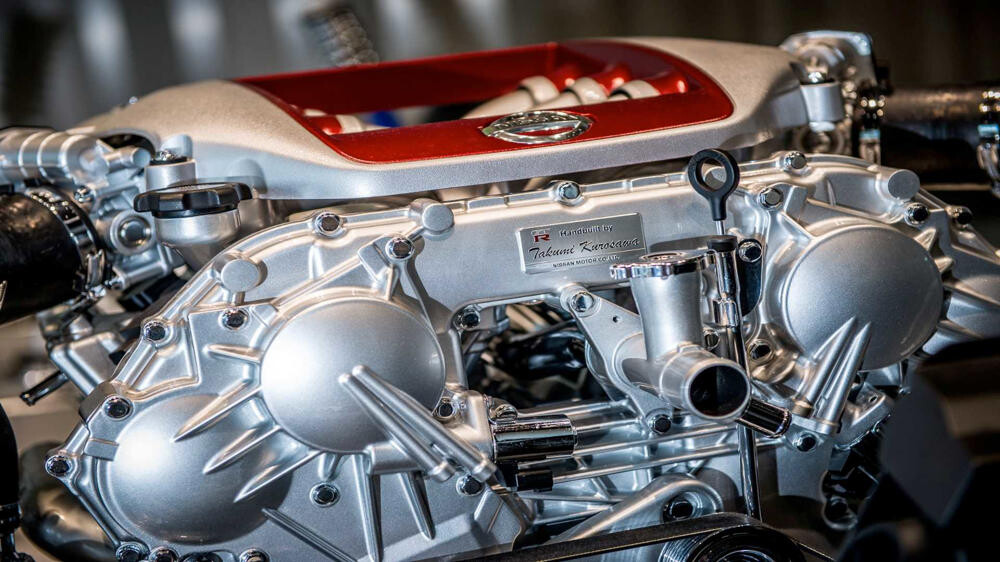
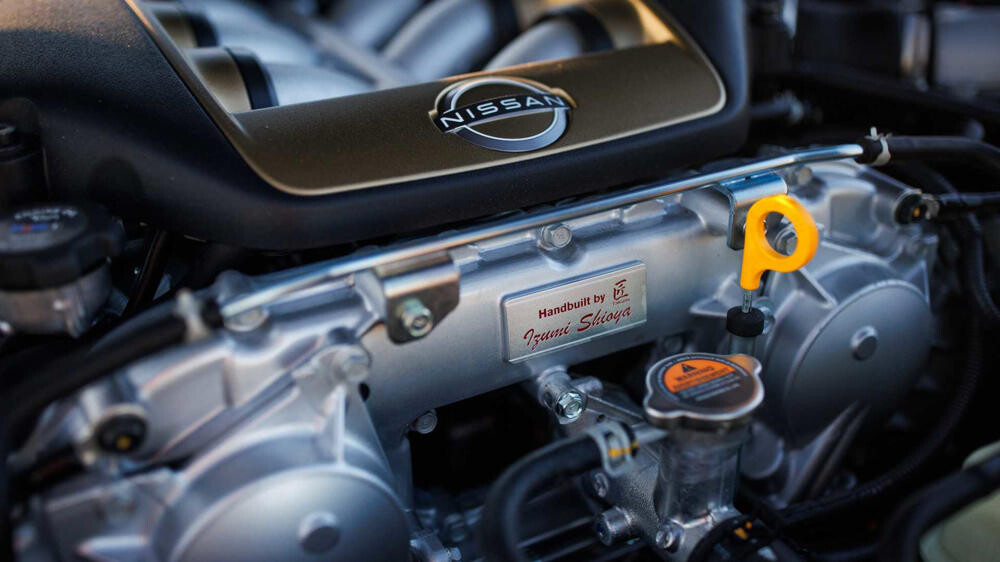
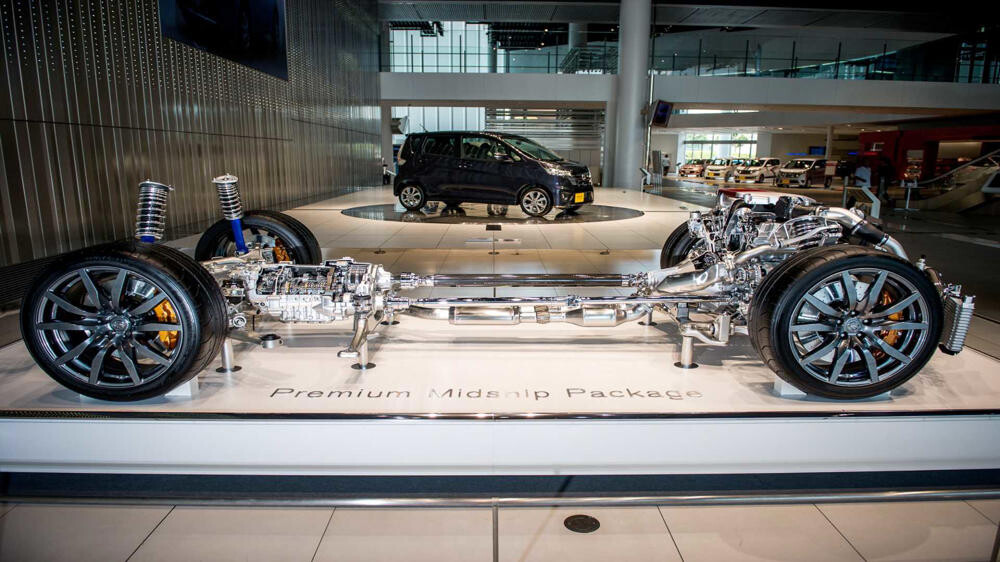
The supercar establishment faced an unexpected challenge in 2007 when a Japanese manufacturer introduced a performance machine capable of competing with some of Europe's most prestigious sports cars. Traditionally, extraordinary acceleration, sophisticated drivetrains and track performance came with equally extraordinary price tags. However, a different approach demonstrated that advanced engineering did not necessarily have to remain exclusive to wealthy buyers. Its combination of cutting-edge electronics, intelligent all-wheel drive and impressive mechanical capabilities challenged conventional thinking, forcing established manufacturers to reconsider their performance targets and what customers could reasonably expect from a modern high-performance vehicle. Nissan Delivered Supercar Performance At Half The Price When Nissan introduced the R35 GT-R, its biggest statement was arguably how much performance it delivered for the money. The 2009 model arrived in the US with a starting MSRP of $69,850, while the 2008 Porsche 911 Turbo carried a base price of $127,060. That meant buyers could purchase the Japanese performance car for approximately 55% of the Porsche's asking price, despite the two vehicles competing in similar performance territory. Under the hood, the original US-market GT-R produced 480 hp and 430 lb-ft of torque from its twin-turbocharged 3.8-liter V6. Car and Driver recorded a 0-60 mph time of just 3.3 seconds, matching the performance of considerably more expensive machinery. Nissan also announced an initial Nürburgring Nordschleife lap time of 7 minutes and 38 seconds, placing it among the quickest production cars of its era. The lap time dropped to 7 minutes and 8.679 seconds in 2013 with the GT-R Nismo version. Its launch control and electronically managed all-wheel-drive system helped deliver repeatable acceleration, making extraordinary performance more accessible without requiring exotic-car money. The VR38DETT Was An Engineering Masterpiece At the heart of the GT-R was the VR38DETT, a 3.8-liter twin-turbocharged V6 that combined conventional mechanical engineering with several unusual construction techniques. Unlike mass-produced engines assembled through largely automated processes, specialist technicians at Nissan hand-built every unit at the automaker's Yokohama engine facility. These craftsmen, known as Takumi, worked in a dedicated clean-room environment, with each engine receiving an identification plate bearing its builder's name. One of its most interesting features was its plasma-sprayed cylinder bore coating. Rather than using conventional cast-iron cylinder liners, Nissan applied an extremely thin coating directly to the aluminum cylinder bores. This approach reduced internal friction and weight while improving heat transfer, helping the engine withstand the demands of forced induction. Its symmetrical intake and exhaust arrangement, twin turbochargers, and carefully designed lubrication system further supported its performance credentials. The engine also developed a strong reputation among tuners. Its robust construction and turbocharged configuration provided considerable scope for increased output through upgraded turbochargers, fueling systems, and engine management. This helped turn the VR38DETT into a popular foundation for high-horsepower builds well beyond its original factory specification. Its Dual-Clutch Transaxle And AWD Changed The Game One of the GT-R's most unusual engineering decisions was separating its transmission from the engine and placing the gearbox at the rear of the vehicle. This created an independent rear transaxle that combined the six-speed dual-clutch transmission with the rear differential. Nissan's arrangement helped optimize weight distribution while keeping the engine mounted at the front. The transmission also used two clutches to preselect the next gear, enabling exceptionally quick shifts with minimal interruption to power delivery. The other half of this drivetrain equation was Nissan's ATTESA E-TS all-wheel-drive system. Unlike a conventional permanent AWD arrangement, the setup normally sends all engine torque to the rear wheels. However, when additional traction is required, its electronically controlled system can transfer up to 50% of available torque to the front axle. It continuously monitors information including wheel speed, steering angle, lateral acceleration, and yaw rate to determine the appropriate distribution. This combination allows the GT-R to deliver impressive traction during acceleration while retaining the rear-biased driving characteristics expected of a performance coupe. Ferrari, McLaren, And Porsche Had To Raise Their Game 997 Porsche 911 Turbo (5) The GT-R's arrival placed renewed pressure on established performance manufacturers to deliver more impressive acceleration and increasingly sophisticated vehicle dynamics. The Nissan's ability to combine computer-controlled launch performance, rapid gear changes, and intelligent torque distribution demonstrated how effectively electronics could improve a production sports car. However, Nissan did not invent many of these technologies; it refined them. Porsche, for example, had been developing its PDK dual-clutch transmission since the 1980s, initially for motorsport, before introducing it into production cars in 2008. What changed was the competitive environment. Porsche continued developing its PDK transmission, while Ferrari introduced its seven-speed dual-clutch transmission in the California and McLaren launched the MP4-12C with its own seven-speed dual-clutch gearbox and launch control system. These developments reflected a broader industry shift toward faster, more efficient automated transmissions and sophisticated electronic controls. The GT-R became an important reference point in this changing landscape, demonstrating that extraordinary acceleration and accessible high-performance engineering could no longer be the exclusive territory of expensive European supercars. The VR38DETT Leaves Behind A Remarkable Legacy 2024 Nissan GT-R Nismo Over its 18-year production run, the VR38DETT evolved considerably while retaining its original 3.8-liter twin-turbocharged V6 configuration. The engine initially produced 480 hp in the US market for the 2009 model, but Nissan continued refining its performance through improved turbocharging, ignition control, and engine management. By 2017, the standard GT-R produced 565 hp, while the Nismo version delivered an impressive 600 hp and 481 lb-ft of torque. These developments demonstrated how much potential remained in the original engine architecture without requiring an entirely new powerplant. The R35 GT-R's production journey finally came to an end in August 2025, when the last example rolled off Nissan's Tochigi production line in Japan. Approximately 48,000 units were built during the 18-year lifespan. The vehicle's departure marked the end of an important chapter in Nissan's performance history. More importantly, the VR38DETT left behind a reputation for engineering durability, tuning potential, and remarkable performance. Few engines have remained so relevant for so long, making it one of the defining Japanese performance powerplants of the modern era. Sources: Nissan, McLaren, Porsche, Car and Driver

 Liked by Charlotte White, Ryan Nelson
 Liked by Charlotte White, Ryan Nelson