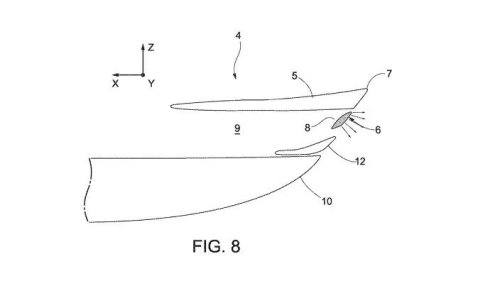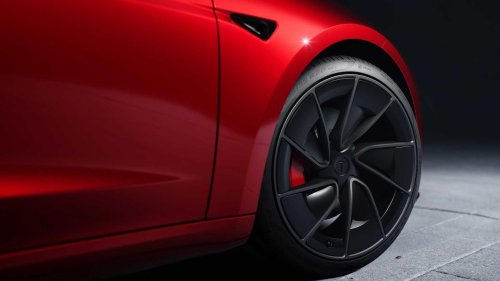
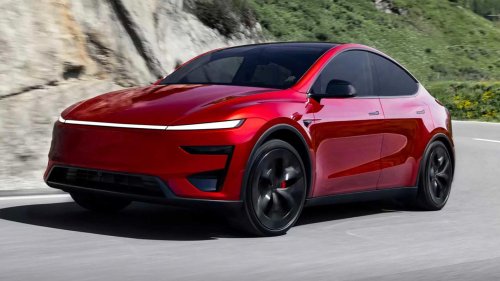
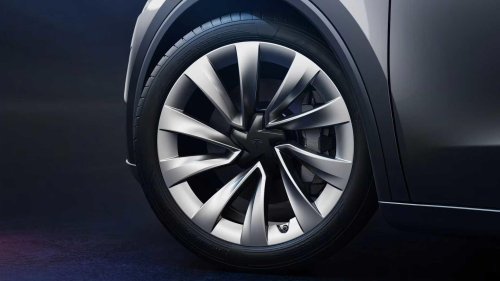
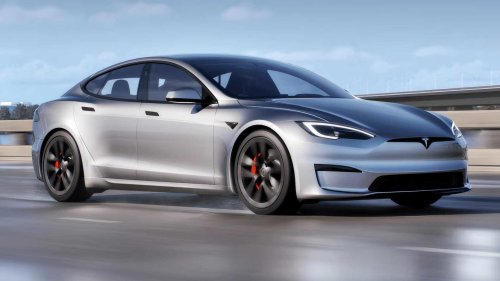
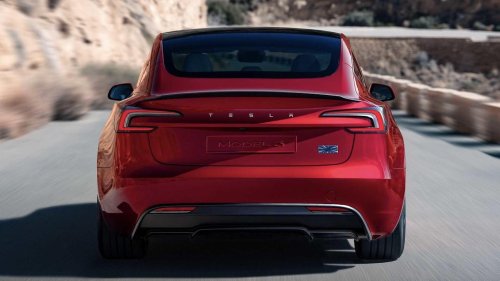


















As cars get faster and heavier, capable brakes are arguably more important than ever. Even with the assistance of regenerative braking from electric motors, brakes need to be able to handle some incredible stresses nowadays. Also, as capable as modern brakes are, they do have limits. In some extreme cases, such as going downhill or slowing from extreme speeds, heat becomes a problem that can lead to reduced performance and even damaged brake components. A recently granted patent from Tesla aims to change that, but maybe not in the way you'd hope.Tesla It Stops You From Going Too Fast In The First Place CarBuzz discovered that this patent was granted by the U.S. Patent and Trademark Office last month, but it had been filed way back in 2023. The idea is fairly simple, though it might not sound appealing to many drivers. The patent describes a vehicle control system that could monitor the temperature and condition of the vehicle's brakes at any given time. It would then be able to take that information, and calculate how much stopping power would be available, and what the maximum speed of the car could be for the brakes to still slow it to a stop in a safe distance. It would then cap the vehicle's speed at whatever that maximum would be.TeslaOne of the other key aspects of this system is that the limit could be varied. So, if you've been using the brakes quite a bit, and they're already getting hot, the car's control system won't let the speed exceed what would be a safe amount. This would prevent a situation in which the brakes could overheat and either not stop the car, or cause damage to the rotors and calipers. Presumably, it would also take into account information such as incline, since downhill braking can require more capability than on level or uphill surfaces.Tesla The System Offers Some Interesting Possibilities The one obvious benefit to this system would be an extra layer of safety for road-going cars. Most drivers likely wouldn't even realize the system was active, since average driving doesn't typically stress brakes too much, especially electric cars that can lean on regenerative braking.TeslaFor a performance car on track, it could also help owners avoid cooking their brakes by pushing their cars too hard or too long. Plus, if the system is keeping track of brake temperatures and conditions, that information could be displayed and early warnings given so that drivers aren't caught off guard by a suddenly reduced speed.There's even the potential for eking out a bit more efficiency and cost savings. An automaker using a system like this might be able to fit slightly smaller brakes with less mass and maybe less drag to slightly increase efficiency. This system would help ensure that a car that might be slightly under-braked doesn't end up going faster than the brakes can handle. Those smaller brakes could potentially be cheaper, too.Tesla People Aren't Fond Of Limiters The thing is, people, or at the very, very least, Americans, hate the idea of having their vehicle capabilities, especially speed, limited. They don't even like it when their car beeps at them to let them know they've exceeded the speed limit. So, even if the system might not be noticed in normal driving, buyers may be uncomfortable with the idea that it even exists, even when many cars already have artificial speed limiters for other reasons, such as the rated limits for factory tires or other components.Such a limit system could also become annoying in track situations where drivers are operating their vehicles in a very different manner than a commuter on the road. It also could cause some complications with modifications to increase braking performance that the system might not be able to take into account.Also, in regard to efficiency, cost savings, and safety, the gains may not be enough to overcome the concerns of customers. As we just mentioned, many cars already have limits to what speeds they can achieve for other reasons, so being able to adjust that limit in select situations may not allow for huge differences in cost or efficiency. Manufacturers are also certainly taking into account emergency stopping situations already, so it may not be enough of a safety improvement for companies to explore.TeslaIt's certainly an interesting idea, and we would certainly be interested to see what Tesla or other automakers could do with it, even if we have a bit of skepticism.Source: U.S. Patent and Trademark Office