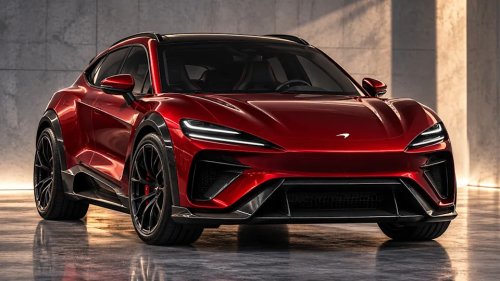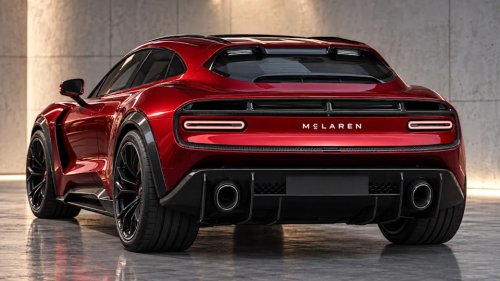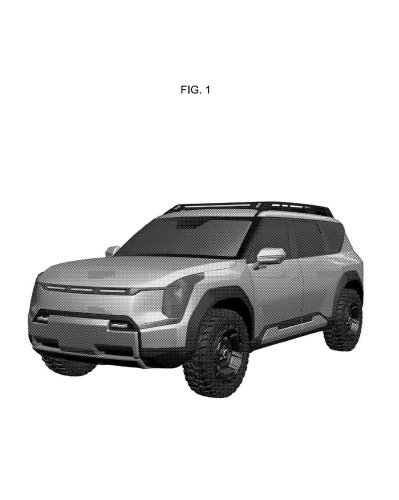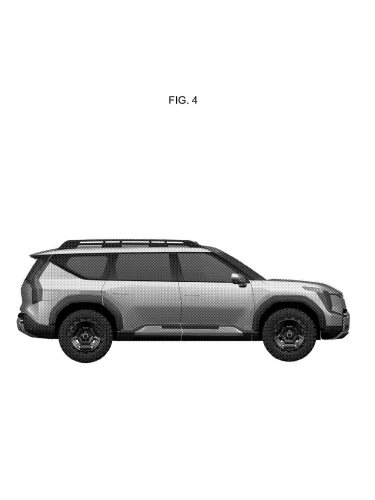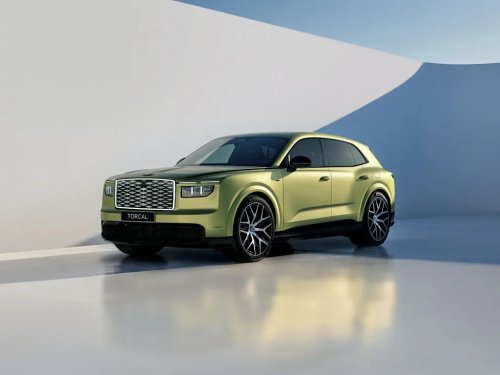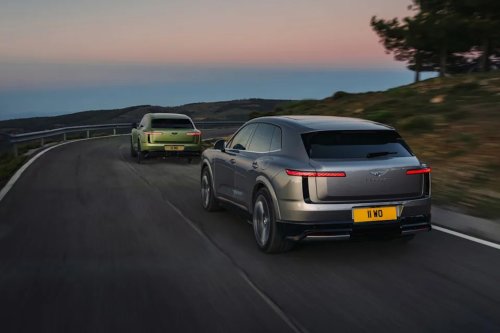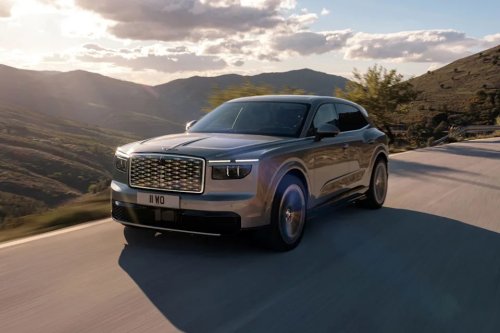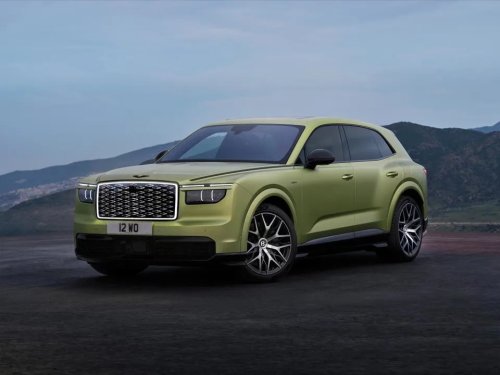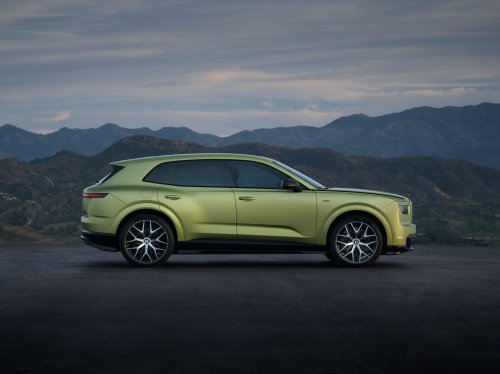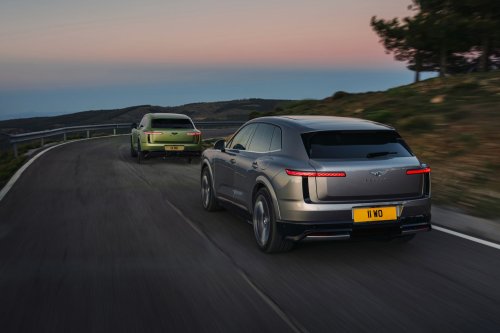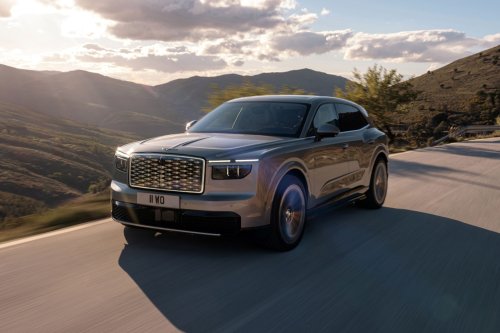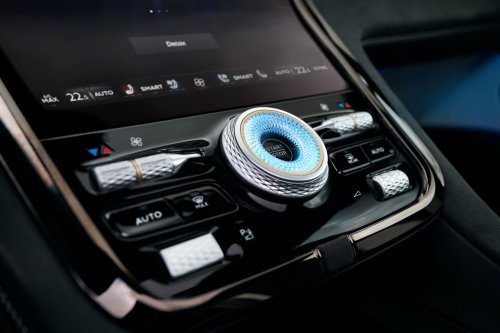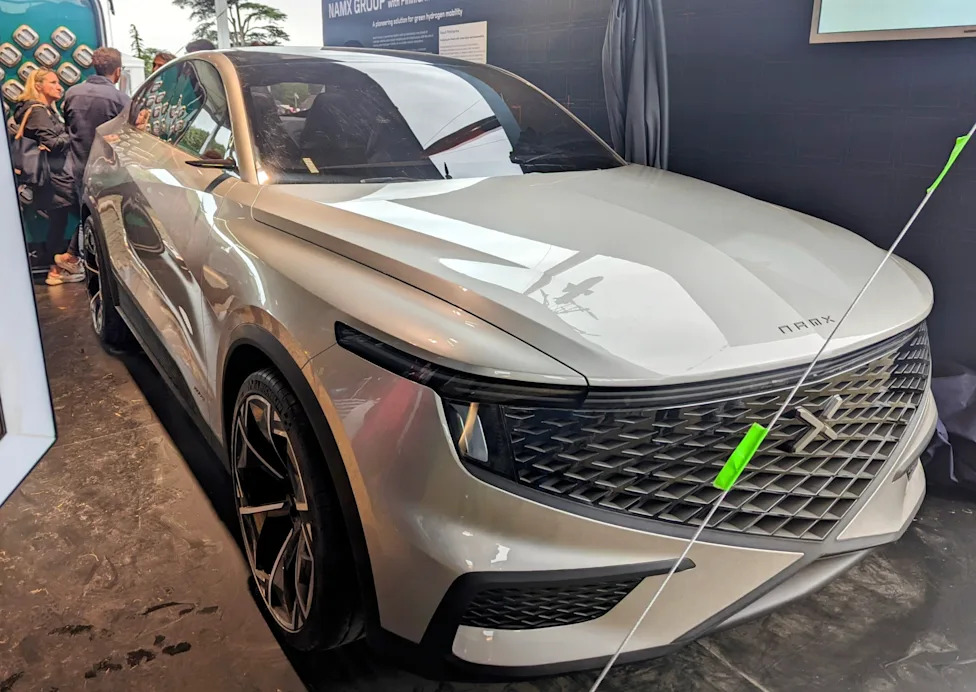



















NamX Hydrogen SUV Range Claims Don't Match the Company's Own Spec SheetThe NamX Hydrogen SUV Doesn't Go 932 Miles, and Its Own Website Says SoThere's a number making the rounds: 932 miles of range, five seconds to refuel. It's a spectacular pair of figures. It's also nowhere on NamX's website, which is a strange place for a manufacturer's headline specs to not be.So let's do the thing nobody bothered to do and read the spec sheet.What the company actually claimsNamX's own home page lists one range figure for the HUV: 800 km. That's 497 miles. Not 1,500 km. The pre-order page repeats it for both trims — a 300-horsepower GT from €75,000 and a 550-horsepower GTH from €95,000, both quoted at 800 km, with 0-100 km/h in 6.5 and 4.3 seconds respectively and a 155-mph top speed. Delivery is listed as Q4 2028.AdvertisementAdvertisementAs for the five-second fill, the capsule page says that "in less than two minutes, all capsules can be removed for refuelling." Two minutes is twenty-four times five seconds, and the sentence describes removing bottles, not filling a car. Somewhere in the aggregation chain, a kilometer became a mile and a minute became a second, and the resulting car exists only in headlines.Which is a shame, because the actual engineering here is worth talking about.The 62.5 percent problemNamX's pitch is a split fuel system. A fixed tank in the car holds 5 kg of hydrogen. Behind a glass panel at the rear sit six removable CapX capsules holding 3 kg between them, for 8 kg total. The company wants to seed 4,000 "CapXtores" across Europe in dealerships, filling stations, car parks and supermarkets, plus a subscription service that delivers capsules to your door.Here's what that architecture means in practice, and it's the part the viral version skips entirely: the capsules are 37.5 percent of your fuel. The other 62.5 percent lives in a fixed tank that fills the way every other fuel cell car's tank fills — at a 700-bar hydrogen dispenser, which is exactly the piece of infrastructure the capsules were invented to route around.AdvertisementAdvertisementSwap all six capsules and you've added roughly 300 km to a car whose full tank is 800 km. That's not nothing. It's a genuinely clever range extender, and decoupling part of your energy storage from the vehicle is a smarter answer to thin infrastructure than most startups manage. But it is not a car that never needs a station. It's a car that needs a station less often.Run the efficiency numbersEight kilograms giving 932 miles works out to about 117 miles per kilogram of hydrogen.For scale: a Toyota Mirai carries 5.6 kg and is rated by the EPA at 402 miles and 74 combined MPGe. That's roughly 72 miles per kilogram — from a low-slung sedan with a small frontal area, built by a company that has been iterating fuel cell stacks since the 1990s.The all-time record is more instructive. In August 2021 a professional hypermiler drove a Mirai 845 miles on 5.65 kg for a Guinness title, logging 152 MPGe by crawling through Southern California rush-hour traffic for two days. That is about 150 miles per kilogram, achieved under conditions no customer will ever replicate, in a sedan.AdvertisementAdvertisementSo the 932-mile claim would require a mid-size SUV with up to 550 horsepower to return efficiency 62 percent better than an EPA-rated Mirai, and land within striking distance of a world-record hypermiling run. NamX's own 800 km figure, by contrast, pencils out to about 62 miles per kilogram — slightly worse than the Mirai, which is precisely what you'd expect from something bigger and heavier. The real number is credible. The fake one isn't.Nobody has told the regulators about the capsulesTwo legal problems sit underneath the CapX concept, and neither has been solved.The first is hazmat. Compressed hydrogen is UN1049, a Division 2.1 flammable gas. PHMSA has been unambiguous that it must travel in UN pressure receptacles or DOT-specification cylinders; a 2017 interpretation letter confirms that non-specification cylinders may not be transported by highway, and that the exception for small containers stops at four fluid ounces of capacity. A 0.5 kg composite hydrogen bottle is not four fluid ounces of anything. Which means "have CapX delivered directly to your home or office" is not a grocery run — it's regulated dangerous-goods transport, with placarding, driver training, packaging specifications and a compliance overhead that scales badly against a €95,000 SUV's margins.The second is the vehicle standard itself. In January 2025 NHTSA issued a final rule creating FMVSS No. 307, covering fuel system integrity in hydrogen vehicles, and FMVSS No. 308, covering compressed hydrogen storage system integrity. It took effect July 16, 2025, and manufacturers must comply by September 1, 2028 — the same quarter NamX has promised deliveries.AdvertisementAdvertisementFMVSS 308 subjects the storage system to pressure cycling, drop, chemical exposure and bonfire testing. A tank bolted into a floor is one thing. Six bottles designed to be pulled out by customers, carried into supermarkets, dropped on concrete, refilled by third parties and pushed back into a car by hand is a far harder certification case, and one that no production vehicle has ever had to make. That's not a reason it can't be done. It is a reason to treat a 2028 delivery date with suspicion.The infrastructure problem is real — that part NamX gets rightNamX's website cites 228 hydrogen stations in Europe as of 2021. The situation on this side of the Atlantic is worse than most people realize. California, the most developed FCEV market in North America, had 50 stations open to the public as of September 2, 2025, with 11 more offline for at least 30 days, and the network averaged roughly 60 percent availability over the preceding year, according to the state's own joint assessment from the Energy Commission and CARB.Sixty percent availability is the number that kills fuel cell cars. Not range, not fill time — the coin flip you make when you drive to a station on a quarter tank. NamX identified the right disease. The question is whether 4,000 storefronts full of pressurized bottles is a cheaper cure than a few hundred more dispensers.If you're thinking about the depositThe reservation is €1,000, and the terms reward a careful read.AdvertisementAdvertisementArticle 6.2 says the deposit is refundable subject to a 15 percent processing fee — you'd get €850 back. Article 3 says any reimbursement "will amount to 15% of the price of the reservation," which reads as €150 back. Those two clauses cannot both be true, the French version governs in a dispute, and the document was last updated in September 2022.Article 9 is blunter: NamX provides no guarantee on development progress, final delivery dates, final design, specifications or price, and is not responsible for statements made by third parties about any of it. The contracting entity is SAS Annajah Motors, registered at Nanterre under number B 878 878 644, and disputes go to French courts. The pre-order page is still selling what it calls the "2022 Historic Edition."None of which makes NamX a scam. It makes it a design study with a payment button, which is a perfectly normal thing for a startup to be — and a very different thing from a car with 932 miles of range.The takeaway for anyone forwarding that headline: the manufacturer says 497 miles and two minutes to pull the bottles, most of your hydrogen still comes out of a dispenser, the U.S. safety standards land the same quarter as the promised delivery, and the deposit terms contradict themselves. The capsule idea deserves a serious hearing. It just hasn't gotten one, because everyone's been busy repeating a number the company never published.Images Via: Wikipedia