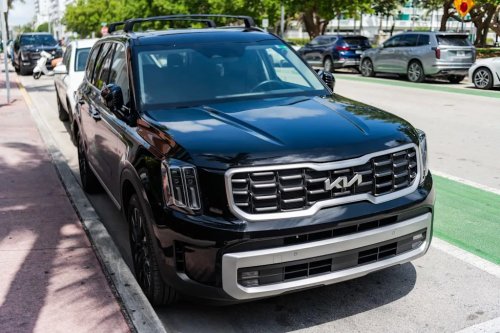
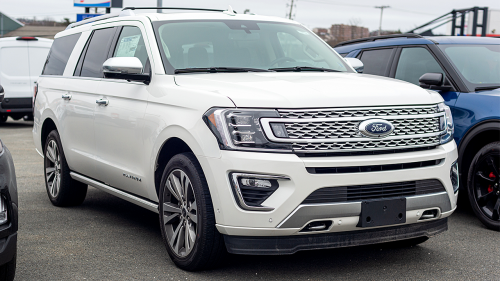
Videos of burning Teslas more than a decade ago may have been the single biggest factor in the anti-EV attitudes of millions of people. They were damned scary, and even those of us who were staunch advocates of the EV revolution were shocked by how violent they were. Blaring headlines screamed about first responders getting crash courses in how to extinguish battery fires. HOAs all across the US voted to ban electric cars from their properties. The Washington Post reported this week that there are currently 3.2 million vehicles in the US that have been tagged with a “park outside” safety warning, according to an analysis by CarFax. The vast majority of them are not electric cars. In fact, the danger in most cases comes from “always on” electronics that stay active even when the vehicle is parked. We would never suggest that a car fire is not a serious issue, but battery fires affected only about a dozen first-generation Chevy Bolts and the fallout cost GM and LG Chem over $1 billion. How is it that the general public does not know the owners of more than 3 million vehicles — most of them with gasoline or diesel engines — are currently being told to park their vehicles outside away from their homes because of the risk of spontaneous fires while parked? Conventional Cars Have A Higher Fire Risk Than EVs The Washington Post analyzed NHTSA recall notices and found that conventional gas and diesel vehicles made up the vast majority of vehicles covered by the “park outside” label since 2021. The number of those recalls has surged in recent years. Federal authorities have announced 17 new “park outside” recalls in the first seven months of 2026, covering a total of 1.7 million vehicles and making 2026 the second-highest number of vehicles since this type of recall began more than a decade ago. The reason for most of those recalls is not what you think. “It’s a mix of things causing this,” said Sean Kane, president of Safety Research and Strategies, which specializes in auto safety analysis. “It’s messy. It doesn’t lend itself to simple description of what’s happening. But it boils down to growing electronic systems and the number of components.” Gas and diesel vehicles still account for the vast majority of vehicles covered by “park outside” recalls, according to NHTSA data. In part, that reflects how gas and diesel still dominate the US market. About 94 percent of light-duty vehicles have conventional internal combustion engines, while about 6 percent are hybrids and fully electric. “They’re known as ‘key-off’ fires,” Frank Borris, a former NHTSA investigator who now works as a safety consultant, told the Washington Post. “The engine is off,” he said, “but the circuits are still hot and they stay hot all the time.” Hot in this case means they are powered on, not that they are overheating. That part comes later. Earlier this year, Kia needed to recall 463,000 Tellurides because of the risk that the front power seat switch could overheat and ignite the seat. It was the second time Kia had issued a recall for that one defect. The first recall two years ago did not fully address the problem. More than 66,000 Ford Expeditions and Lincoln Navigators from the 2021 model year have been recalled because of circuit boards in the battery junction box that could short out. At least 16 fires were blamed on the problem, which often ignited when the vehicles were parked and turned off. NHTSA Creates “Park Outside” Designation The National Highway Traffic Safety Administration created the “park outside” designation in 2015 to flag defects that can ignite a vehicle even when it is shut down and parked. For years it was rare, with manufacturers averaging about one such recall a year from 2015 through 2019. Since then, the number of such warnings has increased dramatically. NHTSA logged 10 “park outside” recalls in 2024. In the first seven months of 2026 there were 17, with eight of those announced in June and July. NHTSA has issued 93 “park outside” recalls since 2021, according to a Post analysis. Nearly half of them — 44 in all — applied to vehicles exclusively with conventional internal-combustion engines, while 38 recalls were just for EVs or hybrids. So the number of campaigns were nearly equally divided between gas and electric or hybrid vehicles. But gas vehicles pull away when comparing the size of the recalls. Gas-only campaigns covered a combined 4.6 million vehicles with “park outside” recalls over the past five years, compared to only about 662,000 vehicles that were EVs or hybrids. The largest number of recalled vehicles had “mixed powertrains” — meaning the recalls included models with conventional engines as well as EVs and hybrids. But gas and diesel cars also dominated the “mixed” powertrain category. NHTSA announced two recalls in September 2023 which accounted for about two thirds of the 5.1 million vehicles with “mixed powertrains” recalled. That’s when Hyundai recalled nearly 1.65 million vehicles and Kia recalled more than 1.73 million vehicles “due to the risk of fire.” The automakers said “the safest place to park [the vehicle] is outside and away from homes and other structures. Fires can occur whether the vehicle is parked and turned off or while driving.” Hyundai’s recall covered more than a dozen models, mostly gas engines and fewer than 100,000 hybrid and fuel cell versions. Gas engines made up almost all of the dozen Kia models recalled. The Hyundai and Kia cars shared the same defect — the anti-lock brake system could leak brake fluid and cause an electrical short, triggering an engine fire even when the car was parked. “They’ve figured out more ways to catch fire than any other vehicle,” Kane said. Better Data Little is known about the relative fire risk in EVs compared to gas cars — at least in the United States. Regulators typically have not collected data on vehicle fires by powertrain. That is beginning to change, said Adam Barowy, principal research engineer for the Fire Safety Research Institute. Starting this year, fire agencies nationwide switched to a new federal reporting system that includes information about vehicle powertrains that should make more granular data available. “Right now there’s pretty limited data on whether they are more likely to catch fire — at least for North American cars,” Barowy said. Other countries have provided limited looks at the EV fire issues. Data from Norway, where cars with plugs are now more than 97 percent of the new car market, showed that gas and diesel vehicles had a fire incidence rate that was four times higher than EVs from 2016 to 2021. Yahoo says what we all know to be true. It is tempting to assume all EVs are a fire risk, but the truth is quite different. Today, the risk is not so much from batteries. It is from seat motors, power steering wiring, starter relays, and “always on” control modules that stay energized long after a vehicle is parked and the driver has walked away. In June, Stellantis recalled Wrangler and Gladiator models because of a fire risk that was traced to a power steering pump connection. Fear Of Fire The fear of EV fires is hard to overcome. A few years ago, catastrophic fires inside two packed parking garages caught the attention of fire researchers. One was on New Year’s Eve 2017, when 1,400 cars burned in a garage at an arena in Liverpool, England. In 2020, a fire damaged hundreds of vehicles at Norway’s Stavanger airport. Investigators wondered what made these fires such disasters and the first thought anyone had was that an electric car was to blame. Later, it was determined the fire in Liverpool started in an old Land Rover and the blaze in Norway was caused by a diesel powered Opel. A contributing factor in the Norway blaze was that the garage where the Opel was parked did not have enough overhead clearance for fire trucks to enter. A Vehicle Fire Every Three Minutes Fires are scary, but coincidence is not causation. According to the National Fire Prevention Association, there are more than 170,000 vehicle fires every year in the US — about one every 3 minutes. Combined, they account for “more deaths than nonresidential structure fires and residential apartment fires. Only structure fire incidents in one and two family homes had higher death rates per fire than vehicle fires.” They are so common, the mainstream press barely mentions them. But let an EV catch fire and it’s all hands on deck! Vehicles powered by internal combustion engine experience roughly 1,500 fires per 100,000 vehicles sold, making them significantly more common than electric vehicle fires, which average about 25 per 100,000 sold. That means EVs are significantly less likely to catch fire than conventional cars with infernal combustion engines. Many may find that statistic shocking, but it is true. The trusty gas car in your garage is far more likely to catch fire than an EV! I mentioned in a comment recently that my wife is constantly telling me I can’t just complain about something. I have to have solutions ready to address my concerns. (She is frequently disappointed.) My guess is that most of the people we encounter each day believe in their heart of hearts that EVs are an extreme fire risk. But now you have the information at your fingertips to counter those fears with facts. Information is power. Use it wisely!




















 +10 others