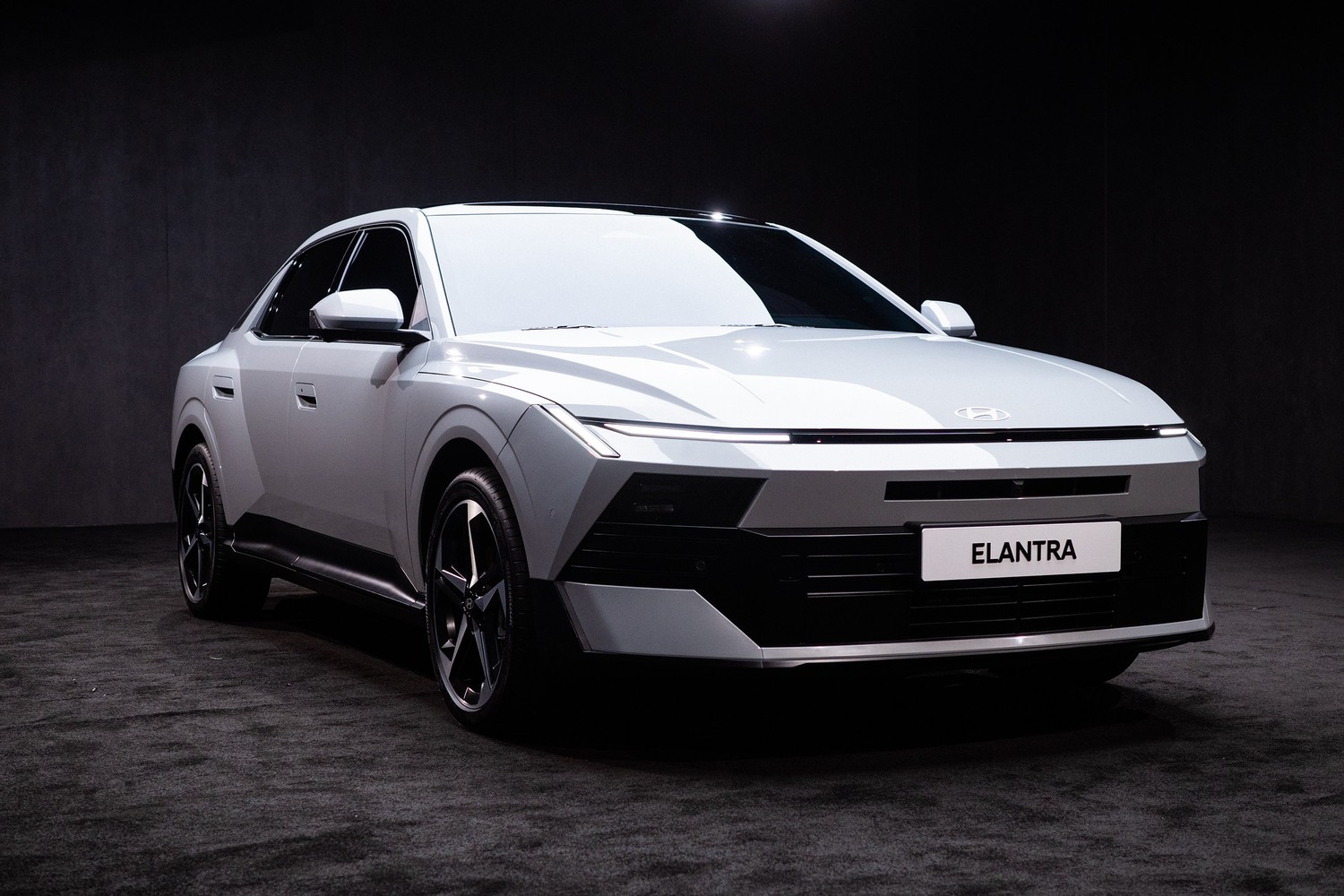
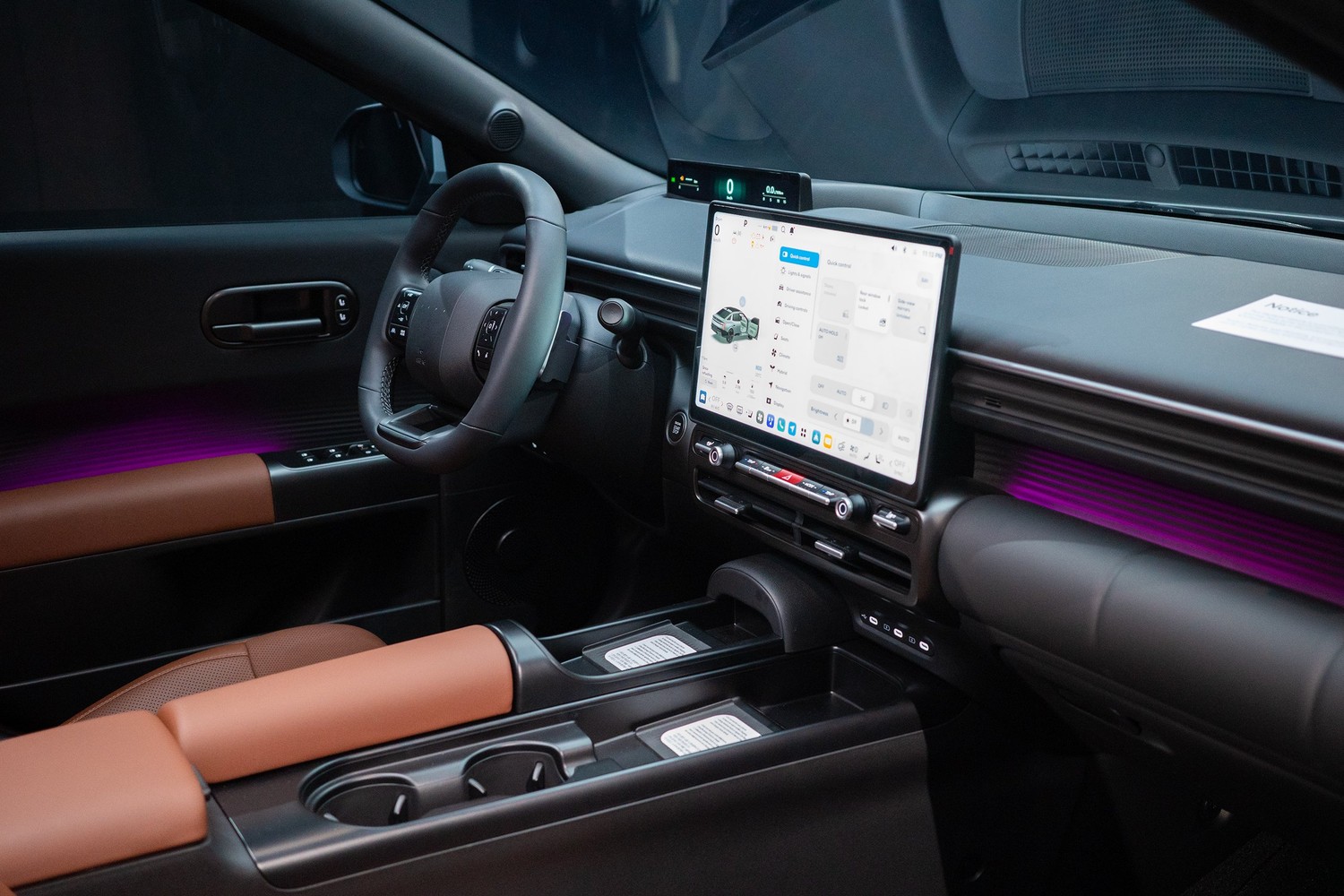
The average price of new cars in the United States keeps rising, but at least one manufacturer, Hyundai, is doubling down on affordability, with the unveiling of its new Elantra sedan at the Los Angeles Auto Show. The South Korean automaker touted that the new 2027 Elantra will have a "bold and muscular look" that stretches the compact sedan closer to midsize car space. The company said the eighth-generation Elantra − Hyundai's entry-level sedan − will include a gas-powered version for the 2027 model year, followed by a hybrid for the 2028 model year. Pricing and sales timing are expected to be released closer to launch. The base trim on the 2026 Elantra has a starting price of $22,825, and the 2027 is expected to start around $24,000, according to Car and Driver Magazine. The release of the new Elantra comes as the average price of new cars in the United States reached $52,369 in October 2026, according to market data compiled by Cloud Theory's MotoMiner platform and USA TODAY Co.'s LocaliQ Automotive. The average price of a new car was $49,861 in October 2025. José Muñoz, president and CEO of Hyundai Motor Co., said in a statement that his company thinks it is important to have an affordable sedan that's available for sale in the United States. "For many customers, Elantra is their first experience with the Hyundai brand, and that makes this vehicle especially important to us," Muñoz said. "We want that first Hyundai experience to be one that builds trust and keeps customers with our brand for years to come." Here's why Hyundai is betting on affordability at a time when a lot of their competitors are going the other way on car pricing. Related: Hyundai unveils new Elantra at the LA Auto Show. I'd wait for it Why is Hyundai betting on affordability? Hyundai is typically one of the most affordable car brands in the United States. The average price of a new Hyundai in October 2026 was $38,492, which was down slightly from an average price of $38,666 for the company's cars in October 2026, according to Cloud Theory's MotoMiner platform and USA TODAY Co.'s LocaliQ Automotive. Only three auto brands had cheaper average prices last month than Hyundai: Mitsubishi, Nissan and Mazda. Randy Parker, president and CEO of Hyundai Motor North America, said in a statement that the new Elantra "gives customers more of what they value while remaining an attainable entry point into the Hyundai brand, and that's exactly the kind of product we want to bring to the U.S. market." "Customers have been very clear about what they want: great design, technology, safety and efficiency, all at a price that makes sense," Parker said. Hyundai officials said they intentionally made the new Elantra bigger and gave it a bolder external look, even as American interest in sedans has ebbed. "Wide muscular fenders, a long hood and refined three-box proportions give Elantra a confident, athletic presence that challenges the conventions of the compact sedan," SangYup Lee, executive vice president and head of Hyundai and Genesis Global Design Center, said in a statement. SUVs have dominated the American auto market for the past decade. They have accounted for 62.5% of all new U.S. car registrations so far in 2026, up 17 percentage points from 45.2% in 2017, according to market data compiled by Mobility Global/Catalyst for Insight and USA TODAY Co.'s LocaliQ Automotive. But there's some evidence that sedans may be starting to make a comeback, at least among younger car shoppers. Sedans make up 80% of the favorite cars of people ages 18 to 29, or Generation Z, according to a recent study from the website Compare.com. By comparison, sedans made up 60% of the favorite cars of people 30 to 45, or millennials, while they made up only half of the favorites of people 45 to 61 years old, or Gen X. Sedans were only 30% of the favorite cars for people between 62 and 77, or Baby Boomers. Why are cars getting more expensive, and why are people still buying them? Car prices have been rising in recent years because of a variety of factors, including more technology that is now expected to be standard in modern vehicles and manufacturing disruptions stemming from the COVID-19 pandemic. Tariffs imposed on imported cars, auto parts, steel and aluminum have also contributed to higher prices. Consumer Reports said in a 2023 analysis that carmakers also won changes to the way the federal government measures fuel economy that made it easier for them sell SUVs and pickups rather than cheaper small cars without damaging their fleetwide mpg averages. "Automakers lobbied heavily and won changes to the rules that made it much easier to sell bigger and heavier vehicles in exchange for stronger overall standards," said Chris Harto, manager of sustainability advocacy for Consumer Reports, in the report. Erin Keating, an executive analyst for Cox Automotive, also said in a statement that car buyers gravitating toward larger, more expensive models that have premium features have driven up average car prices. But she said some buyers are starting to opt for cheaper, smaller vehicles as average prices top $50,000. "Consumers don't buy the industry average," she said. They buy a vehicle, and prices for many of the vehicles they're shopping for are continuing to move higher. Charlie Chesbrough, senior economist at Cox Automotive, said modern car buyers, in general, are wealthier than previous generations might have been. "A wealthier customer base, and more business buying, is insulating the vehicle market from more negative forces," he said in a recent sales briefing. "And as long as the stock market remains strong, this trend seems likely to continue." Contributed: Eric D. Lawrence, Detroit Free Press Keith Laing is an automotive reporter on the National Trending Desk at USA TODAY. Contact Keith at [email protected].