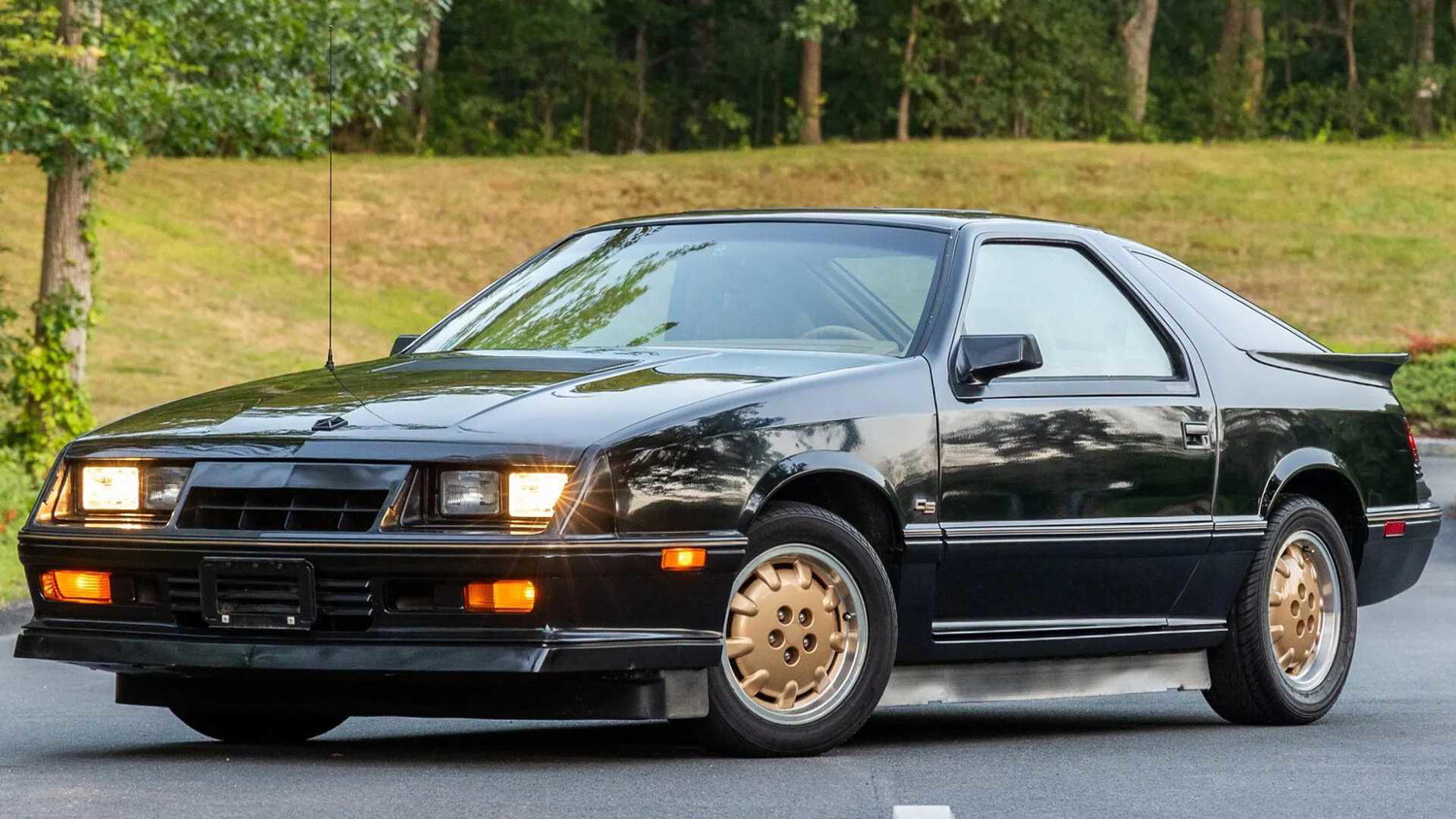
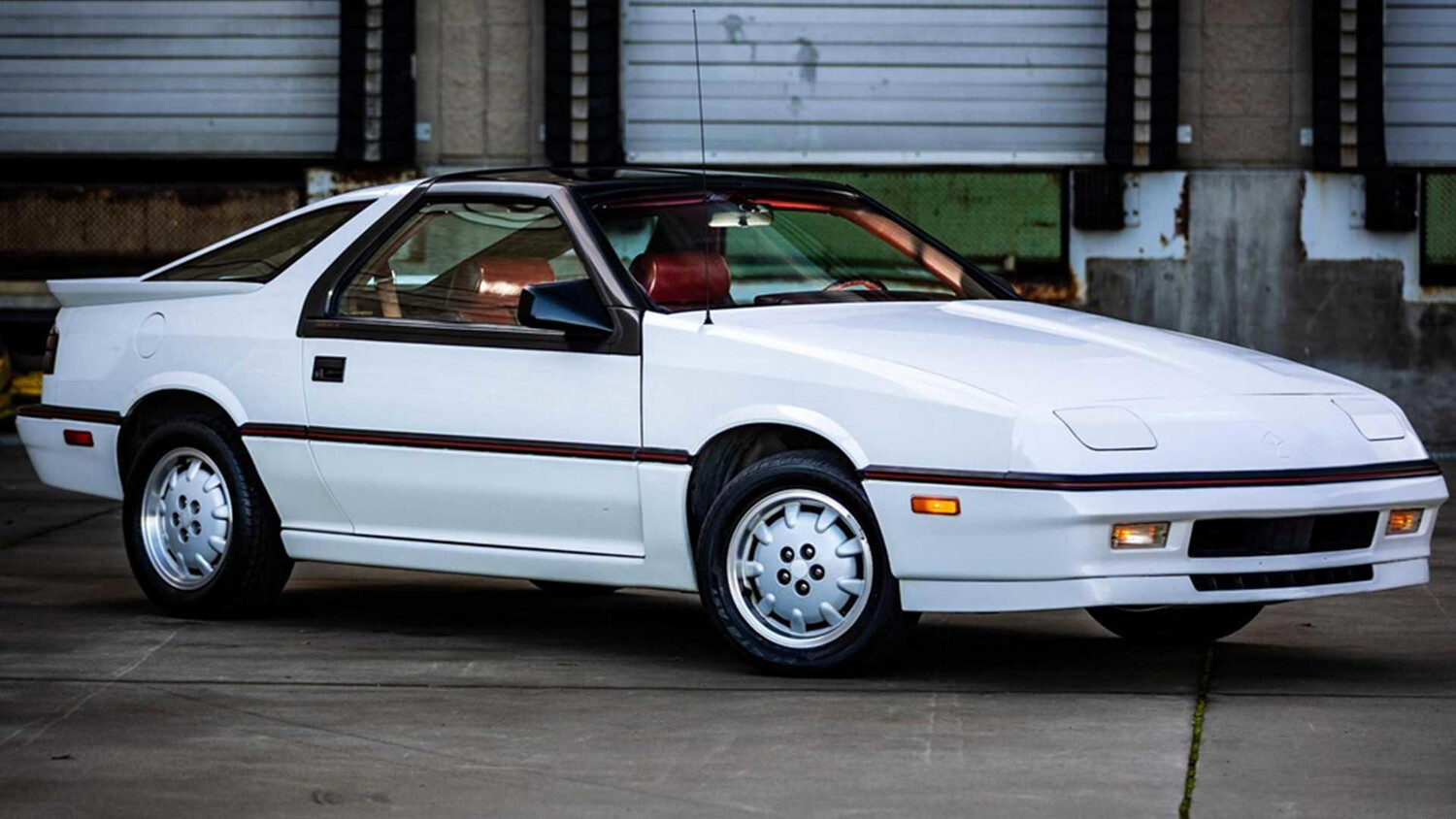
Mitsubishi built the Mitsubishi Starion from 1982 to 1989, and Chrysler sold the same car in America as the Conquest. It arrived with a turbocharged four-cylinder, rear-wheel drive and a wedge shape that looked fast parked at the curb. Yet the Starion never got the respect its speed earned. V8 coupes like the IROC Camaro and the 5.0 Mustang stole the spotlight, and the Starion’s following has grown far more slowly than theirs. Many people remember the pop-up headlights and boxy fender flares, then forget the racing trophies and the turbo boost behind them. These seven are our picks for the Starions and Conquests that were quicker, tougher or more capable than their reputation suggests. That verdict is our opinion. The years, outputs and race results come from period specs, enthusiast references and auction records. 1. 1983 Mitsubishi Starion Turbo EX The early narrow-body car is the purest form of the idea. Grassroots Motorsports says the Starion launched in 1982 as a narrow-bodied 2+2 sports coupe. In Europe and Britain, the base car wore a plain Turbo badge, while the EX added luxury equipment. Meanwhile, most markets used a 2.0-liter turbo four from Mitsubishi’s Sirius family. That engine family also served in the Lancer EX 2000 Turbo, the Galant, the Cordia and the Tredia. Early non-intercooled cars made 145 PS, while later intercooled versions reached 175 PS. In the narrow body, the coupe weighed about 1,260 kg, light enough to make that boost count. Its drag coefficient was about 0.32, too. Even the name was more clever than people think. According to Hagerty, Mitsubishi says “Starion” blends “star” with Arion, a horse from mythology, and has nothing to do with a mispronounced “stallion.” Our take: the 1983 Turbo EX is the cleanest-looking Starion of all. Because it lacks the later flares, people assume it’s slow. That’s precisely why we’d enjoy surprising them in one. 2. 1985 Mitsubishi Starion JB Australia got its own run of Starions, and the build codes tell the story. Unique Cars and Parts lists the JA series from 1982 to 1984, the JB from 1984 to 1985 and the JD from 1985 to 1987. Those codes sit on the car’s vehicle information plate, so owners can check them in seconds. The same source says Australian cars were mostly similar to the European Turbo specification. In other words, that meant the 2.0-liter turbo four, rear-wheel drive and the slim original body. The narrow-body car measured 1,685 mm across, slimmer than the widebody cars that came later. Hagerty adds that four-wheel disc brakes were standard on these coupes. In our view, the JB is the sleeper of the family. It looks almost delicate next to the flared American cars, but it carried the same basic recipe of turbo four and rear drive. If you shop for one, check the plate first. The code is the quickest way to confirm what you’re buying. 3. 1987–1989 Mitsubishi Starion 2600 GSR-VR Japan’s GSR-VR took the big-engine route. Mitsubishi built it from 1987 to 1989 with the 2.6-liter four and rated it at 175 PS. Some GSR-VR cars also used the DASH head, short for Dual Action Super Head. It opened a third intake valve at higher engine speeds and raised the redline to 7,000 rpm. The switch to 2.6 liters came partly because of tighter emissions rules. Reviewers at the time often found the bigger engine made the car slower, partly because the widebody added weight. Widebody Starions weighed about 1,340 kg, roughly 80 kg more than the narrow cars. So why does it make our list? In our opinion, the GSR-VR gets judged by the spec sheet and not by the drive. Hagerty lists the early American 2.6 at 185 lb-ft of torque at just 2,500 rpm, and that kind of low-down pull suits real roads better than a peaky small engine. Honest John calls the 2.6 one of the largest four-cylinder engines of the modern era. We’d love to prove it on a back road. 4. 1987 Chrysler Conquest TSi The Conquest TSi was the same machine sold through Chrysler dealers. Hagerty says Starion and Conquest came off one Japanese assembly line with different badges. The 1986 widebody brought an intercooler, wider wheels and tires and flared fenders that looked a bit like a Porsche 944’s. The numbers were strong for the day. Hagerty lists the 1986 widebody at 178 hp and 223 lb-ft, with 0 to 60 mph in 8.1 seconds and a price around $17,500. Also, its staggered 16-inch wheels wore 205/55 tires in front and 225/50 tires at the back. Later, Grassroots Motorsports says the car dominated SCCA Solo G Stock from 1989 to 1993, until the Mazda MX-6 took over. Since then, collectors have started to notice. Hagerty reports a 1988 Conquest TSi with 40,000 miles and the Sport Handling Package sold on Bring a Trailer for $27,000. Our take: if you love the Starion shape but want an American badge, this is the one. For a broader look at the brand’s fast cars, see our guide to the Mitsubishi performance models collectors are chasing. 5. 1989 Mitsubishi Starion 2.6 Turbo EX The last Starions went out with the biggest engine. After 1987, European cars switched to the 2.6-liter turbo four that American buyers had used from the start. By 1989, the coupe was nearing the end of its run, and total production that year fell to just 1,961 cars, down from 19,438 in 1986. That makes a 1989 car a rare sight. The Turbo EX kept the luxury trim of earlier European cars, while the larger engine delivered strong low-end pull. Meanwhile, rivals were moving on. Hagerty notes that by the early 1990s, cars like the 300ZX Twin-Turbo, Supra Turbo and FD RX-7 made over 300 hp. In our view, that timing hurt the late Starion’s reputation more than any flaw in the car. It looked old next to the new arrivals, so buyers overlooked how well it went. A 1989 Turbo EX is the final chapter of the story. For that reason, we’d treat one as a keeper, not a project. If you want to see how 1980s turbo coupes compared, our list of 1980s sports cars that transformed turbocharged performance sets the scene. 6. 1988 Mitsubishi Starion Turbo 2.0 The 2.0-liter Starion is the one that revved. Mitsubishi’s Sirius 2.0 was a compact turbo four, and in Japan it peaked in the GSR-V. Built from 1984 to 1987, that version used the 12-valve DASH head and made 200 PS. That was the highest output any production Starion reached. A 1988 car with the Turbo 2.0 badge came from a smaller pool. Overall, Starion production fell to 10,655 that year, down from 17,605 in 1987. The 2.0 engine also shared its family with the Galant and Lancer turbos, so it was no orphan. In Britain, Mitsubishi sold it under the Colt Starion name. Our take: people often lump the small-engine Starions in with economy coupes, and that’s a mistake. A light 2.0 turbo car with the slim body pulls hard once the boost comes in, and it feels livelier than its size suggests. If you find a 1988 Turbo 2.0 with service records, you’ve found a car most people will underestimate. In our view, that’s half the fun of owning one. 7. Mitsubishi Starion 4WD rally car The wildest Starion never reached a showroom. Mitsubishi built the Starion 4WD as a Group B rally prototype between 1984 and 1986. It added a strengthened transfer case from the Pajero behind the gearbox. Engineers also used carbon-fiber driveshafts, a carbon sump guard and fiberglass body panels to bring the weight under 1,000 kg. The car even lost its pop-up headlights. Fixed lamps made the nose about six inches shorter, though the wheelbase stayed the same. However, the FIA banned Group B before the car could be homologated, so the factory program never got its chance on the world stage. It raced anyway, and it won. Even earlier, a Starion took first place in the Experimental Class at the 1983 Paris-Dakar Rally. The Starion 4WD took first place at the 1987 Himalayan Rally. Our take: few cars prove a reputation wrong as clearly as this one. A coupe dismissed as a cruiser turned into an all-wheel-drive rally weapon. The best result came last, when Pentti Airikkala and Ronan McNamee won the 1988 British Open Rally Championship in a Starion 4WD.

 Liked by Sophie Morgan, Hannah Hill
 Liked by Sophie Morgan, Hannah Hill