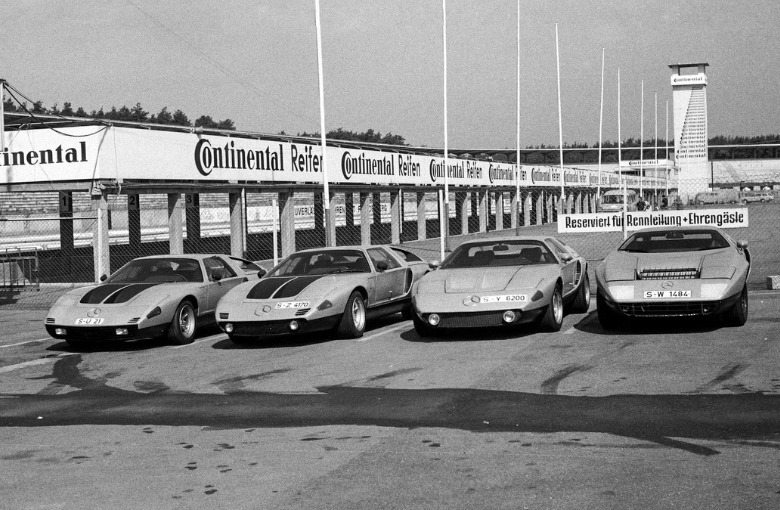
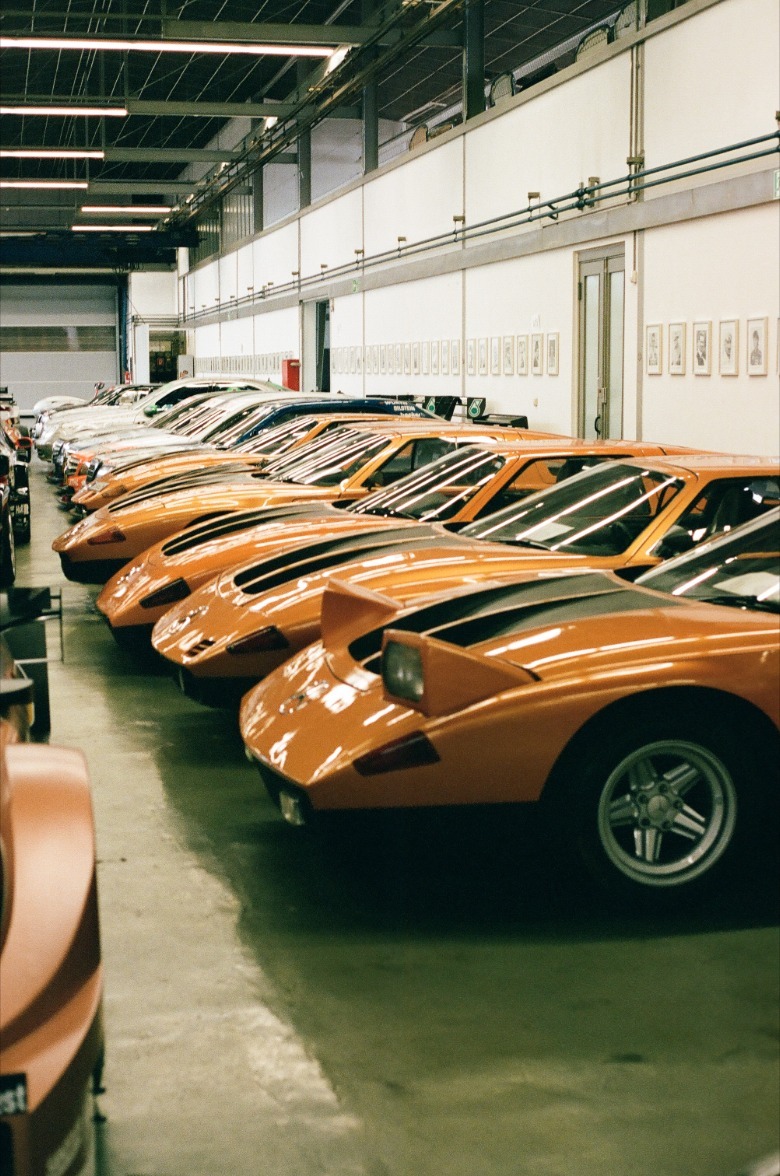
There’s no shortage of rare, collectable, crazy-desirable classic Mercedes-Benz vehicles out there for the discerning car collector. Some of the Three-Pointed Star’s cars have gone down in history among the most expensive automobiles ever sold; there’s the $11.8 million 1936 Mercedes-Benz 540 K Special Roadster by Sindelfingen, the $10.2 million 2002 Mercedes-Benz CLK GTR Roadster, and of course, the 1955 300 SLR Uhlenhaut Coupé that sold for over $140 million back in 2022, making it the world’s most valuable car. But no matter how rich, how connected, how much of a master of the universe you are, you’ve never been able to buy one of Mercedes-Benz’s most ground-breaking machines: the rotary-powered C111. Or at least, that was the case. Come next year, for the very first time, one lucky person will be able to take the Apollo-era wundercar home. Fans of the brand certainly need no introduction to this wedge-shaped beauty, but for those of you who might not be as current on your Mercedes history, the C111 was revealed at the 1969 International Motor Show (IAA) in Frankfurt, less than two months after Neil Armstrong plopped his boots on the moon. The idea was to create a gullwinged successor to the iconic W198-gen 300SL that dominated racing in the 1950s, packed with then-impressive technology: Wankel rotary engines, fiberglass bodywork, and multi-link rear suspension, all wrapped in a gorgeous period design. Yet while 17 prototypes were ultimately made, the car never entered production. Rumor has it that interested parties practically channeled Philip J. Fry shouting “Shut up and take my money” by mailing blank checks to the company’s home office, but Mercedes said no dice, citing the Wankel motor’s inability to play nicely with the 1973 oil crisis. (That also kept the motor from winding up in the S-Class, as Mercedes-Benz Classic head of collection Dennis Heck said.) Instead, the copies served as company test beds for years, performing tasks like high-speed testing at Nardo with a variety of different powertrains and aerodynamic kits. The car in question that will be up for grabs is the third one ever made, a C111-II variant known internally as “Car 33” that comes equipped with its original 2.4-liter 4-rotor engine making 345 horsepower and 289 lb-ft connected to a 5-speed manual gearbox. It was used as part of the Mercedes test fleet, trialing features like anti-lock brakes and a component to empty its twin fuel tanks at even rates—a handy feature in a car capable of 186 miles per hour. The car was restored to working order two years ago at the Mercedes-Benz Classic Center, although the patina of the Weißherbst-colored exterior and gray-and-white houndstooth patterned interior was kept delightfully intact. As of last month’s photo shoot, its odometer showed 24,766 kilometers—15,355 miles. The C111 in question will hit the auction block on February 3, 2027, at the Palais du Louvre as part of RM Sotheby’s Retromobile Paris auctions, with the funds raised by the sale used to help the automaker further develop the Mercedes-Benz museum in Stuttgart, including the creation of a digital twin of the museum that will let people access it virtually. Given its provenance, I would not expect it to go cheap. Neither does the company. “We do believe it will come to a significant double-digit euro [price at auction],” CEO of Mercedes-Benz Heritage GmbH Marcus Breitschwerdt told Road & Track. “It’s gonna be in excess of twenty-five [million] euros,” RM Sotheby’s president Gord Duff added. “There will be strong activity. It’s one of those things you could never get until now.” And if you’re thinking, Ehh, they’ve broken the seal on sales, I’ll wait until they auction off another one—well, you’d better be prepared to hold off until 2051 or so, because Mercedes says this sale includes a contractual commitment that it will not sell any more C111s for the next 25 years. Should you be interested in bidding, you can find out more here. Will Sabel Courtney is a contributing editor at Road & Track. A 12-year veteran of journalism, he formerly worked at Gear Patrol, The Drive, and RIDES Magazine, and contributed to the New York Daily News and Jalopnik, among other outlets. You can often find him test-driving new cars in New York City, cursing the slow-moving traffic surrounding him.

 Liked by Oliver Lewis, Camille Smith


 Liked by Oliver Lewis, Camille Smith