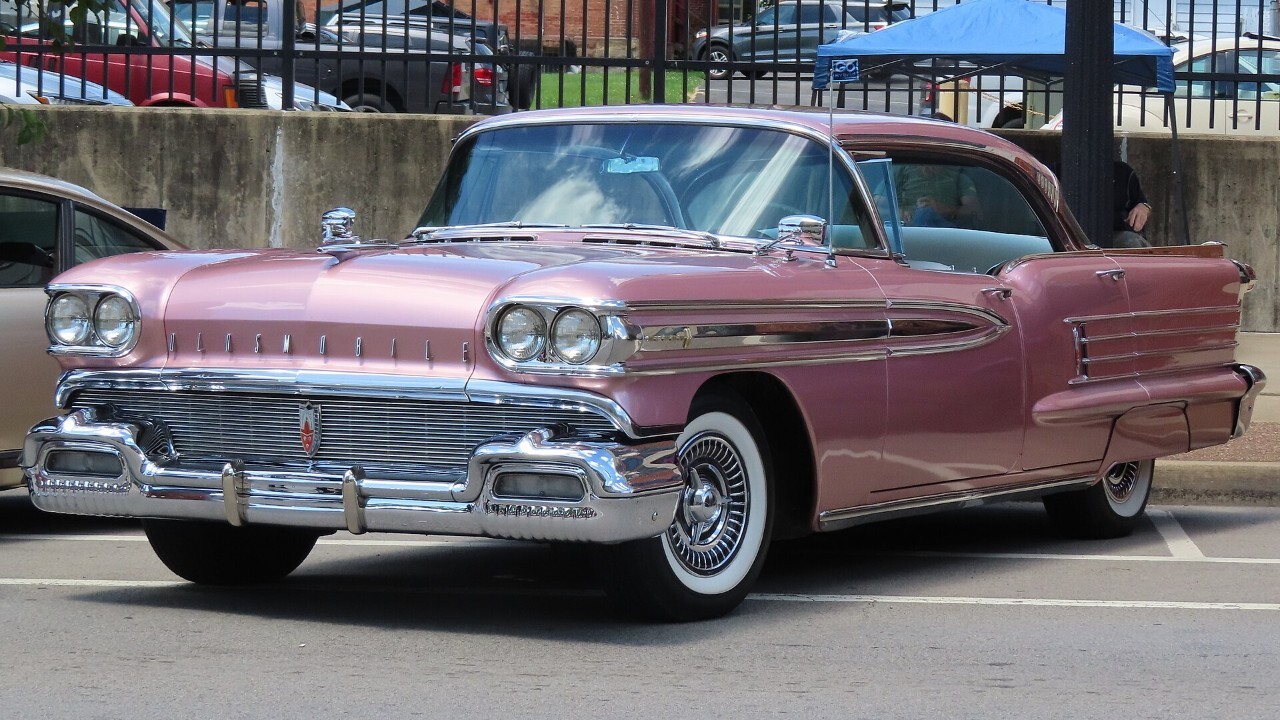
Chevrolet’s 1955 lineup introduced the small-block V8, and the 1955 Chevrolet 210 sedan put that engine in reach of ordinary families. It was not the flashiest car in the showroom. Still, Two-Ten sport models cost about $100 less than their Bel Air counterparts, and they shared the same fresh styling. However, family sedans rarely get that kind of credit. Sports cars and muscle cars grab the magazine covers, while the four-door in the driveway gets forgotten. Yet some of those everyday cars changed safety, styling and even the fate of the companies that built them. These are our picks: 10 family sedans from America and Europe that we think deserve more conversation today. Some saved a brand, some won rallies, and some simply refused to quit. The opinions are ours, while the figures come from maker records, period sources and reference histories. 1. 1955 Chevrolet 210 Sedan The Two-Ten sat in the middle of Chevrolet’s 1955 range, above the stripped-down One-Fifty and below the Bel Air. As a result, that middle spot made it the sweet spot for families. In fact, the Two-Ten had been Chevrolet’s best-selling line in 1953 and 1954, before buyers drifted toward the fancier Bel Air. For 1955, Chevrolet launched a new chassis along with the 265-cubic-inch Turbo-Fire V8. That first small-block made 162 hp, with a 180 hp option. Buyers who wanted to save money could stay with the Blue Flame six, rated at 123 hp with a manual gearbox. The Bel Air took the glory, as our story on how the Bel Air became the face of 1950s America explains. Our take: the 1955 Chevrolet 210 sedan is the purest way to experience the year the small-block arrived. It has the same fresh shape and the same V8, yet with less chrome and a more honest price. That is why we think it deserves a bigger place in the Tri-Five conversation. 2. 1957 Ford Fairlane 500 Sedan Ford went all in for 1957. The new body was longer, wider, lower and sleeker, with modest tailfins, and the Fairlane 500 arrived as the new top trim. Under the hood, buyers could choose a 223-cubic-inch six or Thunderbird V8s of 292 and 312 cubic inches. The gamble paid off. In 1957, Ford outsold Chevrolet for the first time since 1935. Meanwhile, the Fairlane 500 line also carried the Skyliner, a hardtop whose steel roof folded into the trunk at the touch of a button. The Fairlane name has had its rough moments too, as we covered in the unusual reason the Ford Fairlane became controversial. In our view, the 1957 Fairlane 500 sedan is the car that proved Ford could beat Chevrolet on style. Better yet, the four-door version carries all of that 1957 design without the collector premium of the Skyliner. For a family hauler, it looks remarkably sharp. 3. 1962 Rambler Classic Custom AMC built its success on sensible cars, and the Rambler Classic was the heart of that plan under George Romney. For 1962, AMC dropped the V8 from the Classic entirely. Instead, buyers got a 195.6-cubic-inch six, with an optional aluminum block that weighed 80 pounds less than the cast-iron engine. Both versions made the same 127.5 hp. AMC also cut the price of the Custom Classic sedan by $176 for 1962. As a result, Classic sales rose by more than 56,000 cars in the first six months compared with the same period of 1961. A year later, Motor Trend named the redesigned 1963 Classic and Ambassador its Car of the Year. We like the 1962 Classic Custom because it shows how a smaller maker fought the Big Three with brains rather than horsepower. An aluminum six in a family car was a bold idea for the time. For more on the brand, see our list of Ramblers that rank among the best. 4. 1964 Peugeot 404 Sedan Pininfarina styled the Peugeot 404, and Peugeot built it in France from 1960 to 1975. Under the hood, its 1.6-litre engine came with either a Solex carburetor or Kugelfischer mechanical fuel injection. Output ranged from about 72 PS to 96 PS in the later injected versions. Even so, the 404’s real fame came from rough roads. 404s won the East African Safari Rally in 1963, 1966, 1967 and 1968. That toughness also made it a favorite taxi. Licensed production in Kenya continued until 1991, and South African factories built the saloon until the end of 1978. Worldwide production reached 2,885,374 cars. Our take: few family sedans have a résumé like this one. It carried French families, won one of the world’s hardest rallies and kept working across Africa for decades. The 1964 404 sedan deserves a spot in any conversation about durable cars. 5. 1971 Volvo 144 2.0 Volvo presented the 144 in August 1966 as the first car of its 140 series. According to Volvo’s heritage page for the 140 series, the car had crumple zones front and rear, plus disc brakes on all four wheels. Its brakes ran on two circuits, each handling three wheels. Volvo also kept the interior free of protruding parts and fitted front seat belts. From 1969, the 144 used the 2.0-litre B20 four, offered in versions from 82 to 124 hp. Volvo built 523,808 of the four-door 144s. Altogether, the 140 series reached 1,205,111 cars before the 240 took over in 1974. Swedish magazine Teknikens Värld also named the 144 its Car of the Year in 1966. We think the 1971 Volvo 144 2.0 is the sedan that made safety a selling point. It looked plain. Even so, its engineering set the template for decades of Volvos. That is a legacy worth talking about. 6. 1970 Mercedes-Benz 250 W114 Sedan Mercedes-Benz launched the W114 and W115 family in 1968 with crisp three-box styling by Paul Bracq. The 250 sedan used a 2.5-litre M114 six rated at 129 hp. Mercedes built about 78,303 of the 250 saloons, part of a family total of 1,919,056 cars. Yet the bigger story sits under the back seat. The W114 and W115 introduced the semi-trailing arm rear suspension that Mercedes kept in its passenger cars until the multi-link designs of the 1980s. Durability also became part of the legend. A Greek taxi driver donated his 1976 240 D, a diesel sibling, to the company with 4.6 million kilometers on the clock. In our view, the 1970 Mercedes-Benz 250 is the gentleman’s pick here. It brought six-cylinder refinement to a mid-size sedan, and its basic design shaped Mercedes for a generation. We’d happily drive one every day. 7. 1986 Ford Taurus Sedan Ford put the Taurus on sale on December 26, 1985, as a 1986 model. According to Curbside Classic’s history of the car, the Taurus program cost $3.2 billion, which the site calls the last money Ford had available to spend. Lew Veraldi led the program, and Jack Telnack’s design team pushed its rounded shape. Early focus groups thought the design looked too radical. However, the team bet that buyers would come around, and they did. The Taurus won Motor Trend’s 1986 Car of the Year award. As a result, Ford sold more than 200,000 in the first model year and more than a million by 1989. Buyers could choose a 90 hp four or the 140 hp Vulcan 3.0-liter V6. Our take: the 1986 Taurus is the most important family sedan of its decade. It dragged American styling into the aero age, and its 0.32 drag coefficient looked like science fiction next to boxy rivals. That alone makes it worth remembering. 8. 1960 Studebaker Lark VI Sedan Studebaker was in trouble in the late 1950s, and the Lark was its answer. Design chief Duncan McRae and a small crew took the center section of the 1953–1958 Studebaker sedan body and cut the wheelbase from 116.5 to 108.5 inches. Then they trimmed the overall length by nearly 28 inches. The result beat the Big Three’s compacts to market by nearly a year, according to Mac’s Motor City Garage. Sales jumped from around 45,000 in 1958 to more than 130,000 in 1959. The 1960 total topped 125,000. The Lark VI used a 169.6-cubic-inch flathead six with 90 hp, while the Lark VIII offered a V8. We think the 1960 Lark VI sedan deserves credit as the compact that bought Studebaker time. Sales fell below 65,000 in 1961, after the Big Three’s own compacts arrived. For two years, though, a small, clever sedan kept a proud company alive. 9. 1981 Peugeot 505 GR Sedan Peugeot unveiled the 505 on May 16, 1979, with styling from Pininfarina and Peugeot’s own studio. It was Peugeot’s last rear-wheel-drive car. Peugeot built 1,351,254 of them, and most were saloons. After that, the 505 traveled far. It went on sale in Australia in October 1980, where the GR served as a petrol sedan in the lineup. Renault Australia first assembled the cars, and then Leyland Australia took over from March 1981 until the end of 1983. Elsewhere, PAN assembled 505s in Kaduna, Nigeria, while a Guangzhou factory in China built them from 1990 to 1997. Our take: the 1981 Peugeot 505 GR is the last of an old-school breed. For example, it offered rear-wheel drive, French comfort and global reach, all in one sensible four-door. Enthusiasts who overlook it miss a genuinely interesting car. 10. 1956 Plymouth Savoy Sedan The Savoy sat between the base Plaza and the top Belvedere in Plymouth’s 1956 lineup. According to Over-Drive magazine’s 1956 Plymouth fact sheet, the Savoy four-door sedan was the best-selling Plymouth that year by a wide margin, with 151,762 built. The 1956 cars also wore Virgil Exner’s new tail fins, part of his Forward Look styling. Buyers also had plenty of choices. The 230-cubic-inch six made 125 hp, while the 270 V8 made 180 hp, and the 277 V8 offered up to 200 hp. Over-Drive also credits the 1956 models with the first push-button automatic transmission. Plymouth added seat belts that year, and an optional Highway Hi-Fi record player could even spin discs on the road. In our view, the 1956 Savoy sedan captures the mid-1950s family car at its most optimistic. After all, it brought fins, push buttons and V8 power to ordinary buyers. With 151,762 four-doors built in a single year, it was the sedan many families actually drove home.

 Liked by Noah White, Emily Brown
 Liked by Noah White, Emily Brown