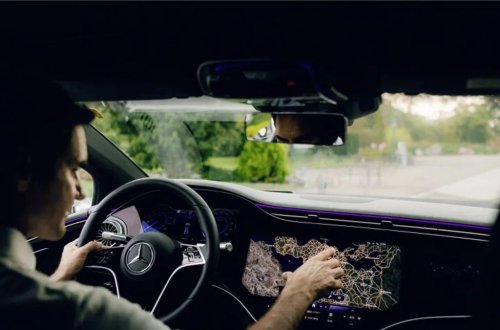
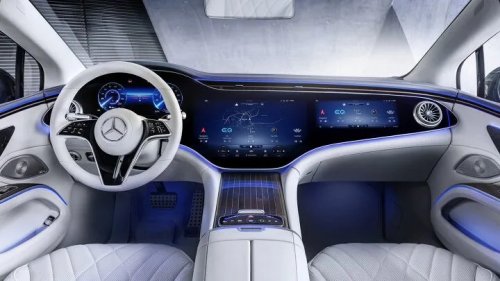
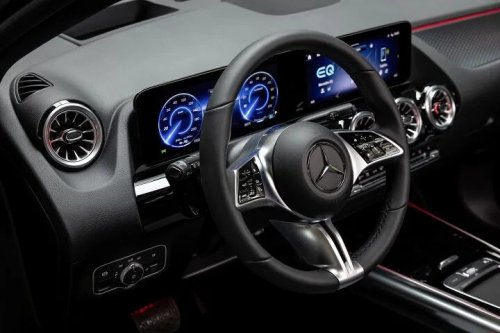
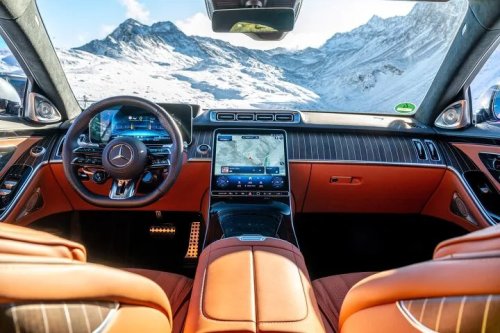
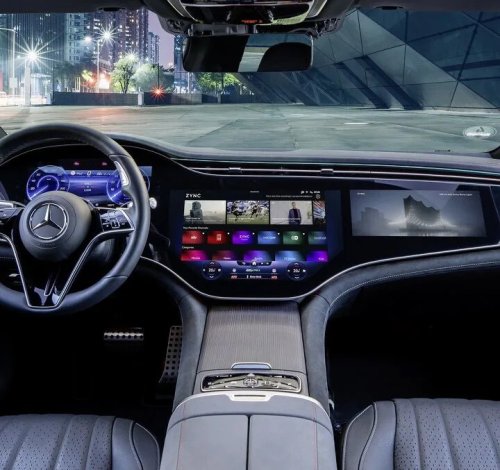
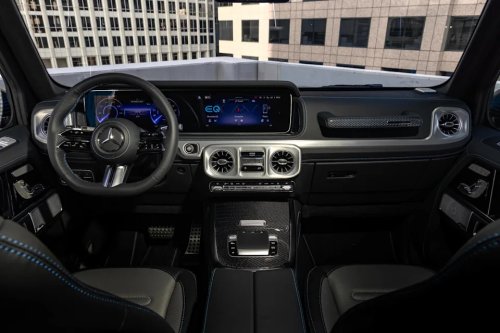
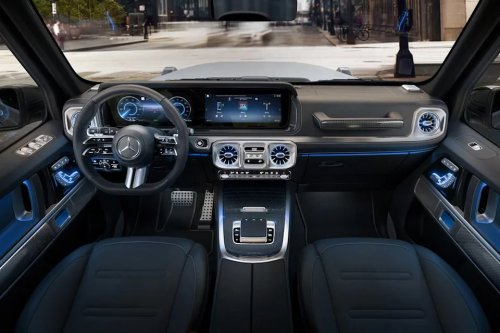
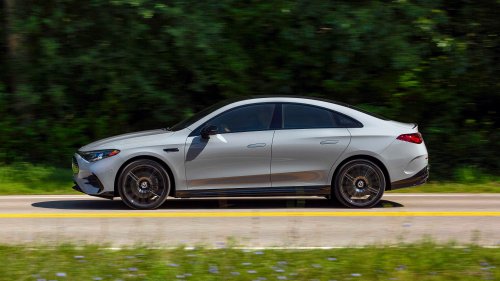
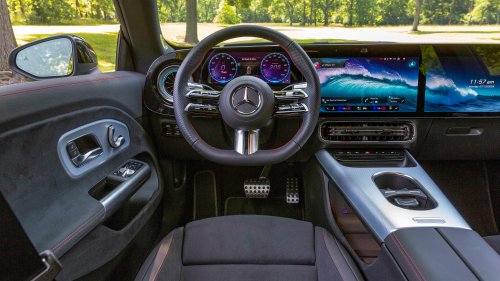
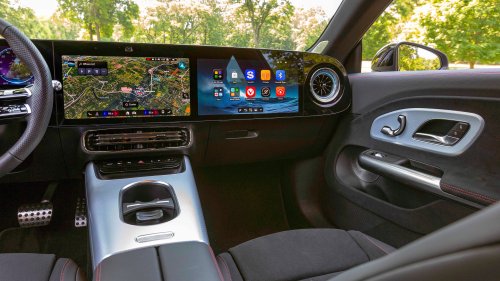
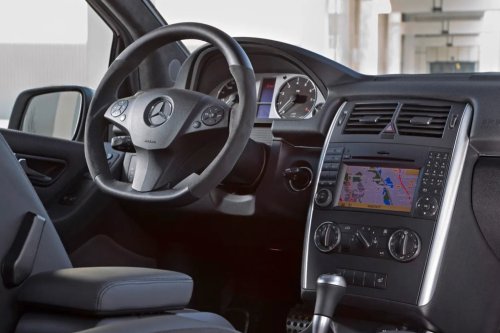
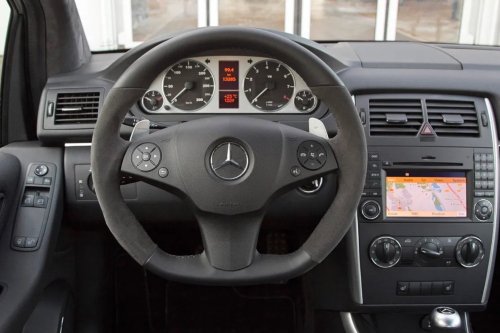
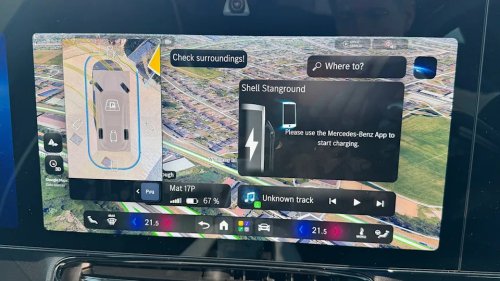
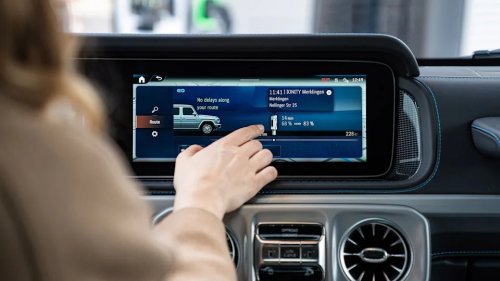
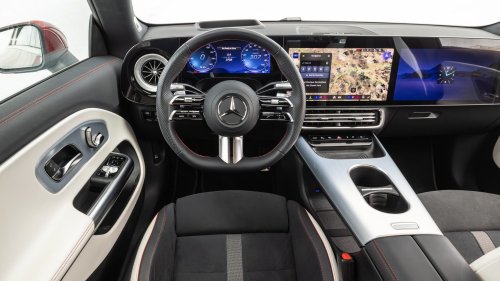
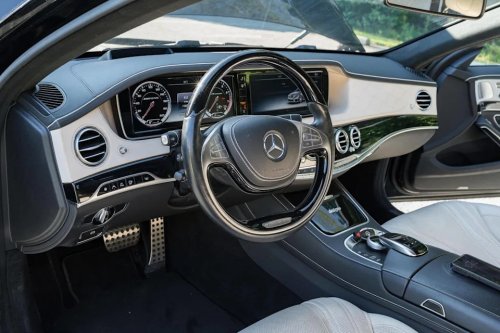
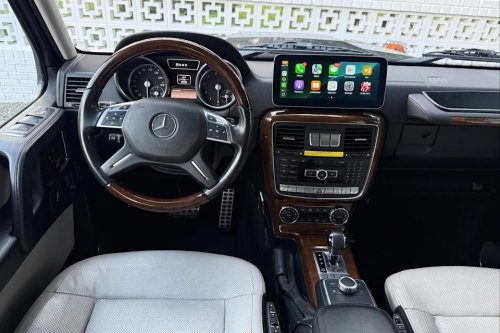
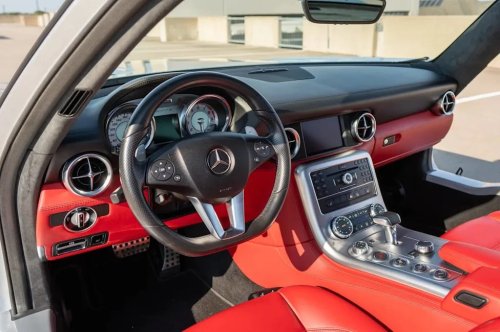
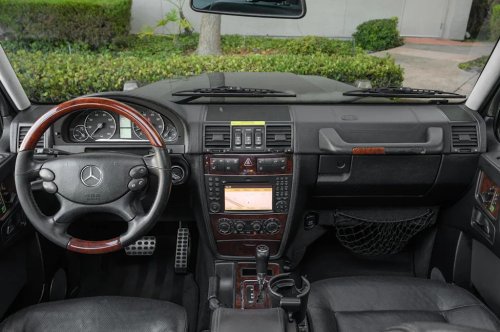
mercedes ceo addresses the touchscreen questionMercedes-Benz CEO Ola Källenius has indicated that the company may need to rethink its strategy on touch screens.The brand has some of the largest interior displays of any legacy manufacturer and seems keen to retain that position with things like the dashboard-spanning MBUX Hyperscreen (pictured). While the unit is technically three screens incorporated into a singular seamless presentation, it's extremely impressive upon the initial viewing.It's easy to imagine scenarios where someone walks into a dealership, sees one of the brand's massive displays, and immediately decides that they're ready to start discussing payment options with the finance department. For some customers, it's the primary reason they're willing to buy the vehicle.AdvertisementAdvertisementUnfortunately, the units have also garnered some complaints. They're prone to smudging and can be distractingly bright at night if not properly adjusted. However, the biggest gripe is that it can be difficult to use and frequently requires drivers to take their eyes off the road to execute simple functions - such as adjusting the climate controls.Speaking with Autocar, Källenius hinted that Mercedes' screen-focused approach had indeed ruffled some feathers and that the business may need to adjust its strategy a little.mercedes ceo addresses the touchscreen questionLike many brands, Mercedes-Benz wanted to lower production costs while implementing more software-controlled features and touchscreens are an excellent way to accomplish both. But the company likewise wanted to start catering to specific markets that viewed conspicuous screens as futuristic, with China being the main target.We recently discussed some of the recent missteps taken by German automakers and screens were a major component. While some drivers really seem to enjoy the industry's general pivot to touch controls, plenty of other motorists despise them. This is particularly true of Westerners (particularly Americans), who have shown stronger preference for physical controls relative to other quadrants of the global market.AdvertisementAdvertisementDue to Mercedes arguably leaning into the trend harder than most other legacy brands, the company has actually started to make public statements pertaining to the topic. However, these usually involve some acknowledgement of customer criticisms before suggesting that the next batch of screens will be better than ever.This is what happened when Mercedes-Benz design chief Gorden Wagener acknowledged that customers no longer view large screens as luxurious and CEO Källenius seems to be doing more or less the same thing over a year later. Wagener stated that the novelty of screens had effectively evaporated, noting that Mercedes would need to further innovate to make them desirable by improving the software.mercedes ceo addresses the touchscreen questionIn contrast, Källenius seems to be suggesting that the buttonless approach may have created some setbacks. But he still defended the practice."We spend countless hours on UI [user interface]. I spend hours every year discussing this with our engineers and we joke it needs to be so easy that either a 5-year-old kid or a Mercedes board member can use it. That is the hurdle, and once you familiarize yourself with it, it becomes second nature," he said.AdvertisementAdvertisementThat sounds a lot like an excuse for making something wildly unintuitive to use.Even if I believed the claim the CEO made about young children, which was totally ridiculous, they're not allowed to drive. As for the board members, one would expect the brunt of their driving to be handled by a chauffeur. Still, a person can certainly learn how to work with any interface - regardless of how good or bad it may happen to be.But truly excellent interior design should ideally bridge the gap between being visually impressive and immediately easy to use. Basic and frequently used controls should be accessible and intuitive, something which numerous studies have shown is typically more easily accomplished with buttons and knobs. Mercedes presumably knows this and simply doesn't want to outright say it made mistakes or shift away from a trend that helps enable profitable things like subscriptions, in-vehicle marketing, and showy displays.To his credit, Källenius did address that the industry might have gone too far with touch and voice-focused vehicle controls. When questioned if carmakers had finally reached "peak screen," he said he wasn't sure but that they were clearly at "low button," whatever that's supposed to mean.mercedes ceo addresses the touchscreen questionGuessing we can assume Mercedes doesn't want to move too far away from screens. They're presumably too lucrative to abandon, and the company has kind of made dashboard spanning displays part of its current identity. Instead, Mercedes-Benz plans on keeping the big screens while also reincorporating physical controls.AdvertisementAdvertisement"Sometimes you get a bit ahead of yourself and do technology for the sake of technology and maybe forget a little bit about the customer. So from now on, you will see us reintroduce the most sensible buttons," explained the CEOs.How far the automaker plans on going is up for debate, however.Volkswagen made similar promises in the past and the resulting changes were rather gradual. Select combustion models dumped some haptic feedback faux buttons for the real deal and reintroduced some physical HVAC controls. Meanwhile, it kept the cabin of electric models relatively austere while adding more buttons to the steering wheel.It's certainly better than nothing. But we sincerely doubt that it will achieve the same ease of use and superior safety older vehicles are known for.AdvertisementAdvertisementThat said, subsequent testing has shown that sometimes traditional controls can likewise be too busy and there are a few touch-focused user interfaces that achieve a higher degree of intuitiveness by simply not burying things behind layers of menus. While tactile buttons and knobs are likely to remain the best solution for most drivers in terms of safety and ease of use, smartly designed digital systems are still possible.We're just concerned that automakers will start trying to charge customers extra for physical controls. If that sounds unrealistic, we'll remind you that companies have already started placing formerly standard features behind digital subscriptions. But there are also the kind of things customers are rallying against, with screens being one of the primary ways of ensuring they were implemented.Ultimately, this is a matter of the industry balancing polarizing features with (debatably) predatory implementation. Automakers want to keep screens, connectivity, telematics, and subscriptions. But their customers have mixed feelings about all of the above while being in broad agreement that vehicle controls should still be more intuitive.mercedes ceo addresses the touchscreen question[Images: Mercedes-Benz]Become a TTAC insider. Get the latest news, features, TTAC takes, and everything else that gets to the truth about cars first by subscribing to our newsletter.