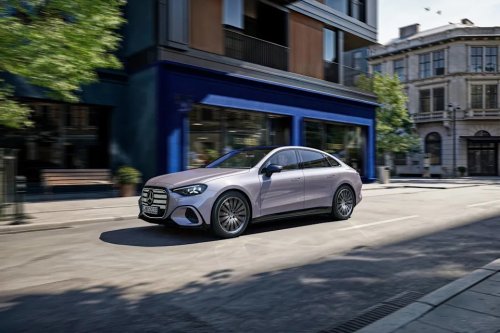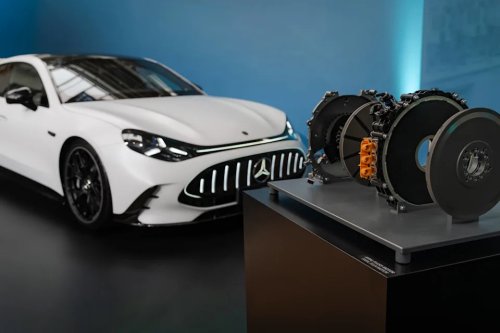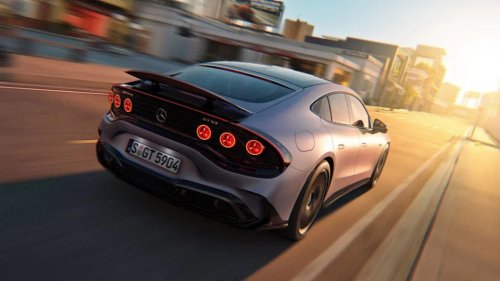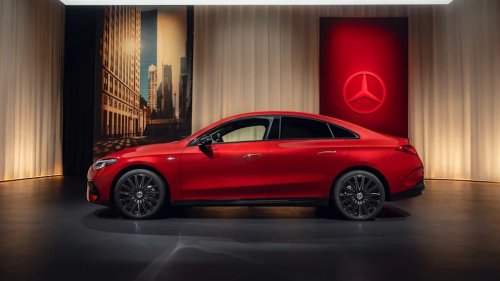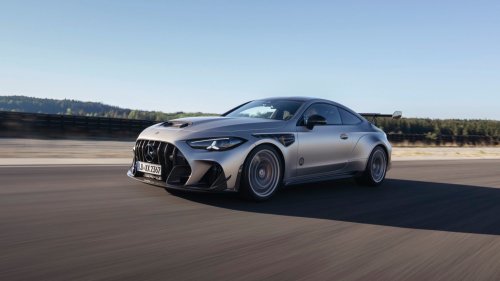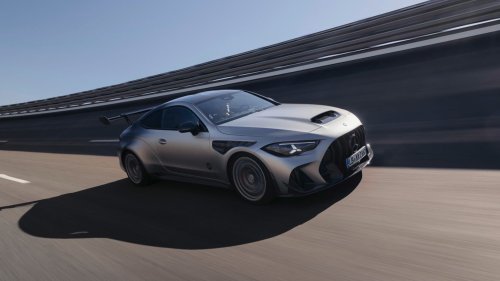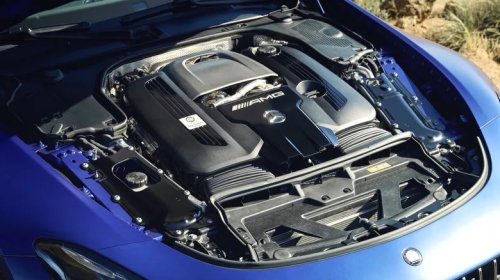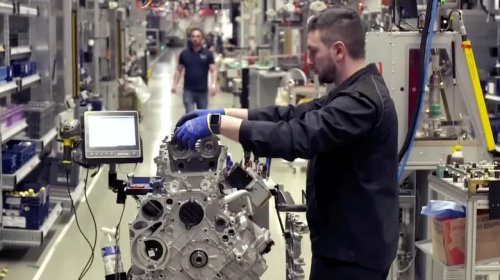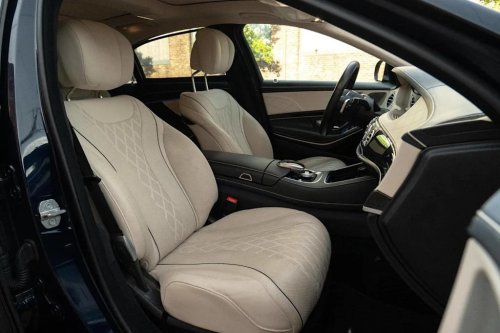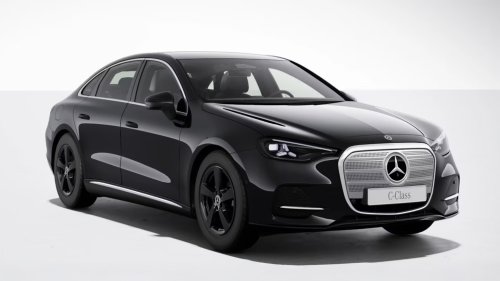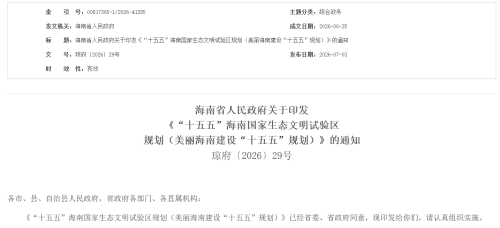

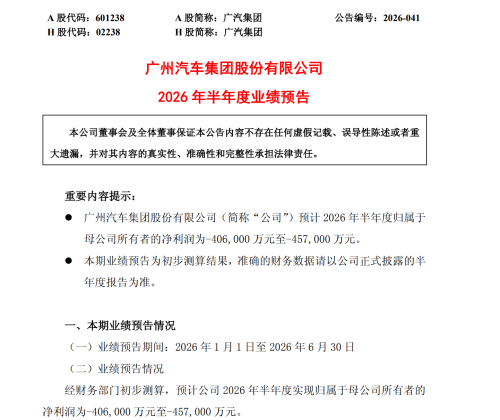
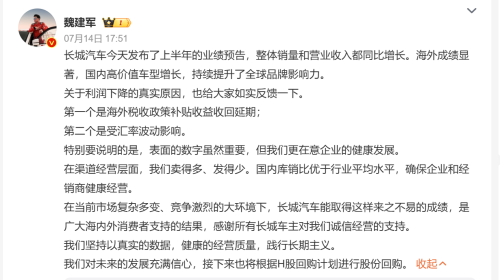
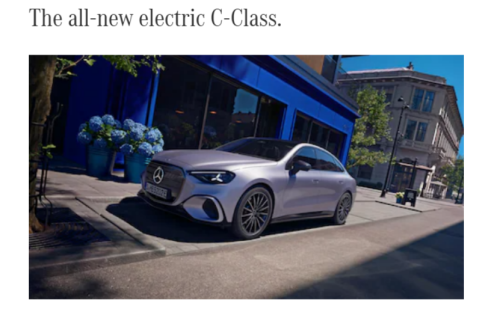



















What major events shaped the global auto industry this week?China confirms first province to ban fossil-fuel vehiclesThe Hainan Provincial People's Government recently released its "15th Five-Year Plan for Hainan National Ecological Civilization Pilot Zone." The blueprint calls for a steady phase-out of fossil-fuel vehicle sales by 2030, projecting that new-energy vehicles (NEVs) will account for 45% of ownership by then, up from 23.75% in 2025. That makes Hainan the first Chinese province set to halt gasoline and diesel car sales.Image source: Hainan Provincial People's Government websiteHainan first floated the 2030 ban back in 2019, when NEVs made up less than 3% of its fleet. Seven years later, the province is holding firm to that deadline.During the "14th Five-Year Plan" period, Hainan accelerated its transition into a clean-energy island, with renewables becoming its largest power source. The province now leads all provincial regions in NEV market penetration and ranks second in ownership share.The plan mandates a comprehensive acceleration of Hainan's green economic transition during the "15th Five-Year Plan" period. It aims to hit peak carbon emissions before 2030, raise the share of non-fossil energy consumption to 35%, and meet carbon intensity reduction targets. Resource efficiency is expected to reach advanced domestic levels, further solidifying the province's competitive edge in green development.To meet the target of raising non-fossil energy's share of total consumption from 20.9% in 2024 to 35% by 2030, Hainan will push for greener practices across key sectors, including energy, industry, transportation, urban and rural construction, and agriculture.In transportation, Hainan aims for 100% clean-energy adoption in new and replacement public service and commercial vehicles by 2030, with the same requirement for NEVs in private passenger cars. The ratio of vehicles to charging piles will be kept below 2.5:1. The province plans to pilot fuel-cell vehicles in heavy-duty trucks, cold-chain logistics, and public transit. It will also explore zero-carbon freight corridors from ports, map out a land-and-sea hydrogen supply network, and support Yangpu in becoming a green, low-carbon international shipping hub. Additionally, Hainan will test green marine fuels like biodiesel, green ammonia, and green methanol on Qiongzhou Strait routes.Gasgoo Takeaway: Hainan's 2030 ban is grounded in its island geography and head start in clean energy. However, that same geographic advantage means mainland provinces will need to reassess their infrastructure readiness before following suit.Brazil temporarily raises mandatory ethanol blend in gasoline to 32% from 30%Brazil's National Energy Policy Council (CNPE) approved a temporary increase in the mandatory ethanol blend for gasoline on July 14, raising the standard to 32% from 30%, according to the Ministry of Mines and Energy and a Reuters report.Image source: Anfavea (Brazilian automakers association)The measure is valid for 180 days and can be extended for an equal period. The market had expected the move in late June, but the council delayed or postponed several meetings in recent weeks, pushing back the announcement.The last time Brazil raised the ethanol mandate was last August, when it increased the blend to 30% from 27%.The Ministry of Mines and Energy estimates the adjustment will cut gasoline import demand by about 900 million liters annually, a decision made with global oil and fuel market volatility in mind.The ministry also stated that "E32 ethanol gasoline performs on par with lower-blend fuels and will not significantly affect vehicle operation."Industry data from earlier this year indicates that a higher ethanol blend will boost the processing share of sugarcane-based biofuels and drive expansion in the corn-based ethanol sector.In recent months, international oil prices have surged amid conflict involving the U.S., Israel, and Iran. That has driven up Brazil's gasoline import costs and heightened supply uncertainty, fueling industry calls for a higher ethanol blend.The Brazilian Sugarcane Industry Association (UNICA) said in a statement: "This measure increases the share of local renewable fuels, strengthens national energy security, reduces reliance on gasoline imports, and stabilizes fuel supply expectations."UNICA estimates the hike will generate an additional 1 billion liters of annual ethanol demand. The group added that it has already begun research to support a gradual transition to a 35% blend (E35).Local fuel distributors and importers pushed back on Monday, arguing that the higher blend could hurt vehicle performance, shorten component lifespans, and drive up maintenance costs.The corn ethanol industry group UNEM noted that the move to E32 comes as oil market turmoil deepens, further cementing expectations for a future shift to E35."We will continue to monitor the rollout of the new blend and related technical studies to prepare the necessary conditions for a transition to E35," UNEM said.Gasgoo Takeaway: Brazil is temporarily raising its ethanol blend to 32% to hedge against volatile global oil prices using local biofuels. However, the technical impact of higher ethanol blends on existing vehicles remains to be seen.GAC forecasts loss of 4.06 billion to 4.57 billion yuan for first half of 2026GAC Group recently released its earnings forecast for the first half of 2026, signaling continued pressure. The company expects a net loss attributable to shareholders of 4.06 billion to 4.57 billion yuan, with a non-recurring net loss of 4.8 billion to 5.6 billion yuan—widening from a year earlier.Image source: GAC GroupIn the first half of 2025, GAC reported a net loss of 2.54 billion yuan and a non-recurring loss of 2.95 billion yuan. The comparison shows that operating losses deepened significantly in the first half of 2026, with profitability under mounting strain.Notably, GAC saw a slight increase in overall sales and a modest improvement in gross margins during the period. Overseas sales surged, and the company's overall operational scale continued to expand steadily.GAC cited several factors for the profit decline and widening losses. First, fierce domestic competition forced its proprietary brands to ramp up sales incentives to defend market share. Combined with product mix adjustments and rising raw material costs, this led to a year-on-year profit drop in the proprietary segment.Second, joint ventures faced operational pressure and falling sales, while higher sales spending and rising costs reduced investment income. Additionally, foreign exchange losses during the period further squeezed profitability.Industry-wide, price competition has become the norm, with automakers struggling to turn sales growth into profit. GAC's widening losses reflect a broader trend: proprietary brands are spending heavily to compete, joint ventures are contracting, and external costs and currency swings are taking their toll.Gasgoo Takeaway: GAC's sales edged up in the first half, but losses widened. Shrinking returns from joint ventures and increased marketing spending by proprietary brands are squeezing profits, meaning a turnaround in earnings will take time.Great Wall Motor forecasts nearly 60% drop in first-half net profitOn July 14, Great Wall Motor released its earnings forecast for the first half of 2026. Net profit attributable to shareholders is expected to fall between 58.97% and 62.92% to 2.35 billion to 2.60 billion yuan. The automaker attributed the decline primarily to delays in recovering overseas tax subsidies and foreign exchange fluctuations.Image source: @Wei JianjunChairman Wei Jianjun addressed the profit drop on his Weibo account the same day. He noted that total sales and revenue grew year-on-year, driven by strong overseas performance and higher sales of high-value domestic models. He reiterated that delayed subsidy recognition and currency moves were the main reasons for the profit decline. Wei emphasized that the company prioritizes long-term health over short-term financial metrics. To protect dealer profitability, Great Wall is sticking to a "sell more, ship less" inventory strategy, keeping its domestic inventory-to-sales ratio below the industry average. He also said the company would proceed with an H-share buyback to signal confidence in the future.Earlier this month, Great Wall reported June sales of 108,100 units, down 2.36% year-on-year. First-half sales reached 583,900 units, a 2.48% increase. Overseas sales hit 60,200 units in June and 291,400 units for the half. NEV sales stood at 34,700 units in June, totaling 144,600 units for the first six months.By brand, Haval sold 60,300 units in June, down 3.38%; WEY sold 7,200 units, down 29.48%; Great Wall Pickup sold 14,000 units, up 6.05%; ORA surged 229.15% to 10,800 units; and TANK fell 27.16% to 15,700 units. Performance was mixed, with ORA posting strong gains while WEY and TANK saw significant declines.Overall, Great Wall Motor grew sales and revenue in the first half, but profits were hit hard by external policy shifts and currency swings. The company said it remains committed to a long-term strategy focused on solid data and operational health.Gasgoo Takeaway: Great Wall's profit plunged nearly 60%, dragged down by delayed subsidies and foreign exchange losses. The sales decline of TANK and WEY also exposes internal pressure on growth for high-margin models.Mercedes-Benz invests 1 billion euros to expand Hungarian plantMercedes-Benz said on July 13 it has invested 1 billion euros ($1.14 billion) to double capacity at its Kecskemet plant in Hungary, aiming to stay competitive in a global auto market defined by intensifying technological and cost pressures, according to Reuters.Image source: Mercedes-BenzOnce complete, the plant will produce a new all-electric C-Class model, making it Mercedes' largest production site in Europe and its second-largest globally. The expansion allows for greater flexibility to navigate volatile market conditions.The Hungarian government said the investment will lift annual capacity to 350,000 units and create 3,000 new jobs in Kecskemet. Mercedes already employs nearly 5,200 people at the site as of the end of May.Former Prime Minister Viktor Orban lost re-election in April. During his tenure, the automaking and battery sectors were pillars of growth and employment, attracting major German luxury brands and Chinese battery manufacturers to build large-scale factories in the country.Even though wages have risen significantly in recent years, Hungary's labor costs remain among the lowest in the EU, continuing to attract foreign investment."Local production of core components like batteries allows us to respond to market demand faster and more flexibly," CEO Ola Kallenius said at the plant's inauguration. "That makes Kecskemet a key hub for our group's future."Michael Schiebe, the board member responsible for production, said Mercedes will also add production lines for the all-electric GLC and a compact "G-Class" model at the Kecskemet plant."We will build a flexible, collaborative production system with our German plants," Schiebe said. "This enables flexible, multi-site production that can quickly adapt to market shifts and external variables, further strengthening the resilience of our global manufacturing network."Gasgoo Takeaway: Mercedes is spending 1 billion euros to expand in Hungary, leveraging Eastern Europe's cost advantages to build flexible EV production lines. The move reflects the harsh reality of cost control that legacy European automakers face during their transition.Bosch starts sample production at first U.S. semiconductor plantGerman auto supplier and chip giant Bosch announced on July 13 that it has started sample production at its first semiconductor plant in the U.S. The company also finalized a $225 million subsidy agreement with the U.S. Department of Commerce to boost local manufacturing capacity for silicon carbide (SiC) chips, Reuters reported.Image source: BoschBosch acquired the Roseville, California chip plant from TSI Semiconductors in 2023 and overhauled its production lines. The total investment stands at $2 billion, including the government subsidy, with commercial mass production slated to begin later this year.Paul Thomas, president and CEO of Bosch in North America, told Reuters that the U.S.-Mexico-Canada Agreement (USMCA) was a key driver for expanding chip production in the U.S., as local companies seek to build more robust domestic supply chains."Semiconductors are critical to national security," Thomas said. "This site offers excellent location advantages, and we believe it's the right strategic choice." Automakers, he added, want suppliers to establish stable production capacity close by.The $225 million subsidy comes from the CHIPS Program Office at the Department of Commerce, established under the 2022 CHIPS and Science Act to expand U.S. semiconductor manufacturing and reduce reliance on foreign supply chains.Unlike chips used for infotainment or advanced driver-assistance systems (ADAS), SiC chips manage high-voltage power. In electric vehicles, they enable more efficient power transmission from the battery to the motor, reducing heat and energy loss while extending range and improving fast-charging speeds.Thomas noted that SiC chips are also used in data center power supplies. Many automakers and suppliers are expanding into energy storage to capture demand from the booming artificial intelligence sector.Despite slowing EV sales growth, demand for automotive SiC chips continues to rise, Thomas said. Demand from hybrid vehicles and the defense sector also makes this investment timely.Bosch also revealed plans to invest up to $7.5 billion in the U.S. by 2031 to further expand its local operations.Gasgoo Takeaway: Bosch's U.S. SiC plant has begun sample production, leveraging CHIPS Act subsidies to shore up the domestic power semiconductor supply chain. While demand from automakers is climbing slowly, data center power management offers an additional growth curve.