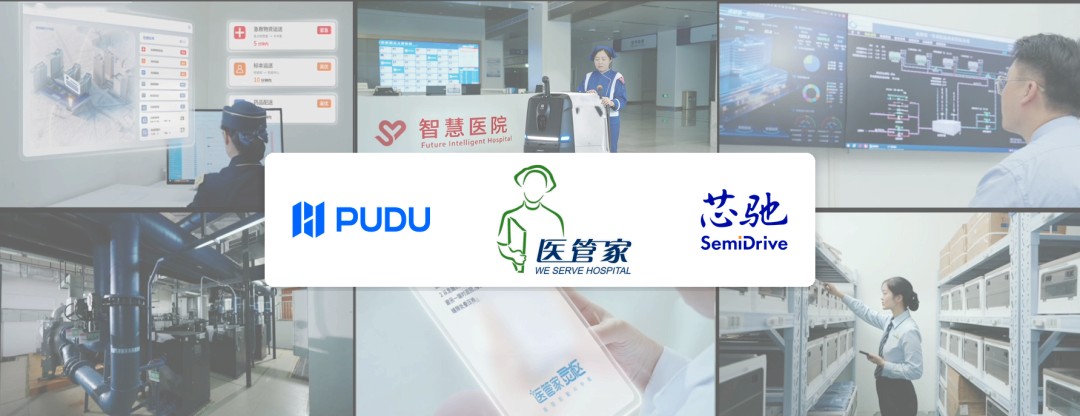
On November 16, Gasgoo Embodied Intelligence reported that Medical Butler has struck a strategic partnership with Pudu Robotics and Semidrive. By integrating hospital operations, embodied AI robotics, and automotive-grade chip technology, the trio plans to explore intelligent logistics solutions — upgrading robots from standalone tasks to complex, multi-machine and human-machine collaboration. Image source: Semidrive At the heart of this collaboration is a "scenario operations + robot hardware + automotive-grade chip" ecosystem. Medical Butler will leverage its service network spanning over 300 hospitals and operational insights from more than 40,000 employees to provide real-world application scenarios and service standards. On the technology front, Pudu Robotics will deploy multi-form robots based on its "one brain, multiple forms" architecture, covering delivery, cleaning, and general embodied intelligence. Official data shows Pudu has shipped over 130,000 units cumulatively, with a business footprint in more than 85 countries and regions. Semidrive, meanwhile, is introducing automotive-grade chips into hospital logistics robots. By leveraging its expertise in functional safety, fault redundancy, electromagnetic compatibility, and long-term reliability, the company aims to boost the operational stability of robots navigating complex environments. Image source: Semidrive According to the plan, Pudu's robot matrix will integrate with Medical Butler's proprietary "Lingshu" agent platform. This will enable unified dispatch, task orchestration, and dynamic human-machine division of labor, focusing on five key scenarios: smart logistics, environmental cleaning, triage interaction, nursing assistance, and inspection operations. Zhu Chuntang, Party Secretary and President of Medical Butler, said the core of human-machine collaboration lies in letting robots handle standardized tasks, allowing staff to focus on professional judgment and service. As embodied intelligence accelerates into real-world operations, hospital logistics is emerging as a new frontier for large-scale robot deployment. This partnership also extends the application boundaries of automotive-grade chips further into the medical service sector.