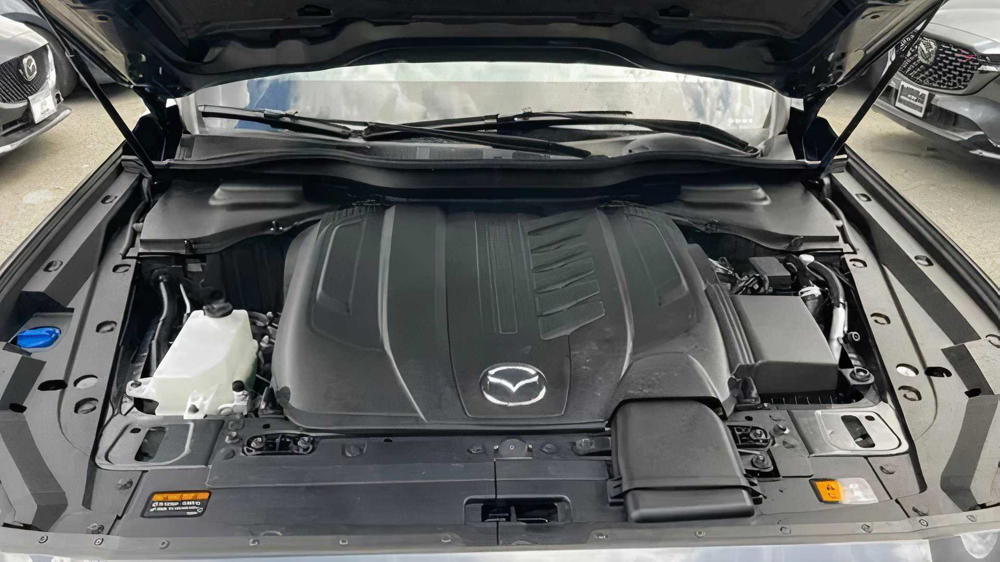
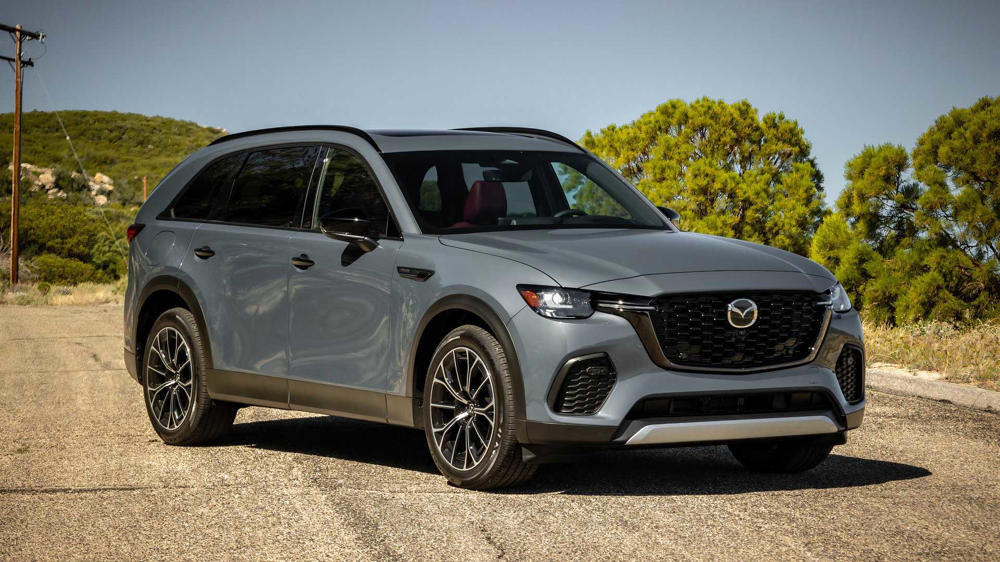
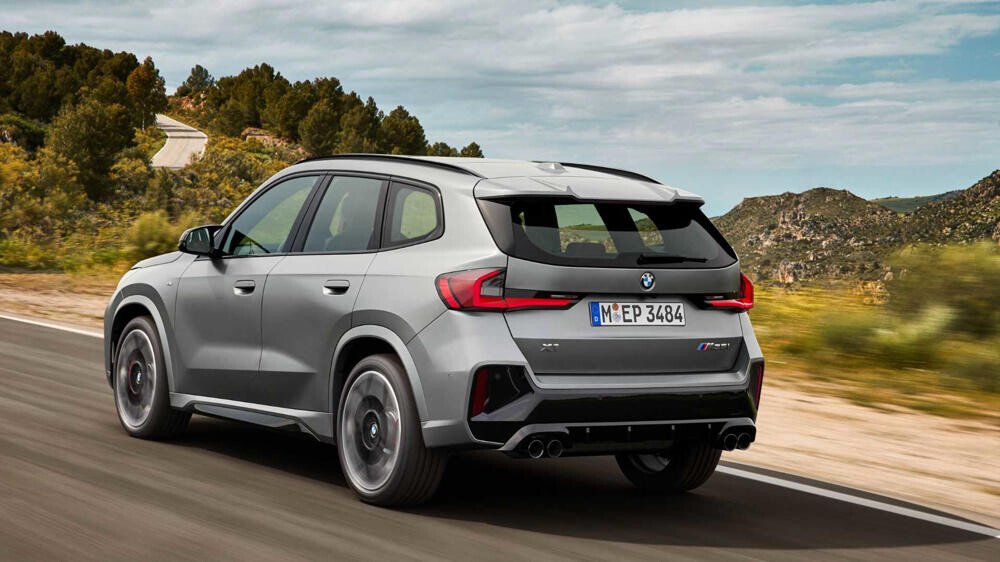
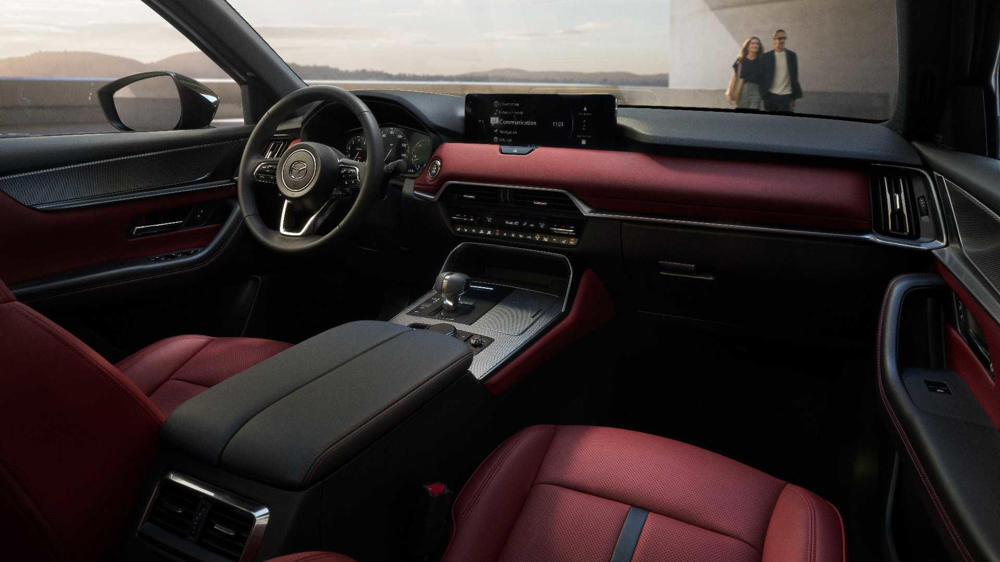
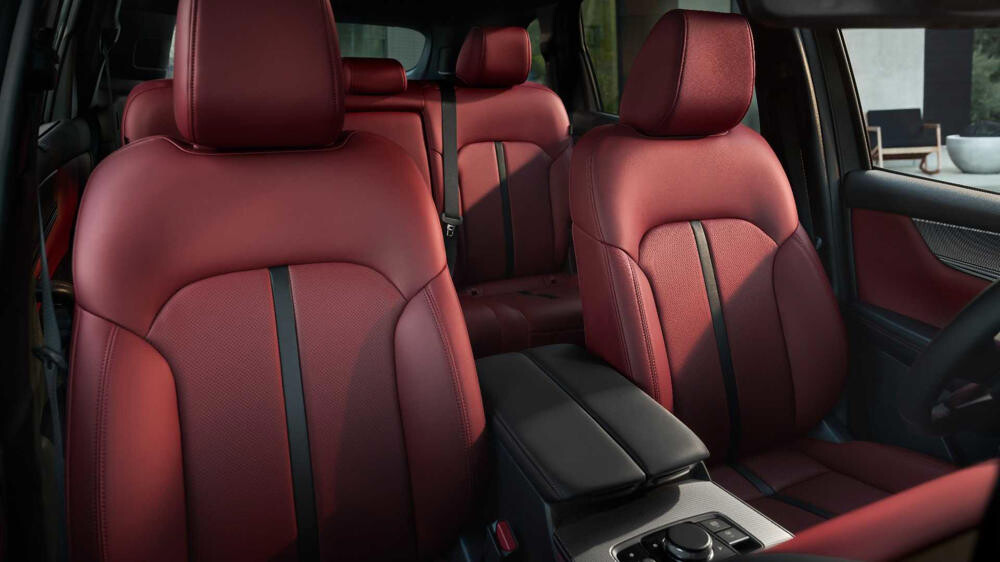
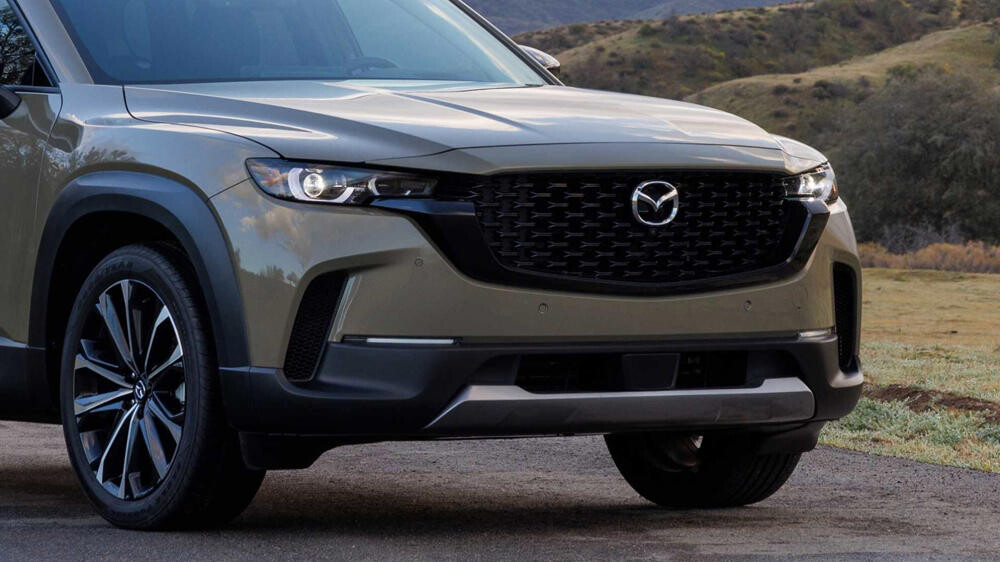
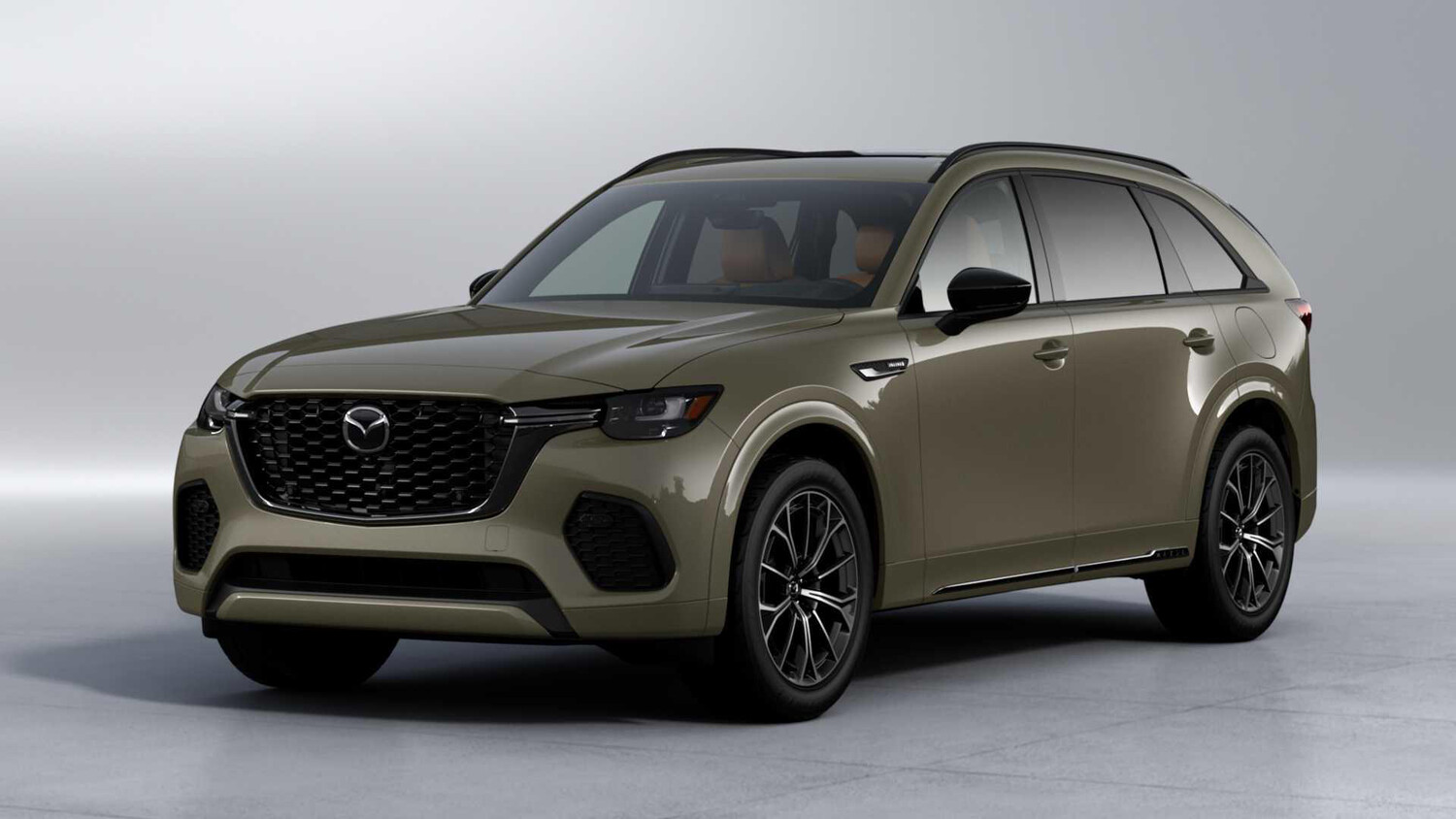
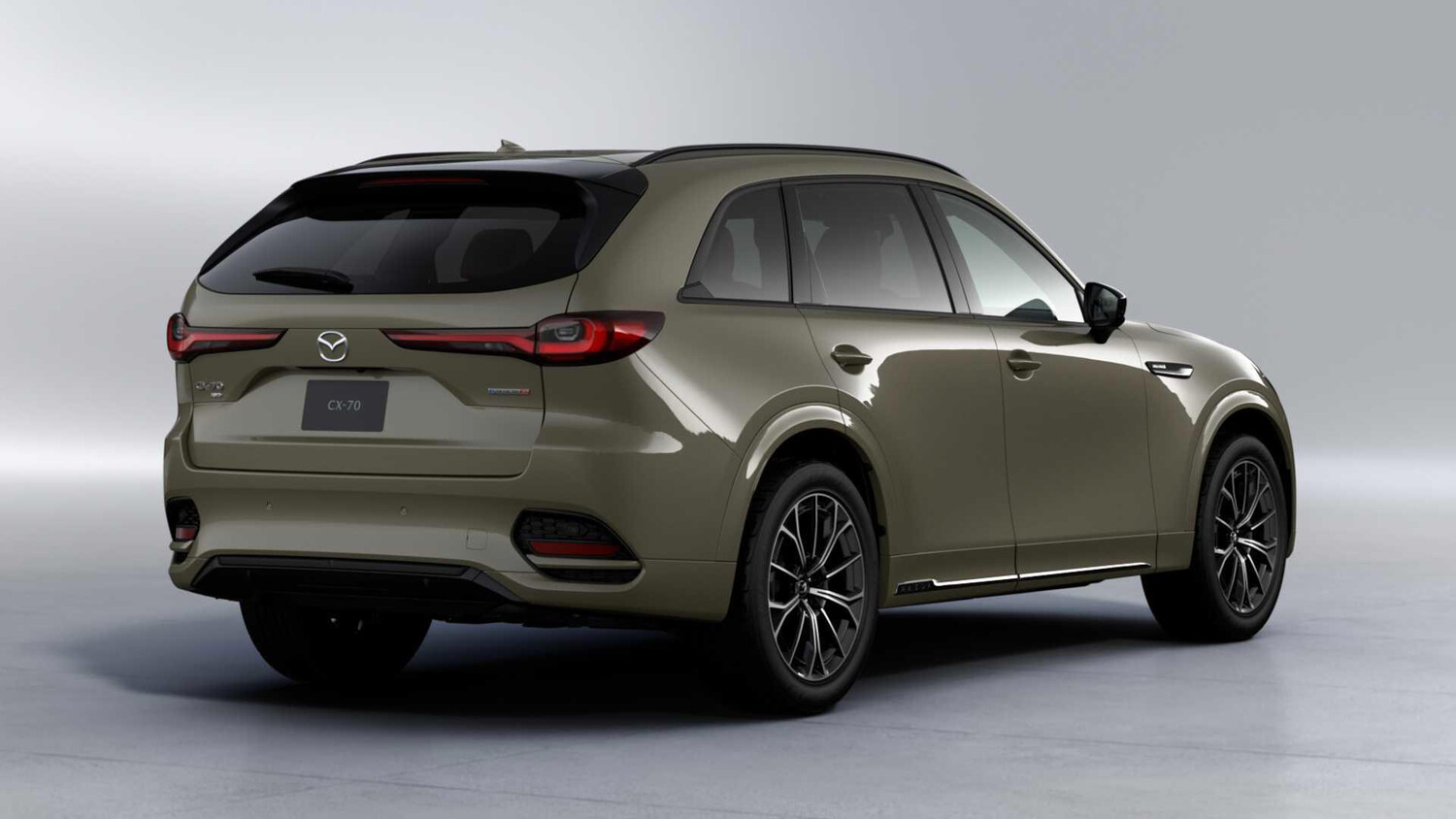
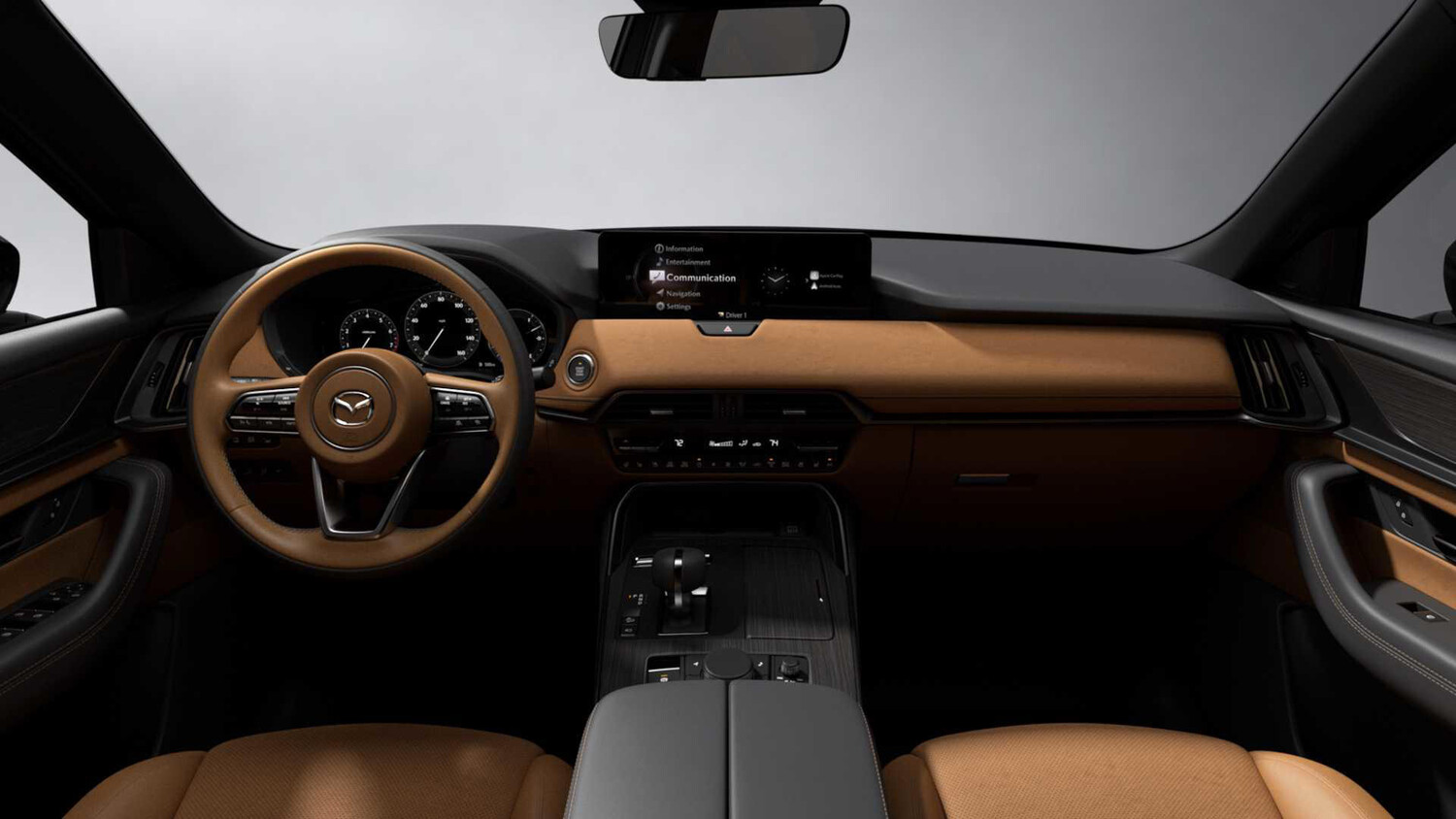
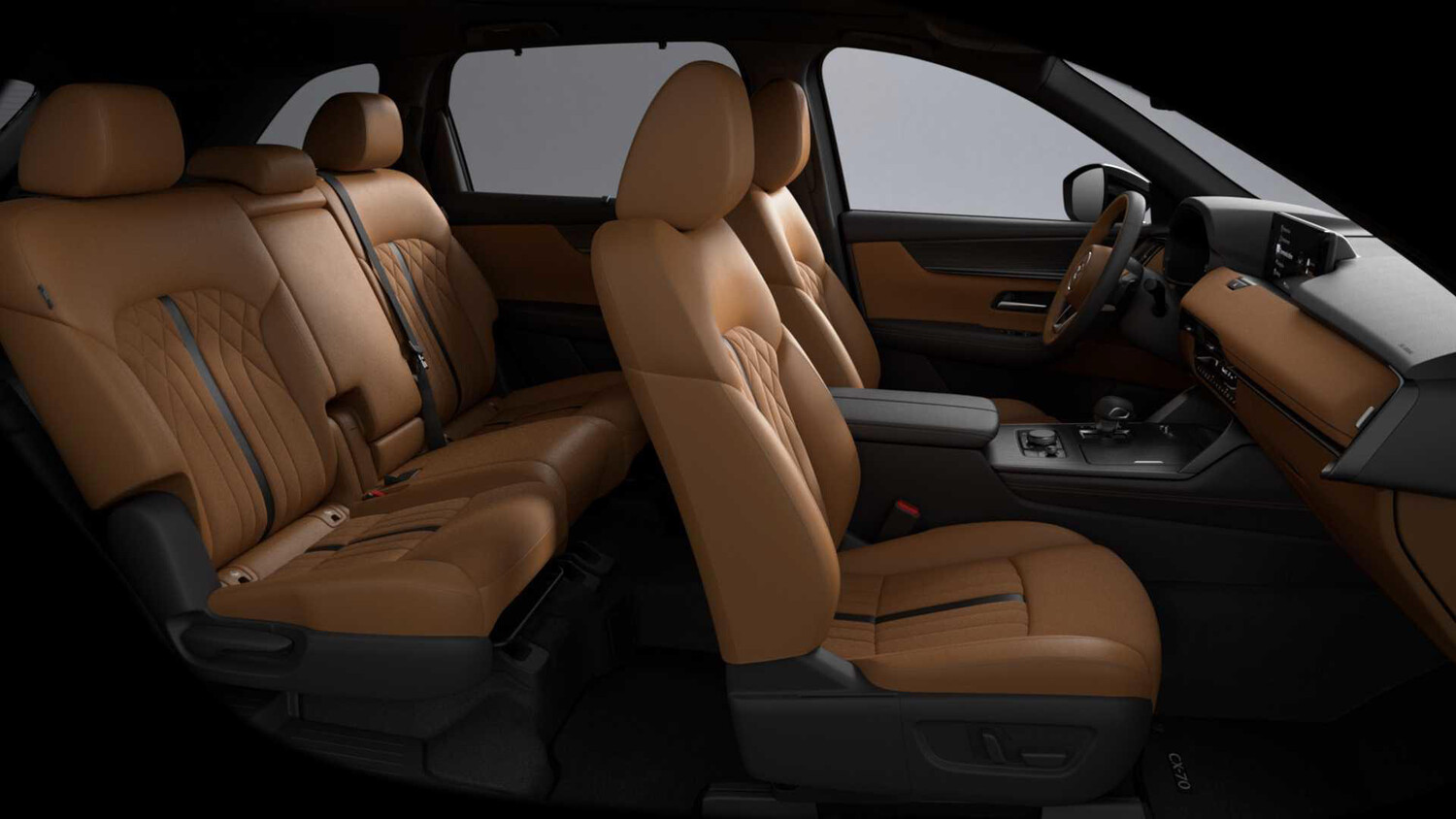
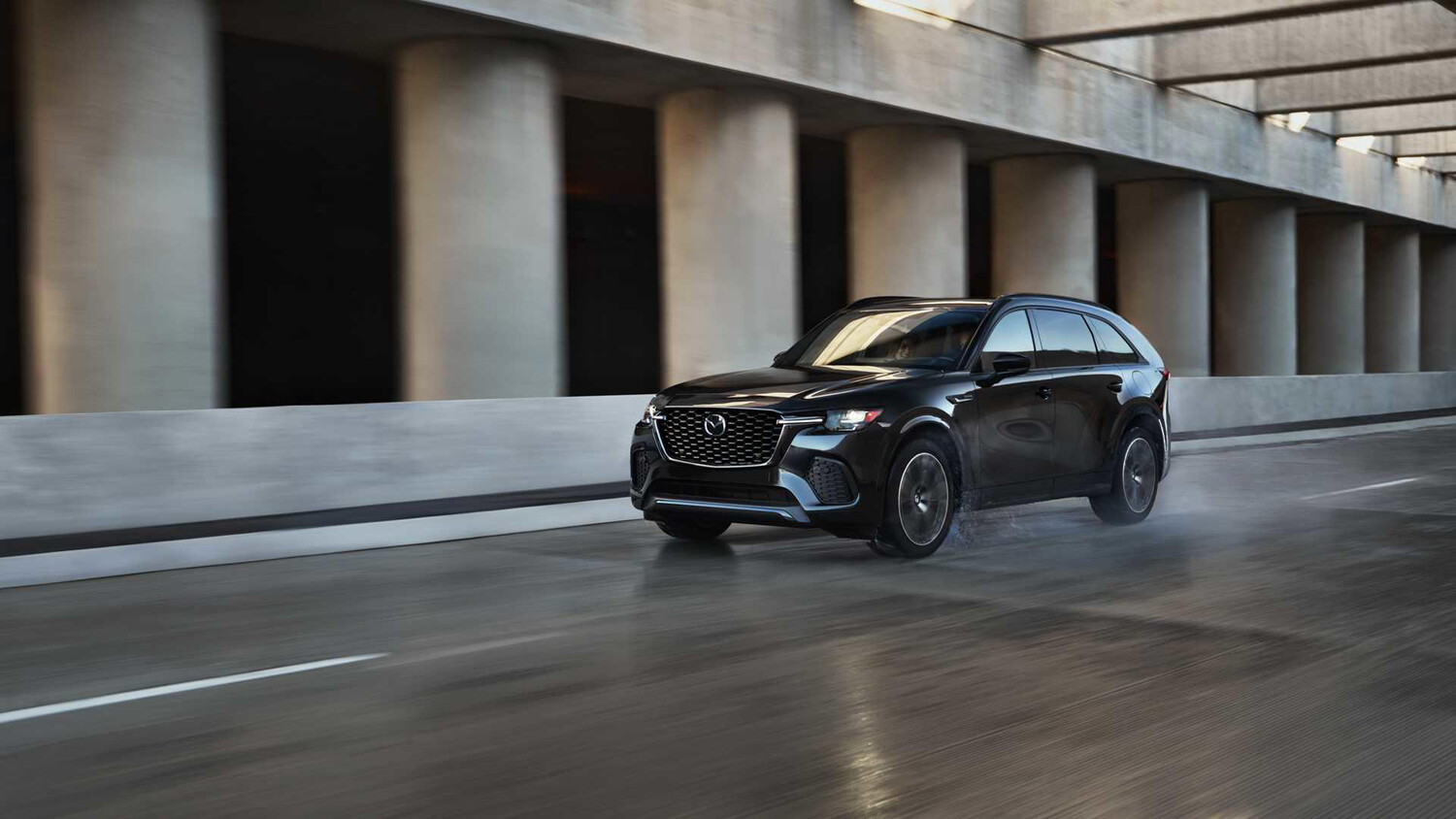
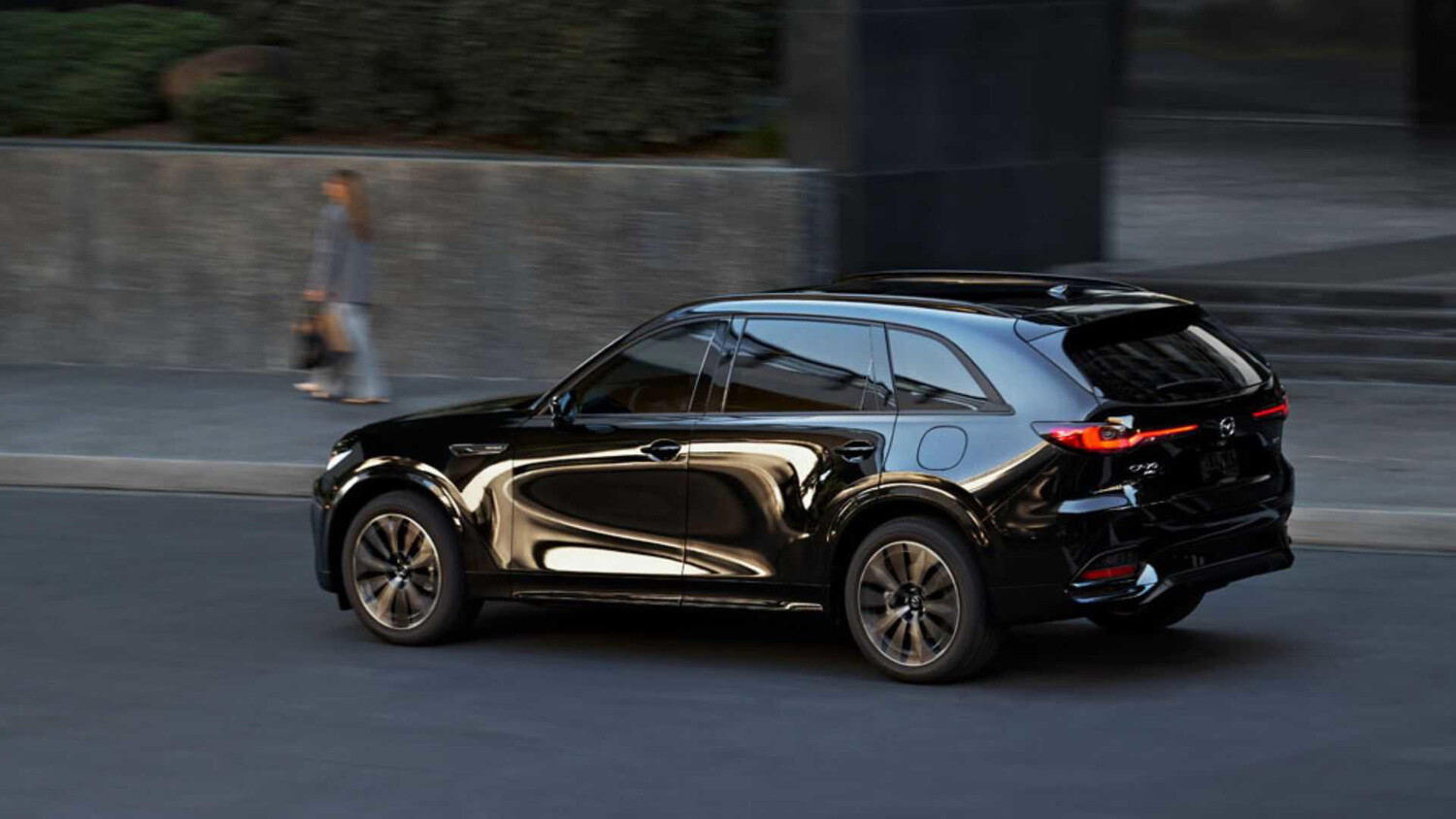
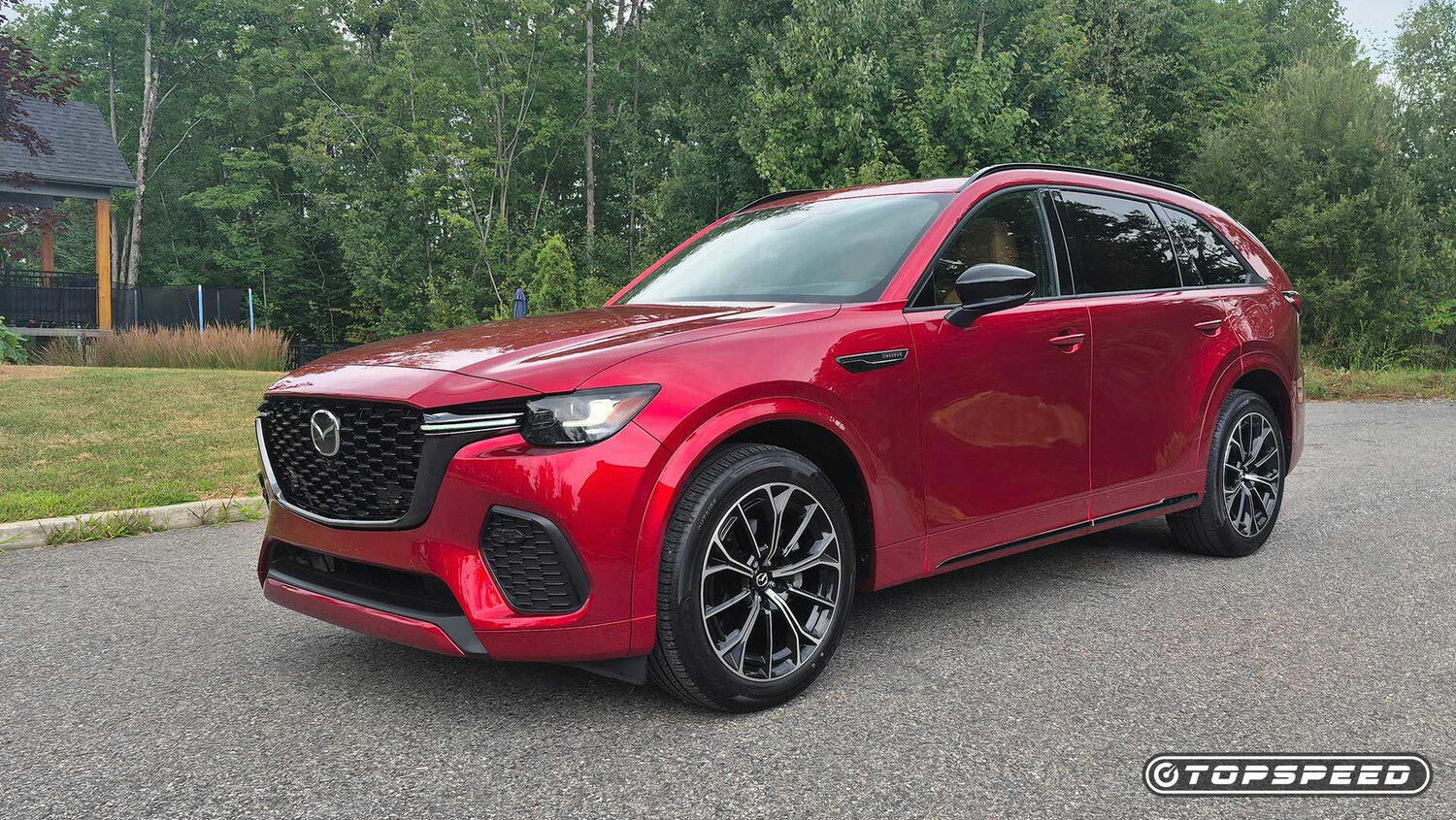
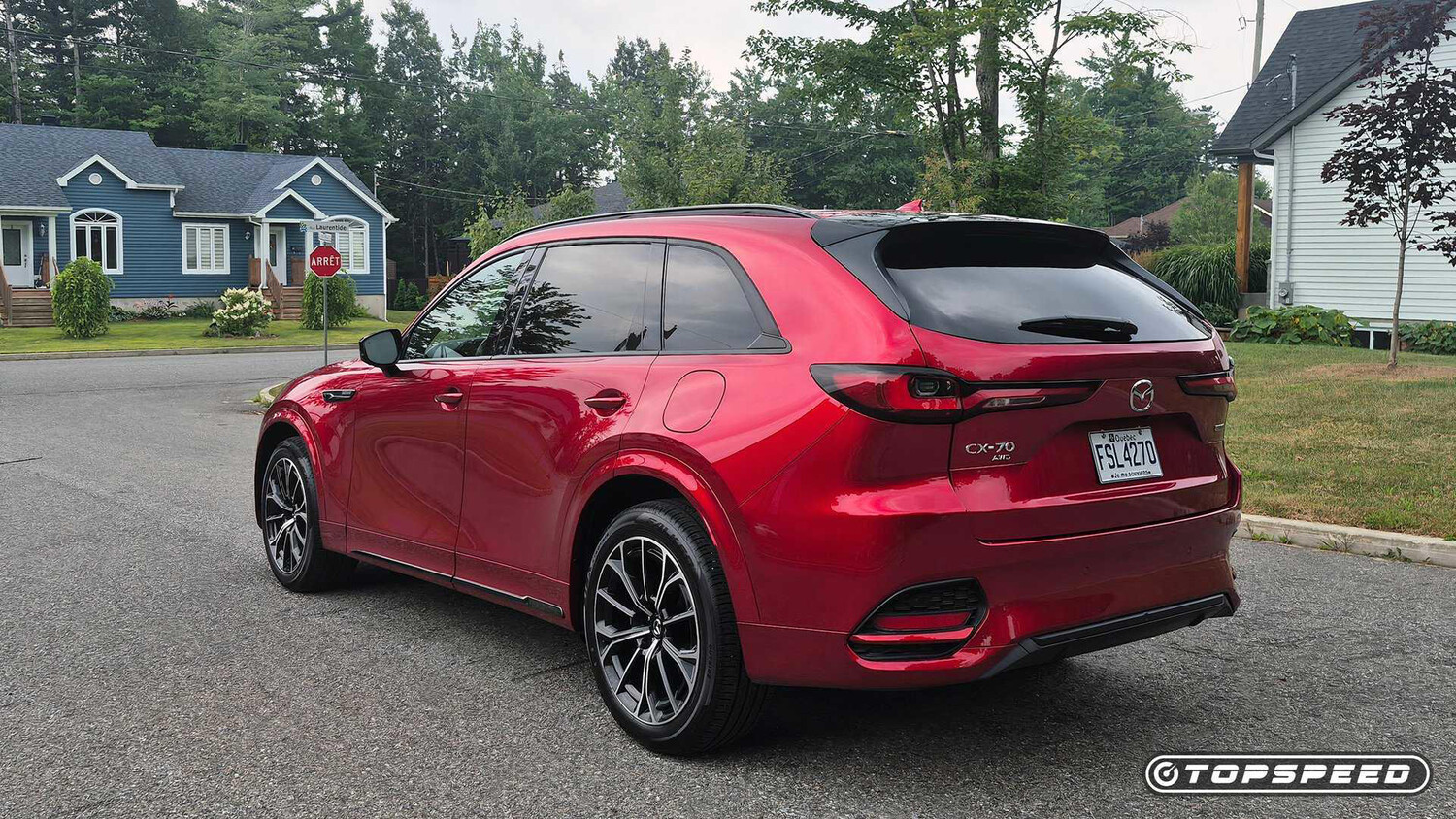
Mazda Is Keeping The Affordable Six-Cylinder SUV Alive For years, premium SUV shoppers have been quietly shortchanged. BMW and Mercedes-Benz, chasing tighter emissions targets and efficiency benchmarks, methodically phased out their silky six-cylinder SUVs and swapped in turbocharged four-cylinders — often at the same price or higher. Mazda saw the opening and took it. Rather than follow the European playbook, the Japanese brand developed its own inline-six engine and dropped it into a full-size crossover that undercuts the Germans on price while beating them on displacement, refinement, and standard equipment. That crossover is the CX-70, and it makes a persuasive argument that Mazda has found exactly the right moment to make its move. 2026 Mazda CX-70 Engine 3.3L turbocharged I6 Transmission 8-Speed Auto Power 280-340 hp Torque 332-369 lb-ft 0-60 mph 6.3-7.0 seconds Base MSRP $42,750 For a long time, Mazda existed in a strange void where it tried to sell budget-focused cars by ensuring they looked stylish inside and out. In recent years, the Japanese manufacturer has pivoted toward offering cars on the premium side of the market, resurrecting an approach it dabbled with as it tried to make it big in the US back in the 1990s. It felt that by offering cars that could be mentioned in the same breath as those produced by the likes of BMW and Mercedes-Benz, but for less money, it could secure the title of people's champion. The handsome styling the brand produces via its Kodo design language — which combines flowing lines with muscular touches — is a key element of this approach. Beyond this, Mazda has worked hard to reinvigorate its engine lineup so it can market itself as a proper luxury marque, and its 3.3-liter inline-six is a great example of this. Larger Engines Allow For A More Refined Experience When building a luxury car, getting the engine right is a key element of achieving a successful package. Essentially, the more cylinders an engine has, the smoother it will be. With more cylinders firing, there is greater overlap between power strokes, which means there is a smaller gap between combustion events. This allows the engine to work less hard to produce the power it needs to move the vehicle, delivering more torque at lower revs and reducing the need to push the engine harder to gather speed. The smaller gap between power strokes also reduces vibration, meaningfully enhancing refinement. While larger engines are less fuel-efficient due to their greater fuel consumption, the extra smoothness is a worthwhile trade-off in a vehicle that commands a premium price — buyers in this segment tend to prioritize refinement over saving money at the gas station. For Mazda to take the fight to its established German rivals, having a six-cylinder engine in its lineup was a critical step. Mazda's Six-Pot Power Plant Plays An Important Role In The CX-70 Having produced only four-cylinder engines for over a decade, Mazda's Skyactiv-G 3.3 was introduced in 2022 for its CX-60 SUV, before later reaching the rest of its SUV range over the following couple of years. Notably, it found its way under the hood of the full-size CX-70 crossover SUV in 2024, where it helped make Mazda's dreams of fighting the Germans a reality. Since it lacked a sustained reputation for luxury cars, Mazda chose to pursue refinement comparable to those brands while keeping its models significantly more affordable. The CX-70 perfectly illustrates this approach, with its six-cylinder engine dwarfing the four-pot engines used by the likes of BMW and Mercedes-Benz at the circa-$40,000 area of the market. The base turbocharged 3.3-liter unit found in the entry-level CX-70 variants produces 280 horsepower and 332 lb-ft of torque, which is easily enough to get the roomy crossover moving with ease. If you have a little more budget available, Mazda offers an S version of the CX-70. This features a tuned version of the engine that produces 340 hp and 369 lb-ft of torque, achieved by running the turbocharger at a higher boost level. Its Similarly-Priced Rivals Can't Match The Mazda's Firepower The beauty of the entry-level CX-70 Preferred is that it costs about the same as an entry-level BMW X1 xDrive 28i and the Mercedes-Benz GLA 250 4MATIC. Both of these vehicles are smaller than the CX-70 — they're classed as subcompact crossovers — and both are available only with turbocharged four-cylinder engines. Aside from having less power at their disposal — 241 hp and 221 hp, respectively — they also have to work harder to produce that power, making their powerplants less refined than the six-cylinder found in the Mazda. All three machines get an automatic transmission as standard, distributing the engine's output between all four wheels. Model 2026 BMW X1 xDrive 28i 2026 Mercedes-Benz GLA 250 Engine 2.0L turbocharged I4 2.0L turbocharged I4 Power 241 hp 221 hp Torque 295 lb-ft 258 lb-ft 0-60 mph 5.4 seconds 6.6 seconds Base MSRP $43,200 $41,500 The German pair are more fuel-efficient by three or four mpg, but the CX-70 stands out as the more luxury-focused option at this price point. It's well-equipped for the money, and its smoother, more refined six-pot powerplant operates on a level above the busy little four-cylinders found in the competition. The CX-70 Is Well-Priced Compared To Its Rivals Despite being classed as a full-size crossover, the CX-70 battles BMW and Mercedes' subcompact and compact models in terms of value. The entry-level Preferred starts from $42,250, which is practically identical to the base AWD variants of the X1 and GLA. Aside from bringing more power, engine refinement, and space to the equation, the CX-70 is also much better equipped than the subcompact Germans. You get heated and ventilated leather power seats as standard, as well as a sunroof and a heated leather steering wheel. All of these are available only as options on the German models, as is adaptive cruise control, which is included as standard with the CX-70. The more powerful S variants of the Mazda start from $53,240, putting it on level ground with the larger compact X3 and GLC models. Once again, the BMW and Mercedes vehicles are only offered with smaller four-cylinder engines, which produce 85 hp less than the 340-hp CX-70 Premium S. Plus, the higher-end version of the CX-70 gets sumptuous Nappa leather seats, as well as satellite navigation and a useful heads-up display. The CX-70's positioning as a sub-$50K six-cylinder luxury-oriented SUV ultimately puts it in a league of its own, since the most affordable six-cylinder BMW SUV available is the X3 M50, which starts at $65K. As for Mercedes, stepping up to a six-cylinder SUV means buying a GLE 450, which starts at a little over $72,000. And they're still less well-equipped than the base Mazda CX-70. Mazda's Bold Strategy Could Set It On A Path To Join The Big Boys While risky in a world where reducing emissions and boosting fuel economy is such a priority, Mazda's push for refinement over efficiency is a bold choice. The extra smoothness offered by the CX-70's engine, combined with the space and standard equipment it provides compared to what BMW and Mercedes can offer at the same price, make it a luxury SUV that represents strong value. Once upon a time, BMW and Mercedes offered a range of vehicles with smooth six-pot engines for less than $50,000, which allowed them to hold prominent spots in the affordable premium luxury market. Mazda now has that slice of the market largely to itself, since the V6-powered Honda Pilot doesn't compete in the premium luxury arena. Mazda is hoping it can achieve the same with its SUV range, with enough buyers turning their noses up at four-cylinder rivals and opting for the six-cylinder CX-70 instead to secure greater refinement. Its plan looks even more inspired given that other manufacturers are starting to listen to consumers and bring back larger engines, as illustrated by Stellantis' push toward the Hemi V8 and Mercedes' pivot toward V8s after a period of championing its four-cylinder engine technology at the higher end of its product portfolio. If it gets it right, Mazda could end up well ahead of the curve and win over buyers who long for a proper six-cylinder luxury model, just as it used to be. With enough success, Mazda could build a strong enough reputation to start taking on the Germans on a level playing field by offering higher-end and more expensive vehicles. The automotive landscape is going through a huge shift right now, and Mazda is seizing the chance to reinvent itself. The six-cylinder CX-70 is a crucial piece of this puzzle, and if it fits, the Germans could soon have a formidable rival to contend with. The Mazda CX-70 Is Surprisingly Luxurious Not only does the CX-70's powertrain keep up with more expensive German rivals, but the Japanese brand manages to match (to some extent) the Germans' interior qualities. The CX-70 is broken up into five trim levels; the cheapest version is the 3.3 Turbo Preferred, while the top-of-the-line is the 3.3 Turbo S Premium Plus. At its least expensive, buyers are given a power sliding glass moonroof, three-zone climate control, leather-trimmed seats, an eight-way power-adjustable driver's seat with two-way lumbar support, heated and ventilated front seats, heated second-row seats, and much more. Of course, moving up to the model's top trim level means getting the best Mazda has to offer. With a starting price of $56,870, it's no surprise the 3.3 Turbo S Premium Plus can compete with German luxury. That said, it comes with the following upgrades: Tan quilted Nappa leather upholstery Heated and ventilated front seats Heated second-row seats A 12-speaker Bose audio system Mazda Navigation Active driving display with traffic sign recognition Windshield wiper de-icer Mazda's Current Lineup Is SUV Rich Of the eight models Mazda currently has in its 2026 lineup, five are SUVs — and within this, there is further differentiation with choices between ICE and PHEV powertrains. There's something for everyone right now, from small models to three-row versions, and all of them offer genuinely good value for money: 2026 Mazda SUV Lineup CX-30 $26,375 CX-50 $29,900 CX-5 $29,990 CX-50 Hybrid $34,750 CX-90 $39,300 CX-70 $42,750 CX-70 PHEV $44,450 CX-90 PHEV $50,695 Sources: BMW, Mazda, Mercedes-Benz.

 Liked by Audrey Côté, Sophie Macdonald
 Liked by Audrey Côté, Sophie Macdonald