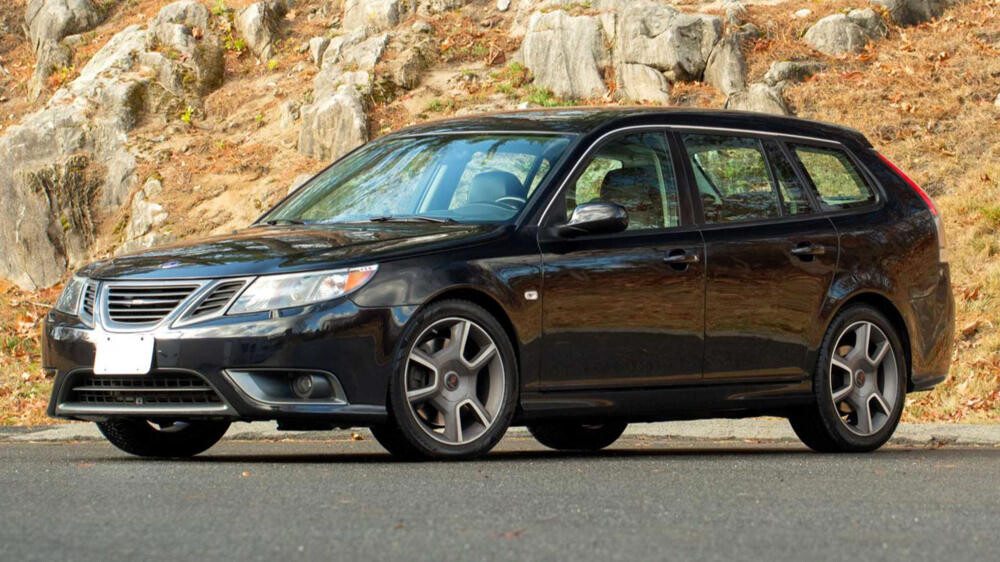
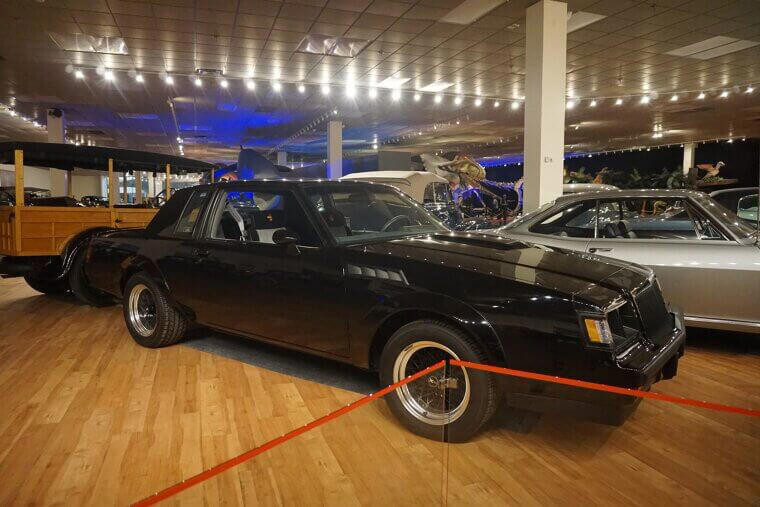
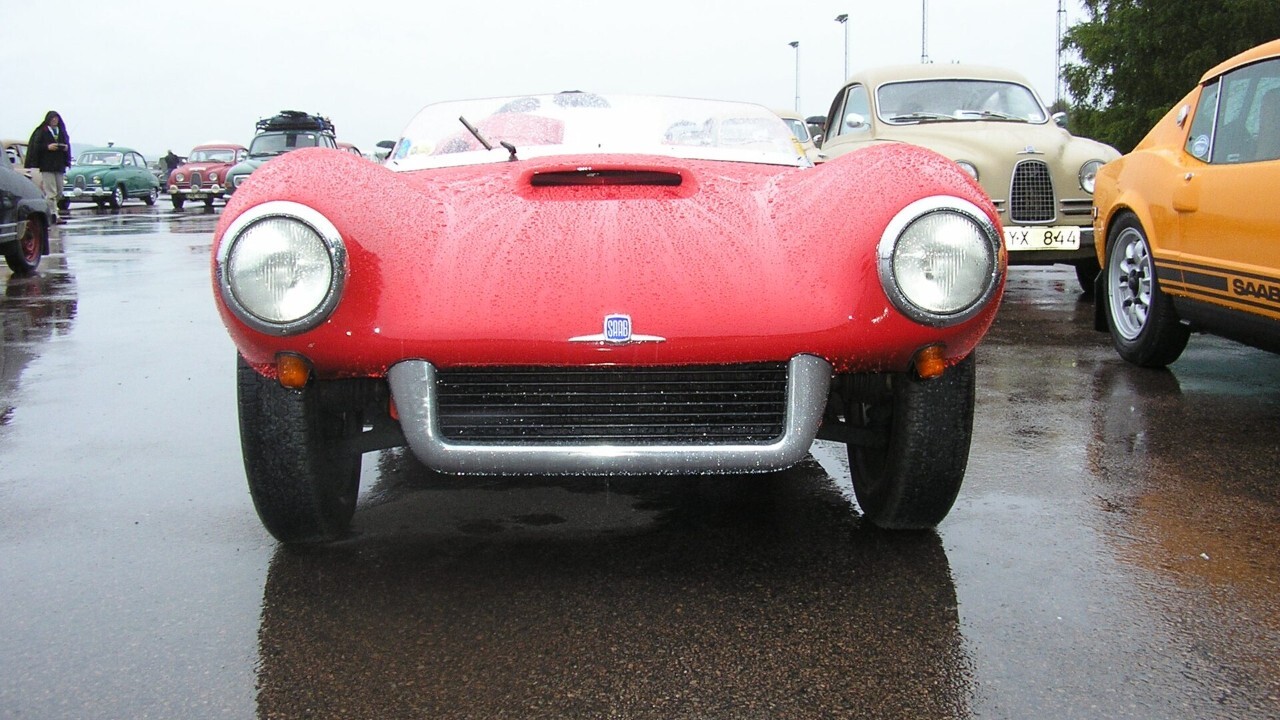
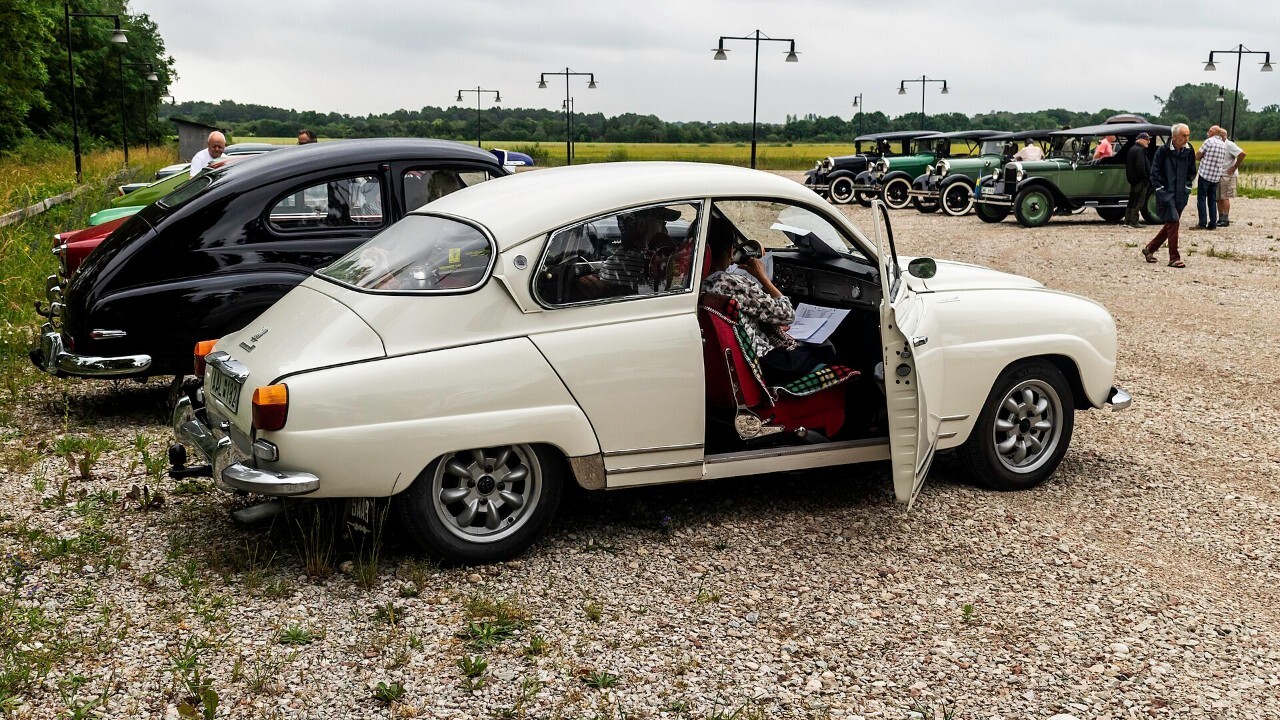
It didn’t seem so at the time, but 1977 would prove to be among the most important years in automotive history. Commercially, this was the model year when General Motors “downsized” its full-size cars from gargantuan to merely huge. Their immense sales success meant the era of land dreadnoughts was over. It was the first model year for the BMW 3-Series name in America and the first for the Porsche 924, that company’s first front-engine car. In Formula One, Colin Chapman introduced ground effects aerodynamics to the series with the revolutionary Lotus 78. Culturally, 1977 was the year of Smokey and the Bandit, which continues to define what a silly car chase movie must be. But quite sneakily, with 50 years of hindsight, the most important development of 1977 was the introduction of the Saab 99 Turbo. Yeah, Saab isn’t around today; there were turbocharged cars built before it; and the 99 never sold in overwhelming numbers (at least not here in America). But almost every car for sale today derives at least some of its essence from that eccentric Swedish front-driver. “Saab’s use of a turbocharger differs considerably from that of other car makers, such as Porsche,” reported John Lamm in Road & Track’s October 1977 road test. “[I]n that Saab’s goal is maximum torque at mid-range engine speeds rather than dramatic boost at high output.” The 99 was already ancient by 1977. Originally shown in 1967 as Saab’s first stretch beyond dinky cars with weird two-stroke engines, it went into production in 1968 as a 1969 model and was, by Saab’s standards, a hit. But it was still weird—wraparound windshield, odd ducky styling, and yeah, the ignition key was down behind the shifter—and at a time when front-wheel drive was rare, it was front-drive. Saab’s buyers had a certain academic and liberal edge, too. According to researchers at the University of Connecticut and reported by Time magazine in 1976, a staggering 98 percent of Saab owners voted for Democratic candidate George McGovern over Republican incumbent Richard Nixon in the 1972 presidential election. In that election, Nixon carried 60.7 percent of the vote, and won 49 of the 50 states. Saab owners weren’t like everyone else. The 99’s “Slant-4” four-cylinder engine was based on the V-8 installed in the British Triumph Stag. By 1972, Saab had taken over production of the engine itself, and had modified the design to be robust and reliable, but there was nothing exotic about what Saab now called the B engine. It had an iron block and a single overhead cam aluminum head. Simple stuff. And in the 1976 99 EMS, the sportiest model in the line, the 2.0-liter eight-valve engine was rated at 115 horsepower channeled through a four-speed manual transmission. Saab didn’t have the resources to develop a new engine, but it had plenty of turbocharging experience with its Scania large truck division. “The immediate problem,” explained R&T’s Thos. L. Bryant after driving the new 99 Turbo in Sweden for the December 1976 issue, “was to get low-speed torque for the drivability while at the same time limiting high engine speed power for durability.” To achieve that goal, Saab used small turbochargers and advanced electronic engine controls. Saab already used Bosch K-Jetronic fuel injection on the B engine, and while it wasn’t a wholly electronic system, it was good at advanced fuel metering. And it was the same system Porsche used on the 911 Turbo. Also, Saab developed its own electronic Automatic Performance Control (APC) that used a knock sensor in the block and pressure sensors in the intake manifold to trigger a wastegate and limit turbo boost when the engine couldn’t take any more. Saab didn’t hide the small, quick-spooling Garrett T3 turbocharger in the 99, putting it forward of the engine. And what was downstream of it was nearly as important. Saab breakthrough emissions tech, known as “Lambda,” ensured that performance could be compatible with stricter emissions controls and catalytic converters. “Basically, Lambda is a 3-component catalyst designed to handle NOx as well as CO and HC,” explained Bryant. “The normal catalytic converter takes care of the last two pollutants fairly well, but NOx usually requires lower compression ratios and exhaust gas recirculation (EGR) to keep it from being passed out through the tailpipe.” Lambda added three pieces alongside the fuel injection system: There was an oxygen sensor to monitor air-fuel mixture; an electronic control system that tweaked the air-fuel mixture to keep it close to the ideal stoichiometric value; and a switch on the throttle housing to override the metering system under full-load conditions. It was effective enough so that the engine could meet California’s 1977 emissions without using an Exhaust Gas Recirculation (EGR) valve. Altogether, those elements and many subtler tweaks meant the 99 Turbo had 135 horsepower aboard. Not a lot by 2026 standards, but a sweet chunk back then. “In all of our discussions about the Saab Turbo,” R&T reported in the October 1977 test, “the one comment that continually surfaced was. ‘It’s so much fun to drive!’ Obviously, with a net horsepower rating up 20 hp to 135 at 5000 rpm (net torque is 160 at 3500 rpm versus 123 lb-ft for the non-turbocharged Saab and that is the more revealing improvement), the Saab Turbo is not going to give the breathtaking acceleration of a Porsche Turbo Carrera, but the performance increase is substantial and worthwhile.” R&T measured the 99 Turbo waltzing to 60 mph in 9.5 seconds, and running the quarter-mile in 17.5 seconds at 80.5 mph. In the context of the time, a solid performance. The 99 Turbo wasn’t perfect, but showcased how effective turbocharging and electronic engine controls could be. At the same moment GM was using dumb carburetors on its new 1977 turbocharged Buick V-6, Saab was showing how it could be done. Buick would eventually adopt fuel injection and better electronic engine controls to allow its blown V-6 to mature into a legend with the Grand National and GNX. But Saab was there first. Saab died a sad death after some corporate conniptions. But look around at the turbocharged engines that dominate today. All those engines, powering everything from the Honda Civic Type R to the Kia Telluride, are descendants of the Saab 99 Turbo, which went on sale 50 years ago. As one anonymous staff member noted in that first road test, “This to me is one of the waves of the future: small engine with turbocharger for fuel economy and performance coupled with low exhaust emissions. Neat!” John Pearley Huffman has been writing about cars since 1990 and is getting okay at it. Besides Road & Track, his work has appeared in Car and Driver, the New York Times, and more than 100 automotive publications and websites. A graduate of UC Santa Barbara, he still lives near that campus with his wife and two children. He owns a pair of Toyota Tundras and two dogs. He used to have a Nova and a Camaro.

 Liked by Logan Bouchard, Justin Johnson


















 Liked by Logan Bouchard, Justin Johnson