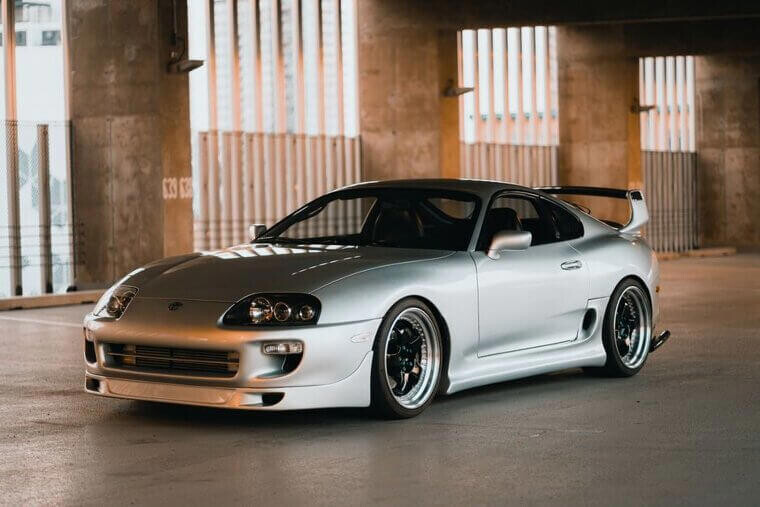
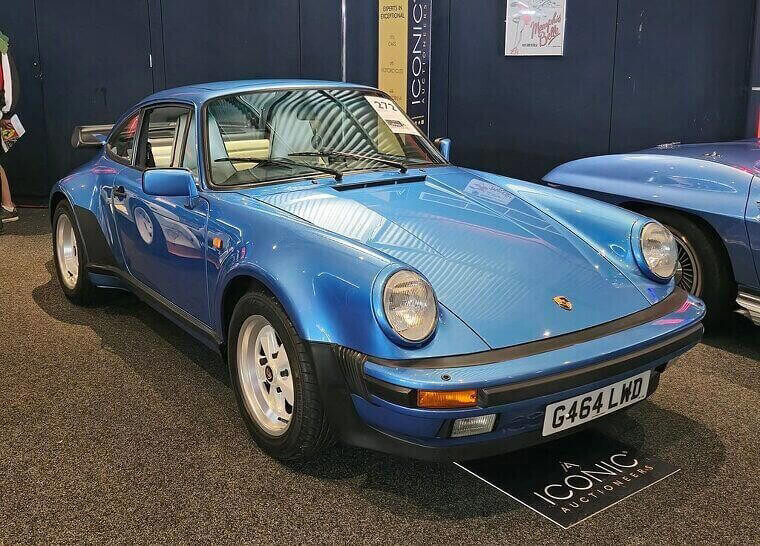
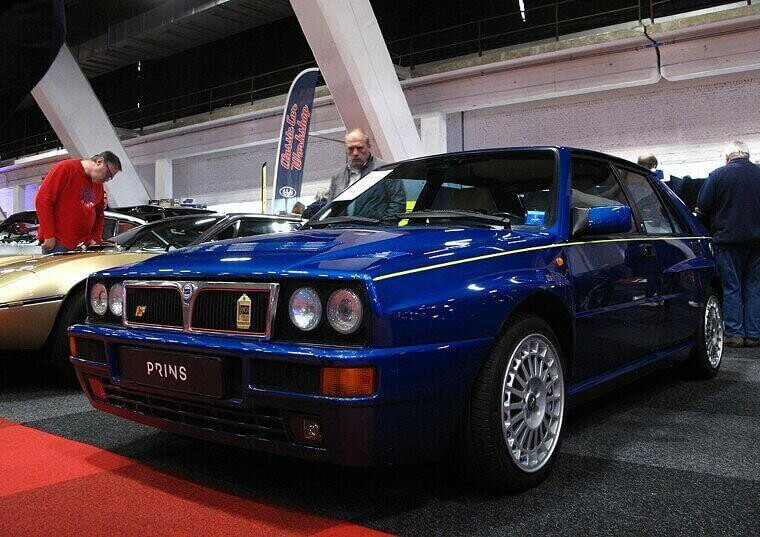
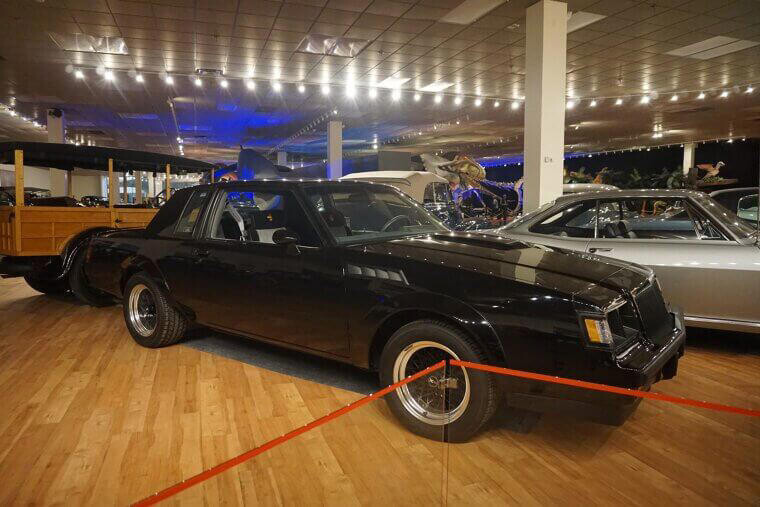
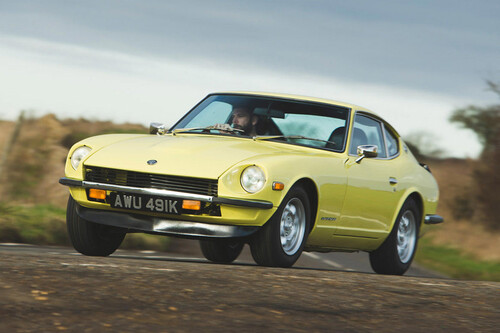
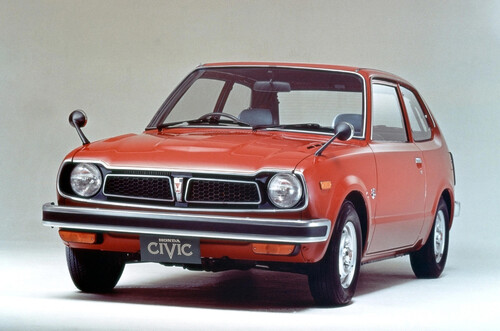
Don't Knock These Cars yetTake one look at some of these old classics parked at a car show, and you might think they're all show and no go. Chrome bumpers, whitewall tires, and pastel paint jobs can fool you into thinking these cars were built for cruising the drive-in, not tearing up the strip. But underneath those unassuming hoods, engineers were quietly stuffing in some of the most surprising powerplants of their era. Detroit, and plenty of overseas manufacturers too, had a habit of hiding serious muscle inside bodies that looked more like grandma's grocery-getter than a street fighter. Before you judge these rides by their looks alone, remember that some of the biggest surprises in automotive history came wrapped in the most modest packaging you could imagine.Toyota Supra Mk4 (A80) (1993–2002)Under the hood of the Mark 4 Supra sat the legendary 2JZ-GTE, a twin-turbo inline-six that Toyota engineers built tough enough to handle far more power than the factory ever advertised. Rated around 320 horsepower from the factory, that block became famous for shrugging off double or even triple that output with the right modifications, all while the original internals stayed intact. You'd hear about weekend racers pushing these engines past 600 horsepower on stock parts, something almost unheard of from a production car in the 1990s. Toyota never marketed it as a supercar killer, but word spread fast among enthusiasts who discovered just how much muscle was hiding under that sleek, understated body. It's the kind of engineering that quietly outclassed cars costing three times as much.Mazda RX-7 FD (1992–2002)Pop the hood on a third-generation RX-7 and you won't find a single piston anywhere. That twin-turbo 13B-REW rotary engine displaces just 1.3 liters, yet it churned out 255 horsepower in its final form, numbers that made V8 owners scratch their heads at stoplights. Mazda engineers chased smoothness and rev-happy character instead of raw displacement, and the result spins to 8,000 RPM with a whine that sounds more like a jet turbine than a car engine. Weighing under 2,800 pounds, the FD felt like an extension of your own reflexes on a winding backroad. Sure, those rotary seals gave dealers headaches, and oil consumption became a running joke among owners. But for pure driving feel wrapped in swooping, organic bodywork, nothing else from the 1990s came close to matching it.BMW M3 (E30) (1986–1991)The original BMW M3 never looked like a race car, and that was the whole point. Boxy fenders, a modest rear spoiler, and a четырех-cylinder engine that seemed almost too small for a car wearing the M badge. Underneath that understated shape sat a high-revving S14 engine, born from BMW's Formula 2 program and tuned to scream past 7,000 RPM with a sound unlike anything else on suburban streets. BMW built the E30 M3 to win touring car races, not to impress at stoplights, and it dominated European circuits throughout the late 1980s. Drivers who got behind the wheel discovered a car that rewarded precision over brute force. That combination of restraint and racing pedigree still makes the E30 M3 one of the most respected performance cars to ever wear a conservative suit.Chevrolet Corvette C4 ZR-1 (1990–1995)The Corvette C4 ZR-1 earned its nickname "King of the Hill" for good reason, and the secret lived under that fiberglass hood. Chevrolet teamed up with Lotus to design an all-aluminum LT5 V8, a 32-valve engine that most folks assumed belonged in an exotic European sports car, not a Bowling Green-built Corvette. That engine pushed out 375 horsepower by 1993, enough to hit 60 mph in under five seconds and top out near 180 mph. What made it sneaky was the styling. Aside from wider rear fenders and a unique taillight treatment, the ZR-1 looked like any other Corvette in a shopping mall parking lot. Unsuspecting muscle car owners who pulled up beside one at a stoplight often got a rude awakening once the light turned green.Porsche 911 Turbo (930) (1975–1989)Few cars earned a nickname like the "Widowmaker," and the original Porsche 911 Turbo, internally known as the 930, deserved every bit of that reputation. Under the rear decklid sat a 3.0-liter (later 3.3-liter) turbocharged flat-six that produced a rush of power unlike anything else on the road in the mid-1970s. The catch was turbo lag, a pause before the boost hit, followed by a surge that could catch an inexperienced driver off guard. That unpredictable personality became part of the car's legend among enthusiasts who wanted a genuine challenge behind the wheel. Whale tail spoiler included, the 930 looked as aggressive as it drove. Owning one meant respecting it, and plenty of drivers learned that lesson the hard way on a curvy backroad.Porsche 911 Carrera RS 2.7 (1973)That ducktail spoiler looked almost comical when Porsche first bolted it onto the 911 in 1973, but nobody was laughing once they felt what it did at speed. The Carrera RS 2.7 packed a 2.7-liter flat-six making 210 horsepower, and Porsche stripped out sound deadening, thinner glass, and even some carpet to keep weight down near 2,150 pounds. Drivers who've owned one describe the sound as unforgettable, that air-cooled howl building as the tach climbs past 6,000 RPM. Porsche only needed to build 500 units to satisfy homologation rules for racing, but demand pushed production well beyond that. Values today reflect just how special this car turned out to be. For anyone who grew up admiring the 911 silhouette in magazines, the RS 2.7 remains the version that proved lightweight engineering could outrun brute horsepower every single time.Lancia Delta Integrale Evo II (1993–1994)The Lancia Delta Integrale Evo II looked like a boxy Italian hatchback that might carry groceries home from the market, but underneath those flared fenders sat a turbocharged 2.0-liter four-cylinder engine pumping out 215 horsepower through a permanent four-wheel-drive system. This wasn't just quick for its era, it was a rally-bred weapon that dominated the World Rally Championship for six consecutive years, a record that still stands today. Drivers loved how the turbo lag built anticipation before the boost hit and rocketed you forward with a growl that echoed through Italian mountain passes. Finding one stateside remains tough since Lancia never officially sold cars in America, but collectors who track one down discover a hatchback that outperforms plenty of exotic machinery from the same period, proving that serious engineering doesn't always come wrapped in flashy bodywork.Ford Mustang Boss 429 (1969–1970)Ford built the Boss 429 for one reason: NASCAR homologation rules demanded a production car housing that massive semi-hemispherical engine, so the street version became almost an afterthought. Squeezing that engine into a Mustang wasn't simple, either. The engine bay needed serious modification, and Kar Kraft, an outside contractor, handled the conversion since Ford's regular assembly lines couldn't accommodate the width. Under that hood sat 375 horsepower on paper, though most enthusiasts insist the real number ran considerably higher. Drive one today and you'll notice how the front end feels nose-heavy, almost like the car knows it's carrying something special. Fewer than 1,400 were built across both years, making this one of the rarest Mustangs Ford ever produced. That rarity, combined with genuine racing pedigree, keeps collectors chasing them at serious money decades later.Buick GNX (1987)Grandpa's Buick was never supposed to be the fast one. That reputation belonged to Corvettes and Camaros, cars with the swagger to back up a stoplight challenge. Then the GNX showed up in 1987 wearing a suit as black as midnight, and it humbled just about everything on the road. Under the hood sat a turbocharged 3.8-liter V6, producing 276 horsepower and a wall of torque that could snap your neck back against the seat. Buick built only 547 of them, working with ASC/McLaren to squeeze out performance nobody expected from a brand known for cushy rides to church on Sunday. Car and Driver even clocked it beating a Ferrari in the quarter mile. It proved something important: sometimes the most dangerous car in the parking lot looks like it belongs to your accountant.De Tomaso Pantera (1971–1992)Picture an Italian body wrapped around good old American muscle, and you've got the De Tomaso Pantera in a nutshell. Ford handled distribution here in the States, which meant Lincoln-Mercury dealerships suddenly had a wedge-shaped exotic sitting next to the station wagons. Under that low, dramatic hood sat a Ford 351 Cleveland V8, the same family of engine you'd find in a Mustang, only here it drove the rear wheels through a rear-mounted transaxle borrowed from race car thinking. That combination gave owners genuine supercar performance without the usual supercar ownership headaches, since parts and service came straight from your local Ford network. Elvis Presley famously owned one and, according to legend, once fired a gun at his that wouldn't start. Few cars mix everyday practicality with exotic flair quite like the Pantera managed to pull off.Datsun 240Z (1969–1973)Datsun stunned everyone in 1969 when the 240Z hit American showrooms with a shape that looked like it cost twice its price and a 2.4-liter inline-six that actually delivered on that promise. You got 151 horsepower wrapped in sheet metal that could rival a Jaguar E-Type silhouette, but at a fraction of the cost and none of the notorious British electrical gremlins. Drivers who'd never considered a Japanese sports car found themselves grinning through mountain switchbacks, the engine pulling smooth and eager all the way to redline. Road & Track and Car and Driver both raved about its balance and value. The 240Z didn't just compete with European sports cars, it embarrassed some of them on price and reliability. For a generation of enthusiasts, it proved something important: real performance didn't have to come with a European badge or a mechanic on speed dial.Toyota MR2 (SW20) (1989–1999)The second-generation MR2 caught plenty of drivers off guard, and Toyota engineers deserve credit for building something that handled like a pocket-sized Ferrari. With its mid-engine layout and available turbocharged 2.0-liter four-cylinder, the SW20 pushed out around 200 horsepower in its later trims, enough to embarrass far pricier sports cars on a twisty back road. You sat low behind the wheel, the engine humming just inches behind your seat, and every input felt immediate and alive. Reliability quirks and a reputation for snap oversteer earned it a nickname or two among enthusiasts, but that same razor-edge handling is exactly why so many drivers fell in love with it. Find one today, and you'll understand why this Toyota still turns heads at car meets.Honda NSX (NA1/NA2) (1990–2005)Ayrton Senna himself helped fine-tune the NSX's chassis, and you can feel that racing pedigree the moment you drop into the driver's seat. Honda didn't just build a fast car back in 1990; the company built a supercar you could actually drive to the grocery store without your back complaining afterward. Under that lightweight aluminum body sat a 3.0-liter V6 VTEC engine, screaming to 8,000 RPM with the kind of mechanical honesty that modern turbocharged engines rarely match. Reliability was practically bulletproof, too, unlike the temperamental Italian exotics it competed against. Owners routinely racked up well over 100,000 miles with basic maintenance. For anyone who thought supercars had to be fragile and impractical, the NSX proved otherwise, and it still turns heads at car shows today.Chevrolet Camaro Z/28 (1st Gen) (1967–1969)Chevrolet built the Z/28 for one reason: to win Trans-Am racing, and that mission shaped everything about this machine. Under the hood sat a solid-lifter 302 cubic-inch V8, a displacement chosen specifically to meet the series' 305-cubic-inch limit. Officially rated at 290 horsepower, most enthusiasts knew that number was conservative, with real output likely closer to 350 or more once you opened up the four-barrel carburetor and let the high-rise intake breathe. Chevrolet barely advertised the package in 1967, selling fewer than 700 units, yet word spread fast among racers who recognized what was hiding beneath that unassuming exterior. Quick-ratio steering, heavy-duty suspension, and front disc brakes came standard, turning your average pony car into a genuine road-course weapon. Few cars from that era balanced subtlety and raw capability quite like this one did.Ford GT40 (Original Mk I–IV) (1964–1969)Ford built the GT40 for one reason: to beat Ferrari at Le Mans, and beat them badly. After Enzo Ferrari backed out of a sale agreement in 1963, Henry Ford II poured resources into a race car that would humble the Italian marque on its own turf. The result stood barely 40 inches tall, hence the name, with a mid-mounted V8 that howled past 200 horsepower in road trim and well beyond that on the track. In 1966, GT40s swept the podium at Le Mans, finishing first, second, and third. That victory ended Ferrari's six-year winning streak and cemented the GT40 as an American icon. Today's Ford GT still carries that DNA, but nothing matches the raw, mechanical drama of watching the original scream down the Mulsanne Straight.Ferrari F40 (1987–1992)Enzo Ferrari wanted one last car with his name behind it before he passed, and the F40 became that farewell gift to driving enthusiasts everywhere. Under that sharp, angular body sat a twin-turbocharged V8 producing 471 horsepower, a number that felt almost reckless for a road car back in 1987. There was no power steering, no anti-lock brakes, and barely any sound insulation, just a thin layer of fiberglass between you and the pavement rushing past at speeds most cars couldn't dream of touching. Climbing inside felt like strapping into something built for Le Mans rather than your local highway. Ferrari built the F40 to be raw and uncompromising, and that honesty is exactly why collectors still chase it today. Few cars capture the fearless spirit of 1980s performance engineering quite like this one does.Ferrari Testarossa (1984–1996)Few cars capture the swagger of the 1980s quite like the Ferrari Testarossa, with its wide-body stance and those unmistakable side strakes that funneled air into the engine bay. Underneath that dramatic bodywork sat a flat-12 engine producing 390 horsepower, a genuine powerhouse for its era. Ferrari positioned the radiators out at the rear haunches instead of up front, which is exactly why the car ended up so wide. Owners still talk about the sound that engine makes at full throttle, a mechanical howl that no modern car quite replicates. Tom Selleck drove one in "Magnum, P.I.," and that exposure turned the Testarossa into a bedroom-poster icon for an entire generation. Even now, seeing one parked at a car show stops people in their tracks, proving that some designs never lose their punch.Lamborghini Countach (1974–1990)Few cars stopped traffic quite like the Lamborghini Countach, with its wedge-shaped body and scissor doors that swung skyward instead of out. Under that dramatic shell sat a 5.2-liter V12, eventually pushing out around 455 horsepower in the later Quattrovalvole models. That engine screamed to nearly 8,000 RPM, a sound that made grown adults stop what they were doing and stare. Poster on every teenager's bedroom wall in the late 1970s and 1980s, the Countach wasn't just a car, it was a statement about what speed could look like. Driving one meant crouching low, peering through a tiny rear window, and feeling every bit of that Italian engineering rattling through your bones. It remains one of the boldest engine-and-body pairings ever built.Jaguar XJ220 (1992–1994)When the Jaguar XJ220 arrived, it carried a name straight from its top speed ambitions, and it briefly held the title of the world's fastest production car. Under that sleek aluminum body sat a twin-turbocharged V6 producing 542 horsepower, a surprising departure for a brand known for silky V12s and stately sedans. Purists grumbled about the engine swap at the time, but the results silenced most doubters once the numbers came in. That power sent the XJ220 past 210 mph, a figure that stunned road testers and enthusiasts alike back in the early '90s. Only a few hundred were built, making every sighting today feel like spotting a unicorn at a car show. For anyone who grew up idolizing supercar posters on bedroom walls, the XJ220 remains proof that Jaguar could build something wild when it wanted to.BMW 850CSi (E31) (1992–1996)Picture a grand tourer that could hush a highway with nothing but a whisper from its exhaust, then wake up entirely when you asked for more. The BMW 850CSi packed a 5.6-liter V12 under that long, sculpted hood, tuned by BMW's M division to deliver 380 horsepower through a six-speed manual, a rare combination for a car this size and this refined. Standard-fit rear-wheel steering kept the big coupe composed through fast sweepers, while the cabin wrapped you in leather and burled wood that felt more like a private study than a car interior. Fewer than 300 examples ever came to American shores, making this one of the most overlooked super-coupes of its era. Anyone who drove one back then remembers the sound of that V12 building through the gears, smooth as poured cream and twice as satisfying.Lotus Esprit V8 (1996–2004)That low, angular wedge shape still turns heads today, and under the rear glass sat a genuine surprise: a twin-turbocharged 3.5-liter V8 producing 350 horsepower, hand-built at Lotus's Hethel factory. This wasn't a bolted-together parts-bin engine either. Lotus engineers designed it specifically for the Esprit, mounting it just ahead of the rear axle for balance that made the car dance through corners the way only a true mid-engine sports car can. Zero to sixty came in around 4.4 seconds, numbers that could embarrass supercars costing twice as much. James Bond drove an Esprit, and this V8 version proved the car deserved that spotlight on merit alone. Rarity keeps values climbing, since Lotus built only a few thousand examples before the model retired in 2004, making surviving cars a genuine collector's prize.Mitsubishi Lancer Evolution VI TME (1999–2001)The Tommi Mäkinen Edition turned heads the moment it landed in showrooms, and rally fans knew exactly why. Named after the four-time World Rally Champion, this Evolution VI variant carried a quicker steering ratio, a titanium turbine wheel for sharper throttle response, and that unmistakable red-and-white livery echoing Mäkinen's Group A machines. Under the hood sat the familiar 4G63 turbocharged four-cylinder, tuned to deliver around 276 horsepower, though enthusiasts always suspected Mitsubishi underrated it to satisfy Japanese manufacturer agreements. Drive one down a twisting back road and you'll feel why rally drivers trusted this platform through gravel, tarmac, and everything between. The all-wheel-drive system distributed power with a confidence that made ordinary sedans feel like toys. For anyone who grew up watching WRC coverage on Saturday afternoons, spotting a TME in the wild still feels like witnessing a piece of motorsport history parked right on the street.Subaru Impreza WRX STI 22B (1998)Only 400 examples ever rolled out of Subaru's Gunma factory, and every single one sold out before dealers could even finish the paperwork. Under that widened fender flare sat a 2.2-liter turbocharged boxer engine, a rare departure from the usual 2.0-liter STI setup, tuned to a claimed 280 horsepower. Real-world numbers likely ran higher, since Japanese manufacturers capped official figures under a gentlemen's agreement at the time. Rally fans recognized the significance right away. This car celebrated Subaru's back-to-back World Rally Championship manufacturer titles, and it showed on the road with a wider track, stiffer chassis, and that unmistakable gold BBS wheel and blue paint combination. Finding one today means hunting through Japanese auction houses and paying prices that would make your old paycheck blush. For driving enthusiasts, the 22B remains the ultimate proof that rally-bred engineering can turn a compact sedan into a legend.Audi Quattro (Ur-Quattro) (1980–1991)The Ur-Quattro changed rally racing before most Americans even knew how to pronounce it. Audi dropped a turbocharged inline-five under the hood, then sent power to all four wheels through a permanent all-wheel-drive system nobody thought could work in a road car. Competitors laughed until Audi started winning stages by margins that seemed impossible. That five-cylinder engine growled with a sound unlike anything from Detroit or Japan, a warbling snarl that turned heads at gas stations from Colorado to Vermont. Rally drivers discovered they could power through corners other cars had to crawl around. Audi built fewer than 12,000 for the road, so spotting one today feels like finding a needle in a haystack. Every modern AWD performance car, from Subaru to Audi's own lineup, owes something to this boxy German original that proved four driven wheels could outrun everybody's expectations.Shelby Cobra 427 (1965–1967)Carroll Shelby wanted a car that would scare the daylights out of anyone brave enough to floor it, and the 427 Cobra delivered exactly that. Under that narrow, deceptively simple body sat a monstrous 7.0-liter V8 borrowed from Ford's stock car program, cranking out around 425 horsepower in a car that weighed barely over 2,300 pounds. Do the math and you get a power-to-weight ratio that still humbles modern sports cars. Folks who drove one back then talk about the acceleration like it's a religious experience, all wind noise and vibration and pure adrenaline. There wasn't much between you and the pavement, either, just thin sheet metal and Shelby's confidence that you could handle it. Today, original 427 Cobras fetch prices that would make your jaw drop, proof that raw, unfiltered power never really goes out of style.Pontiac Firebird Trans Am (WS6) (1996–2002)The WS6 package turned the Trans Am into a genuine sports car killer, and Chevrolet Corvette owners of the late '90s learned that lesson the hard way at more than a few stoplights. Under the hood sat the LT1, and later the LS1 after 1998, pumping out 305 to 325 horsepower depending on the year. That power came paired with Ram Air induction, a hood scoop that actually worked, and a suspension tuned tight enough to handle serious corners. Zero to sixty came in the low five-second range, numbers that embarrassed cars costing twice as much. Ask anyone who owned one, and they will tell you the sound alone was worth the price of admission. That distinctive V8 growl echoing off a highway underpass is something you do not forget, and the WS6 delivered performance that modern turbo four-cylinders still struggle to match.Toyota Celica GT-Four (ST205) (1994–1999)The Celica GT-Four ST205 might look like a sporty coupe your neighbor drove to the grocery store, but underneath that sleek body sat rally-bred engineering that could hang with far pricier machines. Toyota built this turbocharged all-wheel-drive hatchback to compete in World Rally Championship events, and the road-going version inherited that same fighting spirit. Its 3S-GTE engine pumped out around 255 horsepower in Japanese-spec trim, sending power through a sophisticated AWD system that gripped pavement like nothing else in its class. Unfortunately, a scandal involving an illegal turbo restrictor bypass device tarnished Toyota's rally program right as this car hit its stride. Still, the ST205 remains a favorite among enthusiasts who appreciate understated performance. You won't find flashy badges shouting about its capabilities, just a car that quietly outran expectations on twisty back roads and rally stages alike.Mercedes-Benz 500E (W124) (1990–1994)Porsche's engineers spent so much time widening the fenders and reworking the chassis on the 500E that Mercedes-Benz actually had to shuffle each car between two separate factories during production, and you can still sense that hand-built attention every time one rolls past. Under that unassuming three-box sedan shape sits a 5.0-liter V8 borrowed from the SL, good for 322 horsepower, numbers that embarrassed plenty of sports cars back in the early '90s. Zero to sixty came in around six seconds flat, quiet enough that your neighbors would never guess what just left the stop sign. Mercedes built fewer than 12 months' worth of these per year, and the understated look was the whole point. Nobody expected a family sedan to run with Porsches, which made the 500E one of the great sleepers of its era.Acura Integra Type R (DC2) (1995–2001)The Acura Integra Type R looked like any other tidy little coupe rolling out of a Honda dealership, and that was the whole point. Underneath that unassuming shell sat a hand-built B18C5 engine, blueprinted and polished by technicians who individually matched pistons and connecting rods for perfect balance. That kind of attention produced 195 horsepower from just 1.8 liters, redlining past 8,000 RPM with a sound that grabbed your attention like a call to action. Honda even shaved weight by thinning the door panels and skipping sound deadening, turning every drive into something raw and connected. Enthusiasts still talk about how the Type R made front-wheel drive feel like a revelation, gripping corners with a helical limited-slip differential most economy cars never dreamed of. It remains proof that greatness sometimes comes in the most modest packaging.BMW M5 (E39) (1998–2003)Under that understated sedan body sat a 4.9-liter V8 hand-built by BMW's M division, cranking out 400 horsepower and revving to 7,000 RPM with a growl that surprised more than a few unsuspecting sports car drivers at stoplights. The E39 M5 never shouted about its capabilities with flashy body kits or oversized spoilers. Instead, it relied on subtle fender flares and quad exhaust tips to hint at what was under the hood. Car enthusiasts still consider this generation the gold standard for sport sedans, and it's easy to understand why. You could haul the family to church on Sunday, then embarrass a Corvette on Monday's commute. That blend of everyday practicality and genuine performance is something modern manufacturers still struggle to match. Many mechanics who worked on these cars back then still speak of that V8 with genuine admiration, and rightfully so.Peugeot 205 Turbo 16 (1984–1986)Underneath that boxy little hatchback body, Peugeot hid something that had no business being in a grocery-getter shape. The 205 Turbo 16 packed a mid-mounted, turbocharged 1.8-liter engine sending power to all four wheels, a setup Peugeot built specifically to dominate Group B rally competition. On paper, road-going versions made around 200 horsepower, but the rally variants pushed well past 400. Picture a car the size of a modern subcompact rocketing through gravel stages with the engine sitting behind the driver instead of up front. That layout gave it balance most rally cars of the era could only dream about. Group B eventually got banned for being too extreme, but the 205 Turbo 16 remains proof that Peugeot once built one of the most fearsome rally weapons ever to wear headlights and a hatchback badge.Dodge Viper RT/10 (1992–2002)Climb into a first-generation Viper RT/10 and you'll notice something missing right away: door handles that actually work with any grace, roll-up windows, and honestly, a roof worth mentioning. Dodge stripped away comfort and handed you an 8.0-liter V10 borrowed from truck engineering, tuned to snarl out 400 horsepower through a plain six-speed manual. No airbags, no traction control, no mercy. That raw approach turned the Viper into a legend among driving purists who wanted their sports car to feel dangerous in the best possible way. You steered it, you shifted it, and you respected it, because one wrong move on a wet road could humble even a confident driver fast. Few American cars ever captured that much attitude in a single silhouette.