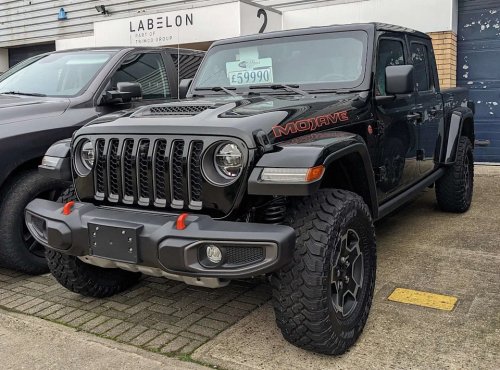
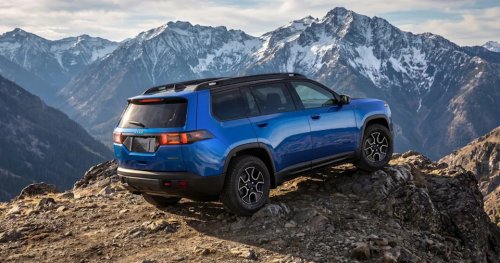
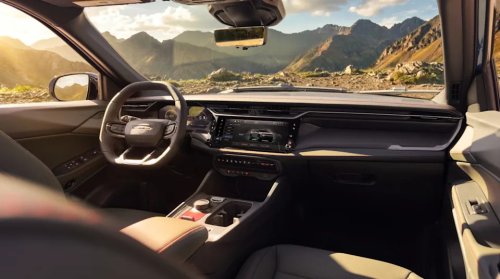
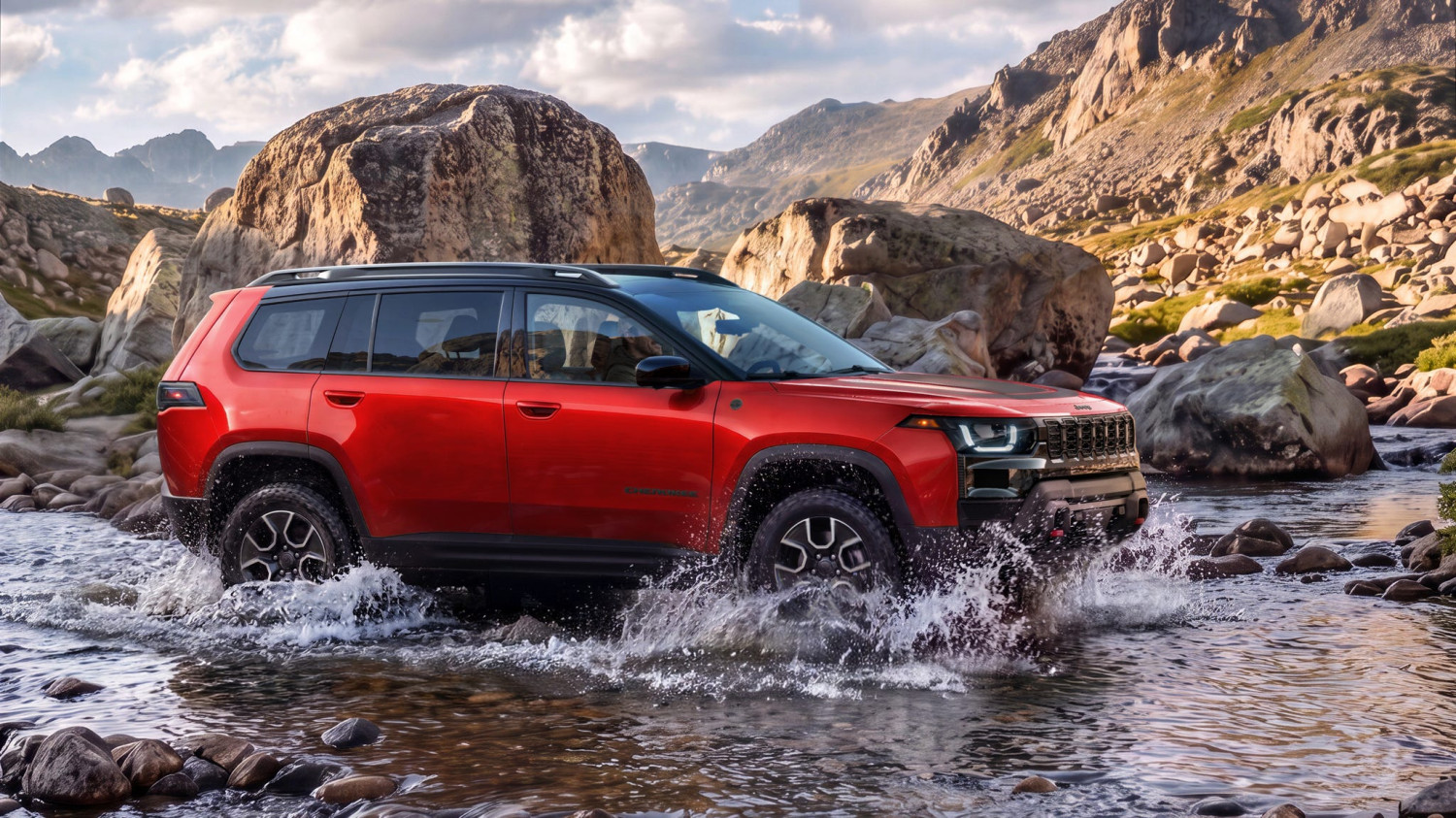
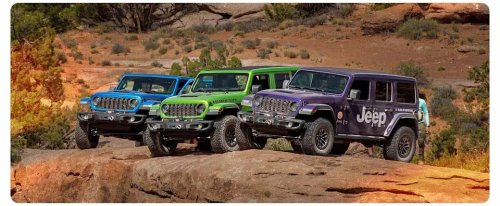
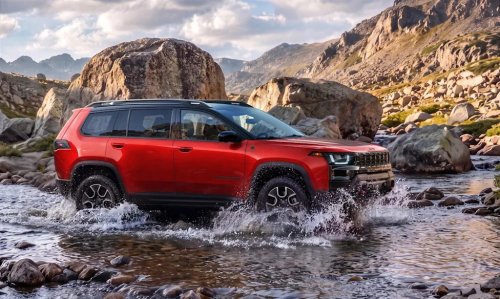
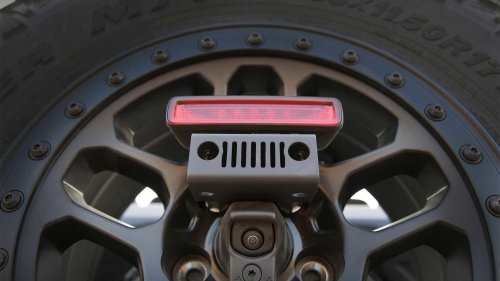
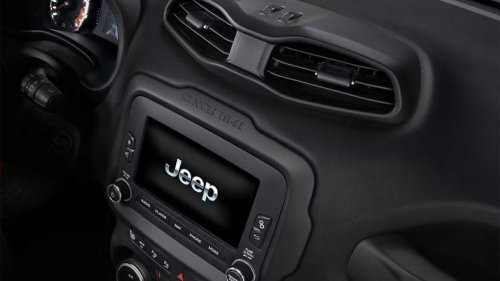
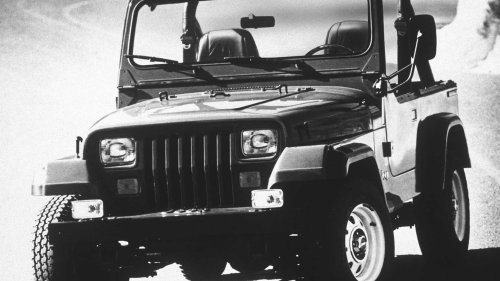
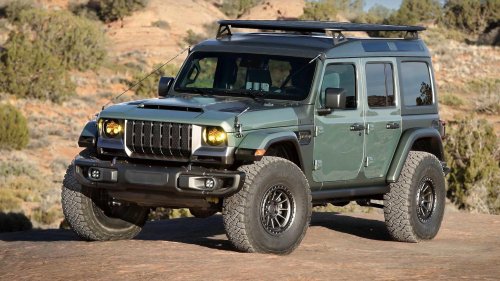
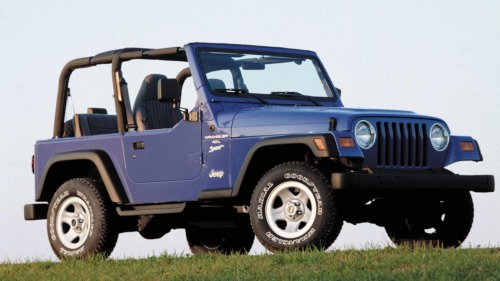
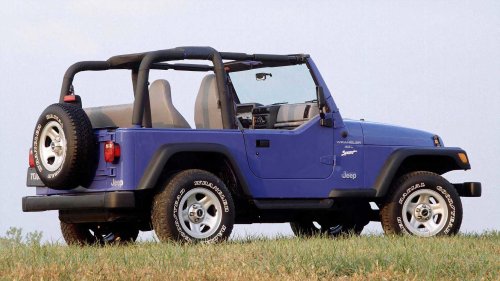
Jeep is an automotive brand with a culture all of its own. The company has a unique history, originating from the military and agricultural world and evolving into a symbol of carefree outdoor fun. This evolution is reflected in the brand’s quirky personality today: Jeep owners are like members of a club, with its own traditions and its own in-jokes.Some aspects of Jeep culture, like the legendary “Jeep wave” drivers use to greet each other, are said to originate from the brand’s military past. Others, like “Jeep ducking”, are more recent inventions. There is one aspect of Jeep culture that has become famous among car enthusiasts all over the world, even ones that don’t personally own a Jeep: the famous Easter eggs.These hidden design features require a keen eye to be spotted: from animals to maps, they decorate the inside and outside of several Jeep models. Let’s take a look at what they are and where you can find them. Jeep Easter Eggs: What They Are And Where To Find Them Jeep While most parts of what we know today as “Jeep culture” were created organically by the owners’ community, the Easter eggs come from the brand itself: these small, unique details are a part of Jeep models’ design process, adding a little bit of fun and whimsy. The Easter eggs, as suggested by their name, are hidden in cleverly concealed places on a Jeep vehicle, and provide a visual connection to several elements of Jeep history and culture.The themes represented in the Easter eggs are varied: from animals, to off-roading culture, to Jeep itself and everything in between. They can be found in a variety of vehicles from the Jeep lineup, including the Wrangler, Gladiator, Compass, Wagoneer, Cherokee, Grand Cherokee, Renegade, Wagoneer, and Grand Wagoneer.Of course, spontaneously finding an Easter egg is part of the fun, and their design changes frequently depending on model and year. However, if you own a Jeep and would like some hints as to where you could find an Easter egg in your vehicle, here are some clues regarding known Easter eggs and their location.JeepFlip-Flop: in the Wrangler and the Gladiator, a flip-flop located on the cowl of the windshield pays tribute to Rick Pewe, a famous automotive journalist. It also represents the carefree, outdoorsy lifestyle typically associated with Jeep owners.Morse Code: on the Compass, Liberty, and Wrangler, at the rear of the vehicle a Morse code inscription spells out “JL”. Also, on several Jeep models, the dead pedal on the driver’s side is etched with Morse code spelling out “Sand, Snow, Rivers, Rocks”, a nod to the off-road capability of Jeep vehicles.“No Step” Warning: the Gladiator also features an aircraft-style “No Step” warning etched on the side rails. This Easter egg isn’t just a humorous reference to the world of planes, but also serves a practical purpose, as the side rails cannot be used as steps.Seven-Slot Grille: the seven-slot grille, an iconic design element of classic Jeeps, is featured as an Easter egg in most Jeep models available today. The design can be found in various locations, including the stereo speakers and the side mirror housing.Mythical Creatures: mythical creatures are frequently depicted in Jeep Easter eggs. In the Renegade, Wrangler, and Cherokee, you will find Bigfoot on the rear windshield. In the Compass’ rear windshield, on the other hand, you will find Nessie, the Loch Ness Monster, as a reference to the vehicle’s ability to ford up to 19 inches of water.Since 1941: in the Renegade, a “Since 1941” inscription can be found on the dashboard, as a homage to Jeep’s history.Map of Moab: in the Compass, Renegade, and Wrangler, a topographical map of the Moab desert in Utah (a popular off-roading destination) is etched into the plastic near the gear shifter and the small item storage cubby.Willys Jeep: the silhouette of the iconic Willys Jeep, the model that started it all, is depicted in several different locations on various Jeep models. These include the wheels, the rear window, and the headlight housing.Animals: the very first Jeep Easter egg was a gecko, included in the design of the Wrangler’s interior. Today, the Wrangler and the Compass feature a gecko under the windshield wipers, symbolizing their ability to grip even on rough terrain. There is another animal-themed design: the Wrangler and Renegade feature a spider with the words “Ciao Baby” near the fuel cap.T-Rex: the T-Rex, king of the dinosaurs, is featured in the design of the Cherokee and Wrangler’s floor mats, reflecting their reliability and toughness.Rear Lights X: the rear lights on the Renegade feature an “X” design that pays homage to Jeep’s military history, echoing old-school gas cans used during World War II.Paintball: if you look closely at the rpm redline on the Renegade, you might spot an orange paintball splotch, a nod to the active, outdoors hobbies enjoyed by many Jeep owners.Jeep Logo: many models feature a barely visible Jeep logo underneath the seat covers’ mesh fabric.419: the Gladiator’s driver-side bed rail features a heart symbol next to the number 419. This is the area code for Toledo, Ohio, where the model is manufactured. The History Of Jeep Easter Eggs Jeep The addition of Easter eggs to Jeeps dates back to the late 1990s and the start of the Wrangler’s second generation, the TJ. While coming up with ideas for the vehicle’s interior, designer Michael Santoro decided to add a small fun element to the mix, and included a hidden gecko design to the car’s cabin.Jeep The gecko turned out to be popular among Jeep enthusiasts, and soon a tradition was born. More and more Easter eggs, referencing anything from animals to movies to Jeep’s own history, were added not just to the Wrangler but to other models as well. Finding the Easter eggs became a pastime for Jeep owners, who looked closely at every part of their vehicles in the hope of spotting a new one.The tradition has continued into the present day: in keeping with the brand’s quirky character, today most models in the Jeep lineup are equipped with at least one or two Easter eggs. The Model Most Commonly Associated With Easter Eggs: The Wrangler Jeep Most Jeeps include an Easter egg or two, but the Wrangler has a particularly strong association with this aspect of Jeep culture. This rugged SUV has been produced as both a compact and a mid-size vehicle over the course of its lifespan; it was first introduced for the 1987 model year, and is still in production today.Jeep The Wrangler’s first generation was designed while Jeep was still owned by AMC (American Motors Corporation), but by the time it was launched, the brand had been acquired by Chrysler. It shared many features with its predecessor, the CJ-7 (a member of the “Civilian Jeep” family that had launched the brand). A second generation, the TK, arrived a decade later in 1997, kicking off the Easter egg tradition that Jeep still embraces today.While the model’s first two generations had only been available in two-door hard-top and convertible guise, the third and fourth generations also added a four-door version to the lineup. The third-gen JK Wrangler was launched for the 2007 model year, while the fourth and current one, the JL, arrived in 2018.While the Wrangler has had several gas-powered engines over the decades, a plug-in hybrid version of the model (the 4xe) was added to the lineup in 2021. However, it only lasted four years as Stellantis killed off all its PHEV models in 2025. The One That Started It All: The 1997 TJ Wrangler StellantisThe generation of the Wrangler that originated the Easter Eggs tradition was not the first, but the second. Known by the model code TJ, this Wrangler arrived on the market for the 1997 model year. It was notable for a change in design that called back to classic Jeeps of the past: while its first-generation predecessor had rectangular headlights, the TJ went back to the iconic round headlights that classic Jeeps are still famous for today.The TJ generation also brought several other updates to the Wrangler. It had a modern coil-spring suspension rather than a leaf spring one, which improved handling and ride quality.Jeep Power came from a lineup of three engines, varying depending on model year and trim. Two were inline-four units (2.4 and 2.5 liters in size respectively), while the third was a 4.0-liter inline-six. Power outputs ranged between 120 and 193 hp. The range of transmission options was quite wide, with three-speed and four-speed automatics, a five-speed manual, and a six-speed manual available.The TJ Wrangler’s production run came to an end after the 2006 model year; it was replaced by the third-gen JK model, which underwent a radical redesign while maintaining several of the iconic features that marked it out as a Wrangler.Sources: Jeep















 +31 others