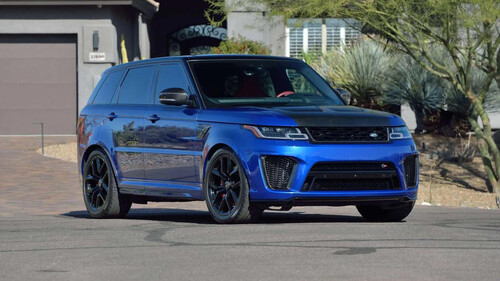
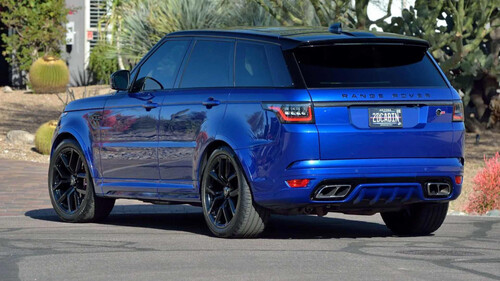
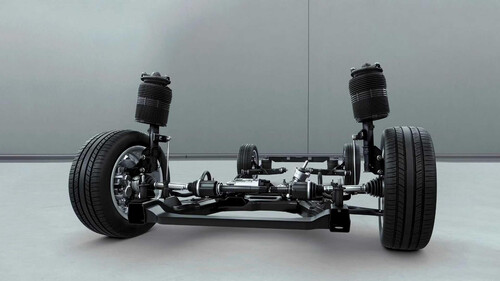
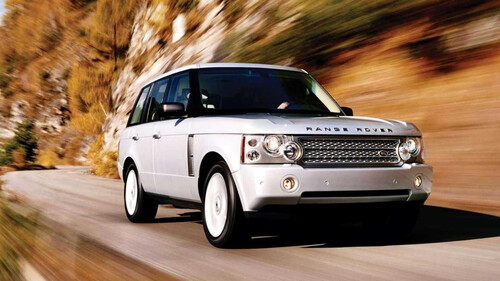
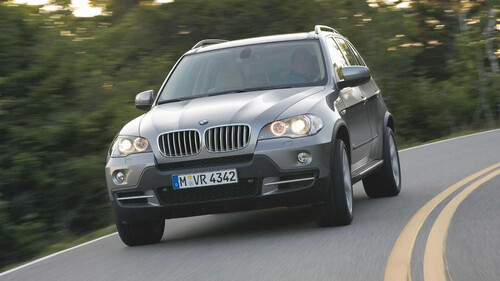
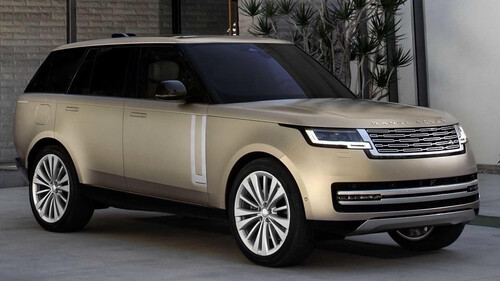
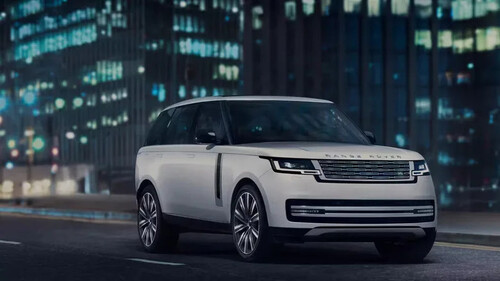
Autoblog and Yahoo may earn commission from links in this article.Luxury cars used to draw a very clear line in the sand. When you paid top dollar, the difference was unmistakable: richer materials, cutting-edge technology, and mechanical refinement that mainstream brands simply couldn't reach. It sent a clear message that you were buying the best engineering a company's R&D had to offer.As someone who keeps a 1996 Discovery at home, I have a deep appreciation for Land Rover's heritage and what these vehicles delivered for their era. Naturally, I approach every new model hoping to find that same standard-setting feel. Yet with recent entries like the Defender 110 V8, the Range Rover Sport, and now the P400 SE, the price tag makes it harder to deliver an unequivocal recommendation. And when a vehicle knocks on the door of $130,000, legendary off-road capability is a given—yet in a world where mainstream SUVs have dramatically elevated their refinement, you start to wonder if that six-figure premium delivers enough distinction to justify the leap.Land RoverDon't get me wrong, I quite liked the P400 SE. But I'm not confident I'd buy one if I had the funds. Here's why I say that.AdvertisementAdvertisementRelated: Road Ethos Launches: The New Automotive Lifestyle Site You Should ReadSo, what do you really get for $130K? Even without the laundry list of add-ons and packages that my tester came with, the base MSRP for the Range Rover P400 SE is $113,300. My tester had every optional package and add-on, so the price came to $129,965. Just a sneeze below $130,000. Because the base price is so high, naturally, you do get a very long list of standard features. But not as many as I thought there'd be. Here are the most notable:20-Way Heated & Ventilated Front Seats: Power-adjustable with driver and passenger memory. Heated & Ventilated Power-Reclining Rear Seats: Second-row passengers get power recline along with heating and ventilation functions. Perforated Windsor Leather: Standard leather seating with matching Windsor leather trim accents on the doors, instrument panel, and console. Three-Zone Climate Control: Independent cabin temperature zones with an integrated Air Quality Sensor. Sliding Panoramic Roof: Panoramic glass roof with power-sliding capability. Heated Steering Wheel: Soft-grain leather-wrapped with power-adjustable steering column. Soft Closing Doors: Power-latching doors that pull shut automatically.These are all nice and dandy, but they're standard features that we see on cars from Mercedes-Benz, BMW, Genesis and even Cadillac. So, are there features that help make sense of such a high price? Yes, but at a pretty substantial cost. Here are the optional add-ons my tester came with:AdvertisementAdvertisement23″ Style 1075 Gloss Black Wheels ($3,600): Upgrades the standard wheels to 23-inch gloss black rims.Premium Upgrade Interior Pack ($1,930): Adds the Full Extended Leather Upgrade, laminated front and rear side acoustic glass, solar attenuating windscreen, and deep pile carpet mats.Head-up Display ($1,400): Projects key driving and navigation information directly onto the windshield. I was pretty gobsmacked that an HUD cost this much extra.Natural Black Birch Veneer ($1,300): Custom interior wood trim. It's pretty muted since it's dark, but once you see it, you can't unsee it. And it certainly enhances the look and feel.Meridian™ 3D Surround Sound System ($1,200): Upgraded premium surround audio system. This is a non-negotiable for me. Shadow Exterior Pack ($1,000): Dark exterior trim and accents.Narvik Black Contrast Roof ($1,000): Gloss black painted finish for the roof.Pixel LED Headlights with Signature DRL ($600): Upgraded lighting system with dynamic beam patterns.Ebony Headlining ($400): Black headliner upholstery.Cold Climate Pack ($350): Adds heated windshield and heated washer jets.Interior Protection Pack ($760): All-weather floor and cargo protection mats. This was also insane—you can buy aftermarket floor mats for much, much less.Rear Seat Convenience Pack ($280): Rear cabin utility accessories (coat hangers/tablet mounts).Wheel Protection Pack ($235): Wheel locks and protection accessories.Emergency Pack ($85): On-board roadside safety kit. Add it all up, and you're looking at $14,215 in options. Customization is expected at this level, but several items on the list feel like unnecessary line items. Charging $1,400 for a Head-Up Display, or tacking on extra charges for upgraded audio, cold-weather amenities, and acoustic glass, feels out of line when we look across the market. Mainstream luxury rivals like the Cadillac Escalade and BMW X7 include many of these essentials as standard equipment at significantly lower starting prices. When an $85,000 to $95,000 base model SUV matches or beats the baseline tech and cabin features, spending nearly $130,000 on a Range Rover with the same features becomes a much tougher pill to swallow.Related: Range Rover Sport Trim Guide: Which Land Rover Luxury SUV Trims Are BestThe ride quality is unlike anything else I've ever experiencedWhile I wasn't convinced the price was where it should be, or the options were fairly priced, driving it helped change my perspective a little. Any Land Rover Range Rover I've reviewed has the smoothest ride I've ever experienced. Even the San Francisco Bay Area's tattered and horrendous roads were no match for the P400 SE's adaptive and predictive suspension setup. It works similarly to Mercedes-Benz's E-Active Body Control, but instead of using cameras and a computer to scan for bumps or dips to prep the suspension, Land Rover uses navigational and sensor data. AdvertisementAdvertisementHere's how it works: The system, called eHorizon, reads map and satellite data while factoring in the vehicle's speed as you approach bends and corners, automatically stiffening the outside air springs and dampers before you enter the turn to reduce body roll. Land Rover's website says it can lean into corners by up to three degrees to keep things where they should be. I definitely noticed that when I slung it around in the Berkeley hills. When it comes to bumps and potholes, the system instantaneously reacts (Land Rover says within 12 milliseconds) to absorb and deflect the impact as it happens.Land Rover"Smooth" doesn't feel like a nice enough word to describe how smooth it was. My kids will fight to the death to stay awake when they're in the car, but they fell asleep every. Single. Time they were in the back of the P400 SE. It was the same story in the Range Rover Sport and Defender 110. The acoustic glass paired with an unbeatably smooth, silky ride knocked them out quicker than NyQuil knocks me out. If they were cranky, I'd look for just about any reason to get in the car to get them to nap, and it worked seamlessly. I would have committed a felony for one of these bad boys when my oldest was dealing with colic.Now for the British-nessOur old Land Rover, ironically, has been one of the more reliable cars in our fleet. When something does go wrong, it's always something funky. Like it would lose power out of nowhere and then kick back on, and then it wouldn't do it again. With the P400 SE, I feel like that quirkiness lives on, because there were a few things that made me cock my head and ask, "Now why the heck did JLR do that?" Like making the rear headrests adjustable via an electronic switch on the door panel, but not making it removable. The cover for the rear cargo space is nice, but the way it works is so strange; I wasn't shocked when my husband and I discovered the person before me had broken it. Kristen BrownThe air purification made such a huge difference, as I reviewed it while my family and I were dealing with smoke from a nearby fire. But to adjust the direction of the vents, you had to dig into the settings, go into the climate control menu, and adjust the vent position with a slider on the screen. It would be so much easier to adjust them with, say, a lever on the vent. Instead, you have to do it through the screen, even while driving. Kristen BrownAdjusting the climate controls themselves is a challenge for similar reasons. Same with making any kind of adjustment to the sound system (which is very bass-heavy, something my kids loved). Otherwise, my husband and I quite liked the off-road information screen, the various drive modes, and the information display for the air purification. AdvertisementAdvertisementRelated: Range Rover Sport Review: Land Rover's Luxury SUV Seems Built To Haul Dogs In ComfortThere's a decent amount of power, though I wish there was moreSince JLR has a longstanding relationship with BMW, I read "inline 6" and immediately assumed it was from BMW (since, you know, BMW used to own the Rover Group from 1994 to 2001 and JLR still uses BMW's 4.4-liter V8). But the inline-six that's under the hood of the P400 SE was designed, engineered, and built by JLR. It's quite a feat of engineering, too, because it uses both a turbocharger and a 48V electric supercharger with a mild hybrid system to make turbo lag pretty much nonexistent. The supercharger is there to help with low-end power, too. We see setups like this in the Genesis GV80 Coupe, too. In simple language, it's built for smooth, instantaneous power. Because it's a relatively small engine at 3.3 liters, it doesn't make as much horsepower or torque as you might think. At 5,500 rpm, the engine produces 395 horsepower and 406 lb-ft of torque. Since the P400 SE is no skinny Minnie, there were plenty of times I felt it could use a few more ponies to give it more oomph. But there were also plenty of times that I was surprised by how much available power there was, too. Since the engine is built for smooth, swift power delivery, mileage was unsurprisingly mild. Around town, I averaged about 19 MG around town, which is on par with Land Rover's EPA estimates. On the freeway, it'd go back and forth between 23 and 24 MPG, depending on how much traffic I was forced to sit in. For its size and engine setup, it's not terrible. But it does call for premium-grade fuel, and at close to $7 per gallon where I live, that can add up quickly. Then again, though, if you're shopping for a $113K SUV, you probably don't care about that anyway. Four-wheel steering should be mandatory on all full-sized SUVsI noticed this when I tested the Range Rover Sport PHEV late last year, and it's a subtle feature that changes the whole dynamic of the car: Four. Wheel. Steering. Land Rover offers it as standard equipment on all Range Rover SUVs, regardless of trim or wheelbase. And I've got to say, this feature is one of the strongest selling points of these SUVs. It works simply: at speeds below 31 MPH, the electronic rear axle can pivot up to 7.3 degrees in the opposite direction to the front wheels, which dramatically reduces the turning radius. At 35.9 feet, it's tighter than the turning radius of a VW Golf. Seriously. This was a Godsend in my obnoxiously small Trader Joe's parking lot and the various parking garages in my area. Chase BierenkovenAt higher speeds (above 31 MPH), the rear wheels pivot in the same direction as the front wheels, so the 5,240-lb SUV felt like it weighed half that, especially at higher speeds and on curvier roads. My husband and I were always insanely impressed with how it handled. Thanks to the rear-wheel steering, it was so incredibly easy to maneuver and park. At one point, I turned to my husband and said, "Anything larger than a Honda CR-V should have four-wheel steering," and he agreed. It just makes life so much easier.AdvertisementAdvertisementRelated: Range Rover's First All-Electric GT Is Unlike Anything It Has Built BeforeFinal thoughtsThere are a handful of things, very important things, that you get from a Range Rover P400 SE that you just don't see anywhere else. As I mentioned, the ride quality is out of the world with how smooth, adaptable, and quiet it is. The agility in such a large SUV is unmatched by anything else that I've driven, and those features alone make the Range Rover P400 SE something to experience, and one that I'd be happy to experience again. But not as an owner. In an era where its less expensive rivals offer equal—if not superior—cabin tech and standard conveniences for tens of thousands less, the Range Rover asks for a serious leap of faith. It commands respect, turns heads, and conquers trails it will rarely ever see, but at nearly $130,000, you are paying heavily for the mystique and the badge rather than an uncontested leap in everyday value.This story was originally published by Autoblog on Aug 22, 2026, where it first appeared in the Reviews section. Add Autoblog as a Preferred Source by clicking here.