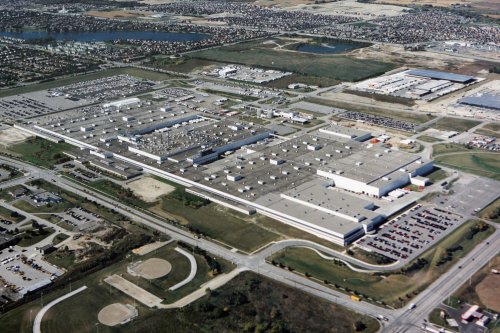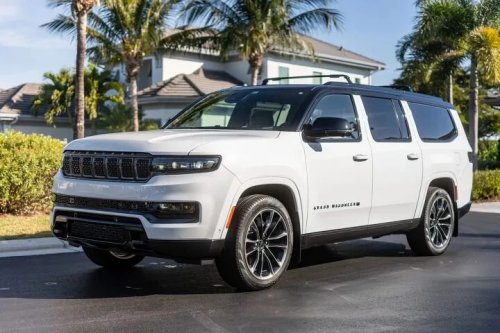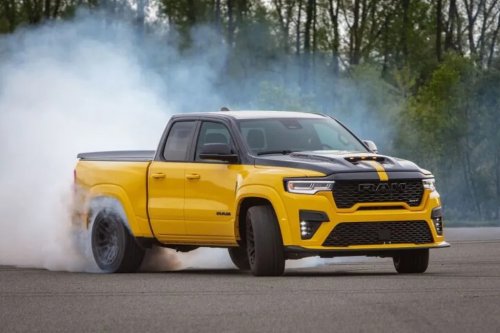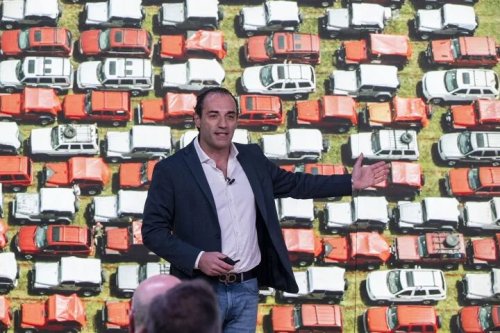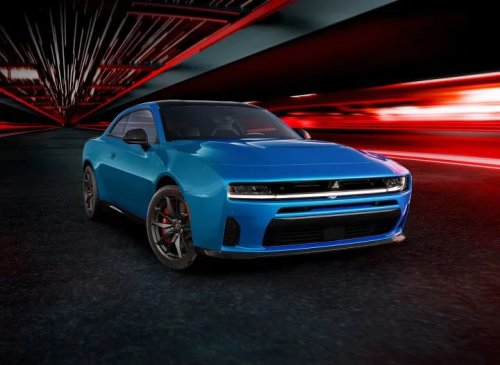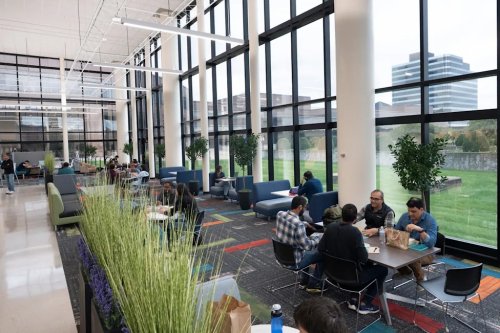




















Inside the Complex Housing Stellantis' BraintrustStellantis (Stellantis)It has been 40 years since construction started on the Chrysler Technology Center in Auburn Hills, Michigan, and 30 years since the corporate tower was finished, complete with its signature 35-foot Pentastar that can be seen for miles as cars zip along I-75. The tech center and the tower, the latter often wrapped in giant images assembled like pieces of a jigsaw puzzle, form the nucleus of the 504-acre Stellantis North America campus and headquarters.Under the current leadership of CEO Antonio Filosa and his FastLane 2030 plan, Stellantis is working on 11 all-new models and 12 refreshes in the next five years. That has the whole complex hopping and, in some cases, changing and upgrading how they do things, working to ensure quality while cutting regional costs by $3 billion.Stellantis gave us a tour of some of key and updated areas in the complex.Stellantis (Stellantis)Test LabsKey to developing all those new and updated models are 34 engineering labs, seven chassis dynamometers, and 110 powertrain dynos to test internal combustion engines, hybrid systems, and EV powertrains. Some cells test single propulsion units, others full systems, like the engine, transmission, motors, and batteries used for extended-range hybrids (EREVs) where the gas engine acts as a generator. While we were there, engineers discussed simulating a depleted battery, prompting the engine to come on. The EREV technology will initially go into the Jeep Grand Wagoneer and Ram 1500 REV.AdvertisementAdvertisementIn the test cells, engineers try to break things, bringing them to failure to detect problems early and fix them before the vehicle launches. They can also do emissions work without the actual vehicle.The engineers have pivoted back to more internal combustion engine work in the last 18 months, said Mark Christie, propulsion systems testing and analysis lead. Many of the labs are multi-energy to test ICE and EV, giving them the flexibility to pivot quickly and easily.Stellantis (Stellantis)New Approach to DesignThe complex also has an extensive design studio that was renovated 10 years ago, adding a $4 million giant digital screen and projector that are used constantly. Design has gone from air brushes to CGI (computer generated images) to digital with help from AI, says Ralph Gilles, Stellantis global design chief. AI provides efficiencies that leaves designers more freedom to explore ideas, said the man who oversees six global design studios in the U.S., France, Germany, Italy, China, and Brazil.An international design studio works on interiors, and the automaker has come a long way from the days when interiors were seas of plastic and tired design. He remembers the Chrysler 200 in 2007 when there were only four UX designers, and it showed. Then Gilles saw the Audi A4 and it shook his world. Now Stellantis designers work with better materials, more imagination, and an obsession with fit and finish. There are close to 200 UX designers alone, and that will continue to grow with the launch of the STLA Brain infotainment and connectivity system next year that will open the floodgates of what is possible, he says.AdvertisementAdvertisementGilles has built departments with people who want to do interiors and want to be in color and trim, as opposed to aspiring exterior designers paying their dues on those teams. He still wants designers who can sketch and use clay, something he won't give up, because a car needs a human touch.As for cost cutting, Gilles says his teams were already working to enhance value and savings by reducing complexity. In some cases, they had gone too extreme, over-spec'd the interiors, and needed to find a happy medium. "We were trying so hard to make a statement that we were exceeding the competitive set, making more bespoke interiors than we needed to." They are backing up a bit, finding value, and where money is best spent.Stellantis (Stellantis)Wind Tunnel Reveals AllStellantis has one of the 36 wind tunnels in the world, and it's one of just six in North America. These tunnels share data so they can calculate what a vehicle in one tunnel would do in another. The tunnel tests the aerodynamics and stability of ideas like the R-wing on the Dodge Charger Daytona and determining that a pickup is more aerodynamic with the tailgate up, followed by it being down, and has the most drag if the gate is off altogether.Chrysler built the tunnel in 2002 with a fixed floor and spent $30 million in 2024 to upgrade it to a moving ground plane with five steel belts so wheels and tires can rotate. It can be adjusted to a new wheelbase and track with the push of a button. The upgrade should keep it relevant for another 20 years, says Greg Fadler, aerodynamics and wind tunnel lead.AdvertisementAdvertisementThe tunnel runs one shift a day, down from three shifts in the past. It is not that Stellantis is developing fewer models, it just has more tools to engineer with, one of them being the wind tunnel that can blast air currents up to 160 mph. For reference: A person can no longer reman upright after 110 mph and a skydiver in freefall hits 125 mph. Fadler usually keeps the winds below 140 mph, at which point the acoustic panels in the tunnel start to shake loose.Stellantis (Stellantis)Back to That Tower PenthouseThe corporate offices used to be on the 15th floor, with the giant Pentastar, but those C-suite offices are no longer occupied. Former Fiat Chrysler CEO Sergio Marchionne eschewed them for offices on the main floor, closer to employees, after he took over Chrysler in 2009 and his successors have continued the practice. The top floor is still used occasionally for events. And the giant boardroom is still there—it had to be hoisted into place by crane, so it's not going anywhere.