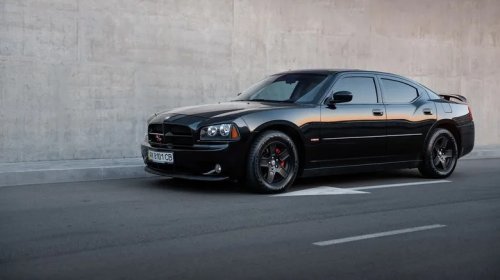
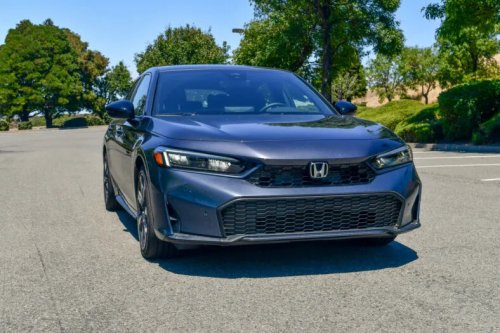
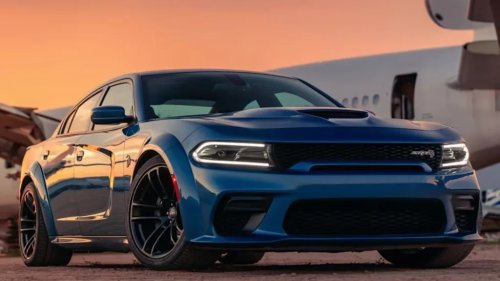
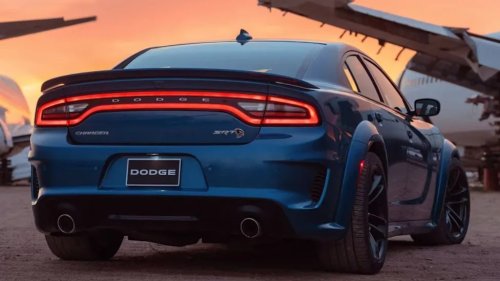
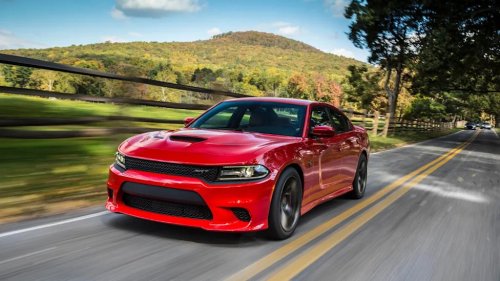
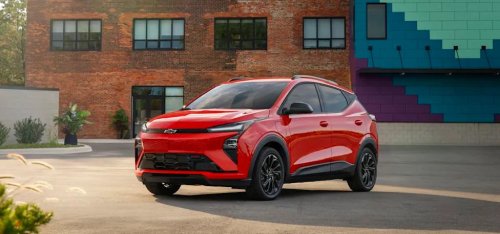
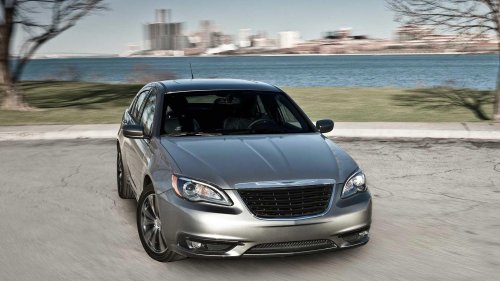
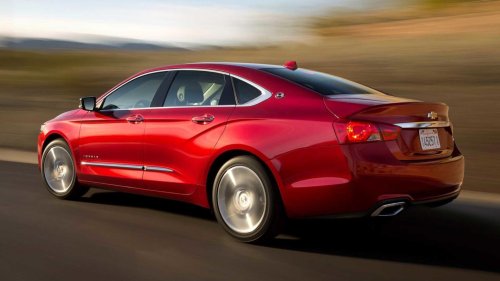
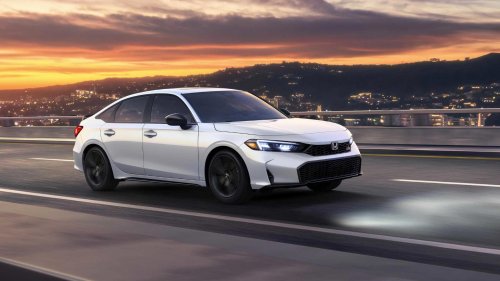
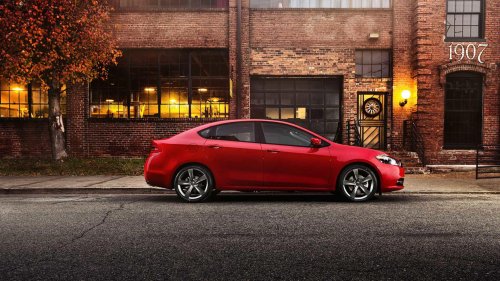
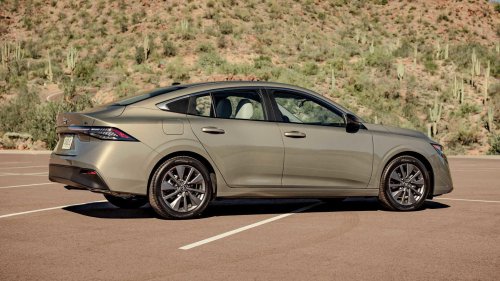
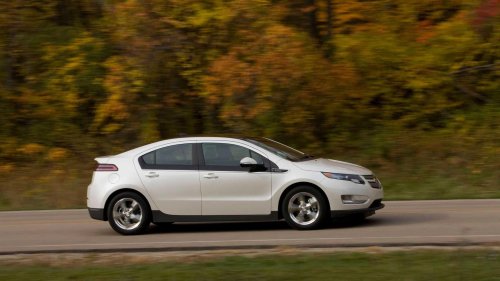
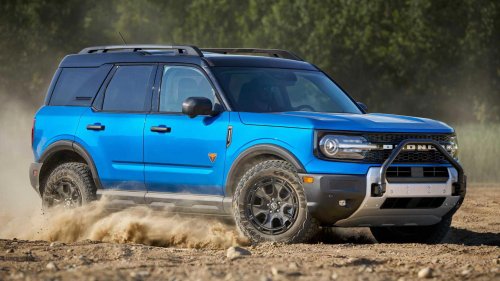
The American sedan has been on quite a rise-and-fall journey over the past 20 years, and now the Trump administration's proposed changes to relax fuel economy standards may breathe new life into the three-box four-door. But before we ponder the sedan's future in America, it's helpful to review the past decade, in which Detroit automakers abandoned the segment with brutal speed, unable to make much money on them.Fiat Chrysler (now Stellantis) launched the midsize Chrysler 200 and compact Dodge Dart sedans, and they departed quickly in 2016, after only three years in the Dart's case. In 2023, the long-running rear-wheel-drive Chrysler 300 sedan went away, as did its Dodge Challenger coupe and Charger sedan platform mates.Chrysler, StellantisFord stopped producing the Focus for the US in 2018, the Taurus and Fiesta in 2019, and the Fusion and Lincoln Continental and MKZ in 2020. Of the three Detroit automakers, General Motors has held out the longest with its sedans, with production ending for the Chevrolet Volt, Cruze, Buick LaCrosse, and Cadillac ATS and XTS in 2019; Impala, Sonic, and Buick Regal in 2020; Chevy Spark in 2022, and Chevy Malibu in 2024.This cross-brand bloodletting leaves Detroit with just a handful of non-crossovers, non-SUVs, non-trucks: the Ford Mustang, Chevrolet Corvette, Dodge Charger (EV and ICE), and 2027 Chevy Bolt. The Cadillac CT4 and CT5 are on the way out, but with plans for a next-generation ICE CT5 reportedly coming in the future. And there's a new Buick sedan, too.Chevrolet And just like that, the US "car" market leaned heavily toward more-profitable high-riding utility vehicles, while Japanese and Asian transplant automakers divvied up what remained of consumers who didn't want a pickup or an SUV. It was only 20 years ago that the Ford Taurus was America's best-selling passenger car, for five years running. But it didn't take long before Detroit automakers admitted they couldn't compete with the Toyota Camry and Honda Civic. From 50.4 MPG To 34.5 MPG Honda Now, the Trump administration is recasting the framework for calculating corporate average fuel economy requirements for all light-duty vehicles available in the US, proposing National Highway Traffic Safety Administration standards to achieve a fleet average of 34.5 mpg by model year 2031. Those would be considerably relaxed from the Biden administration's fleet target of 50.4 mpg by 2031.The new proposed rules, which are still a long way from being finalized, might create fertile ground for more sedans because they would be classified together with car-based crossover utility vehicles and minivans that until now have been considered trucks for regulatory purposes.Dodge So, if an automaker is struggling to meet its new fleet fuel-economy target with its cars and crossovers, it ostensibly could shift to more sedans (or coupes, hatchbacks, or roadsters, for that matter), which tend to be smaller and more aerodynamic for better fuel economy. And the idea that sedans could be less expensive is lost on no one.But here's the rub: the Trump administration is eliminating penalties for automakers failing to comply with the new standards, which makes one wonder why Trump isn't abolishing them completely. And how will less stringent fuel-economy regulations impact air quality?Ian Wright/CarBuzz/Valnet Is this the moment when Detroit automakers wade back into the sedan battlefield? Automotive expert John McElroy is skeptical, saying they left sedans because they could barely make money on them. "Though Toyota, Honda, Nissan, Hyundai, and Kia make sedans in the US, their labor costs are far below what the D3 pay," McElroy says to CarBuzz via email."The only way for the Detroit 3 to make a profit selling sedans is to design cost out."–Autoline.tv Host John McElroyMcElroy refers to Ford's development of its efficiency-focused Universal Electric Vehicle platform "that is eliminating 30% of the workforce from the plant." Should Have Reclassified Crossovers Sooner Government regulators should have reclassified crossovers from trucks to cars (except for body-on-frame SUVs) long ago, says analyst Sam Abuelsamid, vice president of Telemetry. "In theory, this would definitely provide an incentive for manufacturers to put more emphasis on cars vs crossovers. There definitely seems to be a move toward launching more car-like vehicles, but I think this is being driven more by a shift in consumer tastes, especially among younger buyers that want something more distinctive," Abuelsamid tells CarBuzz.Chevrolet But the shift will take time: Developing a new vehicle from scratch takes about four years, and sorting out the regulations might even take that long, Abuelsamid says.General Motors isn't saying much about its product plans, although GM President Mark Reuss said not long ago at a town hall forum that he would love to have a hybrid-electric sedan in the lineup and that the company is trying to make it happen.Likewise, Toyota isn't opening its strategic playbook. "We can say that our strategy has been and remains consistent with consumer demand," a spokesperson tells CarBuzz. Between Toyota and Lexus, the Japanese automaker is flush with sedans, even sporty coupes.FordAnalyst Sam Fiorani recalls when CAFE standards switched to a calculation based on footprint and wheelbase for every vehicle, a process that will likely stay with the new regulations."It was 2015 or 2016 before it became law, which is why, around that time, the Focus and the Cruze and the Dart all went away," says Fiorani, vice president of AutoForecast Solutions. "We don't see traditional sedans and hatchbacks coming back, unless they were to make a low-riding version of a (Ford) Bronco Sport into a passenger car and make it a hatchback or a wagon instead of a crossover."



















 +77 others