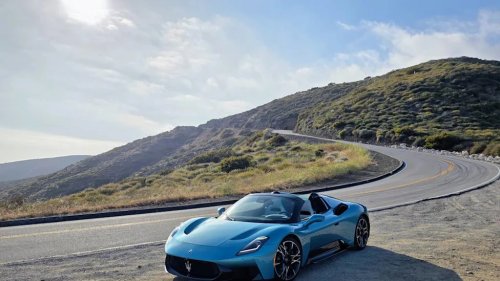
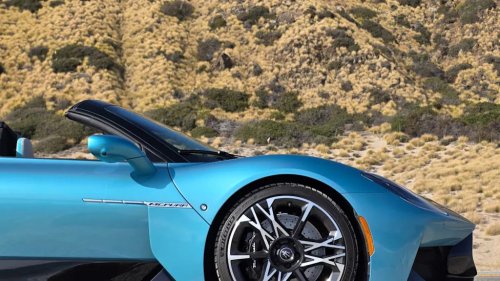
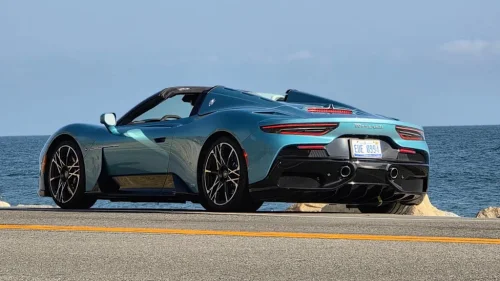
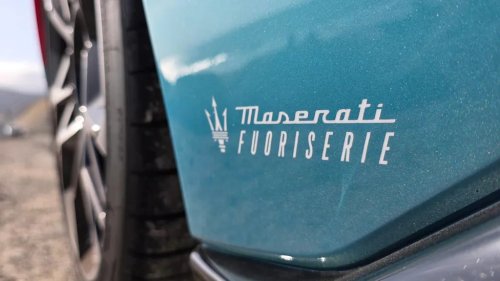
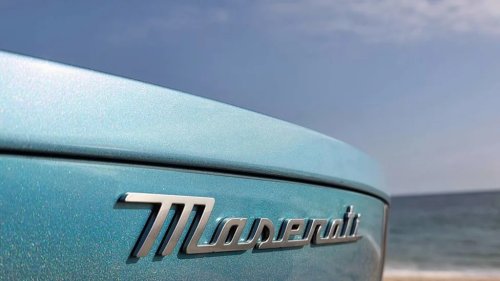
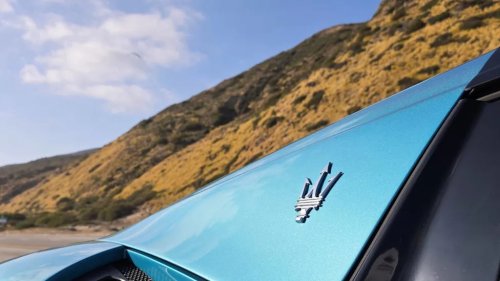
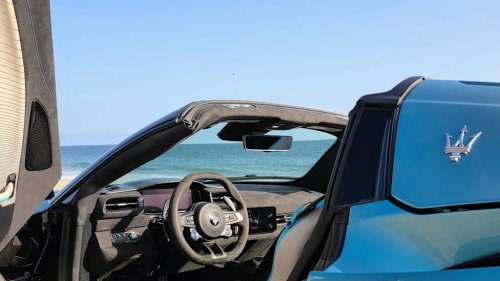
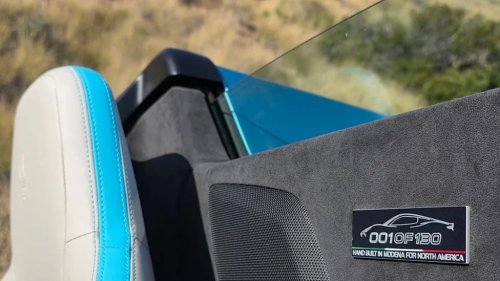
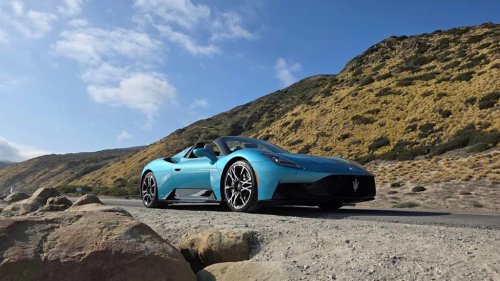
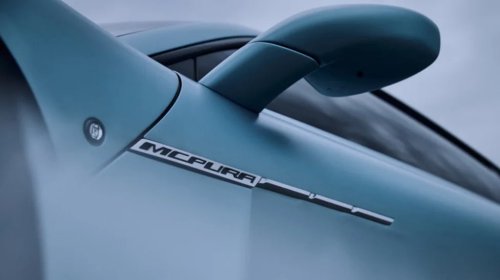
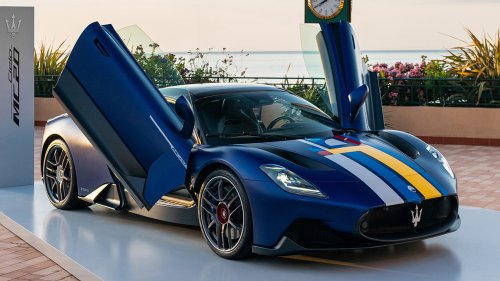
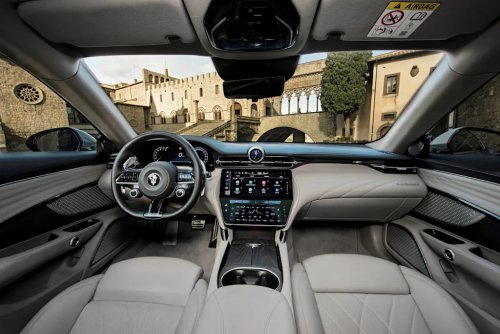
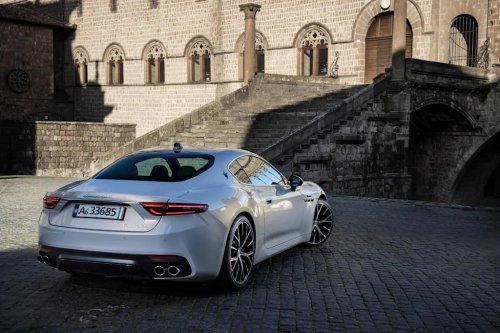
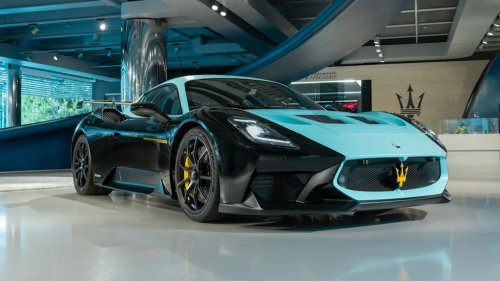
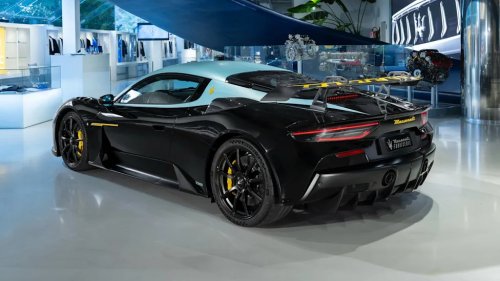
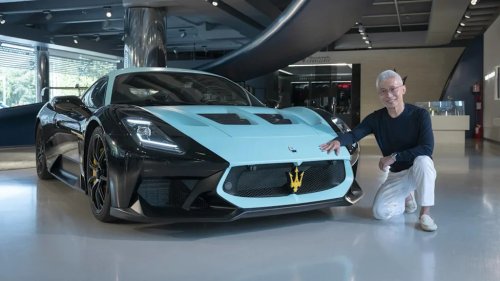
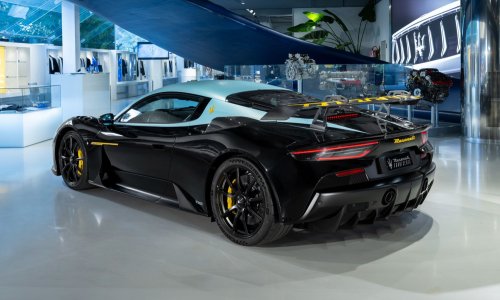
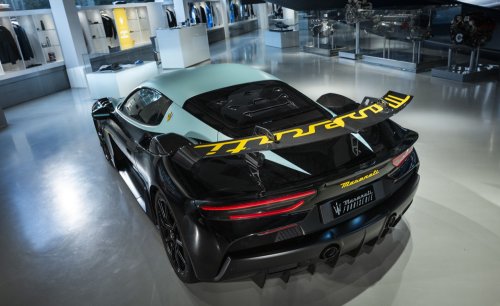
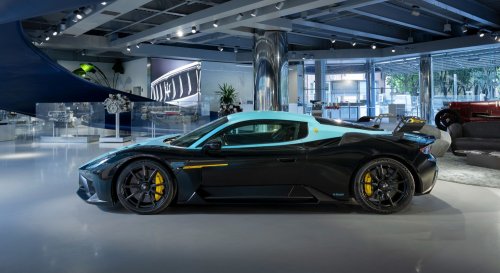
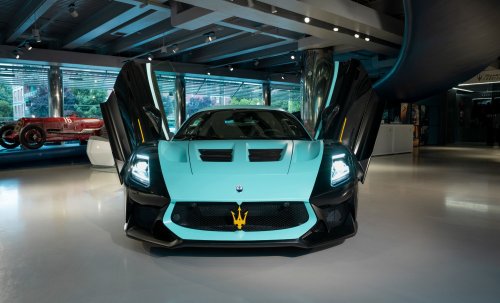
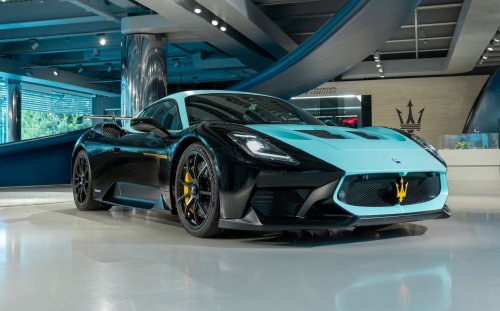
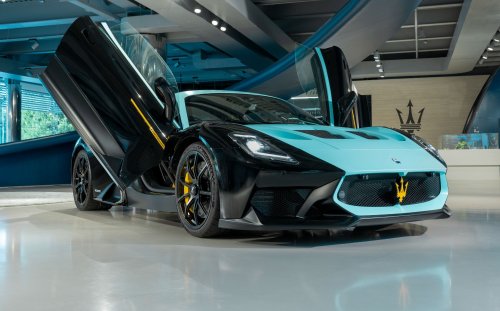
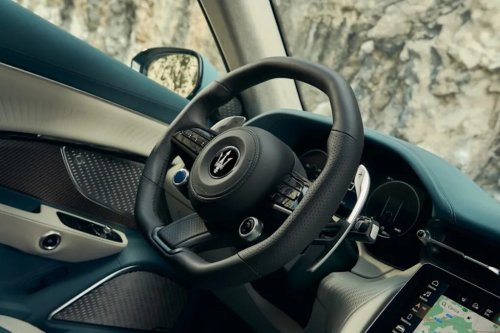
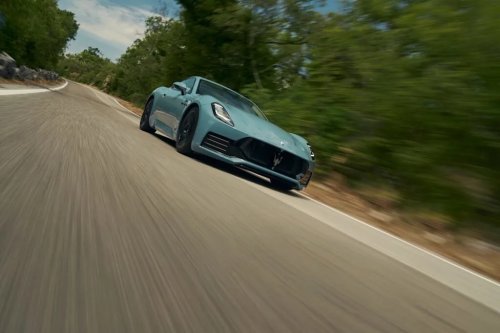
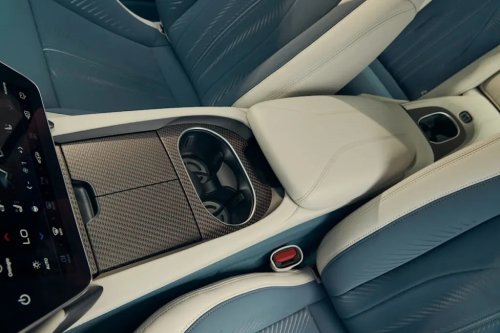
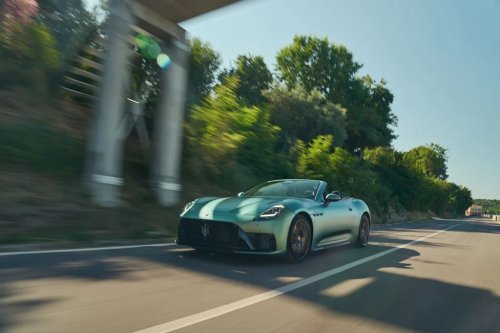
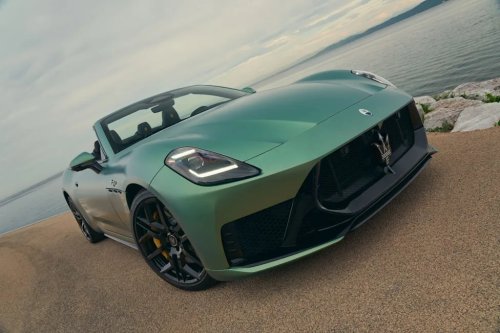
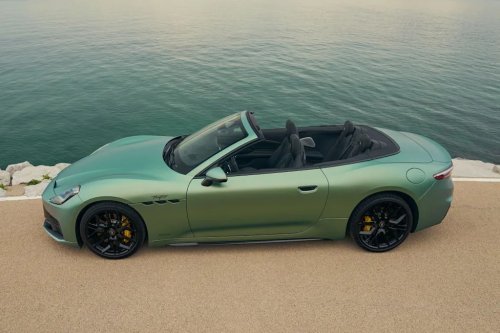
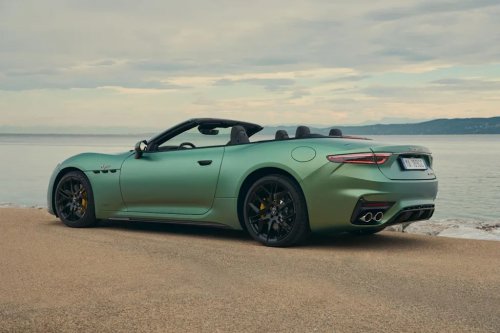
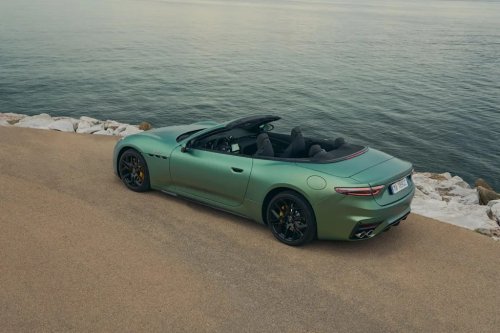
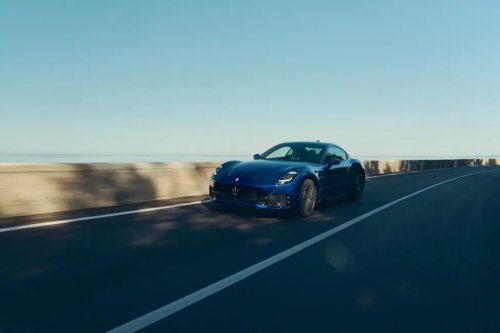
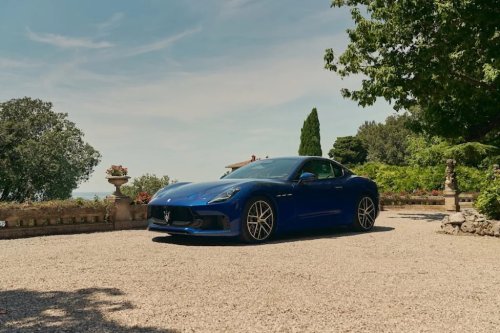
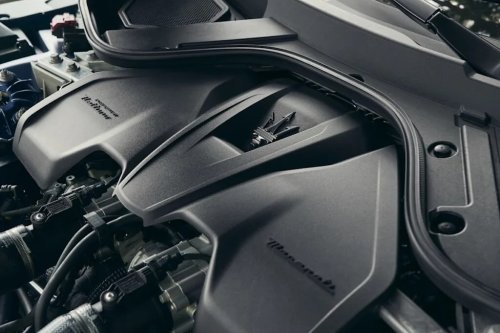
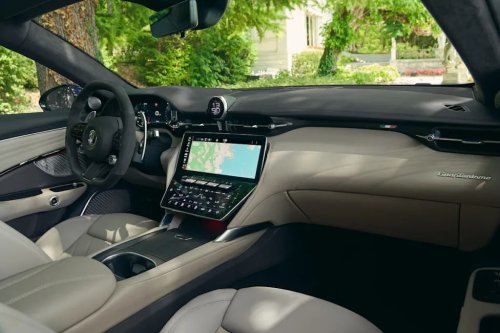
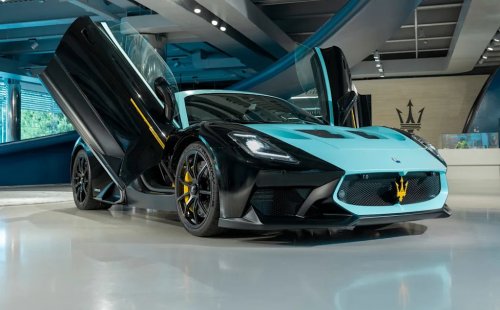
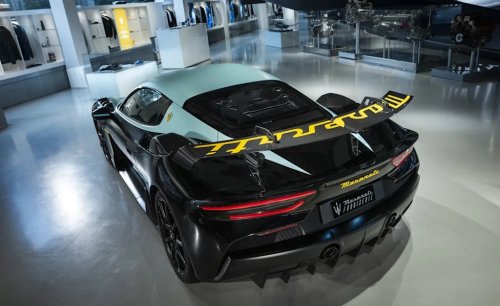
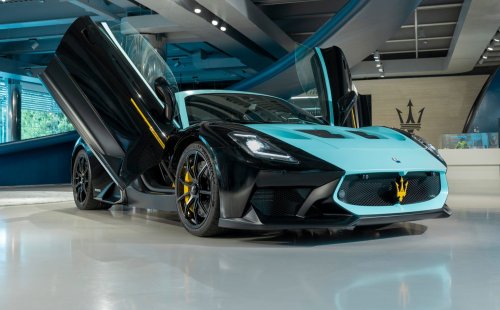
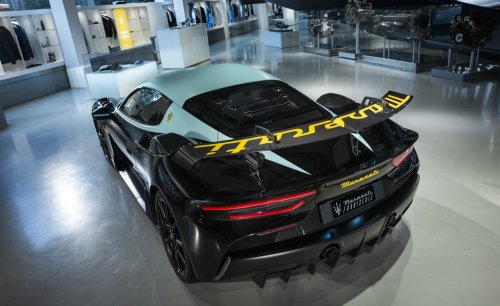
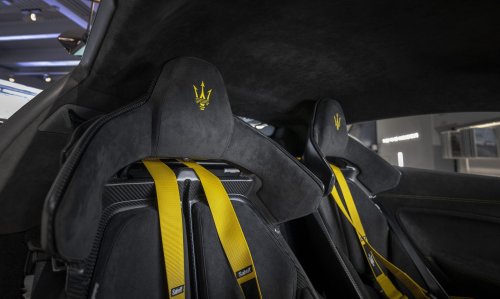
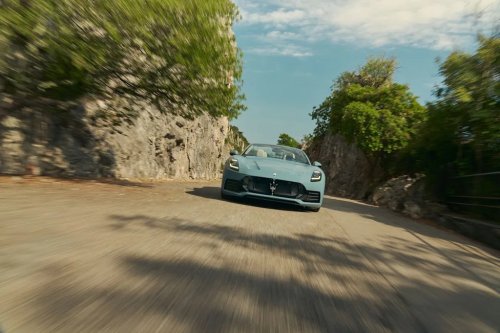
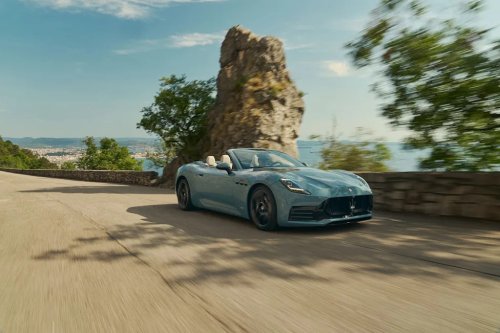
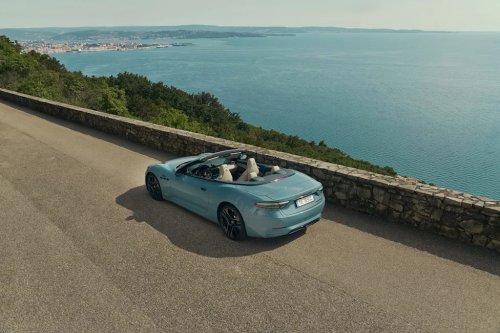
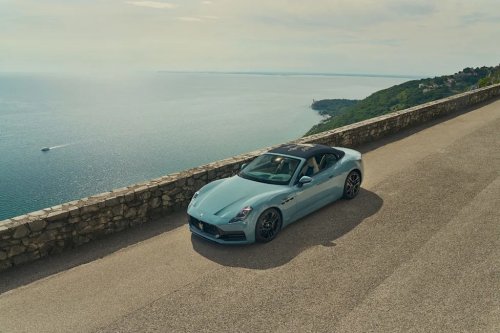
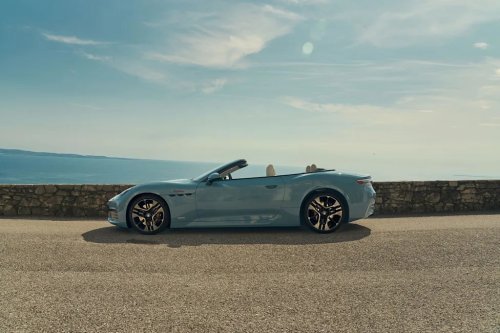
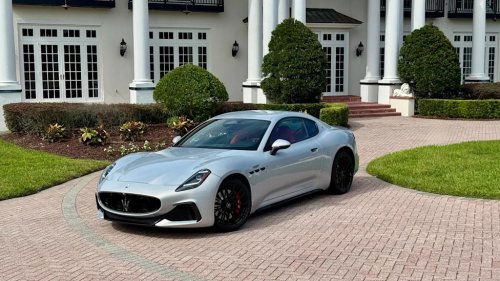
Autoblog and Yahoo may earn commission from links in this article.There are maybe four or five cars currently in production that stop you mid-stride in a parking lot. Cars so proportionally resolved, so effortlessly beautiful, that they bypass the analytical part of your brain entirely and speak directly to whatever wiring makes human beings appreciate a perfect line. The Bugatti Chiron is one. The Ford GT. The McLaren P1. And the Maserati MC20, now reborn as the MCPura, is on that list.It has been since the day it was unveiled, and the 2026 refresh, which sharpens the nose, cleans up the rear diffuser, and adds a few new color options without disturbing a single major surface, only confirms what was already obvious: this is one of the most gorgeous machines money can buy. The question, as with any car this beautiful, is whether the experience from the driver's seat matches the view from the sidewalk.Kyle EdwardThe Anti-Hybrid SupercarThe MCPura is a mid-life evolution of the MC20, which launched in 2020 as the car meant to prove Maserati could still build a proper supercar. Five years later, the MC20 was successful enough to warrant a rebrand. "Pura" translates loosely to "pure," and the name reflects the car's defining philosophy: no hybrid system, no all-wheel drive, no electric motors, no apologies. Just a twin-turbo V6, a carbon fiber tub, rear-wheel drive, and a shape that could hang in a gallery.AdvertisementAdvertisementThe coupe starts at $246,000, while the retractable hardtop Cielo starts at $281,000. Maserati plans to build roughly 1,000 combined coupes and Cielos per year, with only 130 allocated to the North American market. That scarcity is deliberate. Maserati isn't chasing volume here; it's chasing a very specific kind of buyer, someone who values exclusivity, Italian craftsmanship, and emotional connection over lap times and spec-sheet supremacy.Kyle EdwardThat positioning matters because the MCPura's competitive set includes the Ferrari 296 GTB ($342,205) and the McLaren Artura (approximately $230,000), both of which are hybrid-assisted, both of which are technically faster on a circuit, and both of which cost their owners a measure of mechanical purity that the Maserati simply doesn't ask for.The Hardware UnderneathThe Nettuno engine is the heart of the MCPura, and it's a more interesting piece of engineering than it gets credit for. The 3.0-liter twin-turbo V6 produces 621 hp and 538 lb-ft of torque, which is unchanged from the MC20. Maserati's engineers noted that extracting additional power would push the boundaries of Euro 6 emissions compliance, so the focus was on refinement rather than escalation. What they've built is an engine that delivers a rare combination of low-end pull, a swelling mid-range turbo rush, and a top-end charge that screams to an 8,000-rpm redline. It's a potent, heavily boosted unit that hits hard at virtually any point in the rev range.Power routes through an eight-speed dual-clutch transmission to the rear wheels only. The gearbox is one of the car's standout components: shifts are instantaneous in Sport and Corsa modes, with a satisfying mechanical precision that rewards aggressive use of the column-mounted paddles. The turbo wastegate whoosh between gears adds an audible punctuation mark that becomes addictive. Maserati claims a sub-2.9-second 0-60 time, which feels about right from the seat, and a 202-mph top speed for the coupe.Kyle EdwardThe chassis is a carbon fiber monocoque developed in collaboration with Dallara, the same outfit behind the Haas F1 car, the Stradale, and various Le Mans prototypes. At 3,083 pounds dry (roughly 3,307 curb), the MCPura is remarkably light for a twin-turbo supercar, over 300 pounds lighter than the hybrid Ferrari 296 GTB. Double-wishbone suspension at all four corners with adjustable dampers and front and rear anti-roll bars provides five drive modes: WET, GT, SPORT, CORSA, and ESC OFF.Behind the WheelThe MCPura's scissor doors swing up and out with appropriate drama, though they demand more clearance than you'd expect in a tight parking space. Drop into the Alcantara-lined cockpit, and the seating position is low, tight, and angled slightly toward the instrument cluster in the way that proper mid-engine cars should be. Forward visibility is better than the roofline suggests, and the ingress/egress is surprisingly manageable for a car with a carbon tub.Kyle EdwardOn the move, the MCPura is fast in the way that rearranges your internal organs. The twin-turbo V6 delivers its 538 lb-ft with a directness that pins you to the seatback from well below 3,000 rpm, and the thrust only builds as the turbochargers spool fully and the engine charges toward its 8,000-rpm ceiling. In GT mode, the powertrain is remarkably civil; the engine hums at low revs, the transmission finds tall gears early, and the ride settles into a long-distance cruise that's more comfortable than any mid-engine supercar has a right to be. Switch to Sport or Corsa and the character shifts dramatically: throttle response sharpens, the exhaust note hardens, and the dual-clutch holds gears until you ask for the next one.AdvertisementAdvertisementThe dual-clutch transmission deserves specific praise. It's fast, decisive, and communicates each shift with a satisfying mechanical thwack that makes paddle-shift driving genuinely engaging. There's no hesitation on downshifts, no lurch on upshifts, just clean, instantaneous ratio changes that let you focus on the road.Chassis, Steering, and DynamicsThe steering is crisp, light, and direct, with a quick ratio that lets the MCPura change direction with minimal effort. Through fast sweeping corners, the car feels planted and balanced, its low center of gravity and short overhangs working in concert with the carbon tub's rigidity to produce a chassis that rotates with confidence. The weight distribution, biased roughly 60% toward the rear, puts mechanical grip where you need it most under acceleration.Kyle EdwardHere's where the MCPura's character diverges from its rivals: the electronic traction control is calibrated with a light touch that recalls supercars from a previous era. Even in GT mode, aggressive throttle application will coax the rear end into rotation. In Sport and Corsa, the car becomes a genuine handful, willing to slide on power exits with an enthusiasm that's equal parts thrilling and demanding. This isn't the surgical, electronically managed precision of a Ferrari 296 GTB or the four-wheel-drive traction of a Porsche 911 Turbo S. The MCPura asks more of its driver, and that's both its charm and its limitation. On a track, the permissive traction control and occasionally unpredictable brake-by-wire feel mean the car requires more management than a Ferrari would under similar conditions. For fast road driving, though, the playfulness is a feature, not a bug.Kyle EdwardThe one legitimate criticism of the powertrain is the sound. The Nettuno V6 sounds good; it revs with a raspy, metallic edge that's distinctly different from the V8 thunder Maserati is historically known for, and the turbo wastegate whoosh between shifts is genuinely exciting. But it doesn't sound as good as a naturally aspirated Ferrari V8 or a Lamborghini V10. There's a layer of visceral soul missing, a frequency or a harmonic that the human ear associates with "exotic car" that the boosted six-cylinder doesn't quite reach. It's a fine engine note on its own terms. It's just not the one your imagination paints when someone says "Maserati."Inside the CabinThe MCPura's interior received a more significant update than its exterior for 2026. Nearly every surface is wrapped in Alcantara, reducing glare and weight while adding a tactile warmth that leather can lack. A new flat-top, flat-bottom steering wheel, available in standard or carbon fiber with integrated shift lights, replaces the previous design. The overall aesthetic remains clean, purposeful, and free of unnecessary screens or touch-sensitive controls.Kyle EdwardA 10.25-inch digital instrument cluster and matching 10.25-inch infotainment screen handle essential functions without dominating the cabin. The interface is simple, the graphics are clean, and the technology feels restrained, keeping the focus on driving rather than multimedia. However, some secondary switchgear falls short of expectations for a $246,000 supercar, with certain plastic buttons and toggles undermining the premium feel created by the Alcantara and carbon fiber.Kyle EdwardAdvertisementAdvertisementThe real highlight is Maserati's Fuoriserie customization program. Buyers can specify virtually any color, material, or trim combination their imagination and budget allow. Three launch colors are available: Devil Orange, AI Aqua Rainbow, and Bianco Audace, but the broader palette is nearly limitless. Maserati expects 84 percent of MCPura buyers to select at least one Fuoriserie option, turning the car from a production model into something closer to a commissioned piece.The CompetitionThe Ferrari 296 GTB is the MCPura's closest rival, and on paper it comes out ahead. Its hybrid-assisted twin-turbo V6 produces 818 hp, its chassis technology is more advanced, and its track performance is in another league. However, it costs nearly $100,000 more, weighs about 300 pounds extra, and adds the complexity of a hybrid system. The MCPura can't match the Ferrari's pace, but counters with lower weight, a lower price, and a level of mechanical purity the Ferrari sacrifices.Kyle EdwardThe McLaren Artura takes a similar approach at a lower price, combining a hybrid V6 with a sharper, more track-focused chassis, though concerns about McLaren reliability remain for some buyers. Meanwhile, the Lamborghini Temerario brings a hybrid-assisted twin-turbo V8 producing more than 900 hp and is expected to set the segment benchmark when production ramps up. It will also command a significantly higher price.For buyers who prioritize design over lap times and exclusivity over outright performance, the MCPura occupies a distinctive niche. It's the lightest, least complicated, and arguably most beautiful car in its class, while also being the most affordable.VerdictThe MCPura is a supercar you buy because it moves you in a way the spec sheet can't quantify. The Nettuno V6 is potent and precise, the dual-clutch transmission is excellent, and the carbon chassis is light enough to make 621 horsepower feel like more than enough. It won't out-lap a Ferrari on a circuit and it won't match a Lamborghini's theater, but it doesn't need to. What it offers instead is one of the most beautiful shapes on four wheels, a driving experience rooted in mechanical honesty rather than electronic intervention, and a bespoke program that makes every car a reflection of its owner. For the buyer who leads with emotion over spreadsheets, the MCPura is the one that stays with you.AdvertisementAdvertisementThis story was originally published by Autoblog on Jun 25, 2026, where it first appeared in the Reviews section. Add Autoblog as a Preferred Source by clicking here.