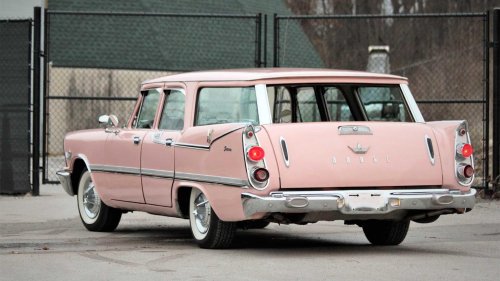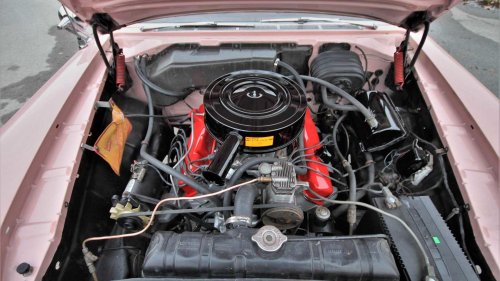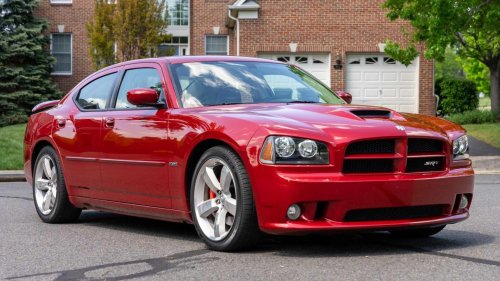
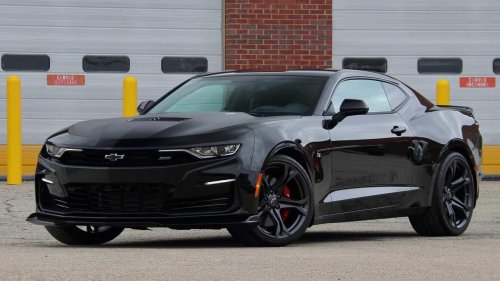
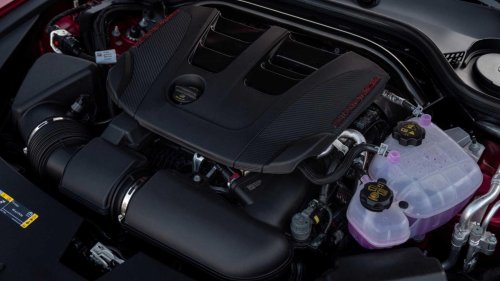
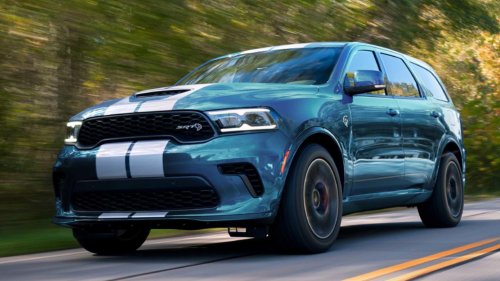
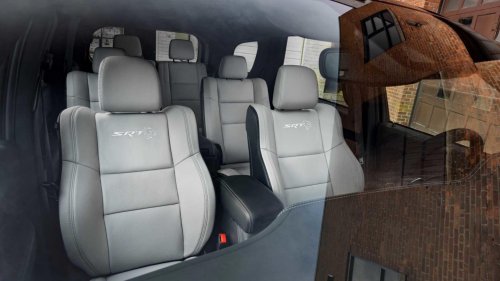
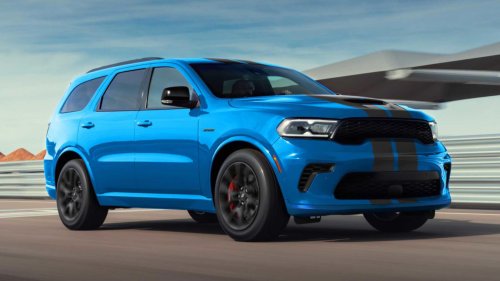
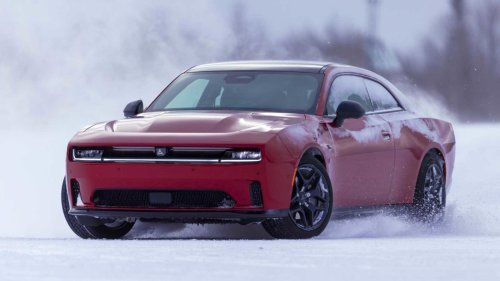
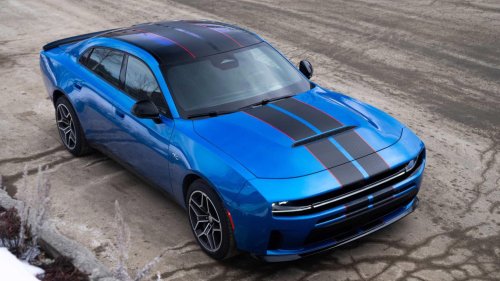
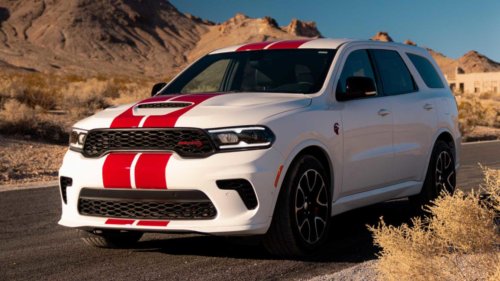



















The Golden Age of American Muscle launched in 1964 with the Pontiac GTO, but sadly was short-lived, effectively ending in 1971. Due to government emissions mandates and changing consumer demands for more fuel efficiency, the once mighty street machines were detuned into sick parodies of their former selves in 1972, which ushered in the Malaise Era. This shameful lack of performance lasted all the way until the early 2000s, when the Modern Muscle Car Era made horsepower cool again. With cars that had two or even three times the power of the classics, modern muscle was a truly amazing phenomenon, but it too was threatened by government intervention. Luckily, there was one vehicle that prevented the collapse of American muscle, and it was a supercharged SUV running on gasoline, which was the least likely vehicle to keep the dream alive. Charge Of The Modern Muscle Car Era Bring a Trailer The Ford Mustang has been in continuous production since its 1964½ debut, but for most of that time, it was nowhere near a high-performance vehicle. Its power was creeping back up in the new millennium, but it still wasn't the performance machine it should have been. GM killed off the Chevy Camaro and Pontiac Firebird in 2002, but they brought back the Pontiac GTO in 2004, that by 2005 was rocking a 400-horsepower 6.0-liter V8. Unfortunately, it was a badge-engineered Holden Monaro, which was an extremely uninspiring set of wheels.In 2006, Dodge rebooted the Charger as a four-door, which took some fans by surprise, but it was an impressive performer, and it came with Hemi V8 options. This next-gen Charger ushered in the Modern Muscle Car Era with a 340-horsepower 5.7-liter V8 and the SRT8 425-horsepower 6.1-liter Hemi V8, which was the first 13-second car since the classic era. Real street performance lit a fire under Ford, and they put more power in the Mustang to compete, then a few years later, Chevy brought back the Camaro with some serious power under the hood, igniting a glorious horsepower war. The Great Muscle Crash of ’24 Mecum The Corporate Average Fuel Economy (CAFE) is a government regulation that says all of a manufacturer's models must meet a certain MPG level. Companies can sell gas-guzzling muscle cars, but it has to be offset by more fuel-efficient vehicles for an average that meets an arbitrary number. The program started in 1975, but didn't really become a serious issue until the Obama administration, when the MPGs were dialed up and then, under the Biden administration, set to unrealistic levels. It became apparent that Dodge's lineup of high-performance street vehicles wasn't going to make it, and parent company Stellantis was facing billions in fines, so in 2023, the ICE Challenger and Charger were discontinued, to be replaced by an EV. The very next year, Chevy dropped the Camaro due to poor sales, and suddenly there was virtually no modern muscle to be had. Hemi Gets Rocked Like a Hurricane Stellantis As if the loss of V8 Challengers and Chargers wasn't enough, rumors were swirling that the Hemi V8 was not long for this planet. In 2024, the Jeep Wagoneer as well as the Grand Wagoneer lost access to the Hemi V8 and then in 2025, in a stunning move, the Ram 1500 was no longer Hemi-eligible. All of these vehicles had their Hemi V8 options replaced by a 3.0-liter twin-turbo Hurricane inline-six. With horsepower ratings from 420 to 550, the Hurricane I-6 doesn't exactly disappoint, but it's missing hemispherical combustion chambers and two cylinders to be a proper muscle car engine. We bring this up because Dodge actually made a gas-powered version of the Charger Daytona known as the SIXPACK, with R/T and Scat Pack trims. Luckily, the rumors of the Hemi's death were greatly exaggerated, and it's actually coming back with a fury, but it was the Dodge Durango that kept the flames alive and showed that this was too important an engine to discontinue. Dodge Durango Hellcat Claws Back Stellantis The demise of both the Challenger and Charger in 2023 with, at the time, an EV-only replacement, plus the impending doom of the Camaro made for a bleak performance landscape. Yes, the Mustang still existed, but one model isn't a movement, and so the Modern Muscle Car Era seemed all but finished. Then, in a surprise that seemed counter to Stellantis' plans for a fuel-efficient fleet, Dodge brought back the Durango Hellcat SUV, packing a 710-horsepower 6.2-liter supercharged Hemi V8, which caused a sudden surge of enthusiasm among fans. Dodge originally built the Durango Hellcat in 2021 as a one-year-only special edition, but it proved to be so popular that it was brought back for the 2023 model year. Here is where things get puzzling, as both the Challenger and Charger were extremely popular but were canceled, while the Durango Hellcat, which sold in far fewer numbers, got a reprieve. The Durango Hellcat is a worthy standard-bearer, but it doesn't make a lot of sense for the muscle cars to have been discontinued if Dodge was allegedly trying to meet CAFE standards. 3-Row Seating 3.5-Second 0-60 Ride Stellantis Back in 1966, when the 426 Street Hemi was first introduced, it was available to all Dodge and Plymouth intermediate models, which meant it was actually an option for the Coronet station wagon. Sadly, nobody ever pulled the trigger on one, but with the Durango Hellcat, we finally got a family ride that can smoke almost anything on the street. As a full-size SUV with legitimate third-row seating, the Durango is one of the most family-friendly rides ever built. Equipped with the 6.2-liter supercharged Hemi Hellcat V8, it is also one of the most performance-oriented vehicles ever built. With 710 hp and 645 lb-ft of torque, the Durango Hellcat is capable of a 3.5-second 0-60 time, 11.5-second quarter-mile, and a 180 MPH top speed. An 11-second quarter-mile used to be the domain of a special-edition factory drag car, but here was a regular production family hauler that could literally annihilate European sports cars and heavily modified imports, which is arguably one of the most remarkable things to happen in the modern performance era. 392 Also Keeps the Durango True Stellantis Stellantis actually did announce that they were phasing out the Hemi V8, but the Durango actually saved it from the chopping block. In 2023 and 2024, when things were supposed to be shifting to EVs and Hurricane I-6s, the Durango stuck with a 295-hp 3.6-liter Pentastar V6, a 360-hp 5.7-liter V8, a 475-hp 6.4-liter Hemi V8, and, of course, the massive supercharged Hemi Hellcat. The 6.4-liter Hemi, which is 392 cubic inches and meant to honor the original 1957 Hemi 392 Chrysler FirePower V8, was a cheaper alternative to the Hellcat that still delivered the thrills. A 2023 Durango SRT 392 could hit 0-60 in 4.6 seconds and rock a quarter-mile in 13.2 seconds, which is astounding for a nearly 6,000-pound full-size SUV with a 1,410-pound payload and 8,700-pound towing capacity. The Durango R/T 392 took a break in 2025, but returned in 2026 because, like the Hellcat, it was too popular for Dodge to ignore. The Disappointing Daytona EV Stellantis The Durango Hellcat's role in keeping American muscle alive is related to the botched rollout of the Charger Daytona EV. Remember, Dodge canceled the ICE Challenger and Charger in 2023, which was premature, because their battery-powered replacement wasn't ready to go in 2024, so they lost an entire year of vehicle sales. Dodge sold 120,880 muscle cars in 2023 and exactly zero in 2024. Well, technically there was still some 2023 stock that sold in 2024, but Dodge didn't have a 2024 model year muscle car and, in fact, it was the first time since WWII that the brand didn't offer a passenger car. They did, however, have a powerful supercharged SUV in the Durango Hellcat that at least reminded people that Dodge was still the leader in street performance. American Muscle Means V8 Hemi Power Stellantis Dodge touted the Charger Daytona as the "world's first EV muscle car," which, as it turns out, was something nobody asked for. When it did finally start shipping in 2025, only 7,421 people bought them and sales for 2026 are looking just as soft. Dodge perhaps sensed this might be an issue, so they also created a gas-powered version known as the Charger SIXPACK. With either a 420-hp or 550-hp 3.0-liter twin-turbocharged I-6, the car has some serious performance, and truth be told, it's a sharp-looking vehicle, but muscle cars, especially the Charger, need a Hemi V8. There are several parameters for a muscle car that have been relaxed over the years, like the 2006 Charger that came with four doors instead of the traditional two, but the V8 engine is non-negotiable. It doesn't matter how much power they throw into an EV or a six-cylinder, because it's not a V8, and that's what muscle car fans want under the hoods of their cars. Period. Hellcat Holds Mopar Muscle Steady Stellantis Post-2023, if you wanted a Hemi V8 with some insane power, the Durango Hellcat was your only option, so it has definitely been holding down the fort at Mopar, but its sheer awesomeness has also ushered in a renaissance. Dodge had announced the cancellation of the Hemi V8, but the Durango wouldn't let them do it, and the Hemi is now coming back to many Dodge, Jeep, and Ram models that lost access. Even better, the 6.2-liter supercharged Hemi Hellcat V8 is returning to Ram in the 777-horsepower Ram 1500 SRT Rumble Bee, and the greatest news of all is that it's almost guaranteed that the Hemi is heading back to the Charger. Though there's no official word from Dodge, it seems like a badly-kept secret that the Charger will once again be Hemi-equipped, because literally all signs point to it happening from the return of the 5.7-liter and 392 to the continuation of the Hellcat. All of this is because the Durango Hellcat held on to Dodge's last shred of street credibility, while demonstrating that fans still wanted serious Hemi V8 power.Sources: Stellantis