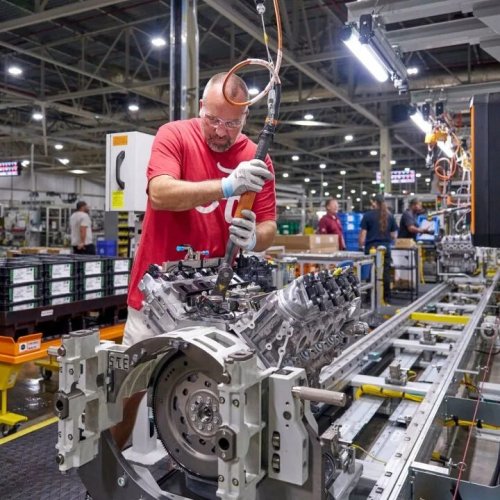
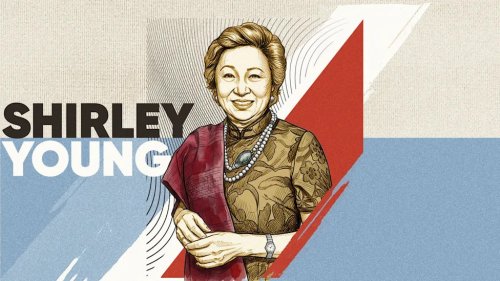
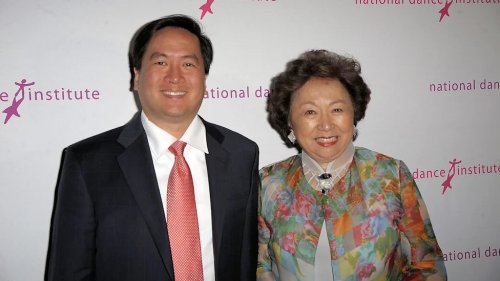
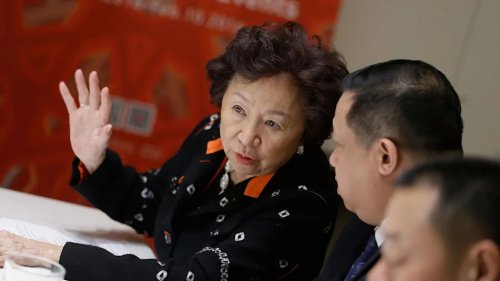
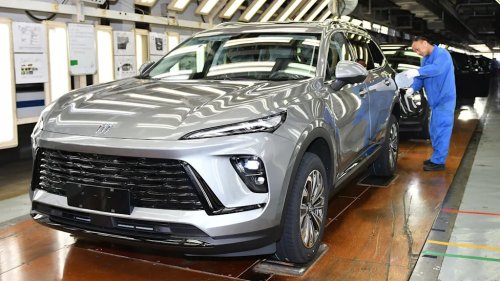
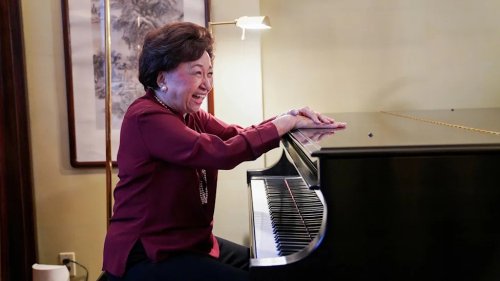
Shirley Young Helped GM Crack China Decades AgoRyan Lugo (Ryan Lugo)Sitting here in 2026, it seems as though there’s almost no stopping the colossus that has become China’s automaking sector. Making the inexorable rise of today’s top Chinese manufacturers even more incredible is the fact that most of them barely existed less than two decades ago. But many had some help. One of the ways the then-nascent Chinese domestic brands were able jumpstart their meteoric rise was through government-mandated foreign partnerships that produced joint-venture cars to serve its growing buying populus.One of the most successful of those partnerships has been the SAIC General Motors Corporation Limited—or SAIC-GM—a tie-up since the late ’90s that may not have gotten off the ground were it not for the efforts of Shirley Young, a very special Chinese American who proved instrumental in making it happen.An immigrant who smashed through glass ceilings at a time when most women weren’t doing anything of the sort, Young’s intrinsic knack for understanding people, markets, and motivations made her a corporate force and saw her eventually serve on the boards of several Fortune 500 companies. Although she died in 2020 at the age of 85, her outsized influence on the automotive industry endures. Arguably, she’s why Buick still exists today.A Pioneer in More Ways Than OneYoung was born in 1935 in Shanghai. At the time, her father served as a diplomat and was consul general for China to the Philippines, with the family posted in Manila during her early years. But tragically during World War II, Young’s father was captured, interrogated, tortured, and later executed by the Japanese, leaving her mother and their three daughters behind. When the war ended, China was too politically volatile to repatriate the family. Through a diplomatic connection, they gained passage to the United States, first arriving in California and then settling in New York City.AdvertisementAdvertisementWhile there, Young went on to prep school and later attended and graduated from the prestigious Wellesley College in Massachusetts. After school, she eventually joined Grey Advertising in the 1960s.“This is totally Mad Men era,” David Hsieh, Young’s eldest son, told MotorTrend in a recent interview. “Guys had little bars in their offices so they could have a midday martini when they wanted.”David Hsieh, left, and Shirley Young, right, attend the 2017 National Dance Institute Gala at the PlayStation Theater on April 24, 2017, in New York City.getty images (getty images)After giving birth to Hsieh, Young did something most women in the workplace didn’t do in those days: She decided to go back to work. Grey apparently had to create a maternity policy in the wake of her decision, because there wasn’t one before her. “That was the environment in which she came through the ranks,” Hsieh said.Young was a pioneer in many ways, one of the most noteworthy being how she prioritized using statistical consumer research to inform marketing and advertising decisions at a time when the advertising industry hadn’t really embraced those tactics yet. It was what put Grey Advertising ahead of so many of its competitors and later landed Young as the president of the company’s strategic marketing arm.AdvertisementAdvertisementBy the mid ’80s, Young’s successes were so recognized that she was asked to join the board of the Dayton Hudson Corporation, known today as the Target Corporation. She was one of a handful of women on the board of a Fortune 500 company with a business background. At the same time, Young’s second husband was living in Detroit, so she frequently commuted between there and New York City. This was how she came to meet fellow Dayton Hudson board member, Howard H. Kehrl, who also happened to serve as a vice chairman at General Motors.Kehrl recognized the value of Young’s approach to consumer insight research and how it could benefit GM. According to Hsieh, GM was full of “traditional car guys” at the time. Young was an outsider who didn’t grow up around cars “but knew a lot about how consumers thought, felt, and how to use research to make better decisions.” (MotorTrend reached out to GM multiple times for comment on Young’s time at the company but received no response.)In 1988, Young was hired to join GM full time.The GM DealWhile at GM, Young helped the automaker make significant strides in modernizing its approach to marketing.AdvertisementAdvertisementHsieh gave an example of one of Young’s contributions, recounting a story she used to tell. “In the ’80s, car manufacturers thought choice was a great thing,” he said. “They would give you all of these options for exterior colors, interior colors, automatic windows, automatic transmission. When you went to buy a car, you were presented with this sort of infinite list of choices of how to customize your vehicle. Through consumer research, Mom helped prove that even though consumers said they wanted choice, what they really wanted was simplicity. That helped General Motors decide to do option packages. It’s simpler. They figured out which clusters of options were the most purchased through consumer research and then simplified the purchase process. That was a big success for General Motors.”Young’s time at GM coincided with one of the most significant economic and geopolitical events of the 20th century: China opening back up to the West and its subsequent economic reforms beginning in 1978.The Chinese government wanted access to Western expertise to help modernize the country. Cars in particular were an area of massive interest. Up until that point, most of the cars in the country were Soviet limousines meant to ferry around government officials. The concept of a private car was largely nonexistent. Sensing an opportunity, Western automakers, including GM, wanted to sell cars in China and capitalize on this new market. But it wouldn’t be that easy; dealing with Communist China was an entirely different beast.“[GM was], I guess, somewhat oblivious to how China thought about things,” Hsieh said. “So, they asked Mom to get involved.”US/China Cultural Institute Chairwoman Shirley Young and President of Fantastic Art China professor Yu Ding attend New York Lunar New Year 2016 press conference at Committee of 100 on February 3, 2016, in New York City.getty images (getty images)Despite Young being of Chinese descent, she—along with everyone else with a Western background—didn’t really know how Communist China operated because it had been isolated for nearly 30 years. Young didn’t even speak Mandarin, which was the national dialect. She spoke Shanghainese and had to learn Mandarin.AdvertisementAdvertisementSeparately, Young had been making trips to Shanghai to visit family after China opened its borders. Through her love of classical music, she got to know many Chinese musicians, singers, dancers, and concert pianists who were also looking to expand their careers outside of China.“Mom ended up mentoring a huge number of these musicians,” Hsieh said. “In the Chinese system, all these musicians would go to a conservatory that was run by the government. When there was a big concert, performance, or whatever, there was always a bevy of government officials. Mom had a whole set of connections and relationships as a consequence of that that the China GM businesspeople didn't have because they were just dealing with car industry people. I think that gave Mom a somewhat different and broader perspective. I think it helped her understand better what the Chinese mentality was and what it would take to actually get a deal.”GM was hardly the only automaker pursuing business in China at the time. By then, American Motors Corporation (AMC) and Volkswagen had established beachheads in the country. But the eventual signing of Shanghai’s SAIC General Motors Corporation Limited joint venture, one of the biggest and most lucrative deals in GM’s history, happened because Young was there to help guide the way. “She was, I would say, instrumental,” Hsieh said.In a 2003 PBS interview with Bill Moyers, Young offered some perspective on how China’s thinking differed from ours. It prioritized partnerships and technology sharing instead of the American way of immediately thinking about selling products and making profits.A worker is seen on the vehicle assembly line at the SAIC-GM Dongyue plant in Yantai, in China’s eastern Shandong province on April 16, 2026.getty images (getty images)“[In China], it’s like a spider's web,” Young told Moyers. “There are all these different influences ... the motivations are not the same. If the government entity is involved, they don’t get stock options. They’re not gonna get a big bonus. Their stock is not gonna go up. So, what are they thinking of when they’re talking about developing something? They’re thinking of what’s the social benefit? What’s the benefit to the industry? What’s the benefit to the economy? What’s it gonna do to jobs? What is it gonna do to technology and training? So, you really have to understand that you’re not dealing with very straightforward profits.AdvertisementAdvertisement“For the Chinese side, they [were] looking for a much broader picture,” she continued. “They wanted to industrialize and develop the economy. And they knew that the automotive industry is one of the important engines of the economy. Therefore, they wanted a modern automotive industry. Which meant technology and product and all the rest of it. All these different factors and parties had to agree to what was best, because they were all advising. So, we then stepped back and said, ‘Instead of just looking straightforward for that bull’s-eye of a deal, let’s step back and understand what this market is looking for and what it’s about.’ That’s what we did. And we recognized that, gee, not only the city government’s involved, the center government’s involved, and the scientific community’s involved because they want the best technology.”In 1997, the SAIC-GM joint venture between GM and the state-owned SAIC Motor was formed, with the Buick Regal being the first car built in Shanghai and sold in China. By the mid 2000s, China had become GM’s second biggest single market. And although Buick doesn’t enjoy nearly the same cultural cachet here in the U.S. as it once did, in China it’s seen as a premier nameplate, and the brand sells more cars there than anywhere else.Retired Chinese American entrepreneur Shirley Young reacts after playing the piano during an interview at her apartment in New York, the United States, March 6, 2020.getty images (getty images)Young retired from GM in 1999 shortly after the joint venture got rolling. She later delved into her passion for music, serving as a cultural diplomat between the U.S. and China and strengthening musical appreciation between the two countries.Looking back, Hsieh said what stood out to him about how his mother did business was her “win-win” philosophy. She was always trying to figure out everyone’s motivations and create something where everyone wins. That was certainly how she got one of America’s proudest and most insular car companies to cooperate with a completely foreign nation for the first time.“She never set out to be an example,” Hsieh said. “She just did what she thought made sense.”



















 +1 others