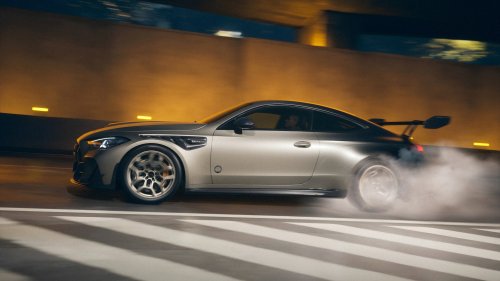
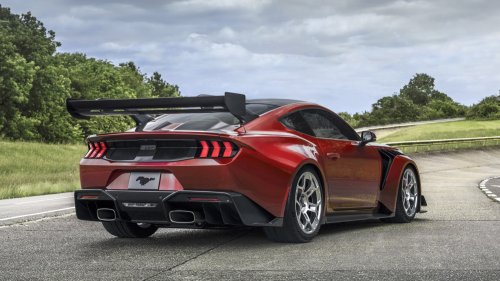
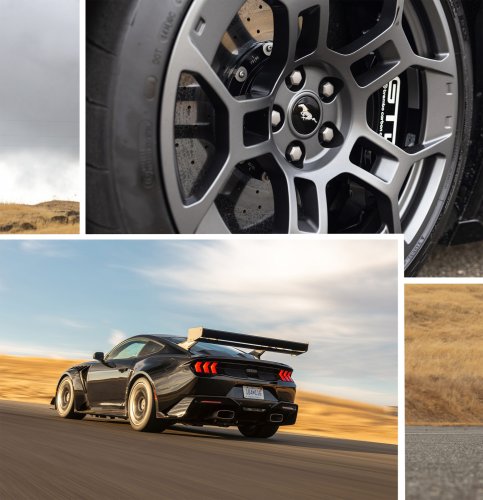
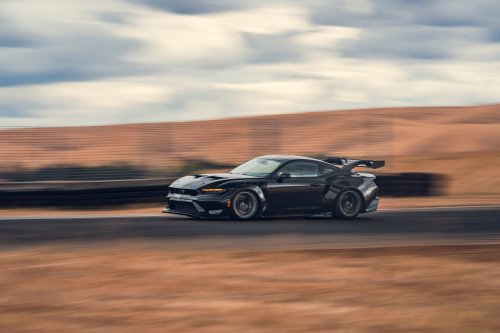
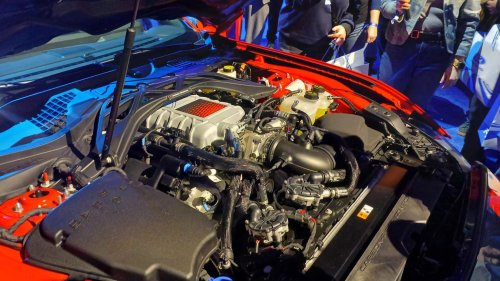
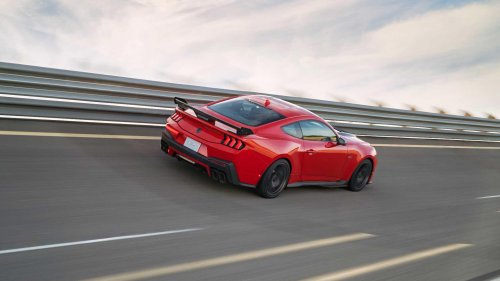
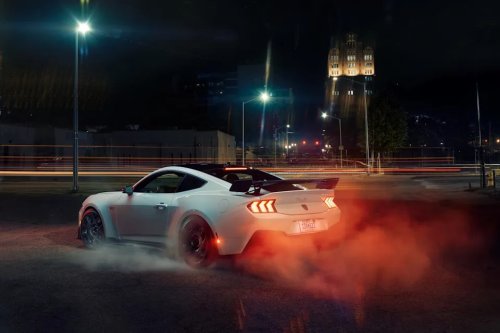
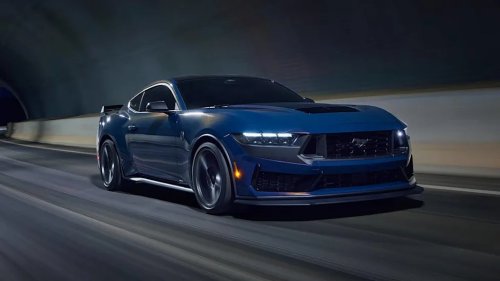
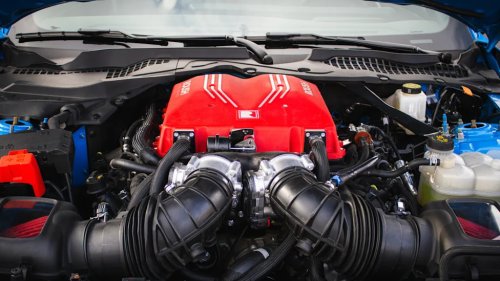
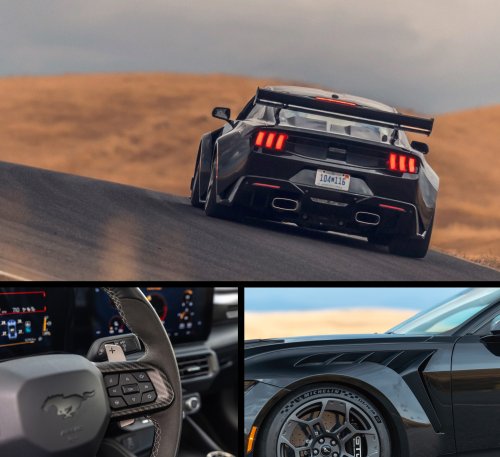
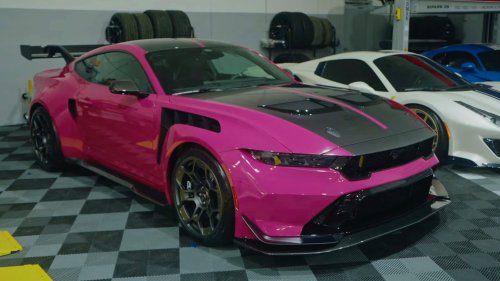
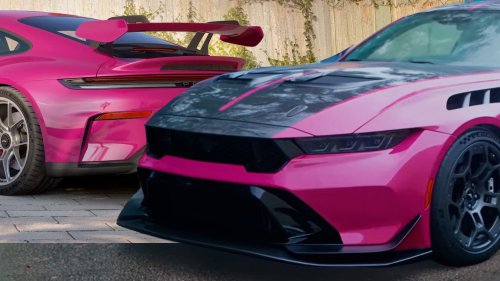
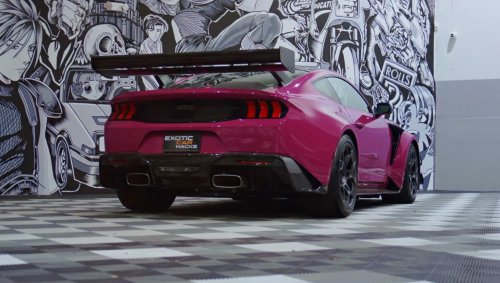
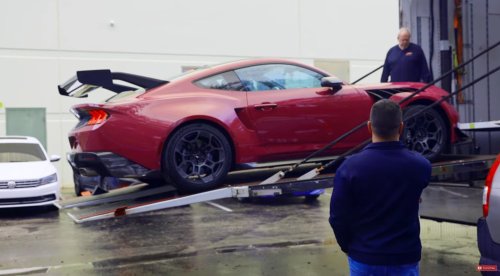
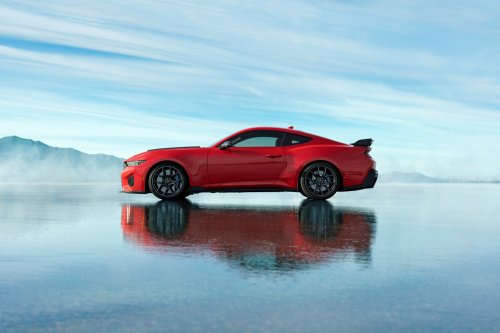
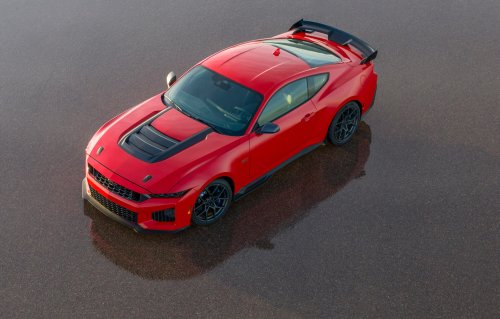
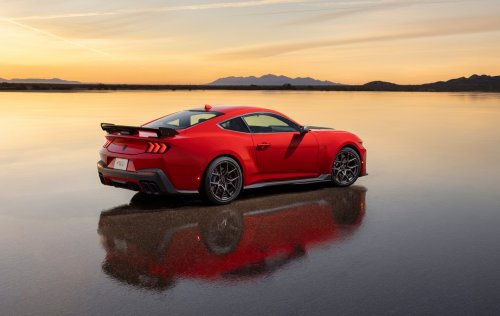
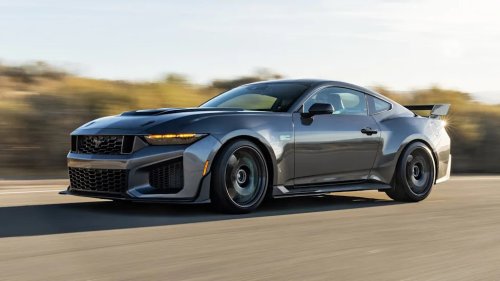
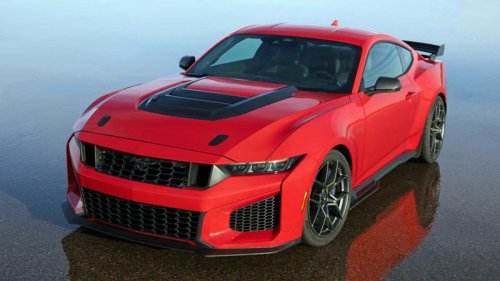
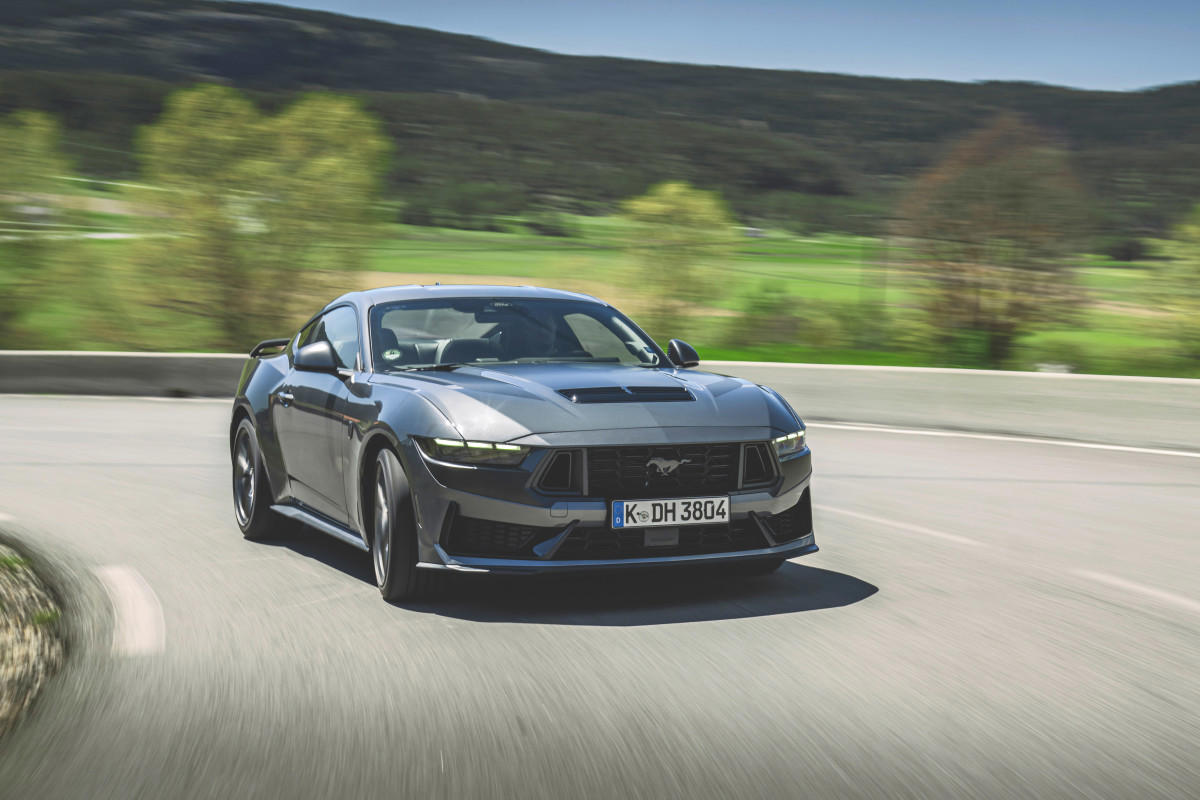
Ford rates the Mustang Dark Horse at 500 horsepower and 418 lb-ft of torque at the crank. That's the figure on the spec sheet, but crank horsepower is measured at the engine, before drivetrain losses to friction. What actually matters to the person behind the wheel is wheel horsepower, and that's where things usually get interesting. Based on typical drivetrain loss figures, most people expected the Dark Horse to land somewhere around 440 wheel horsepower. A reasonable assumption, and one that turned out to be only sort of right. Because the figures depend entirely on who was doing the measuring. The Number on the Spec Sheet Isn't the Whole StoryRoad and Track took the same Dark Horse to four different chassis dynos across Southern California, keeping everything else consistent. Same 5.0-liter V8, same 91-octane fuel, same weather conditions, same SAE correction factor applied across the board. The results should have been close. They were not. A Dynapack hub dyno at Bisimoto Engineering read 430.9 hp. A Dynojet at HK MotorSports came back with 425.7 hp. At the low end, Westech Performance Group's older SuperFlow unit recorded the weakest figures of the bunch. Then there was World Motorsports, whose newer AWD Mustang dyno topped out at 465 hp, nearly 44 hp more than the lowest reading. The shop openly acknowledged that its machine tends to read on the generous side. The spread across all four runs was significant enough that someone buying or selling a modified car could look at those numbers and reach completely different conclusions about what they were looking at.Why Dyno Numbers Are Best Used as BaselinesThe gap between machines is only part of the problem. Weather correction factors introduce another layer of variability that most people never consider. One technician demonstrated to Road and Track how four different correction settings applied to the exact same pull produced a spread of nearly 100 horsepower. Essentially, you can use different math on the same run and get wildly different numbers. This is why experienced tuners are largely indifferent to headline figures. What they care about is running a baseline pull on a specific machine and then measuring gains on that same machine after modifications. A car that picks up 30 hp on the same dyno under the same conditions tells you something real. A random "dyno verified" sheet from a shop across the country tells you almost nothing in isolation. The next time someone quotes their wheel horsepower with total confidence, just remember the Dark Horse walked into four shops and came out with four different identities.



















 +32 others