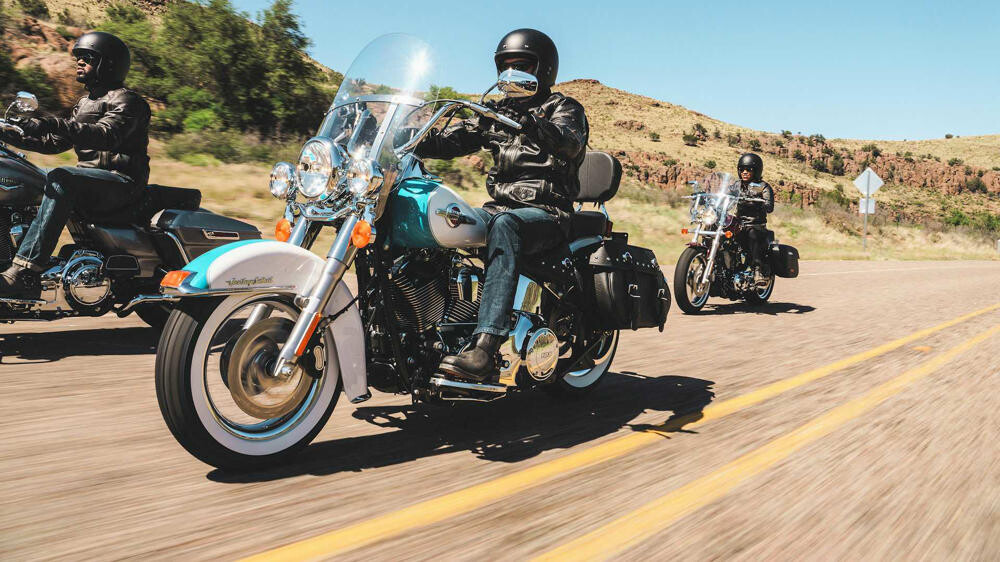
Touring bikes keep getting smarter. More screens, ride modes, menus to dig through before you even leave the driveway. Some riders just don’t want that. They want a big, relaxed machine that puts comfort first and cleverness second: a tall fairing, hard luggage, a plush two-up seat and a fat V-twin pulling at low revs. That’s the classic full-dress formula, and honestly, it’s a dying breed. Most manufacturers have moved on to something sportier and more complicated. One American tourer hasn’t. It still delivers old-school comfort for the long haul, with just enough modern touches to keep it livable. Why Old-School Touring Comfort Still Holds Value “More advanced” doesn’t always mean “more comfortable,” especially around the ninth hour of a 500-mile day. Plenty of modern tourers have drifted toward sportier engines and heavier electronics, which is great if you’re carving canyons but not so if you just want to cross three states without thinking. Layered ride modes, nested menus and constant electronic intervention can start to feel like homework. On the other hand, simple, predictable controls and a relaxed engine do the opposite. They let you settle in and stop managing the bike. That’s why the traditional full-dress approach puts weight, wind protection and low-rpm torque ahead of lean-angle sensors and peak horsepower. In practical terms, a heavy, stable chassis, a fairing with a sizable windscreen, a roomy seat, and proper floorboards are sufficient to ensure a comfortable ride. Luggage for two people is an added plus. Then there’s the V-twin, which makes its torque low in the rev range, so passing on the highway takes a twist of the throttle instead of a downshift and a prayer. Top all that with a retro design, and that's a winner right there. Indian has one such example for you. The Indian Roadmaster Keeps The Classic Full-Dress Formula Alive Base Price: $34,999 That description fits the Indian Roadmaster almost uncomfortably well. It’s a big-bore, air-cooled American tourer built in the traditional mold, and you can spot it from twenty feet away. Passengers aren’t an afterthought, either: there’s a two-up heated and cooled seat and adjustable floorboards for whoever’s along for the ride. Price-wise, the 2026 Roadmaster starts at $34,999. The lineup then climbs to the 125th Anniversary Edition at $43,999. Indian also sells the Roadmaster with the PowerPlus series engine, but this is the traditional air-cooled Thunderstroke 116 version we're focusing on. What Makes The Roadmaster Comfortable For Long Miles For starters, the air-cooled Thunderstroke 116 displaces 1,890cc, with a 4.063-inch bore and 4.449-inch stroke. It produces 126 lb-ft of peak torque at 2,900 rpm. A six-speed transmission works with a gear-drive primary and wet, multi-plate assist clutch. The aim is a steady surge and easy passing response, not sport-tourer acceleration. Rear-cylinder deactivation is a practical detail in traffic. Once the engine is warm and conditions are suitable, the rear cylinder automatically shuts down when the motorcycle is stopped, reducing heat around the rider. It reactivates as the throttle is applied. Its Simple Chassis Matches The Sturdiness Of The Engine Underneath, the Roadmaster rides on a 46mm telescopic fork with about 4.7 inches of travel and a single rear shock with air adjustment and roughly 4.5 inches of travel. The air-adjustable rear shock also lets you tune the ride for solo or two-up riding. Braking comes from dual 300mm rotors with four-piston calipers and a single 300mm rear rotor. Metzeler Cruisetec tires measure 130/80B17 up front and 180/60R16 out back. Now the numbers that matter for comfort: a 28-inch seat height, a 65.7-inch wheelbase and a 919-pound running weight. Yes, that’s a lot of motorcycle, but that works with the double-cradle chassis to give the Roadmaster a planted, steady feel at highway speeds. Convenience Features Are Abundant Behind The Retro Design The equipment list helps justify the Roadmaster's size and price. The powered windshield adjusts wind protection on the move. Heated grips, heated and cooled seat, highway bars, driving lights, and cruise control all help on long stretches. Keyless ignition is a welcome convenience when wearing gloves, whereas the remote-locking saddlebags and trunk provide more than 34 gallons of combined storage. The 7-inch Ride Command display brings navigation, Apple CarPlay, Bluetooth, and configurable ride information into the fairing. A standard 200-watt audio system has speakers in the fairing and trunk, while tire-pressure monitoring is useful before a long trip. The factory-installed Ride Command+ modem adds bike health, location, and connected search; the first year is included, with a subscription fee applying afterward. Old-school touring does not mean going without modern conveniences. Where The Roadmaster Stands Against Competition Harley-Davidson is the obvious rival, although the 2026 U.S. lineup no longer lists an Ultra Limited by that name. The closest current full-dress alternatives are the Street Glide Limited and Road Glide Limited. The Street Glide Limited starts at $32,999 and uses the 1,923cc Milwaukee-Eight VVT 117, producing 131 lb-ft. It also brings a heated rider and passenger seat, Grand Tour-Pak luggage, and Skyline OS navigation. It is a serious long-distance alternative, with a more contemporary touring package and a technology-led presentation. The Roadmaster counters with its air-cooled character and traditional details like the valanced fender, lit headdress, classic fairing and Thunderstroke's low-rpm pulse. Riders who want stronger performance and more consistent cooling may consider Indian's own PowerPlus-powered Pursuit. Its liquid-cooled 112-cubic-inch V-twin makes 126 hp and 133 lb-ft, taking the brand's touring platform in a more modern, performance-oriented direction. It adds a chassis-mounted fairing and modern rider-assist tech, and the Pursuit Limited 112 starts around $35,500. On paper, it’s faster and more advanced than the Roadmaster in nearly every way. Source: Indian Motorcycle

 Liked by Alexander Harris, Lucas Pelletier
 Liked by Alexander Harris, Lucas Pelletier