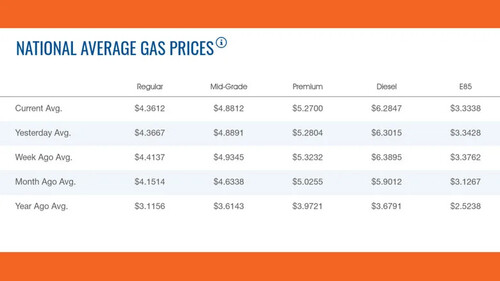
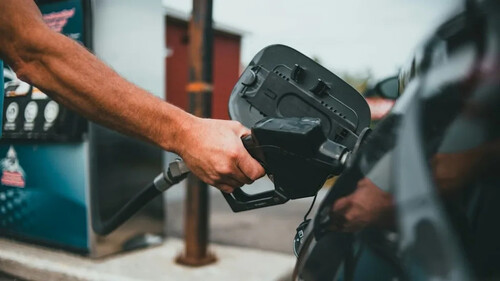
Americans are facing higher gas prices at the pump than they have in years, and the surge is making many turn toward an industry that President Donald Trump deliberately wanted to slow down and undermine—the electric vehicle (EV) market.As the average nationwide gas price surged from below $3 per gallon to above $4.50 per gallon between the beginning of March and mid-May, new EV listing views on online automotive marketplace CarGurus increased 62 percent, Director of Economic and Market Intelligence Kevin Roberts told Newsweek. Over the same timeframe, used EV views jumped 49 percent.“That interest is now starting to translate to sales,” he said, highlighting that is especially true when it comes to used EVs. AdvertisementAdvertisement“Our April vehicle demand data shows used EV sales are up 17 percent year-over-year, with growth accelerating through March and April. Used EV prices have also risen nearly 9 percent since February as shoppers gravitated to more affordable models,” he added.Cars.com, another digital automotive marketplace specializing in used vehicles, reported similar increases. Used EV share of searches on Cars.com were up 61 percent in April compared to April 2024, while since the beginning of the year, they are up 22.5 percent, the company told Newsweek.Used EVs are also selling faster amid the war with Iran.On Cars.com, since the start of the year, days live (amount of time a car sits on a lot before selling) has gone from 50 to 42 (-16.6 percent faster).AdvertisementAdvertisement“This is the fastest turn rate since the 2022 fuel spike,” Cars.com said.Are EVs Really More Convenient Right Now?Gas prices were steadily sliding in the weeks leading to the U.S.-Israel joint bombing of Iran in late February, so much so that the White House was boasting about “big wins for American families.”But in the aftermath of the start of the conflict, disruptions to oil production and supply in the Middle East and the chokehold on the Strait of Hormuz have caused oil and gas prices to spike all across the world, including in the U.S. American drivers are now spending over $1.50 more per gallon of regular gas than they were before the war began.Safe embed will be rendered hereAdvertisementAdvertisementAs of Friday, the nationwide average gas price was $4.55 per gallon, according to data from the American Automobile Association (AAA). Drivers in California are paying the highest price in the country, at an average of $6.13 per gallon.These increases have put used EVs “in the spotlight for delivering on something many car shoppers are hungry for today: affordability,” Roberts said. “Even with the expiration of EV tax credits, used EV affordability has improved tremendously,” he added. Safe embed will be rendered hereSpecific models tell the story even more clearly. The average price of a used Chevy Equinox EV is down nearly 20 percent year-over-year, a used Hyundai Ioniq 5 is down about 17 percent and a used Tesla Model 3 sits at an average of around $25,700, Roberts explained. AdvertisementAdvertisement“Car buyers get the benefit of a current-generation clean powertrain, with low mileage and a price point that competes directly with comparable used gas vehicles,” he said.The timing works for buyers looking for used EVs right now. “A wave of three-year leases is returning to the market this year, and the residual hit those vehicles have taken will help consumers shopping for an EV,” Joseph Yoon, consumer insights analyst at car-shopping website Edmunds, told Newsweek. “The same depreciation that hurt early EV owners on trade-in is what makes used EVs one of the better deals right now.”New EVs, on the other hand, are not as affordable as their used counterparts. AdvertisementAdvertisementFor new EVs, the expiration of the federal $7,500 tax credit in September 2025 ordered by Trump “has cooled demand and led to automakers reprioritizing their portfolios toward hybrids until they’re able to bring EV costs down to match consumer expectations,” Roberts said. Edmunds data shows EV market share spiked to 11.5 percent in September 2025 as buyers rushed to beat the deadline, then fell to 5.0 percent by November 2025. “That’s a classic case of sales being pulled forward,” Yoon said. “Since then, the market has stabilized, but the affordability gap hasn’t closed. The average new EV still runs about $11,000 more than a comparable non-electric vehicle. That difference remains one of the main obstacles, outside of range anxiety and charging infrastructure.”That is why demand for and sales of new EVs have remained subdued even after the recent gas price surges. AdvertisementAdvertisementSafe embed will be rendered here“Gas prices can move a shopper who’s already considering an EV over the finish line, but they can’t close an $11,000 price gap or build out a charging network,” Yoon said. “Frustration at the pump alone wo’’t sell electric vehicles, as adoption depends on whether consumers are ready. The fundamentals still drive the market: affordability, charging access and consumer confidence.”Stephanie Valdez Streaty, director of industry insights at B2B company Cox Automotive, told Newsweek: “For new EVs, the loss of incentives has made affordability more challenging. There are more affordable EVs launching and in the pipeline. For used EVs, affordability has improved dramatically, with prices approaching parity with gas vehicles.”Clear Winner: Hybrid VehiclesGrowing interest in cheaper alternatives to gas-fueled vehicles is broader than EVs among Americans, Valdez Streaty said, as consumers are gravitating first toward fuel-efficient gas vehicles and hybrids.AdvertisementAdvertisementA proprietary Cox Automotive survey conducted May 8 among 1,000 in-market shoppers found that 76 percent said fuel costs are influencing their vehicle choice. And as more shoppers are shifting behavior, 74 percent were considering more fuel-efficient gas vehicles, 56 percent hybrids/plug-in hybrid electric vehicles, and 45 percent battery EVs.Twenty-nine percent of respondents are delaying purchases, while 20 percent are accelerating it, indicating a net demand drag.“Higher gas prices are clearly driving awareness and reshaping consideration, but consumers are taking the path of least resistance, prioritizing affordability and familiarity before fully committing to EVs,” Valdez Streaty said. “Nearly half of shoppers say fuel prices are influencing their decision-making, but more are delaying purchases than accelerating them—and when they do act, they tend to choose lower-cost, lower-friction options first.”Safe embed will be rendered hereAdvertisementAdvertisementSafe embed will be rendered hereAccording to Roberts, hybrids are “the clearest winner during this cycle” of surging gas prices. CarGurus data shows that hybrids now account for roughly 12 percent of new vehicle listings, up from just 4.2 percent four years ago. Even with that increase in supply, new hybrids carry the tightest inventory of any powertrain right now: just 47 days of supply, compared to 83 for gas vehicles and 80 for EVs, Roberts said. “Demand has actually surpassed the growth we’ve seen in supply,” he added. “We see this particularly in Toyota’s hybrid models, which top the list of new cars with the tightest supply across any powertrain. For many drivers, hybrids check all the boxes: lower upfront cost than an EV, no charging infrastructure to worry about, and meaningful fuel savings over a traditional gas vehicle.”Is This a Sign of a Comeback for the EV Industry?Experts are wary that increasing interest in EVs and hybrid cars might be a transient phenomenon rather than the sign of a major reversal of fortune for the EV market in the U.S., after policy shifts, particularly the end of federal incentives, have slowed the pace of new EV adoption.AdvertisementAdvertisement“History tells us consumer interest in EVs tends to ebb and flow with gas prices,” Roberts said. “The spikes of 2008 and 2022 both produced what I’d call a ‘sugar rush’ response. Demand for fuel-efficient vehicles surged quickly, then moderated just as fast once gas prices cooled. Whether this time is different depends on how long prices stay elevated.”Related ArticlesMillions in Texas Told to Avoid Drive-Thrus Over Air QualityTrump May Not Have the Votes to Replace Clarence Thomas, Samuel AlitoPolice Search for Missing Newborn Baby, Public Asked to HelpStart your unlimited Newsweek trial