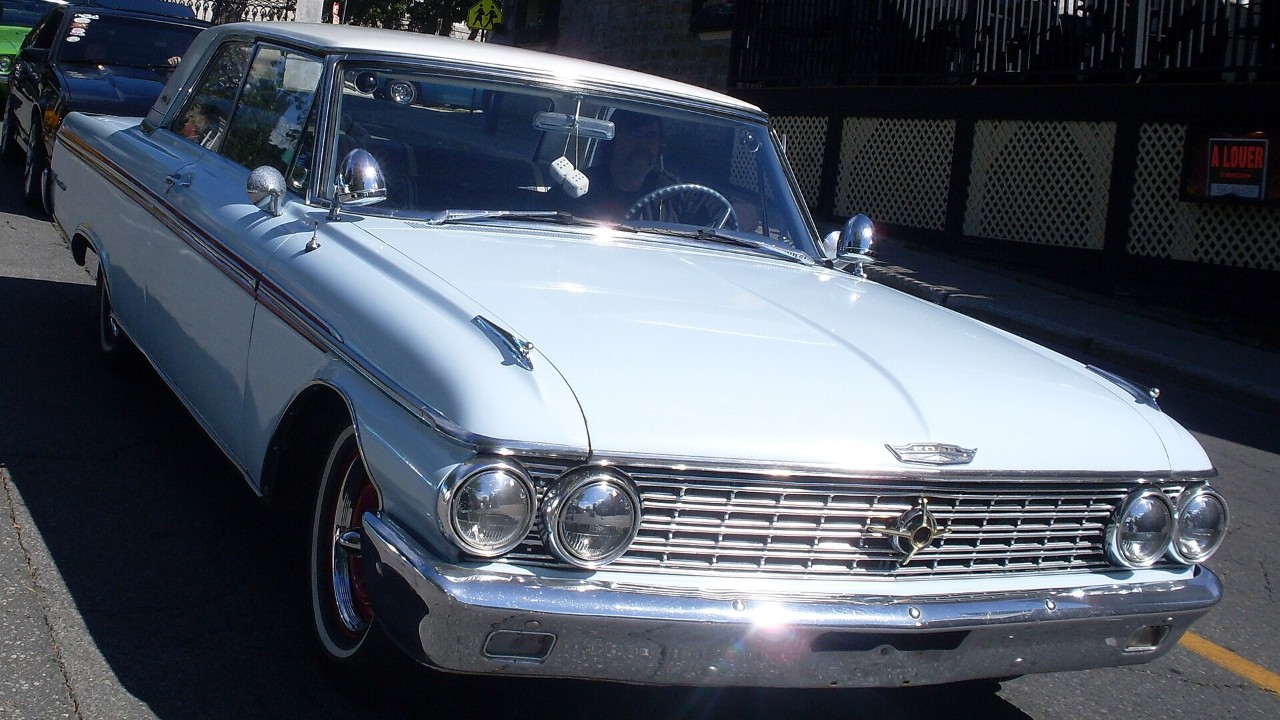
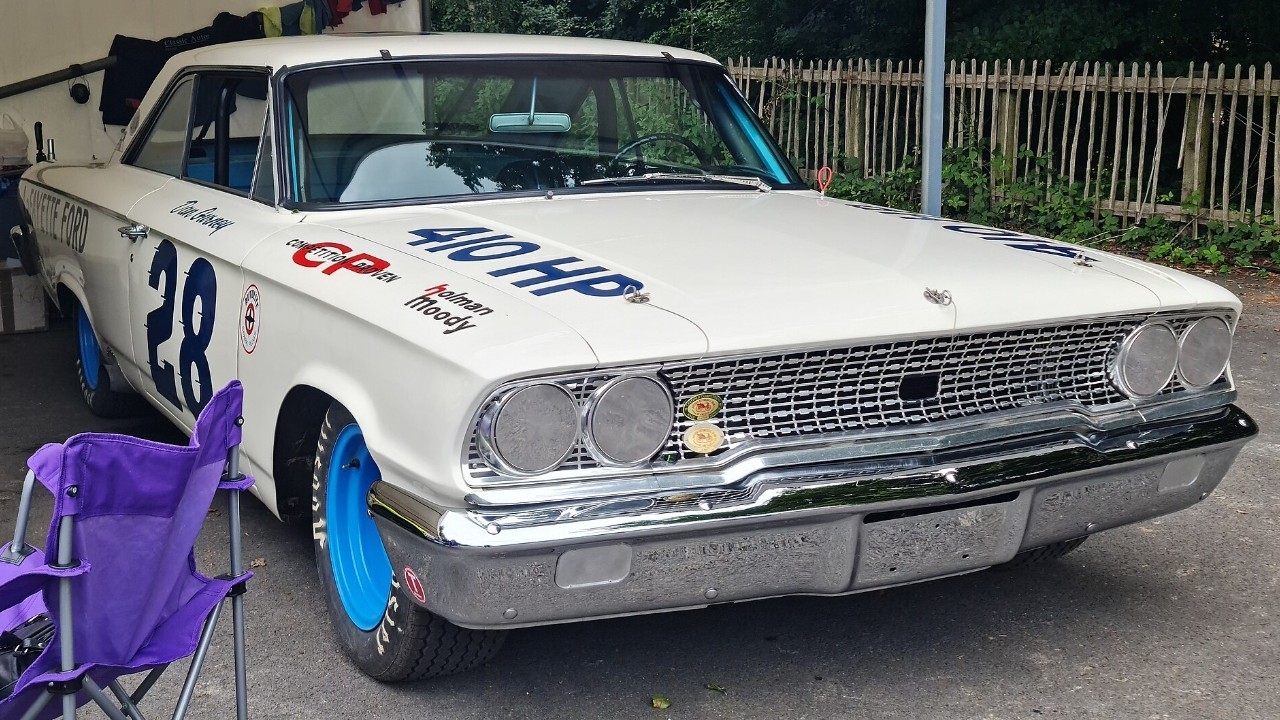
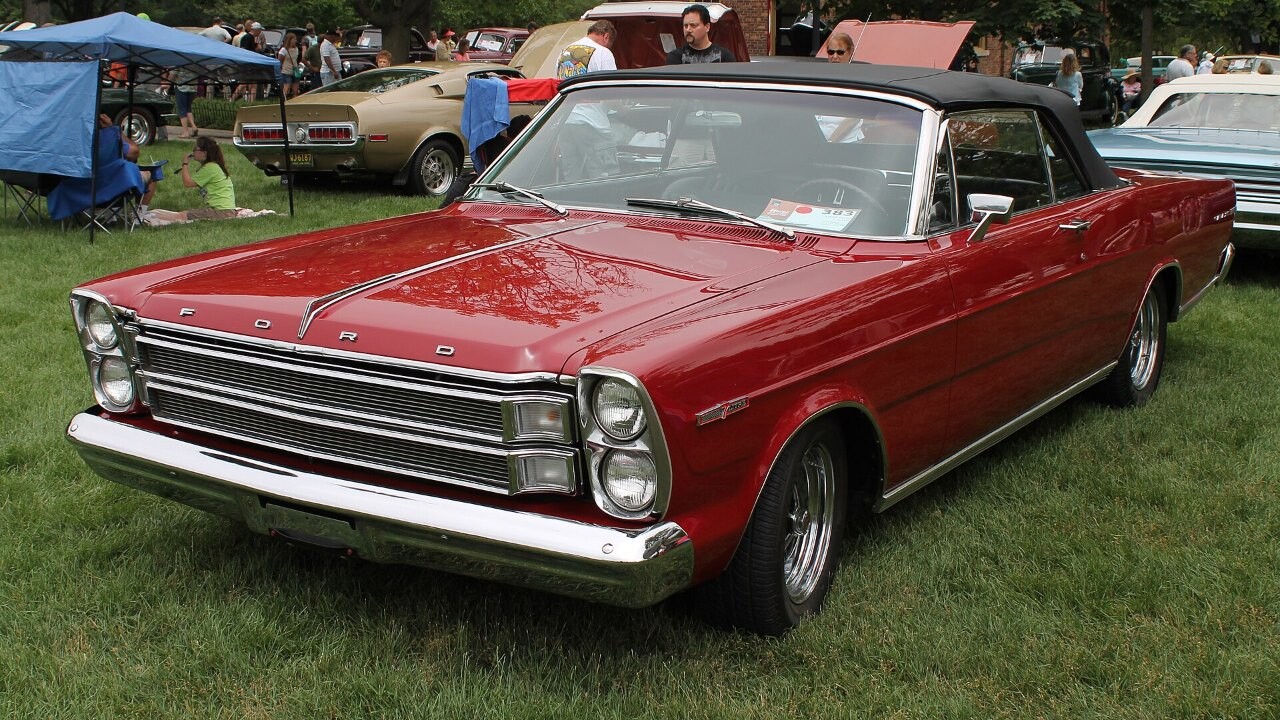
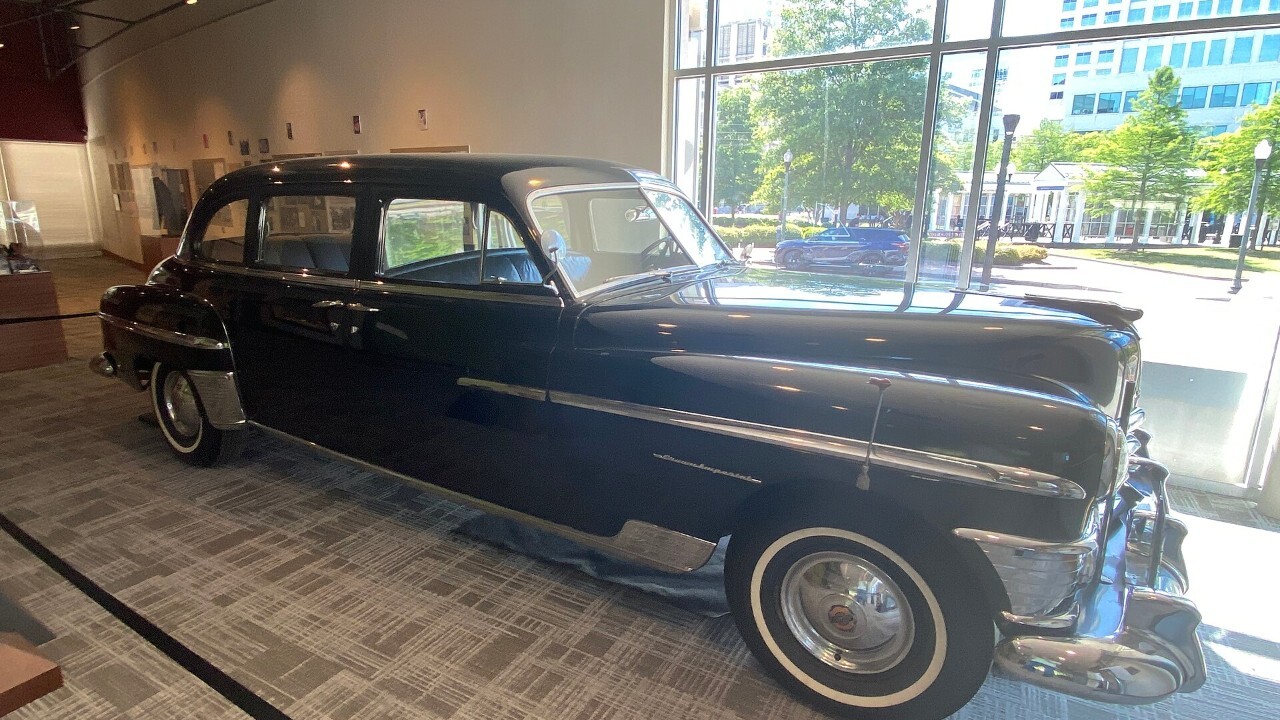
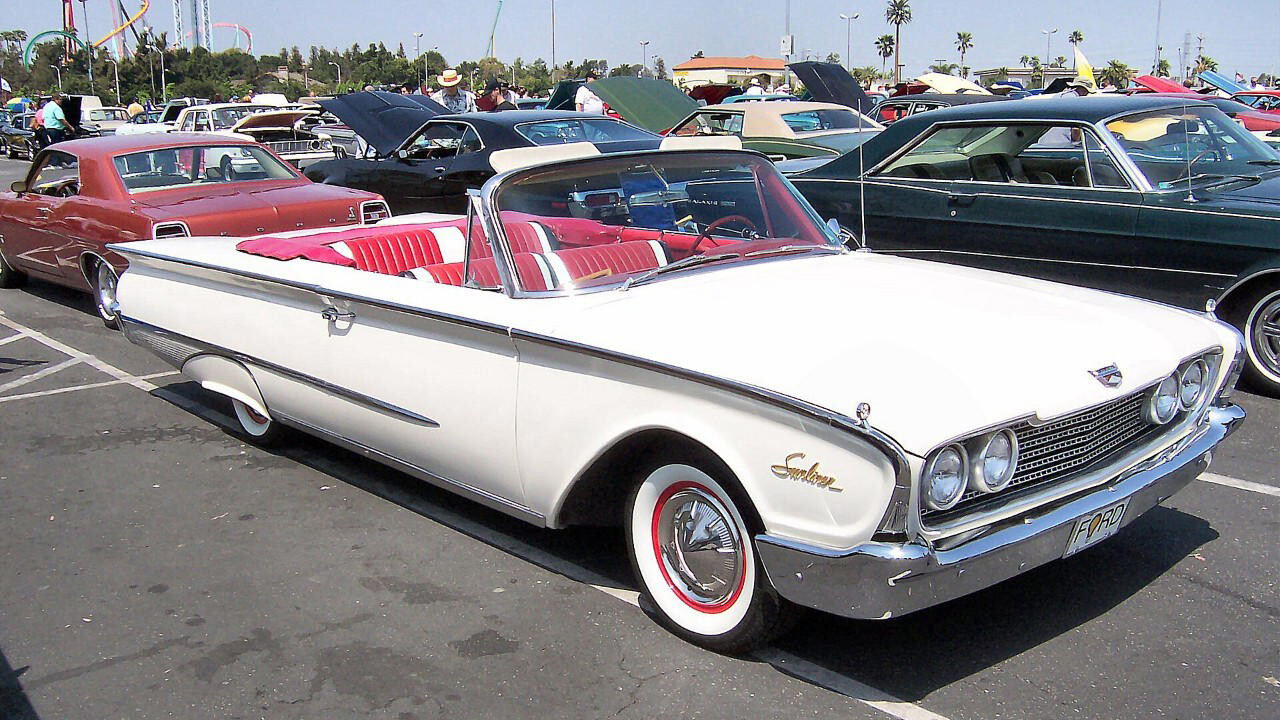
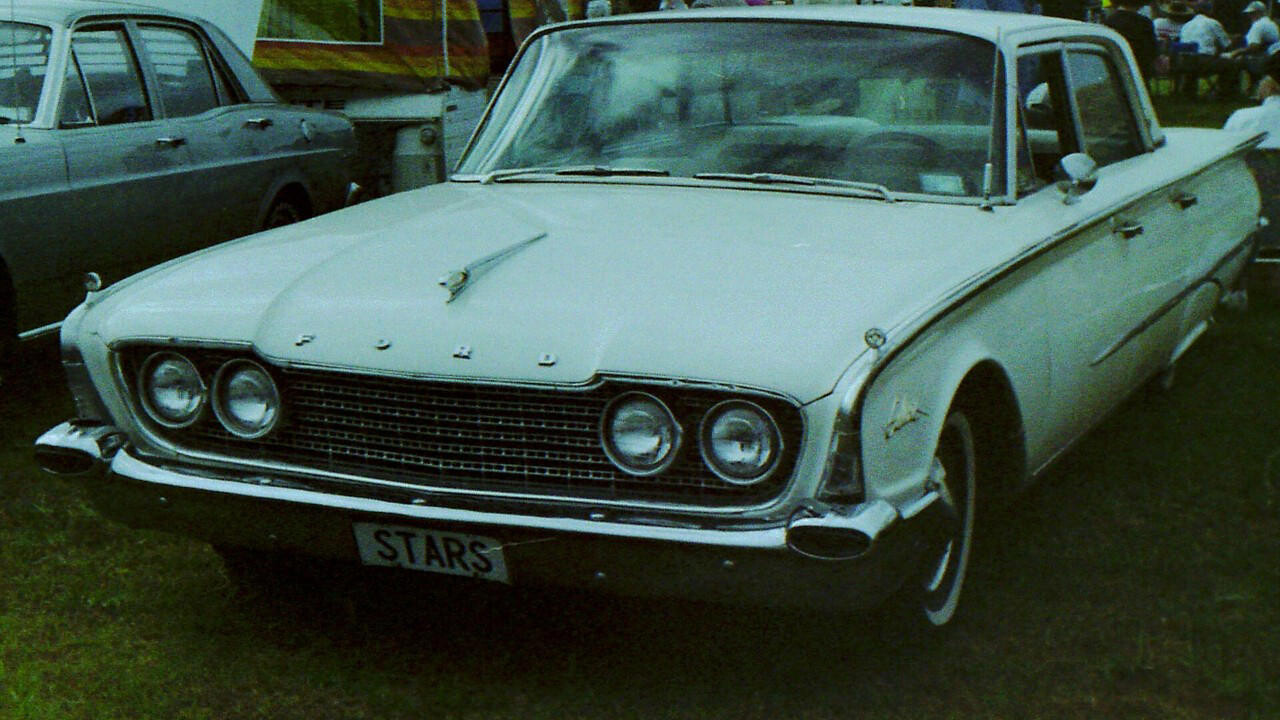
Ford sold the Galaxie in North America from 1959 through 1974, and the name itself was a nod to the Space Race. Over those 16 model years, the badge went from a top trim on the Fairlane 500 to the heart of Ford’s full-size line. Today most people picture one car when they hear it: a Ford Galaxie 500 hardtop with a big V8. That picture leaves out a lot. Ford also built plain club sedans, fastback race cars, family wagons and the sturdy bases that coachbuilders turned into ambulances and hearses. Some of them were hard workers, so few people thought to save them. These 12 are our picks, and the reasons are our own opinion. Each one shows a different side of the Galaxie, and we think every one deserves a second look at a car show. 1. 1959 Ford Fairlane 500 Galaxie The Galaxie did not start as its own model. Instead, Ford added it partway through 1959 as a new top trim above the Fairlane 500, so these first cars wore both Fairlane 500 and Galaxie badges. In other words, the 1959 car is the moment the name was born. The top engine was a 352-cubic-inch V8 rated at 300 horsepower. According to Classic Industries’ Galaxie history, the car rode a 118-inch wheelbase and stretched 208 inches long. Buyers also had the choice of the Sunliner convertible or the Skyliner, whose hardtop folded into the trunk. Ford built 464,100 Galaxies that first year. Our take: the 1959 car is the best place to start any Galaxie story. We wrote more about how the 1959 Ford Galaxie previewed the space-age shift, and the double badges make an original one easy to spot. 2. 1960 Ford Galaxie Starliner For 1960, Ford gave the Galaxie a new body on a 119-inch wheelbase. The star of that lineup was the Starliner, a pillarless hardtop with a huge curved rear window. Three small star emblems marked it out. Ford also made an odd choice that year. It skipped the formal, square-roof hardtop entirely, so the Starliner carried the two-door hardtop role alone. Then, after 1961, Ford dropped the Starliner and went back to a boxier roof on the Galaxie Club Victoria. That short run is a big part of the appeal for us. Ford built 289,268 Galaxies for 1960, but the Starliner shape lasted only two seasons. In our view, it is the most graceful roofline Ford put on a full-size car in that decade, and that curved rear glass looks modern even now. 3. 1962 Ford Galaxie Club Sedan By 1962, the Fairlane name had moved to a smaller car. As a result, every full-size Ford became a Galaxie, from the base two-door Club Sedan up to the bucket-seat Galaxie 500XL. The tailfins also disappeared that year. The base Club Sedan weighed 3,499 pounds. That number matters because of what happened in Ford’s Experimental Garage. There, engineers built 11 “lightweight Galaxies” with fiberglass panels and aluminum parts, and each one weighed under 3,400 pounds. Meanwhile, ordinary buyers chose from a 223 six, a 292 V8 or, at the top, a 406 V8. We admire the Club Sedan because it was the honest version. It had no hardtop glamour and no fancy trim. However, it shared its basic shell with the fastest Fords of the year. Ford built 446,195 Galaxies for 1962, and we would take a clean two-door sedan over a flashier hardtop. 4. 1962 Ford Galaxie 500 Andy Griffith Show sheriff car The Andy Griffith Show ran from 1960 to 1968, with 249 episodes across eight seasons. According to Ford Authority, the show used Ford Fairlanes, Galaxies and a few Custom sedans over the years. Fords also became more common as the series went on, which Jalopnik credits to sponsorship from Ford Motor Company. The black-and-white 1962 Ford Galaxie 500 pictured wears that familiar sheriff’s livery. A 1962 Mayberry tribute that went up for auction in 2025 shows how fans build them. It had a 292-cubic-inch V8 with a two-barrel carburetor, a three-speed automatic, door logos and a roof light. Our take: no Galaxie means more to more people. Yes, a squad-car tribute is a costume. Even so, it is a friendly one, and it keeps a plain four-door from 1962 on the road and in front of crowds. 5. 1963 Ford Galaxie 500 NASCAR Ford brought a new weapon in 1963. Partway through the year, a 427-cubic-inch V8 replaced the 406. It was rated at 425 horsepower with two four-barrel carburetors and a solid-lifter camshaft. The 1963 Daytona 500 showed what the Galaxie could do. Tiny Lund drove the Wood Brothers’ No. 21 Ford, a 1963 Galaxie, from 12th on the grid to the win. It was Ford’s first Daytona 500 victory, as Motorsport.com recounts. Fords also took the next four places, with Fred Lorenzen, Ned Jarrett, Nelson Stacy and Dan Gurney behind him. Remarkably, Lund ran the whole race on one set of tires. We have covered how the 1963 Galaxie 427 went NASCAR hunting before. For this list, the race car earns its place because it proved a big family Ford could win the sport’s biggest race. Lund took home $25,000 for the day. 6. 1965 Ford Galaxie Ambulance The 1965 Galaxie was all new. It stood taller and bulkier than before, with stacked dual headlights up front. Underneath, a three-link rear suspension with coil springs replaced the old leaf springs. Engines changed too. A new 240-cubic-inch six replaced the 223, and the 352 V8 gained a four-barrel carburetor and dual exhausts. Ford built 564,008 Galaxies that year, and that big, roomy body also made a natural starting point for conversions like this ambulance. Our take: emergency conversions are some of the most interesting Galaxies to find. They worked for a living, they racked up hard miles and many were retired without ceremony. A surviving 1965 ambulance with its tall roof and extra lights shows a side of the Galaxie that brochures never did. If you see one at a show, ask the owner about its service history. 7. 1966 Ford Galaxie Sedan For 1966, Ford gave the Galaxie a Coke-bottle shape and a horizontally split grille. It was a big year for the nameplate, too. Ford built 597,002 Galaxies, and the Galaxie 500 convertible ranked third among American convertibles with 27,454 sold, behind the Mustang and the Impala, according to HotCars. The headline car that year was the Galaxie 500 7-Litre, powered by a 428 V8 rated at 345 horsepower. Even so, it was a small slice of the total. The Ford Galaxie Club of America lists 8,705 7-Litre hardtops and 2,368 convertibles. You can read about the years Ford built the Galaxie 7-Litre in our earlier story. We picked the plain sedan for a reason. It was the car most families actually bought. In our view, the 1966 styling looks best without vinyl tops or stripes, and an unmodified sedan shows that shape at its cleanest. 8. 1968 Ford Galaxie 500 XL coupe The XL has a tangled family tree. Ford launched the Galaxie 500XL in 1962 as a bucket-seat hardtop and convertible. Then, for 1967, the 7-Litre was folded into the XL, which became its own series above the Galaxie. Many owners and sellers call these cars Galaxie 500 XLs anyway. The 1968 car brought fresh styling. It got a horizontal-headlight grille and a notchback rear, and the XL and LTD hid their headlights behind doors. Meanwhile, the base V8 grew from 289 to 302 cubic inches. Cars built after December 1, 1967, also gained shoulder belts. Our take: the hidden headlights make the 1968 XL one of the cleanest faces Ford ever put on a big car. Moreover, the XL badge did not last long after this, since Ford dropped the series after 1970. A tidy 1968 coupe is a stylish pick that rarely gets the attention it deserves. 9. 1969 Ford Galaxie 500 2-door Hardtop The Galaxie moved to a new platform for 1969, with a 121-inch wheelbase. A new engine arrived at the same time. The 429 “ThunderJet” V8 came in two versions: 360 horsepower with a four-barrel and dual exhaust, or 320 horsepower with a two-barrel and single exhaust. Ford also dropped the 427 and 428 from civilian cars that year, keeping the 428 only for police cars. Inside, drivers faced a new pod-style dashboard. Headrests also became standard on cars built after January 1, 1969. We like the 1969 two-door hardtop because it is long, low and calm. It is the Galaxie at its most relaxed, built for highway miles rather than drag strips. Ford built 421,197 Galaxies that year, yet a solid hardtop with the 429 is an easy car to fall for at a cruise night. 10. 1970 Ford Galaxie 500 fastback When Ford redesigned the big car for 1969, it added a SportsRoof body for the Galaxie 500 and the XL. Its long sail panels made the roof look like a fastback. That is the shape on this 1970 car. The 1970 model year brought small but telling changes. For example, Ford dropped the four-speed manual from the full-size line. According to Autocade, the 1969 to 1972 cars could be ordered with a 240 six or V8s from 302 up to 429 cubic inches, and Ford built 1,364,685 of them across those four years. Our take: the SportsRoof is the most dramatic Galaxie of the 1970s. Ford built 351,938 Galaxies for 1970, and the 1971 redesign then squared the roof off. Find a SportsRoof with its original paint and you have a real conversation piece. 11. 1972 Ford Galaxie 500 Country Sedan Ford introduced the Galaxie Country Sedan wagon for 1969. It slotted between the Custom 500 Ranch Wagon and the LTD Country Squire, which made it the middle choice for families. The 1971 redesign gave the full-size Fords a wraparound bumper and a squared-off roofline. At the same time, the 351 two-barrel V8 became the standard engine. For 1972, Ford went further. It discontinued the 240 six and the three-speed manual, so every V8 car used the SelectShift automatic. We admire the Country Sedan because it carried families on countless summer trips and then simply wore out. In our view, a 1972 wagon in good shape is a better find than a hardtop from the same year. Our advice: if you find one, check the tailgate hardware and the rear floor first. 12. 1972 Ford Galaxie 500 Hearse The last car on our list is the most unusual. This 1972 Galaxie 500 hearse is built on the same full-size Ford that served as a family sedan and wagon. From 1971, the 400 two-barrel V8 replaced the 390, and the 429 four-barrel sat at the top of the range. Funeral cars often lead quiet, careful lives, so a survivor can be in surprising shape. Few people picture a Galaxie in this role, which is exactly why we like it. In our view, it is a reminder of how many jobs one Ford platform could do. The Galaxie name had only two years left by then. Ford made 1974 its final season, building 117,801 Galaxies before the LTD took over. Classic Industries notes that full-size Fords and Mercurys sold about 7.85 million cars from 1968 to 1978, second only to the Model T among Ford models.

 Liked by Mason Fortin, Kayla Scott
 Liked by Mason Fortin, Kayla Scott