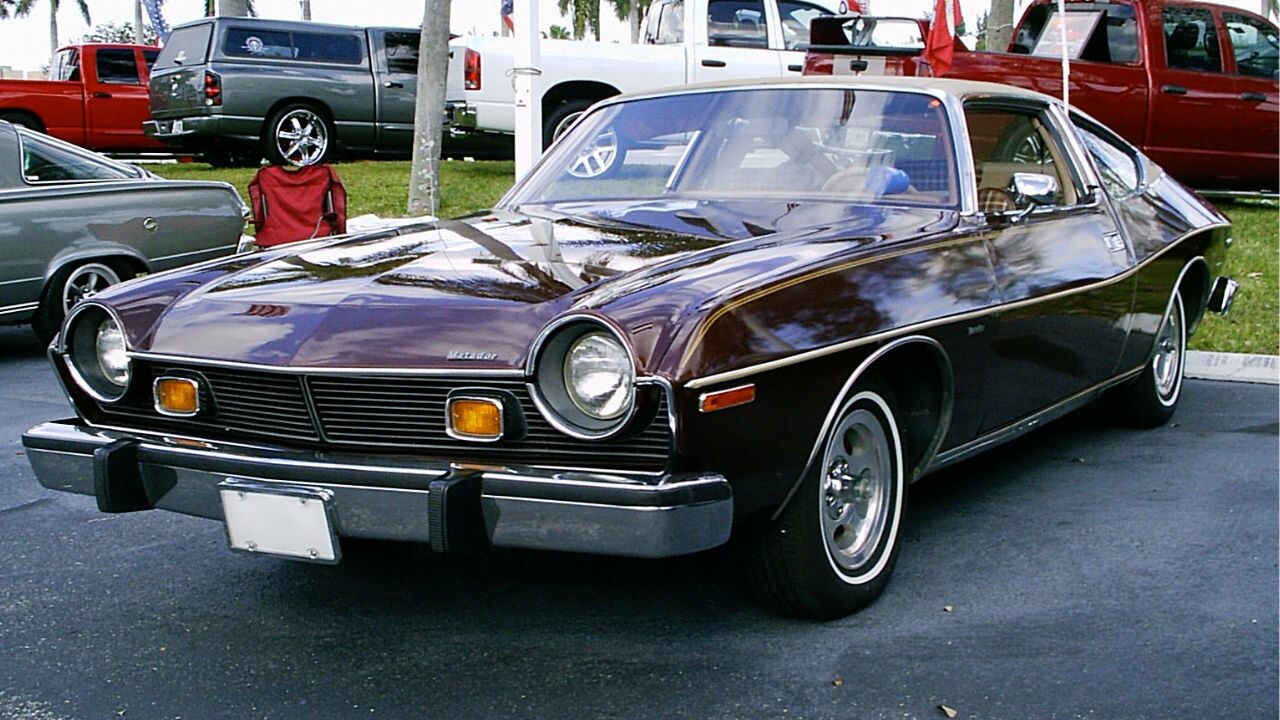
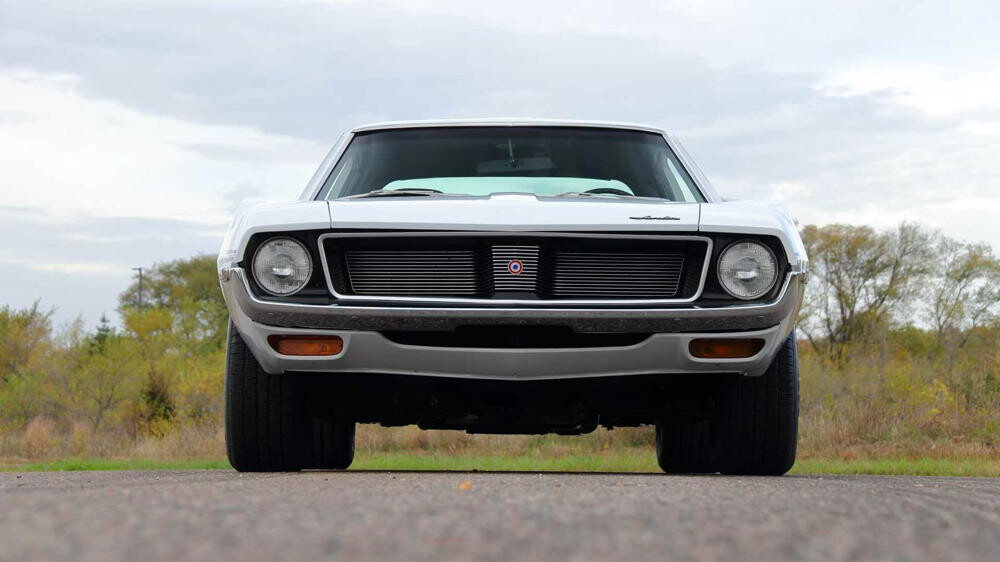
For 1961, Ford built 29,669 copies of the Galaxie Starliner, a two-door with a sweeping pillarless roof that looked like it belonged on a far pricier car. That was the magic of the two-door hardtop and the formal coupe in postwar America. A factory worker or a schoolteacher could park one in the driveway and feel like they had arrived. Detroit understood that feeling well, so it built for it. Ford, Chevrolet, Plymouth, Mercury, Oldsmobile and AMC all sold coupes that borrowed luxury cues, such as vinyl roofs, plush seats and long hoods, without the luxury price. Some of them became best-sellers. Others found smaller but loyal audiences who kept them polished for years. These are our picks, nine coupes that we think made everyday buyers feel successful. They span the jet-age early 1960s to the vinyl-roof middle 1970s. The years, engines and figures come from our sources, while the verdicts are our own opinion. 1. 1961 Ford Galaxie Starliner The Galaxie Starliner was the fastback version of Ford’s flagship Galaxie, and Ford built it only for 1960 and 1961. Its thin roof pillars and huge rear glass gave it a lighter, sportier look than the square-roofed Galaxies around it. That shape also made it a rare sight even when new. According to ClassicCars.com’s profile of a 1961 Starliner, Ford built just under 30,000 of them that year against nearly 350,000 Galaxies. Buyers could keep things sensible with the base 292 Y-block V8. However, the new 390-cubic-inch V8 from the Thunderbird sat on the option list too. In its top four-barrel form, it made 375 horsepower. In addition, NASCAR teams found the Galaxie Starliner a suitable platform, so the shape carried some racing credibility. For 1962, however, the Galaxie 500 took over as Ford’s top full-size offering, and the Starliner name disappeared. Our take: the Galaxie Starliner sold the idea of success through its roofline alone. You did not need a Lincoln to own something that looked fast and expensive at the curb. We think that is why it lingers in so many memories. If you want one, find a car with sound roof trim and glass, since those pieces define the whole design. 2. 1963 Ford Galaxie 500 XL 2-door hardtop After the Starliner bowed out, Ford launched the Galaxie 500/XL in the middle of the 1962 season as part of its “Lively Ones” campaign. The company said XL stood for “Xtra Lively,” and the car backed that up with bucket seats and a center console. It answered Chevrolet’s Impala Super Sport, which had seen a big rise in sales. For 1963, buyers could order the 406 V8 with a single four-barrel or triple carburetors. Later, the racing-oriented 427 arrived with a rating of 425 horsepower. For most buyers, though, the buckets and trim were the real draw, in our view. Ford listed the XL Fastback at $3,268, while a base Ford 300 cost $2,324. Galaxie production reached 648,010 cars that year. In our view, the XL let a buyer spend roughly $900 more than the base car and feel like a sports-car owner. That is a powerful sales tool. The bucket seats and console made a daily commute feel special. We would look for a well-documented hardtop with its original interior, since that cabin is what made the car a status symbol. 3. 1966 Chevrolet Caprice Custom Coupe Chevrolet introduced the Caprice in mid-1965 as a luxury package for the Impala four-door hardtop, adding $200 to a $2,742 base price. For 1966, it became its own series and the top full-size Chevrolet. The two-door Custom Coupe got a squared-off formal roofline, unlike the fastback roof on the Impala and Impala SS Sport Coupe. Standard power came from a 283 V8 with a column-shifted three-speed manual. From there, buyers could add an automatic, power steering, a vinyl top, air conditioning, and power windows and seats. Big-engine fans could order a 396 “Turbo Jet” V8 rated at 325 horsepower or a 427 rated at 425 horsepower. Chevrolet aimed the car squarely at the Ford LTD, Plymouth VIP and AMC Ambassador DPL. As a result, a Chevrolet buyer could equip a Caprice much like a far costlier car, in our view. Our take: the Caprice taught a generation that a Chevrolet could feel upscale. Its simulated wood trim, thicker carpet and extra sound insulation gave owners a taste of the good life. We think the formal roof is the detail that sealed it. A 1966 Custom Coupe with a solid vinyl-top area is the one to hunt. 4. 1967 Plymouth Belvedere II 2-door hardtop Plymouth split its intermediate Belvedere into three series for 1965, with the Belvedere I at the bottom, the Belvedere II in the middle and the Satellite at the top. The line got new styling for 1966. Then, for 1967, Plymouth added the high-performance GTX above it all. Meanwhile, that middle-rung Belvedere II gave buyers a wide menu. The 1967 engine list started with a 225-cubic-inch Slant Six rated at 145 horsepower and a 273 V8 rated at 180 horsepower. It climbed through a 230-horsepower 318 and a pair of 383s. At the top sat the 375-horsepower 440 and the 425-horsepower 426 Hemi. For 1968, Plymouth reskinned the car, dropped the Belvedere II and introduced the Road Runner on the new body. We think the Belvedere II was the ideal step up for a young family. It looked sharp as a pillarless hardtop and sat below the Satellite, yet it could carry almost any engine Chrysler built. In our opinion, it is one of the smartest buys among mid-1960s Mopars today. Confirm the engine and trim with the fender tag before you pay up. 5. 1969 Ford LTD 2-door hardtop The LTD began in 1965 as the Galaxie 500 LTD, a luxury-minded full-size Ford with a plush cloth interior and woodgrain accents. It came as a two-door or four-door hardtop at first. For 1966, Ford dropped the Galaxie name, so the LTD stood on its own. In other words, it grew from a trim level into its own model line within a year. By 1967, Mercury had its own equivalent two-door hardtop in the Marquis. Ford redesigned the LTD for 1969 on a largely carryover chassis with a wheelbase two inches longer. The hidden headlamps and formal roofline from 1967 carried over. Because of that formal roof, the two-door looked more like a personal-luxury coupe than a family Ford, in our opinion. Meanwhile, Ford and Mercury kept selling big cars in huge numbers, with about 7,850,000 full-size models sold from 1969 through 1978. Our take: the 1969 LTD hardtop is the definition of a car that made ordinary owners feel prosperous. Those hidden headlamps alone gave it a Thunderbird-like look at a Ford price. We think a two-door hardtop with clean brightwork has more presence than many true luxury cars of the era. Check that the headlamp doors open and close smoothly before you buy. 6. 1969 Mercury Comet 2-door hardtop Mercury moved the Comet from compact to mid-size in 1966, putting it on the Ford Fairlane chassis. That year, a Cyclone GT version even paced the Indianapolis 500. After a 1968 redesign, the Comet became a two-door only and served as the entry model under the Montego and Cyclone. At the same time, it shared parts with the Fairlane and Torino, so much of its hardware overlaps with those Fords. For 1969, the standard engine was a 250-cubic-inch six rated at 155 horsepower. Buyers who wanted more could step up to a 302 V8 rated at 220 horsepower. Above it, the Cyclone range offered 351 and 428 V8s. After 1969, Mercury retired the Comet name for its mid-size line, and the Montego became the base model instead. We like the 1969 Comet because it delivered the Mercury badge for buyers who could not stretch to a Cougar or Marquis. The long hood and clean hardtop shape look more expensive than the price tag suggested. In our view, it is an overlooked way into late-1960s Ford products today. A V8 car with a straight body makes the best starting point. 7. 1972 Chevrolet Chevelle Malibu By 1972, the Chevelle had become America’s second-best-selling car, and the Malibu carried most of that load. Chevrolet built 290,008 Malibus that model year, compared with 49,352 base Chevelles. The Malibu Sport Coupe was the top seller with a V8, starting at $2,923. The six-cylinder version cost $90 less. Also, Chevrolet had limited the SS package to the Malibu since 1971, so the trim covered both mild and wild cars. That year, GM moved to net horsepower ratings for all of its engines. Consequently, the base 307 V8 in a Malibu Sport Sedan carried a rating of 130 horsepower. The 350 V8 came in at 175 horsepower, and the top 454 reached 270. For 1973, GM replaced this body with its new Colonnade intermediates, so 1972 marked the end of the line. As a result, a 1972 Malibu is the last of the classic long-hood Chevelles. Our take: a 1972 Malibu coupe let buyers enjoy muscle-car lines without paying for muscle-car hardware. The long hood and short deck said “sporty,” while the Malibu trim said “doing well.” We think a 350-powered Sport Coupe is the sweet spot. It looks right, drives easily and makes a fine weekend cruiser. 8. 1973 Oldsmobile Cutlass Supreme coupe GM redesigned its mid-size cars for 1973, replacing pillarless hardtops with “Colonnade” styling and fixed center pillars. The Cutlass Supreme coupe stood apart with vertical opera windows and its own front-end styling. For 1973 and 1974, its standard engine was a four-barrel 350 Rocket V8 rated at 180 horsepower, while a 250-horsepower 455 was optional. Buyers loved it, too. In 1974, the Cutlass line made up 43 percent of Oldsmobile’s total volume, and the Supreme coupe was the division’s most popular single model. By 1976, the Cutlass was America’s best-selling car. As Jalopnik’s history of the Cutlass coupe notes, Oldsmobile sold just under 500,000 that year, most of them two-door coupes. In our opinion, no car on this list fits the headline better. An Oldsmobile official at the time said buyers could get an Olds for not much more than a Ford or Chevrolet, and the name felt like a step up. We think those opera windows sealed the deal, because neighbors could tell a Supreme from a base Cutlass at a glance. Look for an unmodified 350 car with a straight roof and solid trim. 9. 1976 AMC Matador coupe By 1976, the Matador coupe had a new luxury option called the Barcelona, which AMC designed in-house to replace the earlier Oleg Cassini edition. Its hood ornament even used the coat of arms of the city of Barcelona. The coupe’s long hood and tunneled headlamps had already won Car and Driver’s “Best Styled Car of 1974” award. The car had real racing credibility too. Bobby Allison won four NASCAR races in Matador coupes, including the 1975 Southern 500. On the showroom floor, AMC delivered 62,629 coupes from August 1973 through December 1974. In fact, the coupe outsold the four-door Matadors by nearly 25,000 units in 1974. For 1975 and 1976, buyers could choose a 304 or 360 V8. Our take: the Matador coupe gave AMC buyers a look that nothing else on the road shared. With the Barcelona trim, it felt like a personal-luxury car for a family-car budget. We think it deserves more credit than it gets. AMC built nearly 100,000 Matador coupes from 1974 through 1978, and sales fell to 2,006 in the final year.

 Liked by Kaitlyn Harris, Adam Lee












 Liked by Kaitlyn Harris, Adam Lee