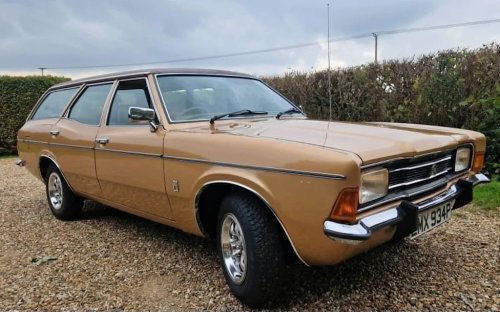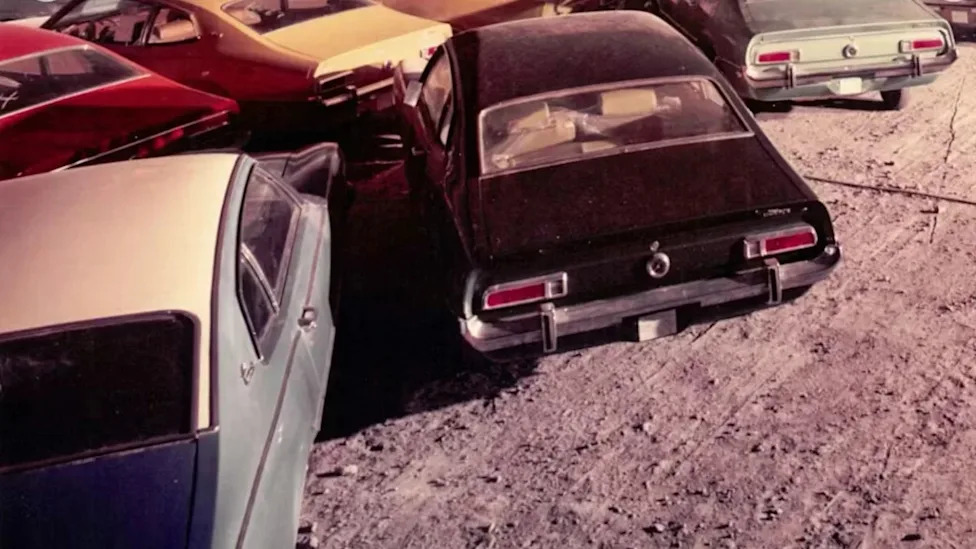



















Ford Allegedly Buried Thousands of Unsold Mavericks Underground and Nobody Wants to Talk About ItWhen Ford had a problem it couldn't sell its way out of, it buried the evidence. Literally. During the 1970s, as unsold Ford Mavericks piled up with nowhere to go, the automaker quietly moved thousands of cars deep underground beneath Kansas City, stashing them inside a sprawling former limestone mine while it figured out what to do next. It's one of the stranger chapters in American automotive history, and it says a lot about how Detroit operated when things went sideways.A Compact Car Caught in Bad TimingThe Maverick launched in 1970 as a practical answer to a very specific moment. Fuel costs were climbing, buyers were getting practical, and there was real appetite for a stripped-down, affordable compact. Ford read that market correctly at first. The car moved well early on, and production ramped up accordingly. But markets shift, consumer tastes move, and what sells in one year doesn't always sell the next. By mid-decade, Ford had far more Mavericks than it had buyers, and those cars were taking up space at dealerships and surface lots across the country.That's where things get interesting.Going Underground Was a Real SolutionSubTropolis isn't some obscure footnote. It's a massive underground complex carved out of limestone beneath Kansas City, stretching across millions of square feet of usable space. The facility maintains naturally stable temperatures year-round without the operating costs of a climate-controlled warehouse. For Ford, which was already using the underground space to store parts for nearby assembly operations, it made logistical sense to expand that relationship when the Maverick surplus became a genuine problem.AdvertisementAdvertisementStoring vehicles underground kept them out of the weather, out of the public eye, and off dealership lots without forcing the company to make any permanent decisions. Ford didn't have to scrap the cars, didn't have to flood the market with deep discounts, and didn't have to absorb the full financial hit all at once. The mine gave the company breathing room.Here's the Part That MattersWhat Ford was really doing was buying time. Moving unsold cars underground wasn't just a logistics move, it was a calculated financial decision designed to protect the value of existing inventory and avoid a visible market collapse. If thousands of new Mavericks suddenly showed up at auction or got steeply discounted across dealer networks at the same time, it would have damaged residual values, frustrated existing owners, and sent a clear signal to the market that the car was in trouble. Hiding the inventory underground kept that signal quiet.The strategy worked as a short-term buffer. Ford could redistribute cars gradually, wait for regional demand to recover, or reintroduce inventory on its own terms rather than reacting to a crisis in real time. That's not the way most people think about surplus car problems, but it's the way a large automaker with access to underground real estate thinks about it.What This Reveals About Automaker EconomicsOverproduction has always been one of the dirtiest secrets in the car business. Assembly lines are built for volume, and volume commitments are made months or years in advance based on demand projections that don't always hold up. When demand drops faster than production can adjust, the cars still come off the line, and someone has to deal with them. For most of automotive history, those options were limited: discount aggressively, send to fleet, sell to rental companies at a loss, or scrap.AdvertisementAdvertisementFord found a fourth option in Kansas City. The SubTropolis storage arrangement was unusual by any measure, but it demonstrated how flexible large-scale infrastructure could absorb the shock of a production miscalculation without turning it into a public-facing disaster. Other automakers have faced similar surplus problems at different points in history, but few have solved it quite this way.Caves Beneath the CityThere's something almost cinematic about the image of thousands of brand-new Fords sitting in the dark beneath Kansas City, waiting. But the reality was straightforwardly practical. SubTropolis existed, it was already connected to Ford's supply chain, it protected vehicles from the elements, and it cost less than building or renting additional surface storage. The Maverick surplus needed somewhere to go. The mine was there.What happened to all those stored Mavericks isn't entirely clear from the historical record. Some were presumably redistributed as market conditions shifted. Some may have been sold through non-traditional channels. The point is that Ford managed the problem without a public implosion, and the underground storage was a significant part of how it got there.The 1970s were a brutal decade for American automakers, squeezed between oil shocks, foreign competition, changing regulations, and consumers who were starting to rethink what they wanted from a car. Ford's decision to park its surplus underground rather than panic-sell or scrap reflects something about how the company managed uncertainty during that era. Whether it was smart business or just creative stalling probably depends on how you look at it. Either way, it worked, and the Maverick eventually moved on. The limestone mine just held the line until it did.Source