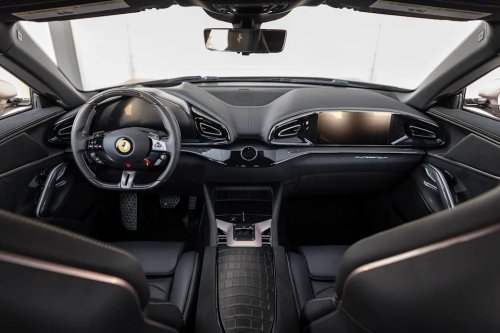
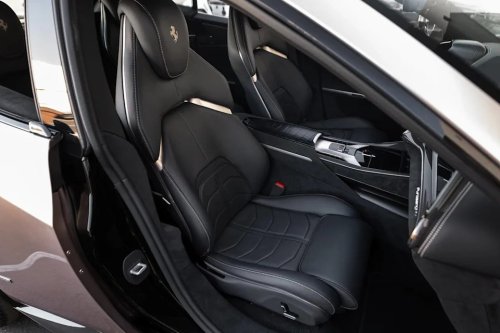
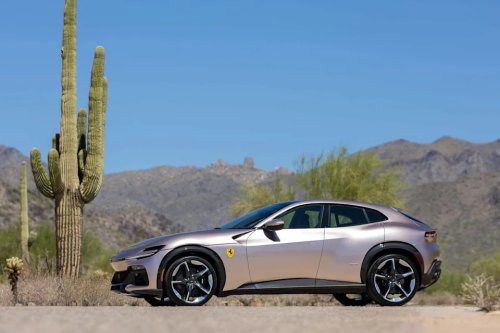
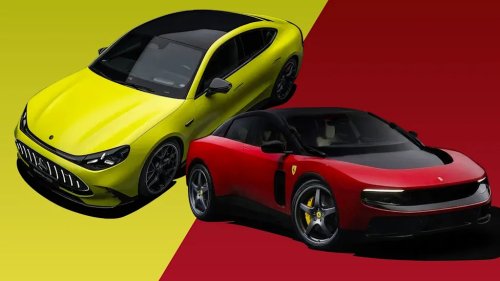
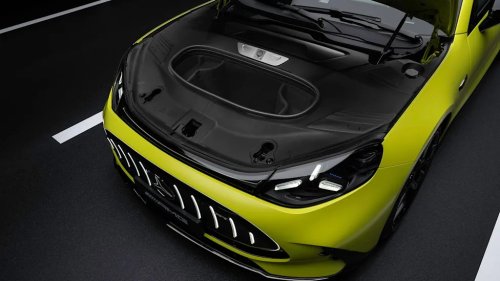
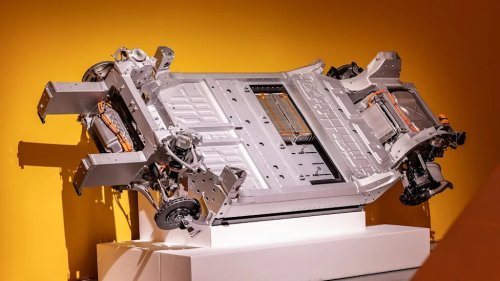
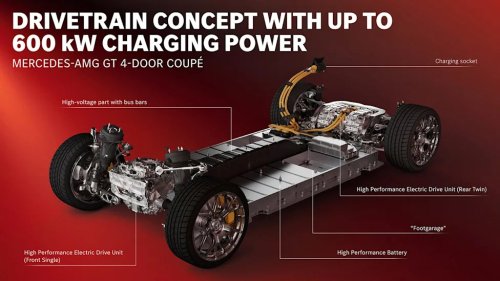
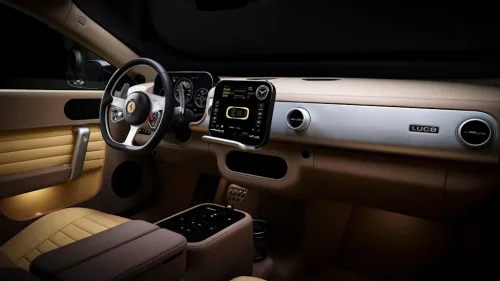
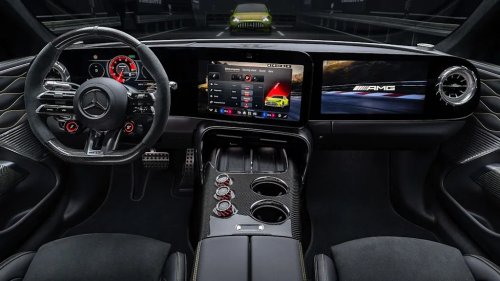
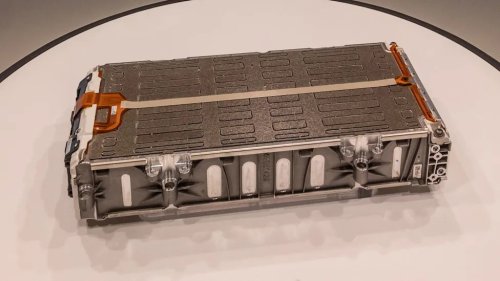
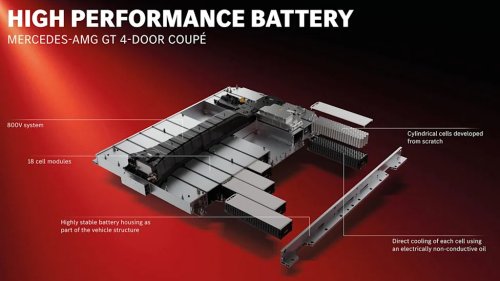
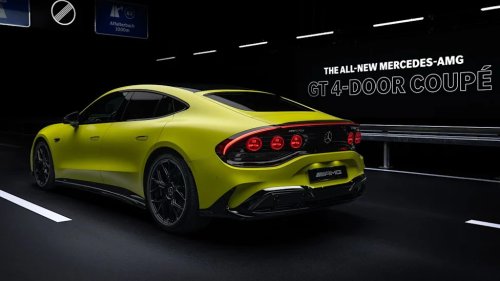
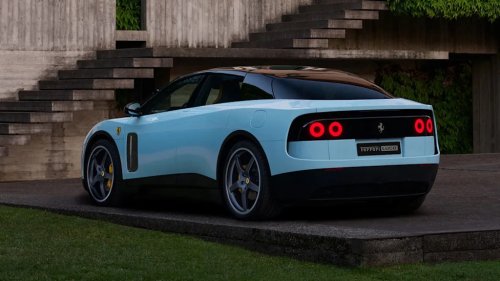
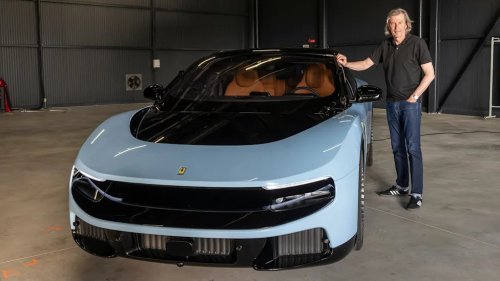
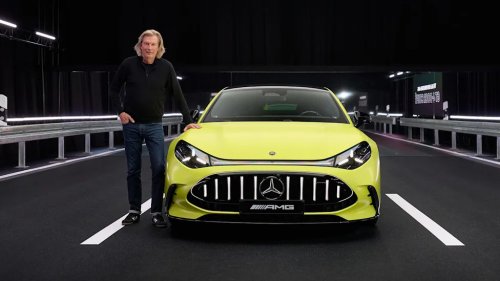
Ferrari Luce and AMG GT EVs ComparedRyan Lugo - MotorTrendThe recent reveals of the Ferrari Luce and Mercedes-AMG GT 4-Door Coupe sent the interwebs into overdrive, with clickbaiting social media mavens all over the world—the majority of whom have yet to see either car in the metal—firing off blistering critiques about their design and technology. I've been to the tech previews, interviewed senior execs at Ferrari and Mercedes, and attended the launch events of both cars. I've driven a prototype of one (I can't reveal which yet) and ridden in a prototype of the other. Very few people have been as up close and personal as I have with both cars. So, yes, I have some thoughts.Make no mistake, both the Luce and the GT 4-Door Coupe are epochal machines. The first production electric vehicles from Ferrari and Mercedes-AMG (the nine or so hand-built SLS AMG Electric Drive coupes sold in 2013 don't count), they ask existential questions of both automakers.Mercedes BenzFor some aficionados, they are questions that ought not to be asked of brands that made screaming V-12s and thundering V-8s famous. But for both Ferrari and Mercedes-AMG, each contemplating a future where electric vehicles will become ubiquitous, they simply had to be built. "Should we get to the point where the new [electric vehicle] technology finally unseats the incumbent technology, we need to be in the position not to miss that point," Mercedes chairman Ola Källenius said. "The Ferrari Luce is not a response to change," Ferrari chairman John Elkann insisted. "It is a decision. A deliberate decision to lead what comes next."AdvertisementAdvertisementBoth the Luce and the AMG GT 4-Door Coupe are the products of companies that have long developed cars at the cutting edge of the performance envelope, and, at a fundamental level, they're strikingly similar. Both are all-wheel-drive four-doors of roughly the same size. At 200.6 inches, the Mercedes is 2.8 inches longer overall than the Ferrari and has a 3.2-inch-longer wheelbase, while the Luce is 1.6 inches wider and 5.2 inches taller than the GT 4-Door. Each has more than 1,000 horsepower and is built on a skateboard platform anchored by a liquid-cooled high-performance battery pack and an 800-volt electrical architecture that enables fast deployment and fast charging. Each has complex software systems that deliver precise control of vehicle dynamics via a wide array of adjustable digital tools for enthusiast drivers to exploit.But they are quite different beasts. Here's how they stack up.FerrariLuce vs. AMG GT 4-Door: PowertrainThe Luce has a four-motor powertrain developed entirely in-house at Maranello. The radial-flow permanent synchronous magnet e-motors have their magnets arranged in what is called a Halbach array, a setup used in Ferrari's F1 powertrains that directs the magnetic flux toward the stator to maximise torque density. As the motors are designed to spin to very high revs (the front pair at up to 30,000 rpm and the rear pair at up to 25,500 rpm), their magnets are held in place by thin, ultra-light, and ultra-strong carbon-fiber sleeves, not the least because at maximum revs the centrifugal force acting on each 3-ounce magnet in the motors is equivalent to 3 tons. The two e-motors at the rear axle each develop a maximum of 416 hp and 262 lb-ft of torque, while the two e-motors up front each develop 141 hp and 103 lb-ft of torque. Total system output is 1,035 hp and 730 lb-ft.The AMG GT 4-Door is powered by three axial-flow electric motors, one at the front axle and two at the rear, developed by British-based Mercedes-Benz subsidiary Yasa Ltd. Unlike the radial-flux motors in the Luce, which have a tubular stator inside a tubular housing, the axial-flux motors feature a disc-shaped stator at their center that enables the magnetic flux to flow parallel to the motor shaft rather than perpendicular to it, dramatically improving efficiency. Axial-flux motors are 67 percent lighter and 67 percent smaller than comparable radial-flux motors delivering three times the power density and twice the torque density, Yasa CEO Jörg Miska told us. And the numbers back him up: In the top-of-the-range GT63 model, that powertrain delivers a total system output of 1,153 hp and a gargantuan 1,475 lb-ft of torque.Mercedes BenzLuce vs. AMG GT 4-Door: PerformanceWith all that torque, it's perhaps hardly surprising that on paper the GT63 is the quicker of the two off the line, even though at 5,423 pounds, it weighs a hefty 441 pounds more than the Luce. Claimed 0–60 mph for the GT 63 is about 2.0 seconds, making it about four-tenths of a second quicker than the Ferrari, with 124 mph coming up in 6.4 seconds versus the Luce's claimed 6.8 seconds. The Italian car is faster overall, however, boasting a top speed of 193 mph. The GT63 maxes out at 186 mph, but only if it's fitted with the optional Driver's package; otherwise, you'll have to drive at 155.Luce vs. AMG GT 4-Door: DynamicsWhat we don't know yet is which of the two will be quicker through the twisty bits. Both cars have semi-active suspension and four-wheel steering. Both cars can deliver up to 0.68 g of regenerative braking, more than twice the level of regular EVs. But the Luce still has massive carbon-ceramic brakes all round, while the AMG GT 4-Door has them only at the front axle, with steel rotors handling the braking chores at the rear. The AMG GT 4-Door has 11 percent more power and more than twice the torque of the Luce, but it has 8 percent more mass to manage under brakes and through the corners, and its three-motor layout means it doesn't have the cross-axle torque vectoring capability of the Ferrari at the front end.FerrariNot only is the Ferrari lighter, but it also boasts slightly better weight distribution, with just 47 percent of its mass over the front axle, compared with almost 49 percent in the Mercedes-AMG. On top of that, Ferrari's vehicle dynamics engineers are probably the best in the business right now, and their latest-generation Slide Slip Control X system can precisely and independently control the power and torque and braking of each wheel, as well as their vertical and lateral motions, in real time. "The Luce has more computing power in it than any production Ferrari," said vehicle dynamic control system manager Francesca Mincigrucci.AdvertisementAdvertisementAs in Ferrari's regular internal combustion engine models, the Manettino under the right-hand spoke of the Luce's steering wheel selects different dynamic control system settings. A new e-Manettino under the steering wheel's left-hand spoke tweaks powertrain outputs to suit different driving scenarios. In Range mode, power is limited to 429 hp, top speed is pegged at 160 mph, and the front motors are disconnected as often as possible to improve efficiency. In Tour mode, the top speed remains 160 mph, but available power rises to 616 hp, and all‑wheel drive is always active. Performance mode retains all-wheel drive but boosts maximum power to 972 hp and the top speed to 193 mph. Selecting Launch Control via the button in an overhead panel unlocks another 53 hp.Mercedes BenzThe suspension stiffness and drive mode controllers under the left and right spokes of the GT 4-Door's steering wheel deliver the same functionality as in regular AMG cars. But on the center console are three rotary switches, the interface for what Mercedes calls the AMG Race Engineer Control Unit. The Response Control knob adjusts the sharpness of the response of the electric motors to commands from the accelerator pedal. The Agility Control selector, which is only active in Sport, Sport+ and Race drive modes with the ESP switched off, adjusts the torque distribution to change the chassis balance from slight understeer through neutral handling to controlled oversteer. The Traction Control knob, which can only be operated under the same conditions as Agility Control, adjusts the level of traction control intervention through nine stages.Both cars offer their drivers extraordinary levels of control over how they feel and respond. Who's done it better? I suspect the Ferrari will feel more natural, more intuitive to drive, while the Mercedes-AMG will be a car sim-racers will love playing with as they work through the drive mode menus and the standard Performance Menu, Set Up, and Track Pace apps.FerrariLuce vs. AMG GT 4-Door: RangeDeveloped in-house at Ferrari, the Luce's 122-kWh liquid-cooled battery comprises 15 modules, each with 14 pouch cells. The cells are from Korean supplier SK On, but the design and the configuration of the battery modules and the attendant power electronics systems is all Ferrari's work. The battery has been designed so individual modules can be replaced, and the entire battery, which is attached to the chassis with 20 fasteners, can be easily upgraded as improved chemistries offer increased range and performance in the future. Hooked up to a 350-kW charger, the battery can suck down 70 kWh of energy in just 20 minutes. Ferrari claims a range of 330 miles on the WLTP test, which suggests a likely EPA-rated range of around 280 miles.Mercedes BenzThe 106-kWh battery in the AMG GT 4-Door Coupe, developed in-house at AMG using expertise from engineers at Mercedes-AMG High Performance Powertrains (HPP) in Brixworth, England, has more than 3,000 cells with a unique nickel-cobalt-manganese-aluminium (NCMA) combination in the cathode and an anode with silicon content. The cells are in lightweight laser-welded aluminium housings, which also provide better electrical and heat conductivity than the commonly used steel containers, and their tall and thin design allows them to be more effectively cooled by the electrically non-conductive oil that surrounds them.AdvertisementAdvertisementThat the Luce has a larger battery pack than the AMG GT 4-Door Coupe but weighs less overall is impressive. However, the Mercedes will go farther on a charge than the Ferrari, with claimed a range of 370 miles to 430 miles on the European WLTP test cycle, which suggests an EPA-rated range of between 315 miles and 365 miles. What's more, the AMG battery can accept peak charge rates of more than 600 kW on the coming generation of hyperfast chargers, which might take it from a 10 percent to 80 percent state of charge in a claimed 11 minutes.Mercedes BenzLuce vs. AMG GT 4-Door: DesignThis is where most of the online sound and fury aimed at both cars has been focused. And what does it all signify? Nothing much. Tempest in a teacup. Yes, the AMG GT 4-Door Coupe's design borders on caricature, and yes, the Luce resoundingly looks like no Ferrari ever made. But despite the caterwauling on the socials, neither car is a fatal misstep for either brand. Indeed, spend time with the Ferrari and the Mercedes, walk around and look at the lines and the surfaces, the stance and the proportions, sit behind the wheel and in the back seats, and the shock of the new quickly fades. The key point is this: While we can debate the execution, the form of both cars accurately reflects their functions.The angry and extrovert AMG GT 4-Door Coupe is the EV contrived as 21st century techno-muscle. The lowest four-door Mercedes ever made, it's also longer and wider than the internal combustion GT 4-Door Coupe and looks ready to devour anything that gets in its way. Most fast and powerful EVs are boringly one-dimensional, cars whose party trick is light-switch quick acceleration and little else. The AMG GT 4-Door Coupe has been deliberately designed to entertain. In certain drive modes, the power and performance of its state-of-the-moment powertrain is accompanied by old-school ICE stylings, from the V-8 soundtrack that's been digitized from recordings of actual AMG engines to the fake gearshifts that replicate the feel and duration of those of the AMG Speedshift nine-speed wet-clutch automated manual. It's fun. It's involving. And those are characteristics every great driver's car should have.FerrariIf the AMG GT 4-Door Coupe is 21st century techno-muscle, the Ferrari Luce is something else entirely. A cab-forward four-door with limolike room inside, the Luce is a car that defies all Ferrari convention, a car that stampedes the fabled Prancing Horse deep into unfamiliar territory. But unlike the AMG GT 4-Door Coupe, it doesn't try to disguise the fact. Philosophically, the Luce is essentially Maranello's take on an S-Class, a fast and roomy premium sedan with an interior—the coolest, most tactile yet on a modern Ferrari—that presents a quieter, more disciplined notion of 21st century luxury than the giant screens and glittery light shows that now dominate Mercedes interiors.AdvertisementAdvertisementThe Luce exists because Ferrari long ago determined there was no point in building an electric-powered sports car or a grand turismo as the technology offered no performance benefit, particularly in terms of driving dynamics, over a comparable internal combustion engine or hybrid powertrain vehicle. The focus has been on the form, but function is why the Luce is the most radical Ferrari ever built.FerrariFast and powerful EVs like the Tesla Model S Plaid, Porsche Taycan Turbo S, and Chinese newcomers like the Xiaomi SU7 Ultra represent the first generation of electric performance vehicles. All hew to a similar visual style and powertrain character. The Ferrari Luce and the Mercedes-AMG GT 4-Door Coupe are electric performance vehicles, version 2.0. They are more adventurous in their design, and they promise to be more dimensional in their dynamics and more involving to drive. They are interesting and characterful cars. And that's a good thing.Mercedes Benz



















 +18 others