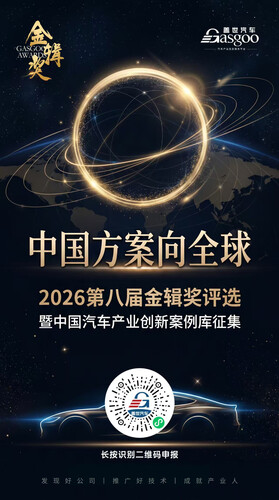
As new energy and intelligent vehicles continue to gain momentum, competition in the automotive industry is expanding beyond traditional dimensions such as powertrains and vehicle configurations to encompass intelligent experiences, product design, and manufacturing capabilities. As a key part of the vehicle, body structures, interiors, and exteriors are undergoing a new round of value transformation, driven by technological advances and evolving user demands.Traditionally, body structures have primarily served fundamental functions such as safety and structural integrity, while also addressing lightweighting and aerodynamic performance. Interiors and exteriors, meanwhile, have focused largely on styling, comfort, and ergonomics. Today, the integration of materials, electronics, software, and other technologies is pushing body, interior, and exterior components beyond their conventional structural and decorative roles toward greater functional integration, intelligent interaction, and enhanced user experiences.At the same time, new energy vehicles are placing higher demands on vehicle lightweighting, space utilization, manufacturing efficiency, and cost control, creating new challenges for body structure design and manufacturing processes. Against the backdrop of greater platformization and integration, technologies such as integrated design, advanced forming processes, innovative joining techniques, and new materials are advancing rapidly. As a result, body manufacturing is shifting from a singular focus on structural performance toward a more holistic optimization of safety, performance, cost, efficiency, and scalable manufacturing capabilities.Body, Interior, and Exterior Components Undergo a Value TransformationThe integration of lighting, display, sensing, and other technologies is giving vehicle exteriors richer information and interaction capabilities. Meanwhile, electronic technologies are upgrading traditional mechanical components and enabling closer integration with vehicle sensing and control systems. As a result, vehicle exteriors are evolving from styling and functional elements into important interfaces for brand expression and intelligent interaction.According to the Gasgoo Automotive Research Institute, raw materials account for 64% of headlamp costs, with electronic components, plastics, and processed components representing 25.20%, 16.20%, and 16.10% of raw material costs, respectively.As features such as Adaptive Driving Beam (ADB) and projection-based interaction become more common, the value of lighting systems continues to rise, while cost control remains critical. Suppliers are mainly reducing costs through lower-cost alternatives, such as light guides combined with LEDs, and structural and process optimization, including two-shot injection molding to reduce part count.Inside the cabin, touch, display, lighting, and sensing functions are increasingly integrated into materials and interior surfaces, transforming some interior components from traditional decorative and functional elements into interactive interfaces. Meanwhile, advances in new materials and glass technologies are creating new possibilities for visual design, privacy, comfort, and information display.This shift also means that body, interior, and exterior components are becoming increasingly integrated into the vehicle's intelligent ecosystem. Their value is no longer defined solely by individual component performance, but increasingly by how well they work with the broader vehicle system to deliver safer, more comfortable, convenient, and differentiated user experiences.Driven by vehicle intelligence and manufacturing upgrades, innovation in body, interior, and exterior components is increasingly moving toward cross-disciplinary integration.The boundaries between structures, materials, electronics, and software are becoming less distinct. New energy vehicle platforms are driving body structures toward greater integration and lightweighting, while evolving electrical/electronic architectures are adding more electronic and software capabilities to traditional body components. As a result, body, interior, and exterior components are becoming more closely connected with intelligent cockpits, intelligent driving, and vehicle control systems.For suppliers, the focus is shifting from "whether a technology works" to "whether it can be commercialized." Beyond performance and functionality, reliability, cost, manufacturing efficiency, and scalability are becoming equally important. Technologies that can move from innovation to mass production and commercial deployment are more likely to deliver lasting industry value.For the 2026 Gasgoo Awards, the Body, Interior & Exterior category will focus on innovative technologies and applications that advance vehicle design, manufacturing, and intelligent user experiences. Key areas include body structure (design and processes), digital grilles, intelligent lighting, electronic exterior mirrors, smart surfaces, smart glass, and closures.The Gasgoo Awards will place greater emphasis on innovations with real industry value and commercialization potential. Rather than standalone concepts or isolated functional innovations, the evaluation will focus on whether technologies address real vehicle and user needs, have clearly defined application scenarios, and demonstrate engineering validation, mass-production readiness, and scalability.During submission, companies can highlight tangible value in performance, functionality, user experience, and manufacturing efficiency, supported by specific application scenarios. For emerging technologies, submissions can also demonstrate their integration with vehicle intelligence, interactive experiences, and electrical/electronic architectures.Gasgoo Awards 2026 & China Automotive Industry Innovation CasebookThe Gasgoo Awards was initiated by Gasgoo, aiming at" promoting outstanding companies, propagate Innovative technologies, and facilitate the success of automotive professionals." With the theme of "Top 100 Players of China's New Automotive Supply Chain", It focuses on ten sub - sectors:Advanced Driver Assistance Systems/Autonomous Driving (ADAS/AD), smart cockpit, intelligent chassis, automotive software and artificial intelligence, automotive-grade chips, powertrain and charging and battery swapping, body and interior and exterior trim, new materials and advanced manufacturing, embodied Intelligence and cross-industry technologies (new focus area). The Gasgoo Awards is committed to identifying and evaluating outstanding enterprises and advanced technical solutions. By presenting these remarkable enterprises and industry leaders to the academic community and the broader industry, it aims to jointly drive the sustainable development and advancement of China's automotive industry.Leveraging a supply chain database covering more than 320,000 companies, as well as years of industry research and innovation case studies accumulated through the Gasgoo Awards, Gasgoo has officially launchedthe China Automotive Industry Innovation Casebook. The initiative aims to document China's automotive innovation journey and serve as a global window into the country's technological and industrial capabilities.Focusing on key sectors such as ADAS, electric propulsion, intelligent cockpits, and thermal management, the Casebook will provide data-driven insights into leading companies, technology trends, and industry best practices. It is designed to help global OEMs, Tier 1 suppliers, and investors better understand the innovation, engineering, and mass-production capabilities of Chinese automotive suppliers, while supporting deeper international collaboration across the industry.