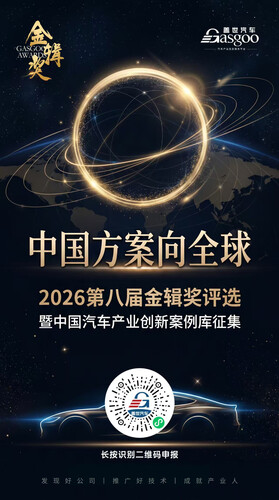
As new energy vehicles (NEVs) enter a phase of large-scale adoption, competition in China's automotive industry is shifting from electrification penetration to electrification capabilities.In recent years, industry focus has centered on rising NEV penetration, power battery growth, and the deployment of electric drive systems. By 2026, competition across the supply chain is moving toward energy efficiency, system integration, cost optimization, and lifecycle value.As a core technology area for NEVs, electrified powertrains are evolving from individual component optimization to system-level innovation. Key technologies including power batteries, electric drive systems, electronic control systems, high-voltage platforms, and power semiconductors are advancing rapidly, driving improvements in performance, safety, cost efficiency, and user experience.Meanwhile, the NEV energy ecosystem is undergoing transformation. Charging and battery-swapping technologies, including 800V high-voltage fast charging and ultra-fast charging, are reshaping energy replenishment systems, while thermal management is evolving from basic cooling solutions into integrated energy management systems covering batteries, electric drives, cockpits, and intelligent vehicle components.Power battery competition heats up, with efficiency becoming the new battlegroundAccording to Gasgoo Automotive Research Institute, China's NEV passenger vehicle power battery market maintained a highly concentrated competitive landscape from January to May 2026, with leading players further strengthening their scale advantages.CATL ranked first with 79,616 MWh in installed capacity and a 43.0% market share, while FinDreams Battery secured second place with 42,063 MWh and a 22.7% share, supported by BYD's in-house supply ecosystem. Together, the two leaders accounted for more than 65% of the market, forming a dominant duopoly. Meanwhile, competition among second-tier players continued to intensify, with CALB, REPT BATTERO, and Gotion High-tech ranking third to fifth, each recording installed capacities between 9,000 MWh and 10,000 MWh, indicating a more diversified market landscape.As NEV technologies continue to advance, thermal management is becoming increasingly important in determining vehicle performance and user experience. With the rapid adoption of high-voltage fast charging, high-performance electric drives, and high-energy-density batteries, achieving faster battery heating, precise temperature control, and efficient heat dissipation has become a key challenge for industry players to improve battery performance and safety under various operating conditions.Thermal management competition is now expanding beyond traditional heat exchange components toward vehicle-level system solutions. Companies are innovating in areas such as battery thermal management, heat pump systems, integrated thermal management modules, and multi-system coordination, driving thermal management systems from standalone temperature control functions toward integrated energy management solutions covering batteries, electric drives, and cockpits.Meanwhile, charging and battery-swapping solutions are evolving around faster energy replenishment and better infrastructure integration. The growing adoption of 800V high-voltage platforms, ultra-fast charging technologies, and battery-swapping models is accelerating the transformation of NEV energy replenishment systems. In the future, energy supply solutions featuring high efficiency, broad compatibility, and intelligent scheduling capabilities will become a key foundation for large-scale NEV adoption.For automotive supply chain companies, future competition will not only depend on improvements in individual product performance, but also on their ability to deliver more valuable solutions that address vehicle-level energy efficiency, system integration, and large-scale deployment needs.At the 2026 Gasgoo Awards, the powertrain electrification and charging/swapping category will focus on innovative technologies and applications that enhance NEV performance and advance the energy ecosystem. The category covers electric drive systems, power battery technologies, hybrid technologies (HEV/PHEV/EREV), thermal management, high-voltage modules, ultra-fast charging technologies, battery-swapping technologies, V2G (vehicle-to-grid), and other related areas.This year's Gasgoo Awards will place greater emphasis on technological innovations that address real industry challenges. Rather than focusing solely on improved technical specifications, the evaluation will consider whether companies can clearly demonstrate the problems their technologies solve, their potential for commercial production, and whether performance improvements have been validated through testing, real-world data, and large-scale applications.For example, in the powertrain sector, companies can highlight key metrics such as efficiency improvements, power density optimization, cost reduction, and lightweight design. In thermal management, submissions can focus on energy consumption reduction, temperature control improvements, low-temperature performance enhancement, and system integration capabilities. Ultimately, the value of innovation lies not only in superior technical performance, but also in its ability to drive NEVs toward higher efficiency, lower costs, and broader adoption.Gasgoo Awards 2026 & China Automotive Industry Innovation CasebookThe Gasgoo Awards was initiated by Gasgoo, aiming at" promoting outstanding companies, propagate Innovative technologies, and facilitate the success of automotive professionals." With the theme of "Top 100 Players of China's New Automotive Supply Chain", It focuses on ten sub - sectors:Advanced Driver Assistance Systems/Autonomous Driving (ADAS/AD), smart cockpit, intelligent chassis, automotive software and artificial intelligence, automotive-grade chips, powertrain and charging and battery swapping, body and interior and exterior trim,new materials and advanced manufacturing, embodied Intelligence and cross-industry technologies (new focus area). The Gasgoo Awards is committed to identifying and evaluating outstanding enterprises and advanced technical solutions. By presenting these remarkable enterprises and industry leaders to the academic community and the broader industry, it aims to jointly drive the sustainable development and advancement of China's automotive industry.Leveraging a supply chain database covering more than 320,000 companies, as well as years of industry research and innovation case studies accumulated through the Gasgoo Awards, Gasgoo has officially launchedthe China Automotive Industry Innovation Casebook. The initiative aims to document China's automotive innovation journey and serve as a global window into the country's technological and industrial capabilities.Focusing on key sectors such as ADAS, electric propulsion, intelligent cockpits, and thermal management, the Casebook will provide data-driven insights into leading companies, technology trends, and industry best practices. It is designed to help global OEMs, Tier 1 suppliers, and investors better understand the innovation, engineering, and mass-production capabilities of Chinese automotive suppliers, while supporting deeper international collaboration across the industry.