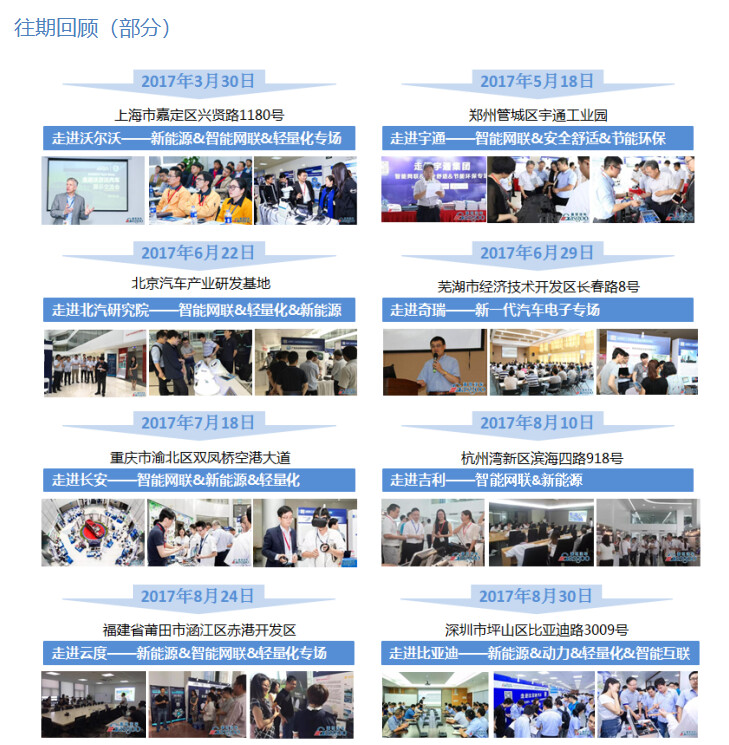
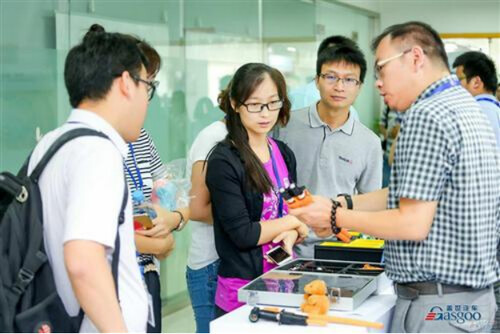
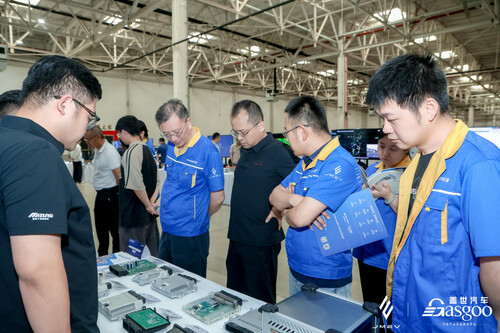
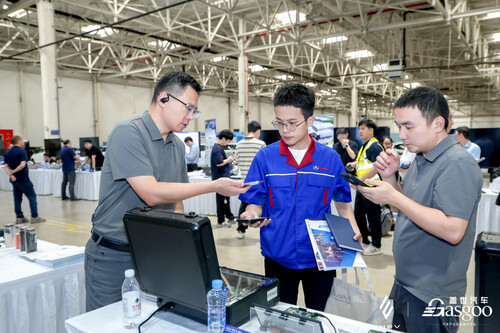
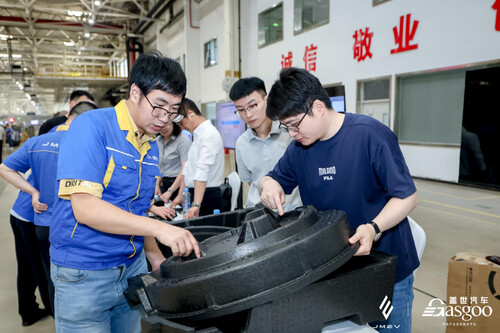
Gasgoo Munich-At Gasgoo Tech Day, a familiar scene unfolds long after the scheduled sessions end: OEM and supplier representatives crowd around booths, still deep in conversation, gesturing and talking, reluctant to walk away.It’s a pattern repeated over the past decade. Yet the topic of those lingering conversations has shifted. In the early years, the question was, "Is this technology mature?" Later, it became, "Can it adapt to my platform?" Now, the dialogue often jumps straight to, "Can we define the next-generation vehicle together?"That shift in dialogue tracks the evolving relationship between supply and demand.In our 10th-anniversary series for Gasgoo Tech Day, we’ve revisited the project’s origins, deconstructed the matching mechanism, and collated industry data. This installment answers a different question: Who has walked this path over the last decade? What have those on both sides gained? Their journey of mutual empowerment mirrors the broader trajectory of China’s automotive supply chain—evolving from local support to a key player in the global ecosystem.AI-generated image; Source: DoubaoOEMs: Gaining More Than Just a Few SuppliersOne veteran OEM executive recalls the event’s most immediate value: efficiency. By leveraging pre-identified technical needs, a single session enables deep engagement with multiple suppliers whose tech aligns perfectly. The attendees are often frontline engineers who can answer technical questions directly, cutting out the cost—and distortion—of relaying messages through layers of management.But the executive notes a deeper value: a shift in perception. After multiple rounds of dialogue, OEM teams realized the domestic supply chain’s technical reserves run far deeper than imagined. For many components once thought to rely on foreign giants, local companies have not only delivered solutions but built advantages in cost control and response speed.This "rediscovery" is particularly evident in sectors once heavily dependent on imports. Automotive-grade chips were long dominated by foreign semiconductor firms, but following the chip shortage, local companies have secured automaker certification and even infiltrated the supply chains of top global Tier 1s. Core components like brake-by-wire systems and air suspension—once tightly controlled by foreign giants—are now being mass-produced and shipped by domestic suppliers.Take air suspension: according to the Gasgoo Automotive Institute’s ADAS configuration database, three local suppliers—Konghui Tech, Baolong, and Tuopu—collectively captured 91.2% of China’s passenger air suspension market between January and July 2026.This shift has also reshaped R&D. Suppliers are getting involved earlier, offering engineering input during the concept phase. Conversely, the operating condition requirements and validation standards set by OEMs are pushing suppliers to refine their products more rigorously.For participants, the ultimate payoff is seeing a technology make it to mass production. Another OEM R&D chief recalls a technology first encountered at the event that went from assessment to designation, validation, and finally SOP—a long cycle. When the vehicle rolled off the line, he reflected: "Mass production is the ultimate test of technical judgment. Only when the car rolls off the line smoothly has the early groundwork truly paid off."The shift is evident in behavior, too. What started as tentative attendance has evolved into proactive moves: OEMs now book exclusive sessions and submit their technical focus areas in advance. Some have even integrated this matchmaking into their standard sourcing workflows. For them, it’s no longer just an event—it’s a stable channel for technical input.Suppliers: From 'Can't Get a Meeting' to 'Co-Designing Solutions'For suppliers, traditional trade shows often offered low returns on investment: rent a booth, haul samples, hand out brochures, and spend days hearing, "Leave the info, we’ll get back to you"—which rarely happens. One supply chain executive recalled his first Gasgoo Tech Day: before he could finish his company intro, the OEM engineer across the table drilled down into technical details, grilling him on performance redundancy under complex conditions. The questions were so technical only a true product expert could handle them. That scrutiny wasn’t harassment; it was the kind of effective dialogue almost impossible to find on a traditional show floor.But a meeting doesn’t guarantee a deal. Over the decade, many matchings stalled midway. Post-mortems usually point to three bottlenecks: mismatched technology roadmaps, shifts in vehicle project timelines, or gaps in the supplier’s own mass-production capabilities.Gasgoo Tech Day offers an opportunity to connect, but it can’t substitute for hard technical strength. Yet a clear rejection can be just as valuable as a signed contract—at least a company knows exactly where it falls short and how to fix it. The records show a common pattern: companies take the feedback, shore up system certifications and batch data, and re-enter the evaluation list when the next vehicle cycle opens a year or two later.Beyond orders, many suppliers cite another gain: updating their product matrix. One executive admitted their early thinking was simple: push whatever you can make. But after hearing diverse requirements from domestic, joint-venture, legacy, and emerging automakers across various sessions, the team realized a single product couldn’t cover every scenario.Gasgoo Tech Day acts as a window into real demand: distinguishing common requirements from specific customer scenarios, and identifying feedback that exposes blind spots in existing products. Armed with these insights, companies return to restructure their product lines and fill gaps, gradually upgrading their matrix. The decision on which needs justify a new project—and which are niche scenarios—remains firmly in their hands.Another supplier interviewed shared a similar sentiment. The first time they received constructive feedback from an OEM at Gasgoo Tech Day, the team iterated their proposal line by line based on the comments. It wasn’t excitement so much as relief—finally, someone was taking their work seriously. "R&D people don’t fear revising a plan; they fear revising it endlessly only to have no one look at it," their lead said. What suppliers truly need isn’t special treatment—it’s a chance to be seen and evaluated fairly. That is the starting point for "co-designing solutions."Two-Way Street: From Buyer-Seller to Problem-Solving PartnersCollaboration across the automotive supply chain has shifted significantly over the past decade. In the early days, OEMs provided clear technical specifications, and suppliers quoted and delivered accordingly. Negotiations revolved around price, delivery, and quality—a straightforward transactional relationship.But as technology cycles accelerate—especially in new energy and intelligent driving—many frontier technologies lack ready-made specifications. The journey from concept to mass production is riddled with engineering challenges that require joint solutions. OEMs and suppliers must now start dialogues much earlier, sometimes even before a project is formally approved.Gasgoo Tech Day provides exactly that early-stage forum. Here, both sides temporarily shed the client-contractor dynamic to collaborate as partners. Suppliers outline the technical boundaries; OEMs explain vehicle requirements and scenario constraints. Only by piecing this information together can they determine if a technology is feasible and how to implement it.Over the decade, this matchmaking has moved countless supplier solutions from blueprint to production and turned early concepts into actual orders. Some technologies have upgraded specific vehicle configurations; others have reshaped competitive landscapes in market segments; and some have even influenced the selection of industry-wide technology roadmaps.The core value of Gasgoo Tech Day has remained constant: helping OEMs and suppliers establish early dialogue, reducing information asymmetry, and lowering the cost of trial and error in selection and verification.In the coming decade, automotive technology will continue to evolve, supply chain structures will adjust, and collaboration models will update. Going forward, Gasgoo Tech Day will run parallel tracks domestically and overseas, diving deeper into R&D frontlines and production factories to listen to engineers’ real technical needs and address the industry’s genuine pain points.