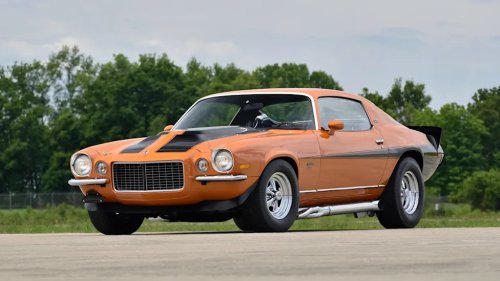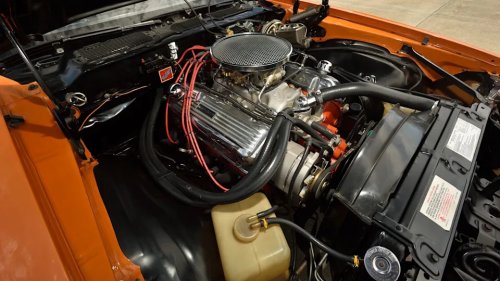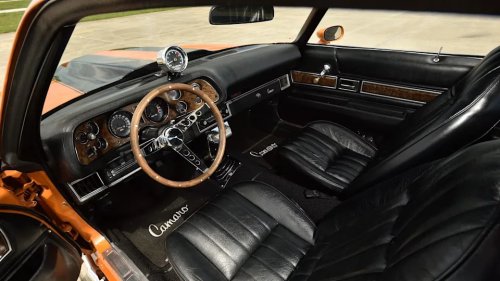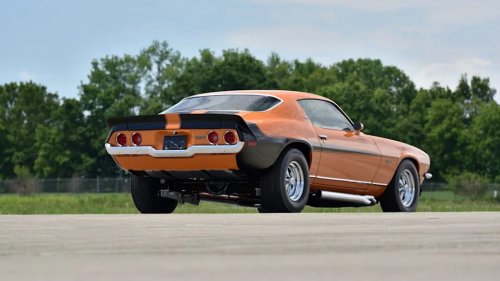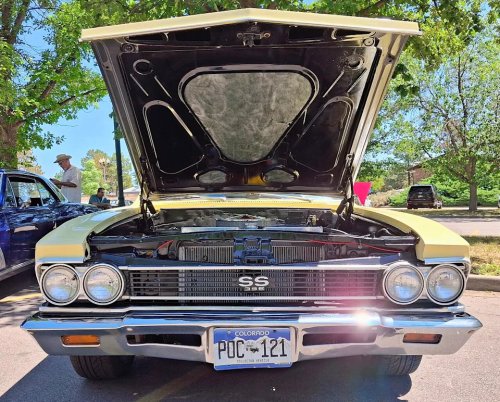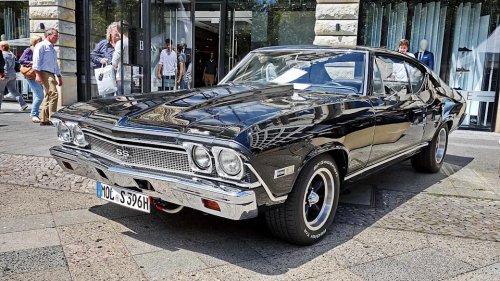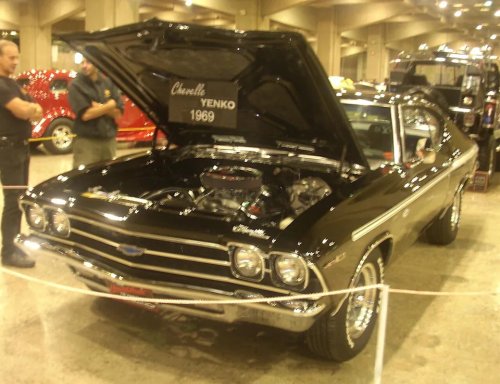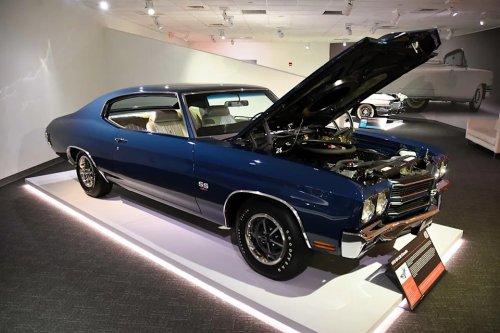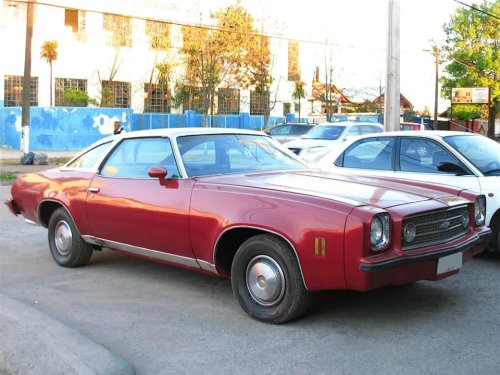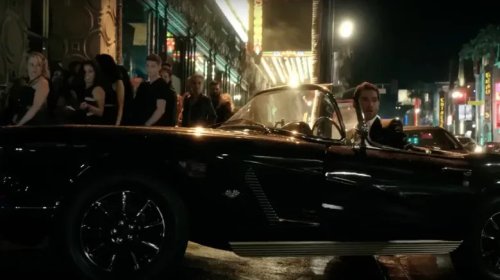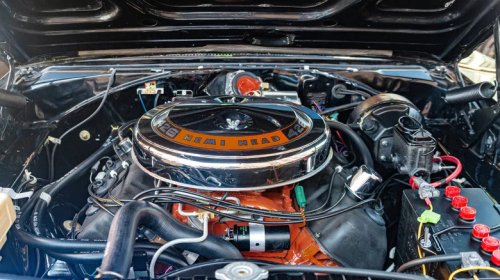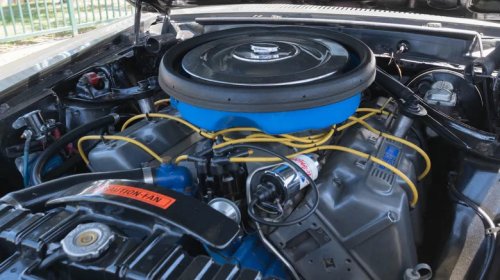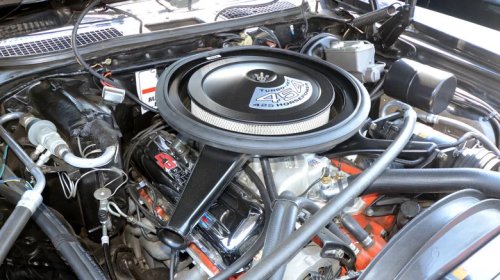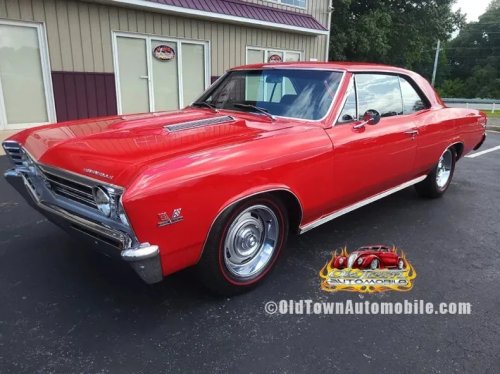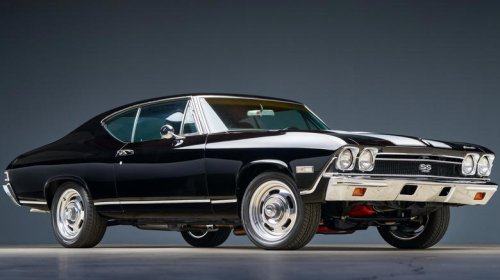
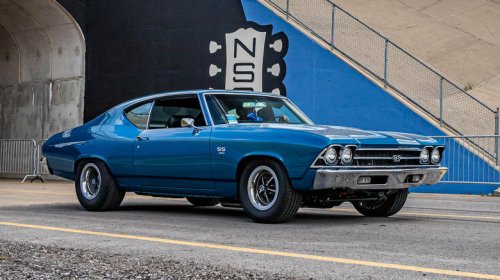
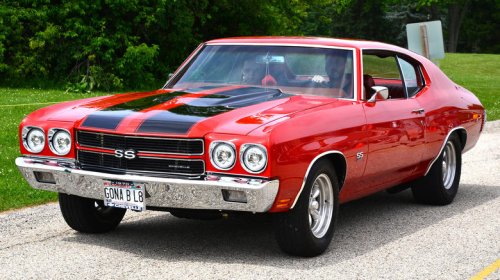
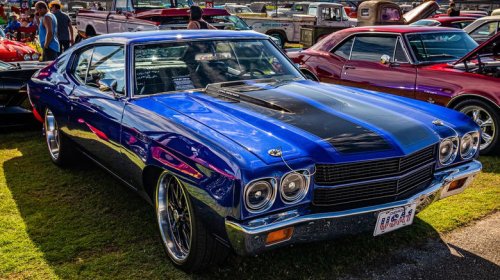


















Second generation 1968-1972For model year 1968, the Chevelle got a new look. The most marked difference in appearance can be attributed to the banishment of the straight rear fenders and long, flat rear deck. Designers installed curved rear haunches and a fastback-style trunk. The car looked like it was in motion, even parked, and the sleek look hit with consumers.The Chevelle is most closely associated with classic muscle, but the truth is the second generation was surprisingly versatile. From 1968-1972, Chevrolet offered several body styles, including sedans, coupes, station wagons, and convertibles. Across the line, consumers had a choice of 10 engine options, including two six-cylinder and eight eight-cylinder engines.Many aficionados consider the second-generation Chevelle the high-water mark for the nameplate. It's what comes to mind when most people think of a Chevelle, and it's not unusual to see the 1970 Chevelle SS LS6 acclaimed as one of the most desirable muscle cars ever. In 1968, at the height of the muscle craze, Chevrolet built nearly 384,000 Chevelles, with a further 455,000 following for 1969 and over 634,000 for 1970 before dipping to 387,000 for 1971. Numbers for 1972 are difficult to ascertain because Chevrolet included Monte Carlo production in their reporting.The second-generation Chevelle swept onto the market and into the daydreams of young drivers with gasoline in their veins. It was modern, powerful, and poised for the height of muscle mania.Identifying a second-generation ChevelleEach of the three Chevelle generations, which ran between 1964 and 1977, had a distinct look. The major redesign for 1968 eliminated the stalwart, blocky lines of the street-fighting first generation and played with a longer hood, sloping, muscular rear fenders, and a shorter wheelbase and trunk deck that made it look like it wanted to spring from the starting line. There were four model years for the second generation, which, at a glance, look pretty similar. One of the best ways to determine the year is to look at the front end. The first year of the restyle included an egg crate mesh grille, while 1969 models and beyond employed horizontally split grills and, crucially, lost the triangular vent window after Chevrolet introduced its Astro Ventilation air system. The latter half of the second generation saw a restyling that set them apart from the '68 and '69 models. In 1970, the deck lid and rear fenders changed slightly for a fatter look. Then, in 1971, the dual headlights switched to singles, and the taillights turned from single rectangles to double circles. For 1972, Chevrolet finished the generation with solid signal lenses in front.It's not always a snap to tell exactly which second-generation Chevelle you're looking at. If you can look at the VIN number, the eighth number of a second-generation Chevelle indicates the year of production. For example, a "9" in the eighth digit of the VIN indicates a 1969 model, while a "0" would be present for 1970.Trim and enginesThe Chevelle was a surprisingly diverse automobile. Throughout its lifetime, fewer than 10 engine options and a selection of coupes, sedans, convertibles, and even wagons gave buyers many options. For 1968, Chevrolet offered the 300, 300 Deluxe, Nomad, Concours, Malibu, and SS 396. Any of the models could come equipped with the standard six-cylinder, 140 horsepower Turbo-Thrift (aside from the SS) or any of a line of V8s, which included options up to a 396-cubic-inch engine producing up to 375 horsepower. Consumers could also choose a number of interior and exterior color options. The options for 1969 remained much the same — the Malibu was considered the luxury model, and the Super Sport with its 396 was as big as the Chevelle would get until 1970.Things changed in 1970. Along with the restyling, Chevrolet made a huge splash by putting one of the most legendary V8 big-blocks of all time into a car already destined for museums — the 1970 Chevelle SS 454. The 454 big-block cost buyers an additional $503 (MSRP ranged between $3,000 and $4,000), and it may be the pinnacle of muscle power. Shelling out for the top-tier LS6 would have been a good investment, with 450 horsepower and 500 pound-feet of torque to enjoy. Surviving examples fetch nearly six-figure prices in the modern era. It also marked the final production year before the Clean Air Act of 1970, which hamstrung big-displacement engines and saw Chevy go out in style.Reception and impactAlas, by 1972, the final year of the second-generation Chevelle, the glory days of the muscle car era had passed. The Chevelle would live on for another five years, but there is little debate the party was over after 1972. The legendary car faded from glory as the 1980s approached, eventually rebranding as the Malibu in 1978.The second-generation Chevelle hit that sweet spot between the rise and development of muscle cars and their ultimate death to regulation. Perhaps this ignominious downfall makes the Chevelle echo so loudly in the halls of automotive memory. It's one of the few cars (along with several of its muscle fraternity) that gains value each year. Sure, it appeals to baby boomers who wish to relive the glory of their youth, but the Chevelle is much more than a nostalgic relic. It's the poster child of an era, a breath of the 1960s and 1970s injected into modernity.They're still out of production, and they have become so desirable there's a high entry barrier for owning one. The average price of a second-generation Chevelle on the market today is north of $75,000, while the top sale on record is a whopping $600,000. Chevelles are slowly becoming more museum pieces than road machines. Still, an enterprising wrench-turner with a nice garage could pick up a project for less than $10,000, though it's unlikely that number will dip anytime soon.