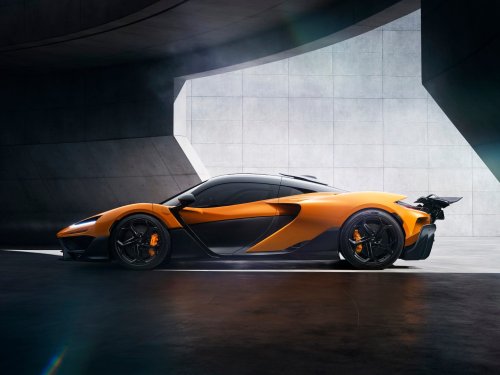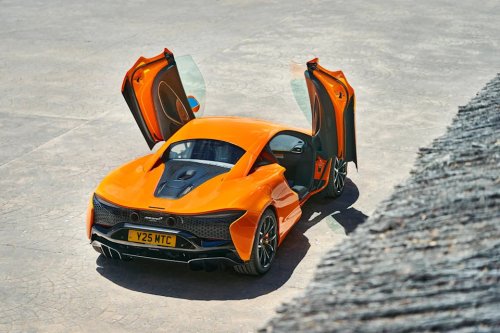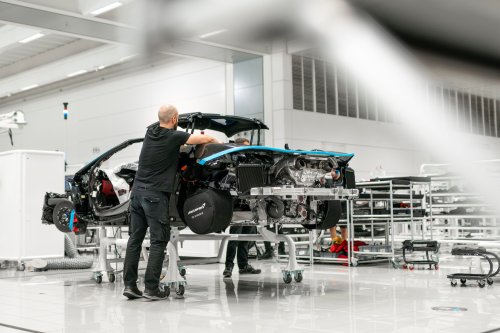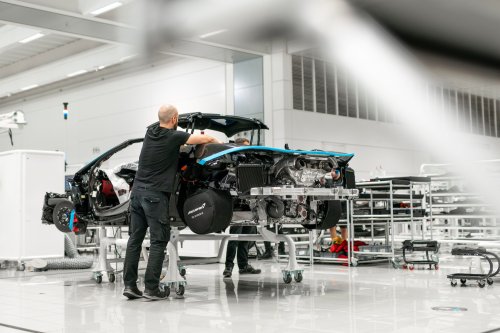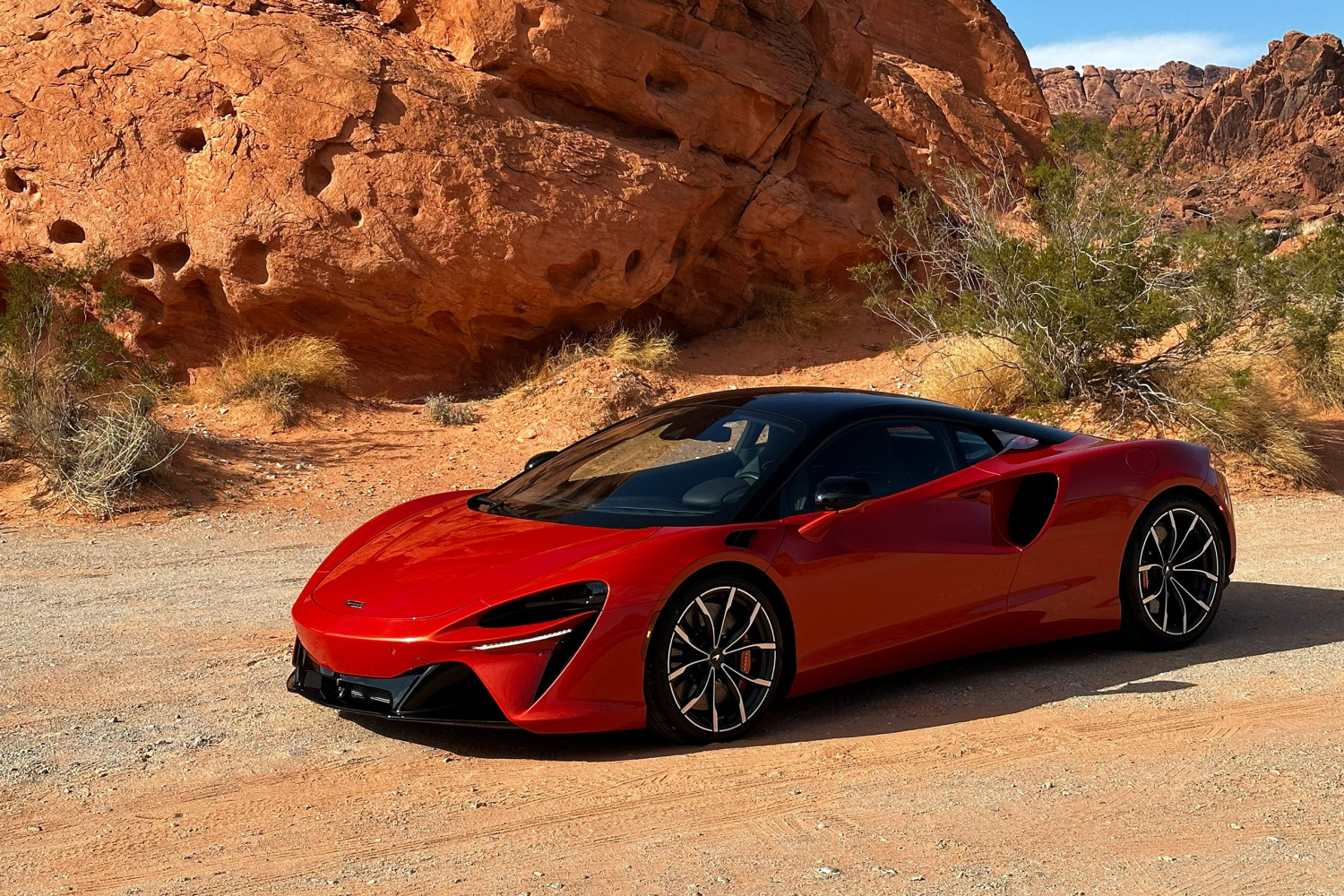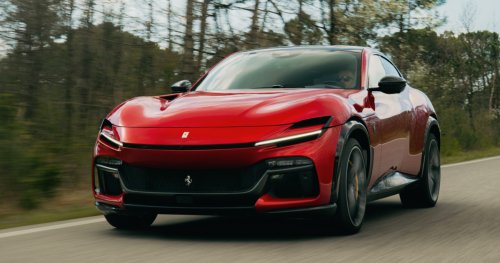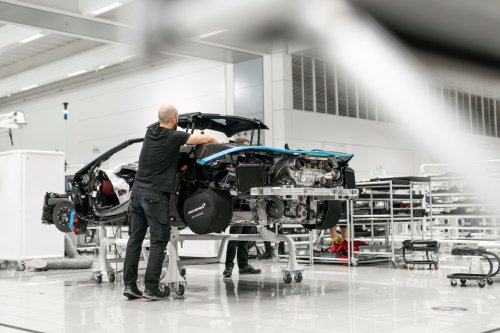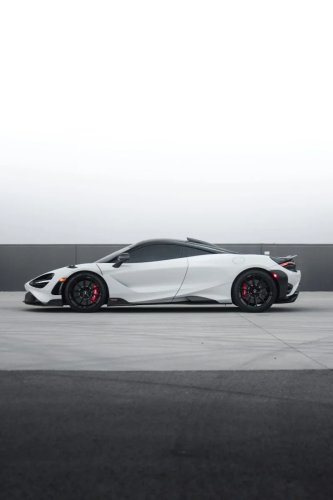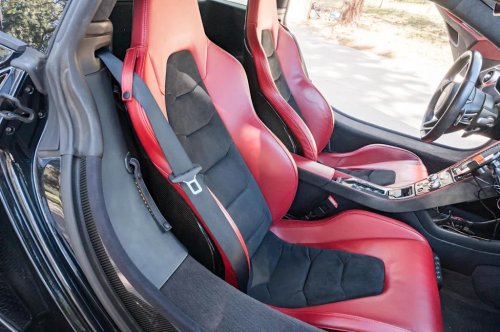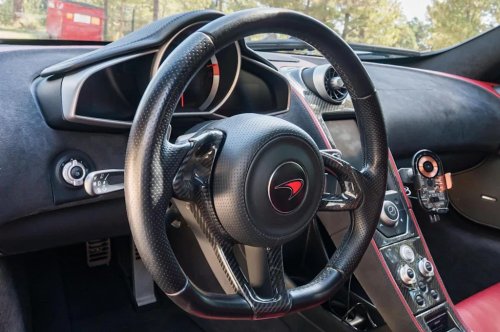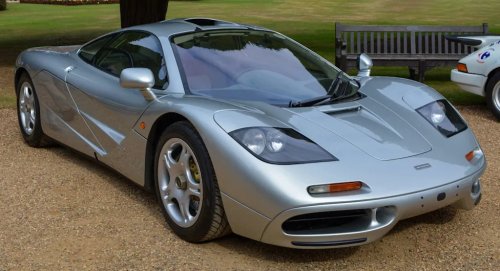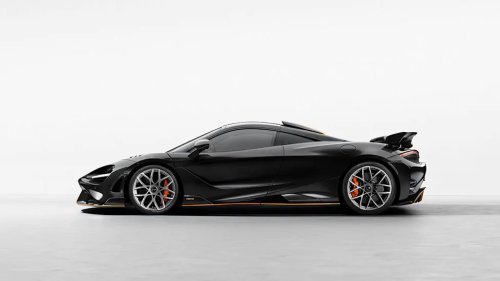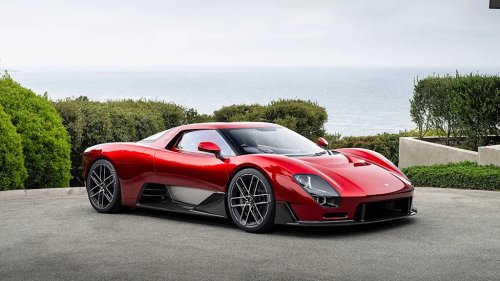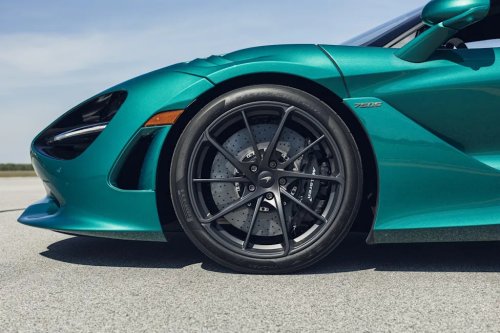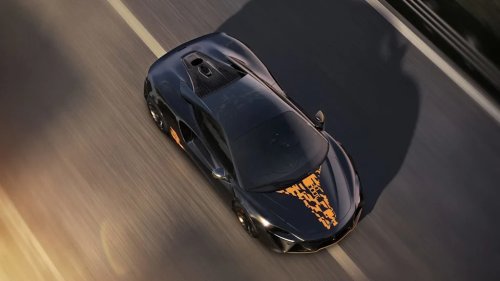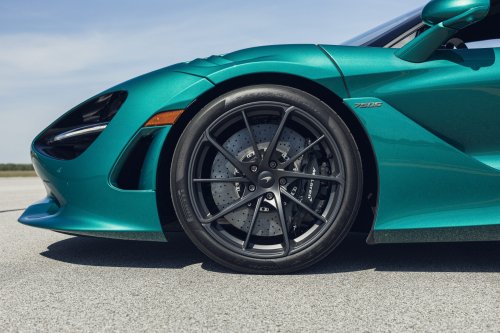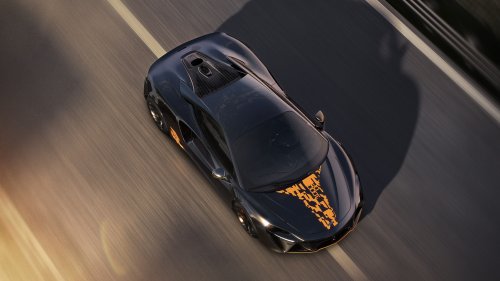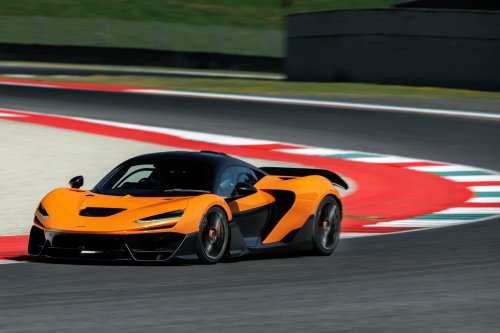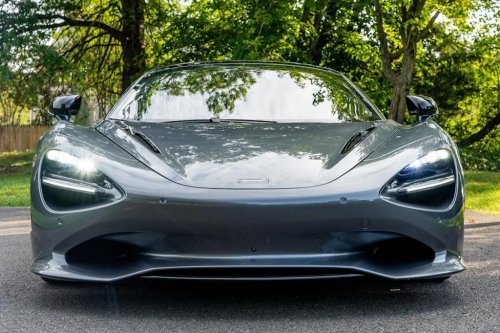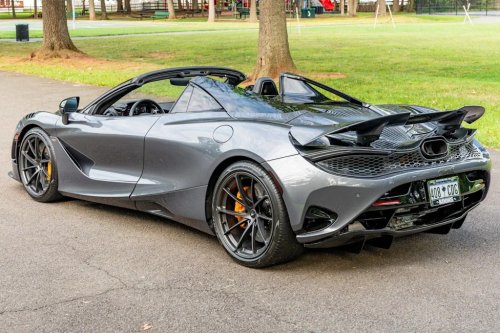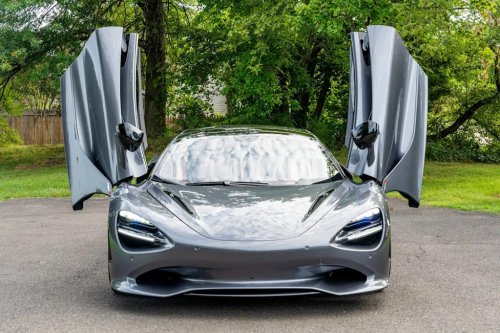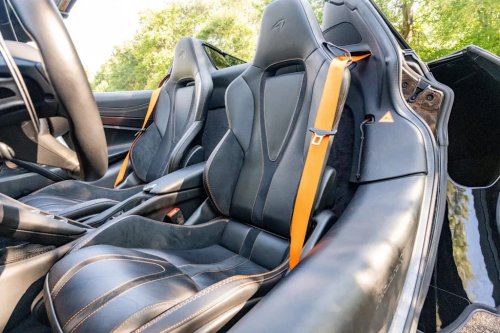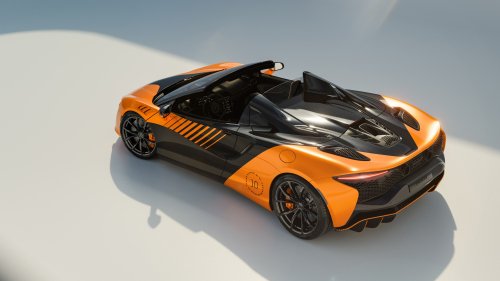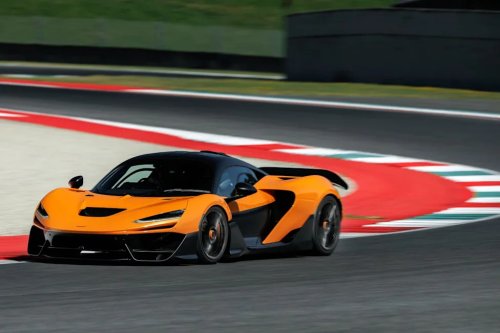
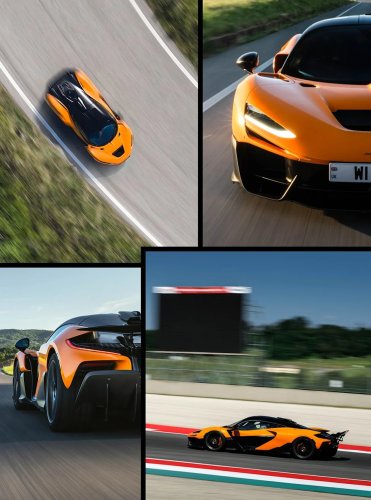
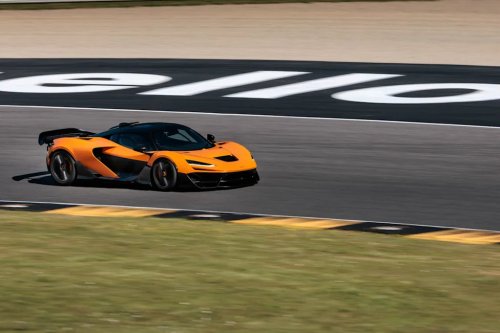
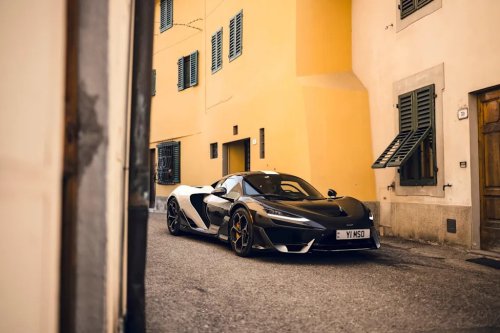
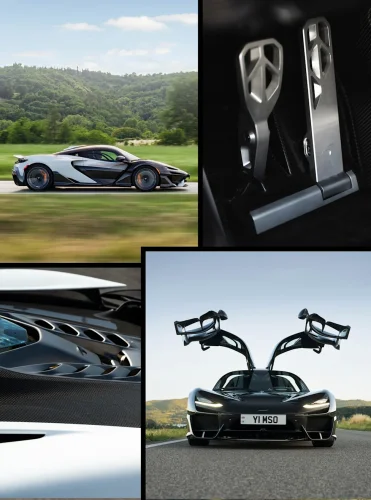
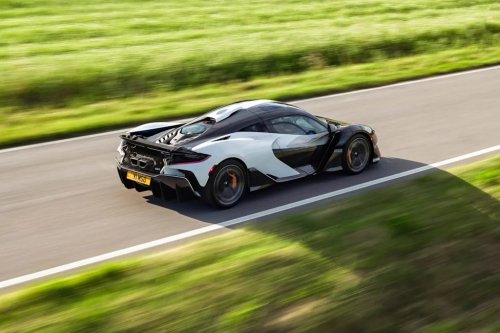
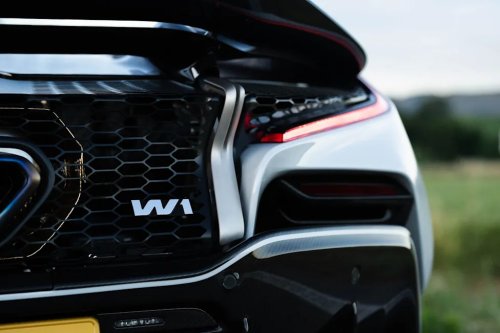



















The McLaren W1 Is a True HypercarMcLarenHow exactly does one decide which vehicles deserve the title "hypercar" and which should wear the obviously totally humdrum moniker "supercar"? There is, of course, no established, agreed-upon dividing line between these two entirely made-up descriptors. Still, I have just driven the new $2.1 million McLaren W1 on road and track, and I have identified my own litmus test for categorization.It is this: How quickly and how frequently during a lap on a racetrack do I transition from being a casual fan of the bluer side of the old Anglo-Saxon language to having full-blown sailor mouth? In the W1, that moment arrived after the first warm-up lap of the gorgeous, flowing Mugello Circuit near Florence, Italy, when I exited the final left-hand turn onto the front straight and let all the 1258 hp flow to the now-warm rear Pirelli P Zero Trofeo RS tires. My eyes wide, my brow furrowed, my right thumb crushing the Boost button on the steering-wheel spoke, I uttered my first "fuuuuuuuuuuu!"McLarenHad I carried more speed through the last corner and committed to the throttle earlier (in other words, "done it properly"), McLaren's newest hypercar would have breached 200 mph at the blind kink on the front "straight." A thrilling and slightly terrifying prospect. The hybrid powertrain—a newly designed 916-hp twin-turbo 4.0-liter V-8 and a fat electric motor fed by a tiny 1.4-kWh battery—might as well be a high-capacity pump flooding the driver's brain with adrenaline, norepinephrine, and endorphins through a fire hose. Even by the increasingly outlandish standards of the mid-Twenties, this car is quick, is what I'm saying.AdvertisementAdvertisementAll McLarens are quick, though. The company is well-known for its mainstay supercars, from the MP4-12C introduced 15 years ago, through the 650S, the 720S, and the 750S, plus the even-hotter LT variants. All of which were carbon-fiber-tubbed, twin-turbo V-8–powered speed machines.But beyond these, with roughly the same frequency as a cicada's life cycle, McLaren also births hypercars. The first of these pre-dates McLaren Automotive, with the F1 that was built between 1991 and '98 being the godhead of hypercars. It pioneered carbon construction in a road car, had a central driving position, and, despite not being designed to race, won the 24 Hours of Le Mans. Next, in 2013, new-era McLaren produced a hawk-nosed hybrid hypercar, the P1, a model that competed with the Ferrari LaFerrari and the Porsche 918 Spyder on equal terms. And now, timed closely with the arrival of Ferrari's definitely-a-hypercar F80, McLaren has unleashed the gullwing-doored W1.Add in the 2019 Speedtail, which didn't get a "1" name but did have a central driving position, a $2 million–plus price, and a 250-mph top speed, and McLaren has made four hypercar models over 30 years. So these are very special moments, and it's no small thing to grow up with the P1 as your father and the F1 as grandpa.McLarenAnd it was surely no small thing for McLaren Automotive to make this car happen in the financial rough waters and ownership changes the brand has encountered over the past few years. The W1 has a unique carbon-fiber monocoque. It uses an all-new V-8 (code-named MHP-8, for those keeping track). It is the only current McLaren road car to use full race-style inboard front suspension with 3D-printed front control arms and a stunningly effective lowered "race mode." It carries an ironing-board-sized wing that, on its complex and beautifully rendered linkage, can extend nearly a foot rearward and flip up when needed. The term "active aero" barely does justice to its balletic moves. That wing, the big underbody diffuser, and active front aero generate a maximum of about 2200 pounds of downforce.AdvertisementAdvertisementBut the W1 is defined as much by what it does not have as what it does. For example, all-wheel drive or electric power steering. Like other McLarens, the W1 uses hydraulically assisted steering, although with pressure supplied by an electric pump. Unlike many rivals, most obviously the Ferrari F80, the W1 does not have electric motors powering the front wheels and providing torque-vectoring capability. (With an estimated 2.7-second 0–60-mph time, the W1 won't be bothering the big-power, four-wheel-drive EVs off the line.) Nor does the W1 have fully active suspension, like the 48-volt Multimatic-supplied system Ferrari uses in the F80.Amy ShoreThere are benefits to these exclusions as well as potential costs. One is that McLaren claims a dry weight of just 3084 pounds, while the Ferrari's equivalent number is 3362 pounds. Of course, both curb weights will rise considerably once fluids are added, but it's fair to assume the McLaren will still be considerably less weighty.Whether for weight savings or cost savings or daylight savings, these omissions from the modern hypercar formula have made the W1 the most intuitive and natural feeling of the class. It is merely and delightfully a sports car, not a spaceship.McLarenWhen I clambered out of the car after my first track session, buzzing and grinning like a maniac, I was repeatedly asked what I thought of the experience. "It feels like, like a car!" I'd say excitedly. This generated quizzical stares. My synapses were too fried at that moment to elaborate that the W1 was predictable and linear and natural, just at a higher level. The seemingly impossible task of putting the combined gas-electric peak of 1258 hp through only the rear wheels is not only not impossible, it simply requires only a modicum of restraint.AdvertisementAdvertisementThe W1's steering felt familiar, quick, certain, and trustworthy. The brakes were almighty, with six-pot front and four-pot rear calipers biting into vast carbon-ceramic discs measuring 15.4 inches in diameter at each corner. I found it easy to modulate braking force through the stiff brake pedal. And even on the public roads I drove near the track, the brakes remained quiet and smooth in operation. On the track, the car rotated smoothly and predictably for something with a weight-to-power ratio well beyond most race cars. It is not trying to kill you. It is, as I mentioned, a car.McLarenThis is not necessarily true of the F80, a vehicle that nonetheless impressed me a great deal. When I drove the Ferrari, I found a foreignness to some of its responses. It is an utterly impressive piece of work, but driving it, you never forget that it is at the vanguard of technology. You never really shake the feeling that much is being done without your knowledge to make the experience truly tremendous. The W1 feels less mediated. There is, of course, much happening at all times during the W1's operation, but the fuss generally feels below the threshold of notice.Like the F80, the W1 driver is fixed in place, the seat padding applied directly to the carbon tub. The steering wheel and pedal set can be moved; the seat cannot. Both are comfortable. And in both cars, the driver's feet ride higher than their butt to allow for aero efficiency under the car. The W1's interior is less spartan than the F80's, incorporating a sizable cup holder and a central screen that the Ferrari eschews. The W1's only real on-road hypercar inconvenience are the side windows, only a small portion of which open. And the seam between the movable and fixed portion falls directly in the driver's line of sight. The W1 makes noises in operation. All sorts of noises, mostly good; huffing and fluttering and roaring and buzzing. The Ferrari is nearly silent, particularly from the outside.And while neither Ferrari nor McLaren are eager to talk about their cross-continent competitor's product, both are keenly aware of each other's every move. Why else would McLaren choose to launch its hypercar on the lovely Mugello Circuit in the rolling Tuscan countryside? It's not just that the track is only 75 miles from Ferrari's front door. It's that the owner of Mugello is—let me check—ah, Ferrari.AdvertisementAdvertisementThe W1 looks like a smooth pod tucked tightly into a partial outer shell of body panels and aero fences. It is a complicated assemblage of pieces that's hard to take in all at once. The Ferrari is a brutal spaceship as drawn by the designer of an old-school Group C/GTP endurance prototype. Take your pick (assuming you've already gotten on the list to buy both cars). If it helps your decision, Ferrari will make about double the number of F80s as McLaren will W1s. The young Italian who whipped his Ducati Panigale into the parking lot I'd stopped in was certainly impressed, summing up the car with a hand gesture suggesting the W1 was too hot to handle.McLarenThe truth is that the F80 is probably not the W1's chief competitor, at least not unless you are a billionaire trying to flex over other billionaires. From a drivability point of view, the W1's relative comfort and convenience on the road highlight a remarkable breadth of capability, one that makes it feel barely more challenging than the McLaren 750S to drive. That's deeply impressive considering how much more performance the W1 can deploy, and it brings a level of usability to ownership unusual in this rarefied part of the market. In terms of street legality, the W1 exists at the very end of the McLaren performance spectrum. It is a joy and a buzz to drive.Incidentally, McLaren refers to the W1 as a supercar, because I suspect they would find the term "hypercar" a bit gauche. But for me, this is a car that has definitely earned the promotion.You Might Also LikeIf You Can Only Own One Car, Make It One of TheseThese Are the Most Popular Cars by State