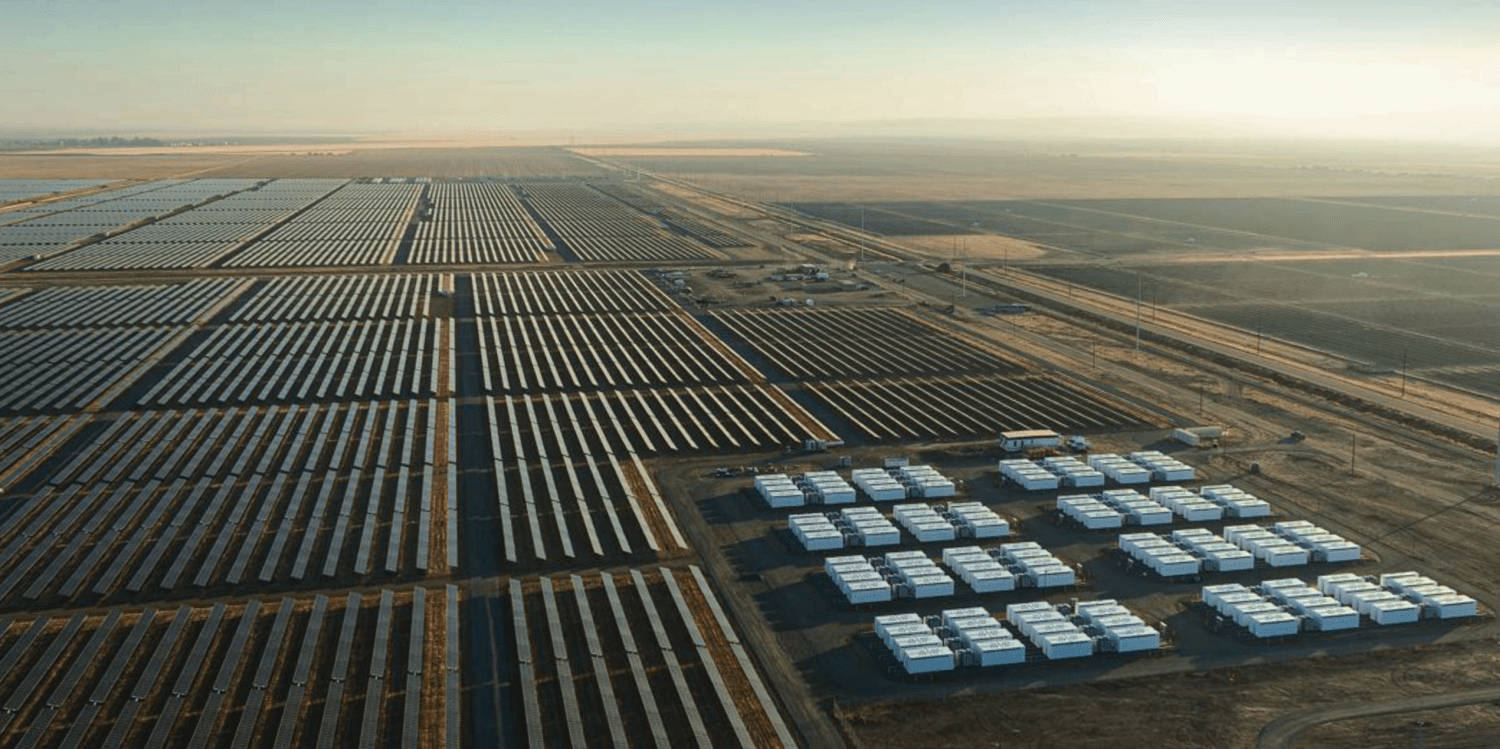
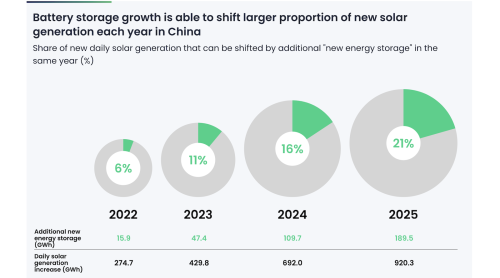
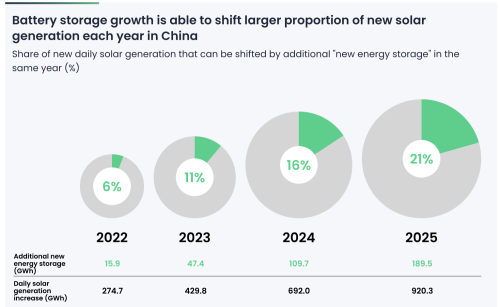
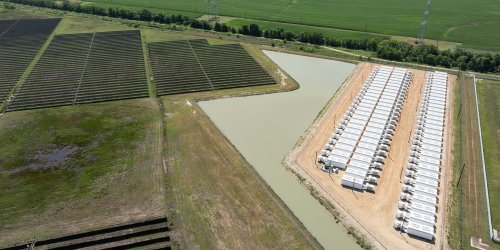
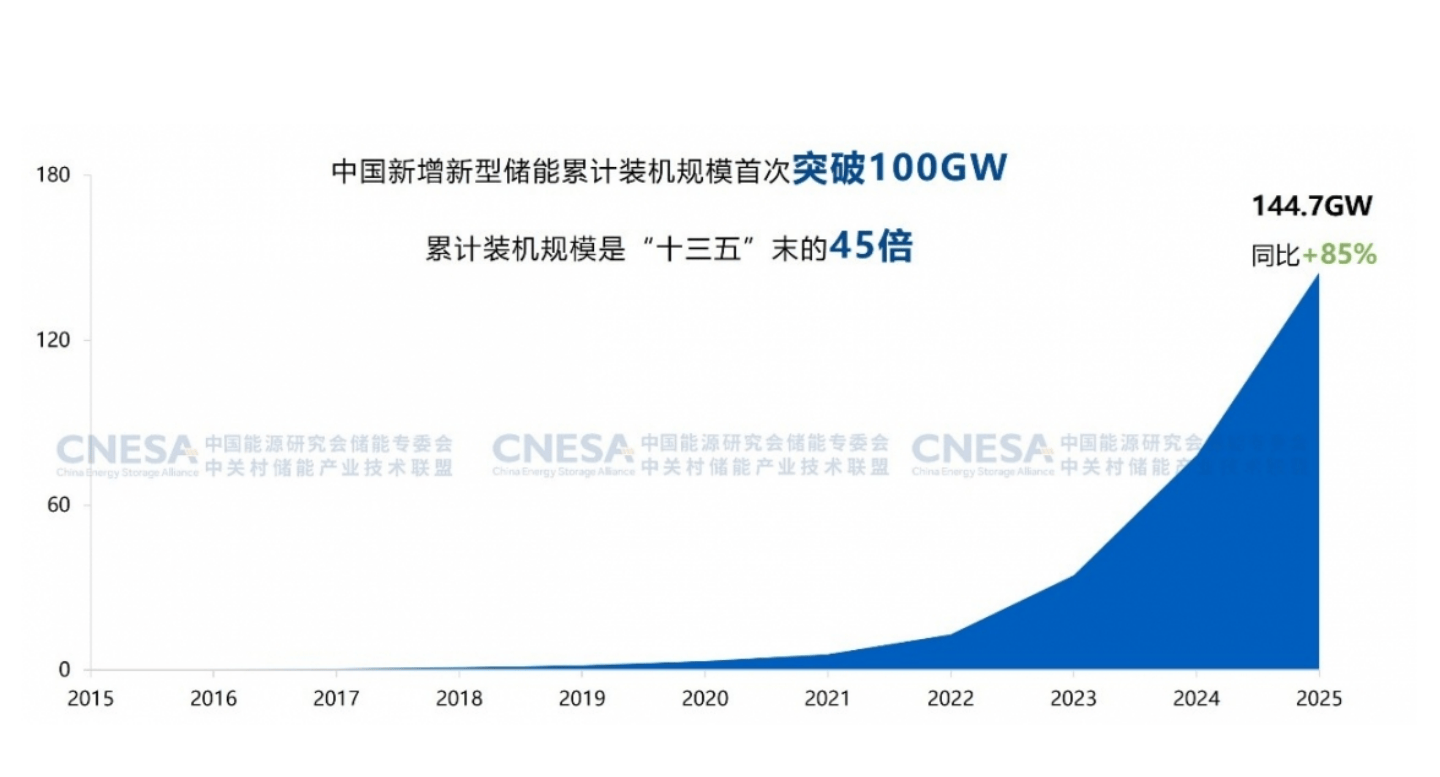
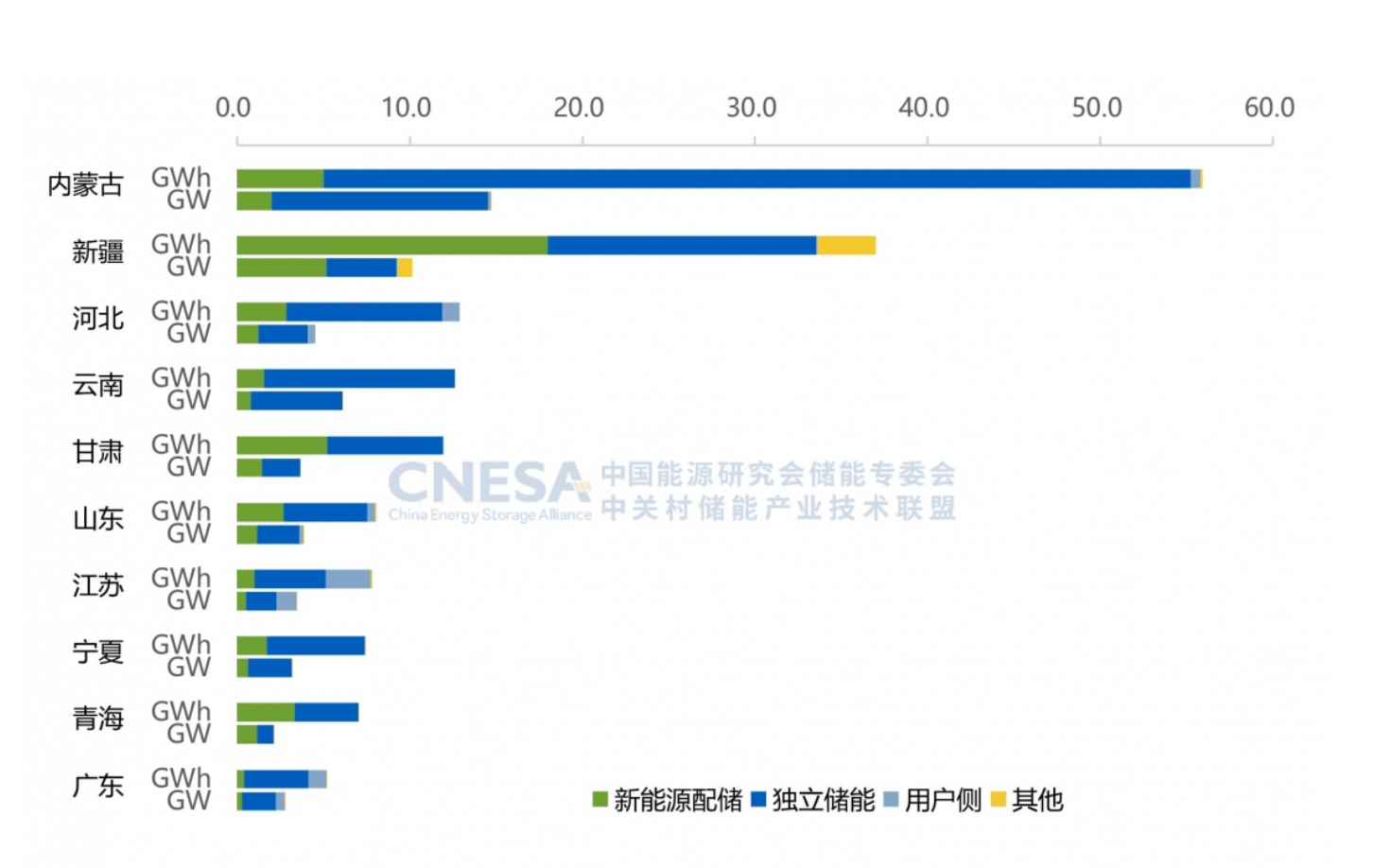
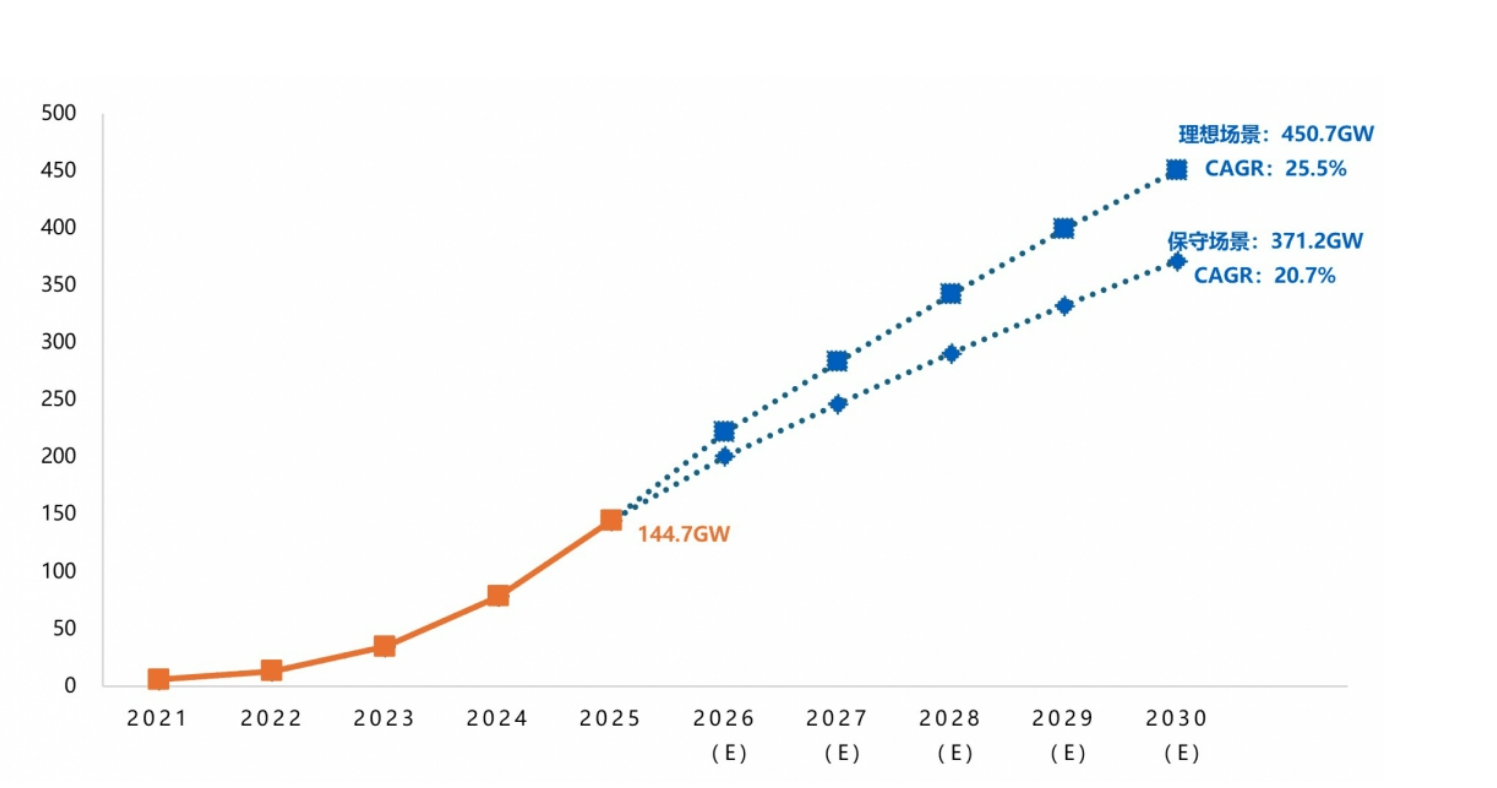
National average discharge duration increased to 2.58 hours in 2025, a 0.30-hour gain from 2024 year-end, marking significantly improved storage system flexibility. On January 30, China’s National Energy Administration held a press conference, unveiling the 2025 “report card” for the development of new-type energy storage in the country. Data shows that by the end of 2025, the installed capacity of new-type energy storage nationwide increased by 84% compared to the end of 2024. The operational installed capacity reached 136 million kilowatts (GW) / 3.51 billion kilowatt-hours (GWh), marking a growth of over 40 times compared to the end of the “13th Five-Year Plan” period. China’s newly added cumulative installed capacity of new-type energy storage exceeds 100GW for the first time. This growth trend is corroborated by data from different institutions. According to figures released this month by the Zhongguancun Energy Storage Industry Technology Alliance, by the end of December 2025, the cumulative installed capacity of China’s new-type energy storage industry exceeded 100 million kilowatts (100 GW) for the first time, reaching 144.7 GW, a year-on-year increase of 85%. Furthermore, Bian Guangqi, Deputy Director of the Department of Energy Conservation and Technology Equipment at the National Energy Administration, reported that the national average energy storage duration has increased to 2.58 hours, up by 0.30 hours from the end of 2024, indicating a significant enhancement in the regulation capability of energy storage systems. In terms of installation structure, a trend towards large-scale projects is evident. By the end of 2025, projects with a capacity of 100,000 kilowatts (100 MW) and above accounted for 72% of the total installed capacity, an increase of about 10 percentage points from the end of 2024. Projects with a duration of 4 hours or more accounted for 27.6% of the installed capacity, an increase of about 12 percentage points, reflecting the grid’s urgent need for long-duration regulation capabilities. Distribution of China’s top 10 provinces for newly operational new-type energy storage projects in 2025. Geographically, new-type energy storage exhibits a pattern of being “heavier in the north and lighter in the south.” North China leads the nation with its operational installed capacity accounting for 32.5% of the national total, followed by Northwest China at 28.2%. These two regions have become the main growth drivers, with newly added capacities in 2025 reaching 21.88 GW and 19.66 GW respectively, together accounting for 66.8% of the national newly added capacity. At the provincial level, Inner Mongolia, Xinjiang, and Shandong are leading the country, with cumulative installed capacities reaching 20.26 GW, 18.80 GW, and 11.21 GW respectively. In 2025, both Xinjiang and Inner Mongolia added over 10 GW of new capacity, demonstrating strong development momentum. Regarding technological pathways, lithium-ion battery energy storage still holds an absolute dominant position, accounting for 96.1% of the installed capacity. Newer technologies such as compressed air energy storage, flow battery energy storage, and flywheel energy storage collectively account for 3.9%, indicating a preliminary formation of a diversified technological landscape. Notably, on January 24, the first phase of China’s largest sodium-ion battery energy storage power station under construction—the Honghu City 100 MW / 200 MWh demonstration project—passed completion acceptance, marking a critical step towards the commercial application of sodium-ion batteries. Projection of China’s cumulative installed capacity of new-type energy storage (Unit: GW). It is worth mentioning that the utilization rate of new-type energy storage is also improving. In 2025, the national equivalent utilization hours for new-type energy storage reached 1,195 hours, an increase of nearly 300 hours compared to 2024. During peak summer periods, provinces like Jiangsu, Shandong, and Yunnan conducted centralized province-wide dispatches, achieving a simultaneous dispatch rate of over 95%. Looking ahead to 2030, the cumulative installed capacity of new-type energy storage in China is expected to exceed 370 million kilowatts (370 GW).



















 +75 others