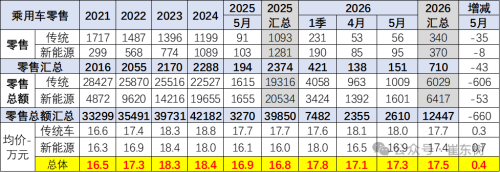
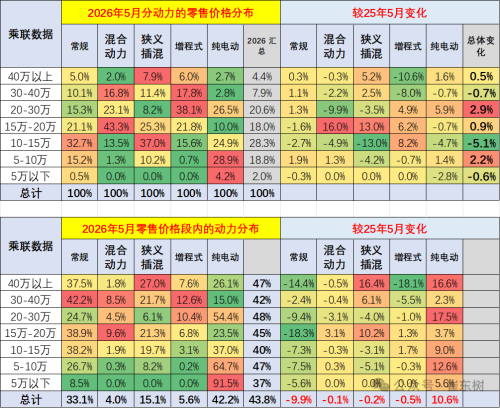
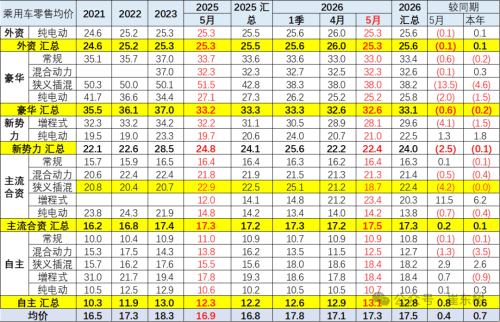
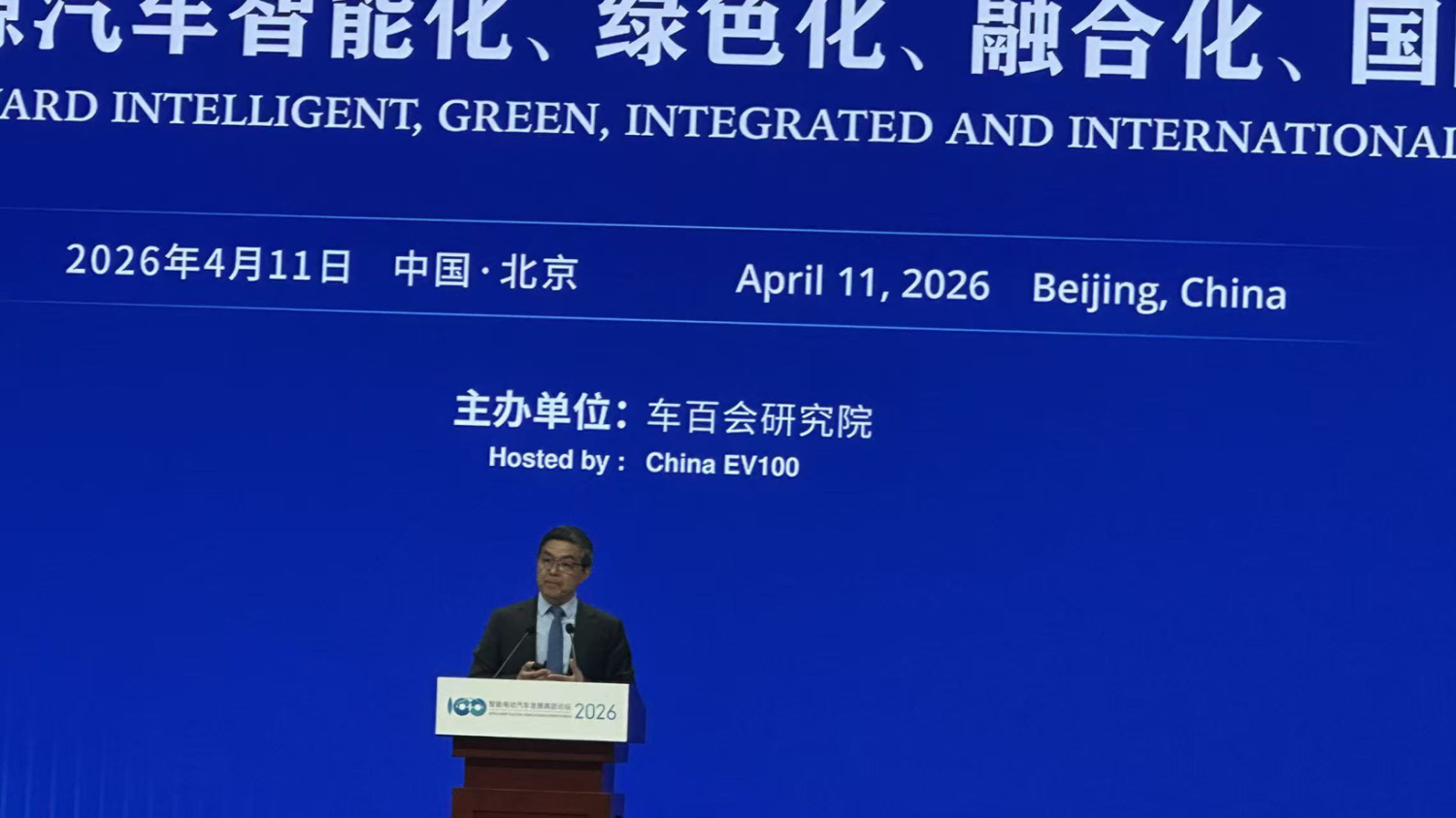
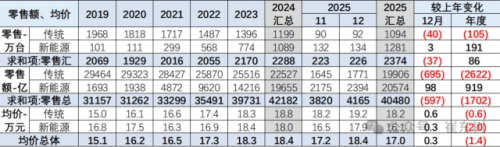
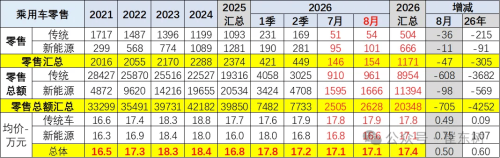
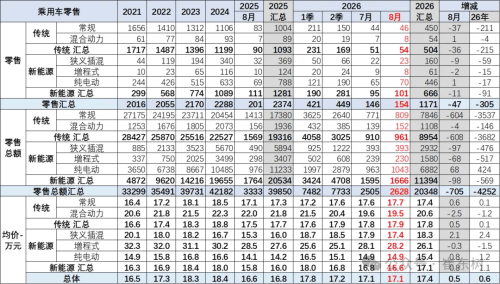
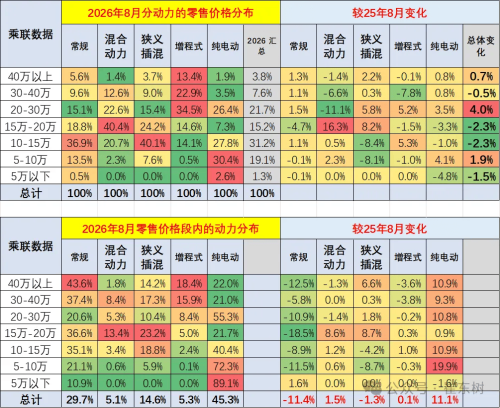
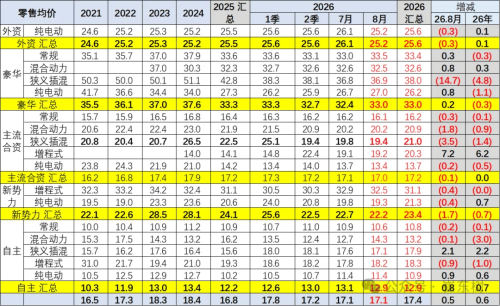
The average selling price of passenger vehicles in China reached RMB 171K ($25,500) in August 2026, up about RMB 5K ($750) year over year, according to the latest data from Cui Dongshu, Secretary General of the China Passenger Car Association (CPCA). New energy vehicles (NEVs) followed a similar trend, with average prices rising rather than declining. The average selling price of NEV passenger vehicles reached RMB 166K ($24,800) in August, up about RMB 8K ($1,200) from a year earlier. Retail price trends for China’s passenger vehicles from 2021 to August 2026 The price increase mainly reflects a shift in market structure. As China’s auto market moves toward higher-quality growth in 2026, demand in the entry-level segments has contracted more sharply. Sales of vehicles priced below RMB 50K ($7,460) fell 64% year over year in August. The RMB 50K–100K ($7,460–$14,910) segment declined 15%, while sales in the RMB 100K–150K ($14,910–$22,370) range, traditionally one of the largest volume segments, dropped 29%. Demand for entry-level vehicles continues to slide. By powertrain, extended-range electric vehicles (EREVs) and hybrid models continued to command the highest average transaction prices among NEVs, reaching RMB 282K ($42,000) and RMB 195K ($29,100), respectively, in August. Plug-in hybrid electric vehicles (PHEVs) averaged RMB 174K ($25,900), while battery electric vehicles (BEVs) recorded the lowest average price among NEV categories at RMB 149K ($22,200). Retail sales and price data for China’s passenger vehicles from 2021 to August 2026 Compared with a year earlier, the average price of EREVs declined by RMB 3K ($450), while hybrids fell RMB 25K ($3,700). By contrast, PHEV prices rose RMB 21K ($3,100), and BEV prices increased RMB 8K ($1,200). The higher average prices of PHEVs and BEVs suggest that their product mix is gradually shifting from entry-level models toward mid-to-high-end vehicles. Looking at sales distribution by price segment, the RMB 100K–150K ($14,910–$22,370) range remained the largest market segment in August, accounting for 31% of total sales, although its share declined from a year earlier. The RMB 150K–200K ($22,370–$29,820) segment accounted for 15%, also down year over year. Meanwhile, higher-priced segments continued gaining ground. Vehicles priced at RMB 200K–300K ($29,820–$44,730) accounted for 22% of sales, while the RMB 300K–400K ($44,730–$59,640) segment represented 8%. Vehicles priced above RMB 400K ($59,640) accounted for 4%. The expanding share of higher-priced vehicles indicates that consumer demand is continuing to move toward more premium segments. Powertrain distribution across price bands also highlights a clear market split.In the RMB 50K–100K ($7,460–$14,910) segment, BEVs dominated with a 72.3% share. Data on sales distribution and changes in sales prices for different categories in 2026 and August 2026 The RMB 100K–150K ($14,910–$22,370) segment became the main battleground for gasoline vehicles, PHEVs and BEVs, with ICE vehicles accounting for 35.1%, BEVs 40.4%, and PHEVs 18.8%. In the RMB 150K–200K ($22,370–$29,820) range, gasoline vehicle share fell from around 55% a year earlier to 36.6%, with hybrids and PHEVs absorbing most of the lost share. In the RMB 200K–300K ($29,820–$44,730) segment, BEVs accounted for more than half of sales at 55.3%, becoming the dominant powertrain choice. At the brand level, luxury passenger vehicle brands recorded an average selling price of RMB 330K ($49,200) in August, up RMB 2K ($300) year over year. Joint-venture brands averaged RMB 170K ($25,400), largely unchanged from a year earlier. Emerging EV brands posted an average selling price of RMB 222K ($33,100), down RMB 17K ($2,500) year over year. Average price changes of China’s passenger cars across different brands from 2021 to August 2026 Domestic Chinese brands averaged RMB 129K ($19,200), up RMB 8K ($1,200). By price segment, domestic brands maintained a dominant position below RMB 100K ($14,910). Their share reached 83.7% in the RMB 50K–100K ($7,460–$14,910) range and 65.8% in the RMB 100K–150K ($14,910–$22,370) segment. Meanwhile, emerging EV brands accounted for 29.5% of the RMB 200K–300K ($29,820–$44,730) market, making them a major force in the segment while continuing to move upward. Luxury brands held 37.7% and 45.7% shares in the RMB 300K–400K ($44,730–$59,640) and above-RMB 400K ($59,640) segments, respectively. However, their shares declined 2.8 and 11.8 percentage points from a year earlier. By comparison, emerging EV brands captured 34.3% of the above-RMB 400K ($59,640) segment, up 4.9 percentage points year over year. Domestic brands held a 16.2% share, gaining 6.9 percentage points. Cui Dongshu noted that China’s vehicle ownership rate remains relatively low at 254 vehicles per 1,000 people, leaving significant room for future market expansion.

















 +44 others