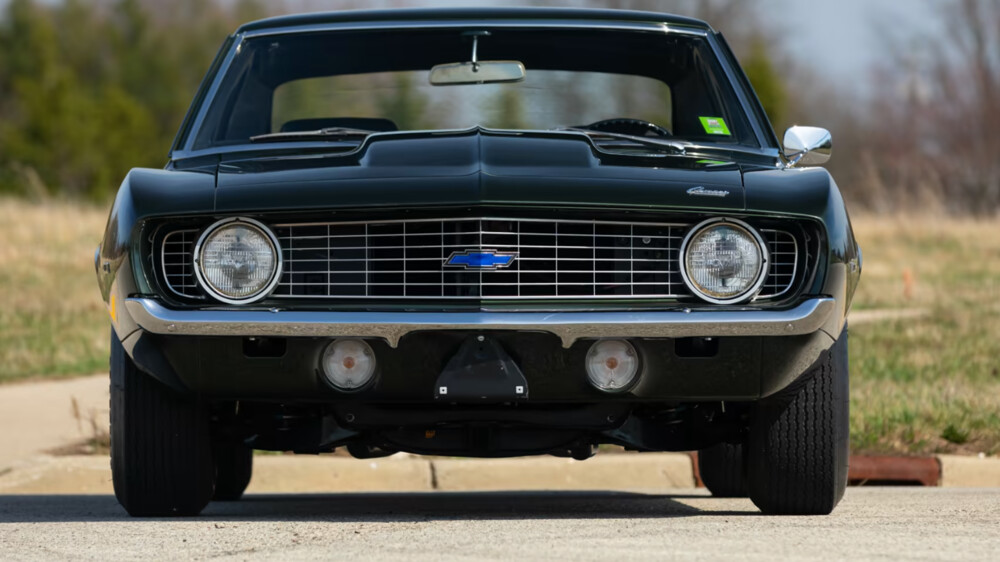
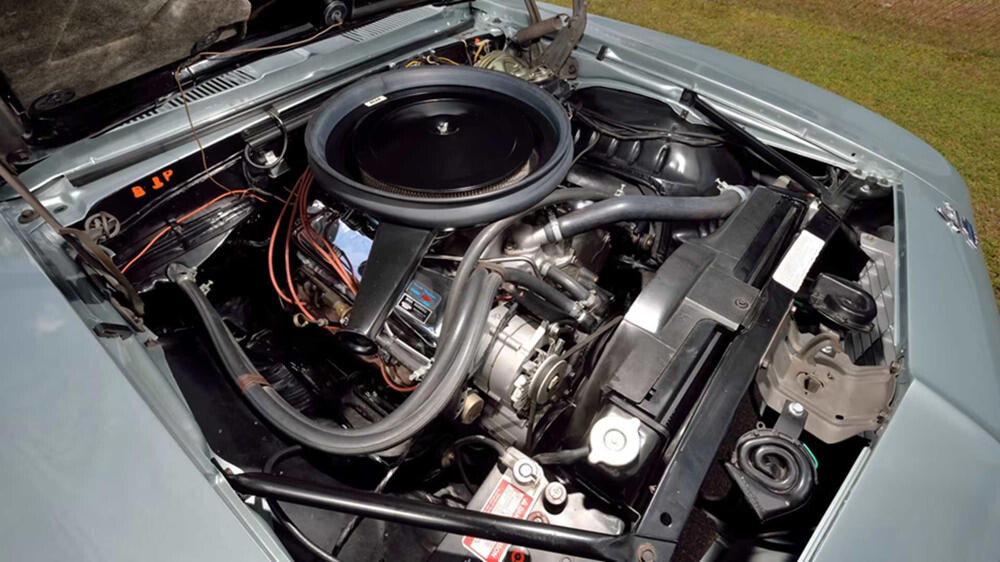
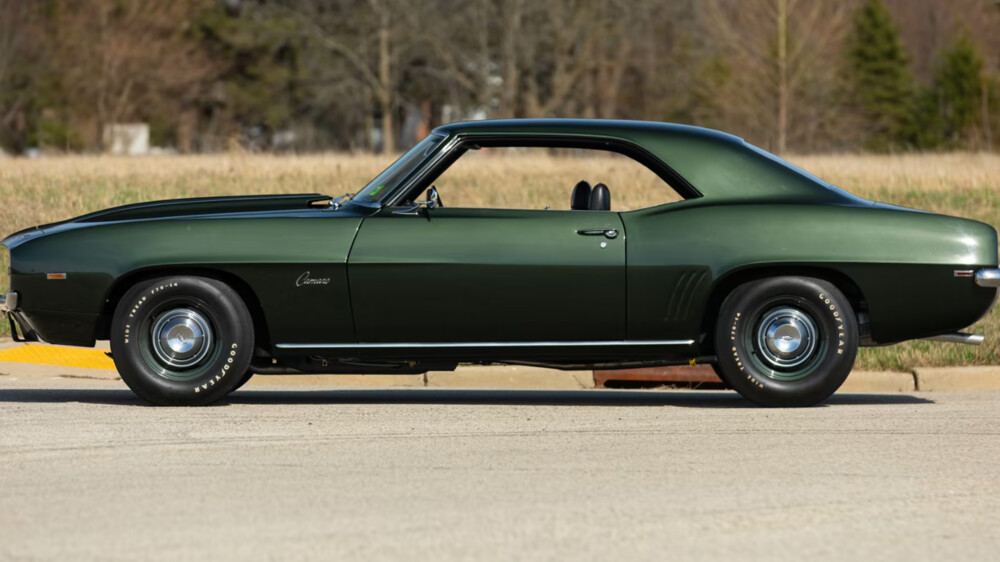
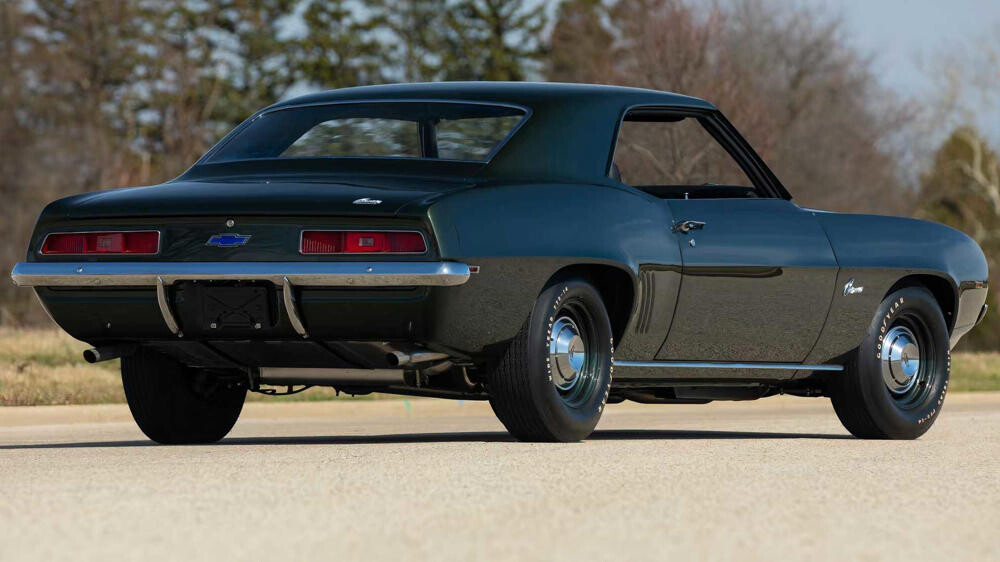
In the muscle car playbook, 1960s classics sit atop the hill for enthusiasts; among those, the first-generation Camaro has always been one of the rarest examples to come around. The 1969 Camaro ZL1, to be precise, had just 69 examples built through Chevrolet's Central Office Production Order system. Yet a rival with the same big-block 427-cubic-inch engine undercut the Camaro ZL1’s production figure and proved even rarer when a dealer found an ingenious workaround to Detroit’s playbook. General Motors’ Self-Imposed Ceiling Left Big-Block Buyers Stranded In the late 1960s,General Motors wanted the Corvette to retain the undisputed flagship status in its division, so GM barred Chevrolet from installing an engine larger than 400 cubic inches into an intermediate or pony car straight from the regular assembly line. Meanwhile, rival manufacturers were using big engines while the Camaro topped out at the 396-cubic-inch V8. Buyers who wanted the 427 power in a small chassis were left with basically nothing. In Canonsburg, Pennsylvania,Chevrolet dealer and accomplished SCCA racer Don Yenko saw the massive gap that GM had left in the market as a business opportunity. He took matters into his own hands. He ordered brand-new 1967 and 1968 Camaros equipped with the heavy-duty L78 396 suspension, cooling, and drivetrain hardware, and took them right into his service bay. After receiving them, his team of mechanics removed the factory 396 engines and replaced them with crate-sourced L72 427-cubic-inch V8s that made 425 hp from the factory; they upgraded the cooling systems, gauges, and badging, resulting in a completely hand-built Super Camaro. The Single-Year Rarity Catch That Puts Yenko Ahead Of The ZL1 TheYenko Super Camaro was scarcer than the ZL1, provided you matched the right model years. Chevy built just 69 examples in 1969; Don Yenko’s shop converted 64 units in 1968 and just 54 units the year before in 1967. On a strict single-year basis, the Yenko Super Camaro was rarer than the ZL1. The catch was that the 64 units were only the 1968 output, not the total across the first-generation production run. In 1969, once the assembly line setup was properly configured, production went up dramatically, and the rarity of those cars dropped sharply. How Yenko And Fred Gibb Turned Chevrolet’s Assembly Line Into A Drag Shop For 1969, Don Yenko stopped swapping engines in his shop and talked Chevrolet into building the cars for him on the Norwood, Ohio, assembly line. He used the Central Office Production Order fleet-ordering channel, which was originally intended for heavy-duty commercial vehicles. Yenko secured COPO 9561. That internal code meant the Camaros were built with the 425-horsepower L72 427 V8 straight from the factory, with heavy-duty four-core radiators, upgraded suspension components, and a 12-bolt rear axle. Although the mechanical appointments came directly from Chevy, Yenko’s dealership still finished each car before delivery with signature sYc graphics, hood and fender stripes, front and rear spoilers, and a Stewart-Warner high-redline tachometer mounted on the steering column. With that collaboration, production jumped to a massive 201 cars for the 1969 model year. That same COPO ordering system created the 1969 Camaro ZL1. LaHarpe initiated it under COPO 9560. Illinois Chevrolet dealer Fred Gibb ordered the first 50 cars while other dealers claimed the remaining 19 examples. Gibb wanted the 50-car batch to satisfy the NHRA homologation rules, which required a minimum production run of 50 factory-built vehicles before a new engine combination could legally compete in Stock and Super Stock drag racing classes. Instead of the cast-iron L72 block used in COPO 9561 Yenkos, the ZL1 featured an all-aluminum 427-cubic-inch V8 originally developed for Chevrolet's dominant Can-Am road-racing program. With roughly 100 pounds shaved off the Camaro compared to the iron-block L72, the aluminum ZL1 engine improved front-end weight distribution and straight-line acceleration. The ZL1 was rated at 430 hp, just five hp more than the iron-block L72, a figure kept intentionally low to minimize insurance costs. However, period dyno testing showed that the aluminum 427 was putting out between 575 and 585 hp in tuned trim. By 1969, both the COPO 9561 Yenko and the COPO 9560 ZL1 had become drag-strip monsters, completely bypassing corporate red tape. Why Buyers Flocked To The 1969 Yenko While The ZL1 Sat On Showroom Floors Even though both 1969 COPO Camaros came from the same assembly line, their prices were vastly different, and so were their intended purposes. The COPO 9560 ZL1 package priced the hand-assembled aluminum engine alone at $4,160, pushing the Camaro's total sticker price past $7,200. That was almost double what a well-specced Camaro 396 cost and, crucially, more expensive than the Corvette. This led buyers to prefer the Yenko Super Camaro over the ZL1. Because of its price, it became a choice for buyers who took their cars to the track for drag racing, alienating regular buyers. By comparison, a complete 1969 Yenko Camaro was around $4,200 to $4,500, costing as much as the ZL1’s aluminum engine option by itself, while delivering almost the same power on the street. It became one reason 201 buyers signed on for the 1969 Yenko, while only 69 ZL1s ever left the factory. Today, however, collector values show that both sit firmly in the seven-figure range. A 1969 Camaro ZL1 sold for $1,430,000 at auction in May 2026, while a 1969 Yenko Camaro prototype commanded $1.815 million in January 2026. Why Yenko’s Hustle Changed Muscle Car History The Yenko Super Camaro and the Camaro ZL1, side by side, were not isolated anomalies but two chapters born out of the same necessity. Without Don Yenko proving in 1967 and 1968 that performance buyers would gladly pay for 427-cubic-inch Camaros built out of a dealership garage, the COPO floodgates might never have opened in 1969. Yenko turned the engine swap into an assembly-line blueprint, all while running a dealership in 1968, with a conversion that beat a factory-produced car on a single-year rarity basis.

 Liked by Oliver Pelletier, Mason Rogers











 Liked by Oliver Pelletier, Mason Rogers