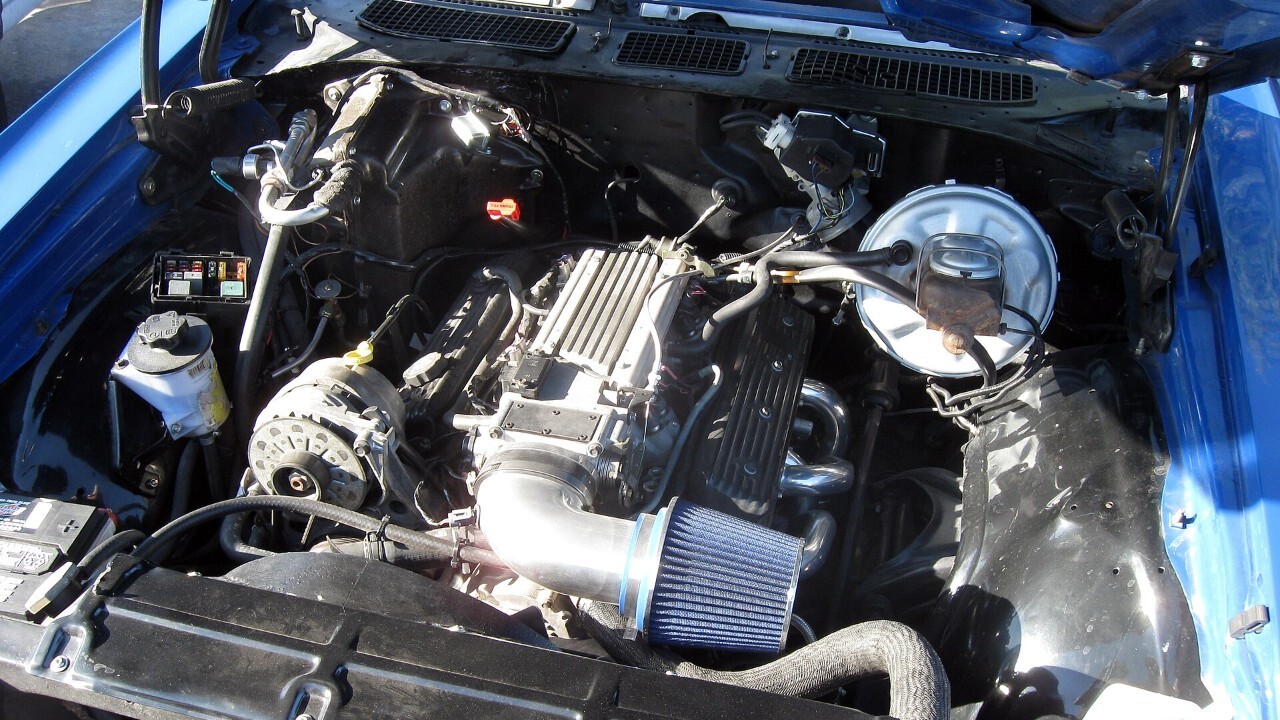
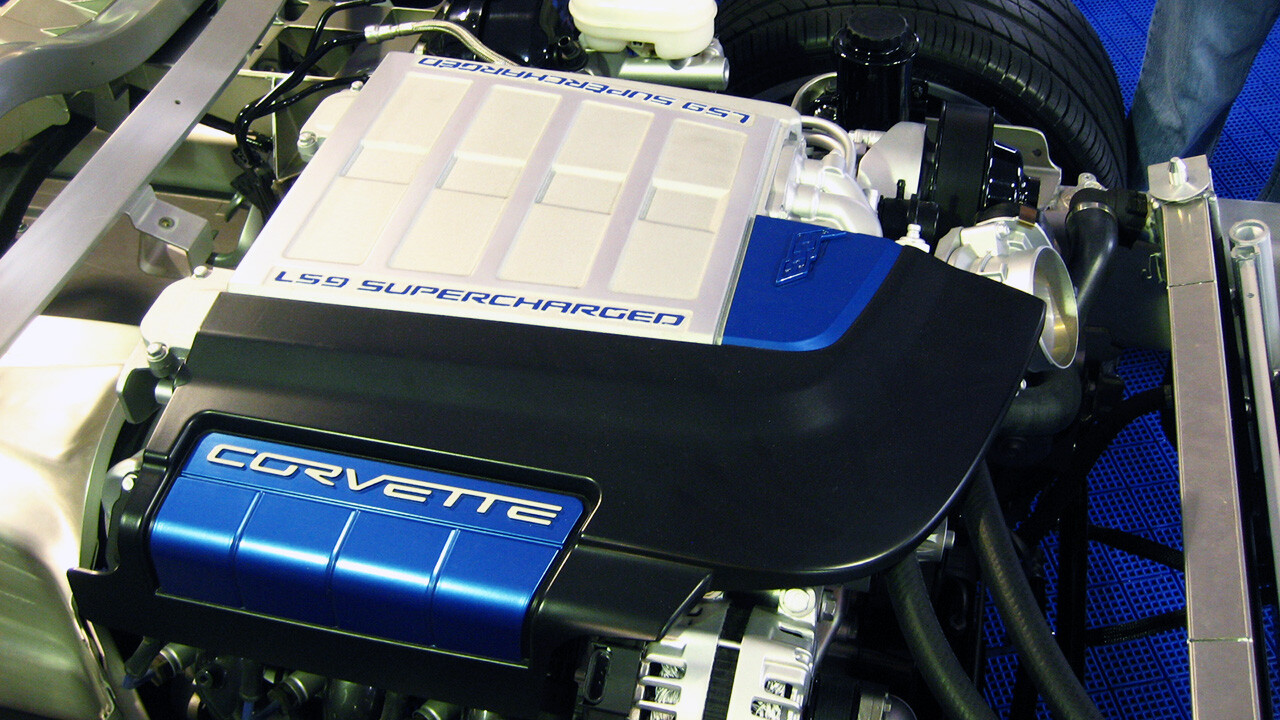
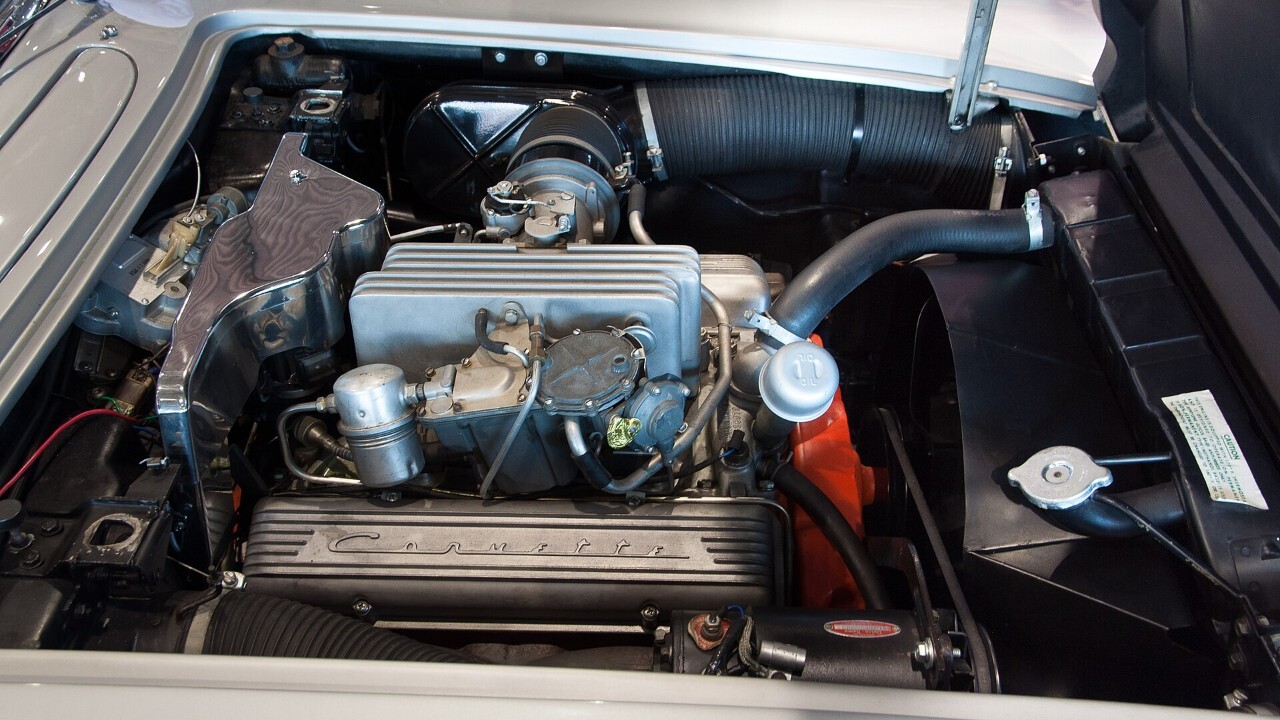
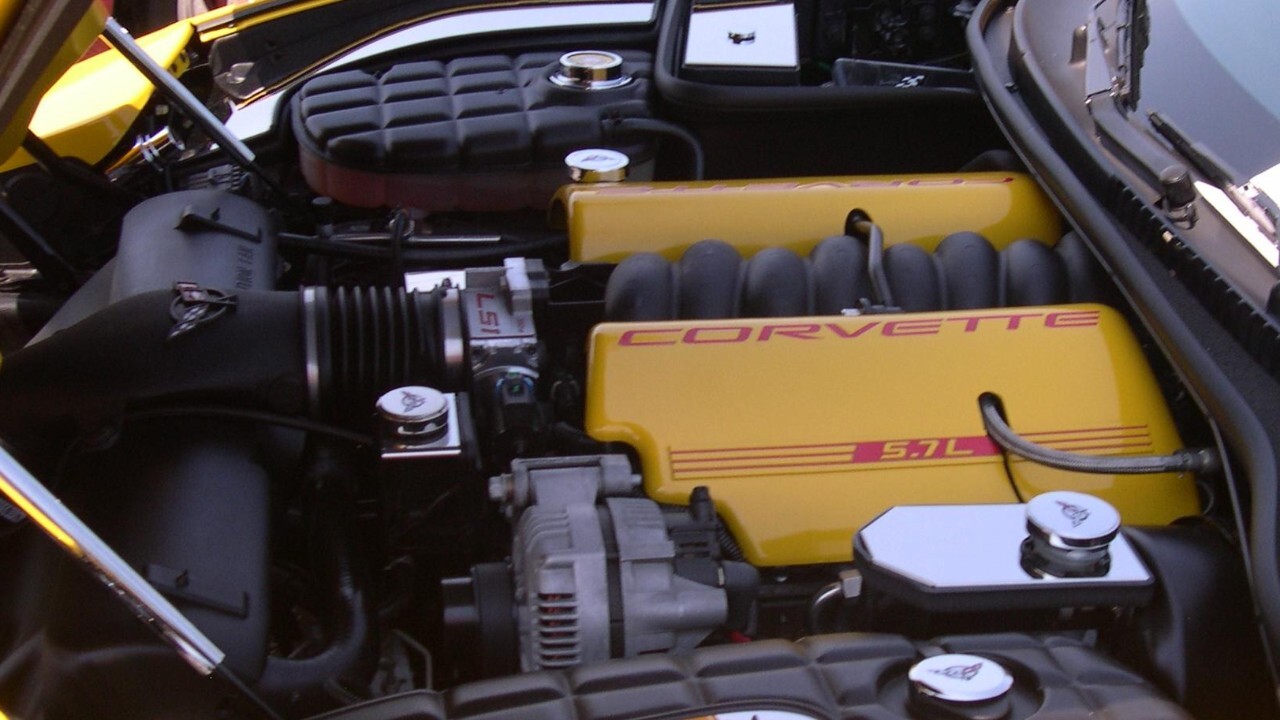
The Chevrolet LS9 gave the 2009 Corvette ZR1 638 horsepower, and GM called it the most powerful production engine it had ever built. Yet that supercharged V8 traces its family tree back to a compact small-block from the 1950s. Over the decades, the design gained fuel injection, aluminum heads, titanium parts and a supercharger. At first, most small-blocks lived ordinary lives in sedans and pickups. A select few, however, made so much power for their day that they felt like race engines wearing license plates. Those are the engines that turned a trip to the grocery store into something closer to a qualifying lap. These are our picks, seven small-block Chevys that we think came close to being too much for public roads. The list counts the later LS family too, since GM built it as a continuation of the original small-block. Ratings and dates come from our sources. However, the verdict on each engine is our own opinion. 1. Chevrolet 283 Ramjet fuel-injected V8 Chevrolet created the 283 for 1957 by boring its 265-cubic-inch small-block out by an eighth of an inch. As a result, the engine had a 3.875-inch bore and a 3.000-inch stroke. Then Chevy added something few American buyers had seen: Rochester Ramjet mechanical fuel injection. The injected 283 made 283 horsepower at 6,200 rpm in 1957. Paired with a Duntov high-lift camshaft, it became one of the first production engines to make one horsepower per cubic inch. Fuel-injected versions stayed in the lineup through at least 1961. In other words, Chevrolet got one horsepower from every cubic inch without a turbocharger, a supercharger or a computer. Because the system was purely mechanical, its setup depended on careful adjustment rather than software. Our take: the Ramjet 283 felt like a racing engine that had wandered into a showroom. It loved to rev, it asked for careful tuning, and it ran with no electronics at all. In our view, that combination made it nearly too sharp for everyday traffic in the late 1950s. Today, a correct injection unit adds real value to any early Corvette. If you buy one, budget for a specialist who knows the system well. 2. Chevrolet LT1 V8 Chevrolet revived a famous name for the 1992 Corvette. The new LT1 was a 5.7-liter, 350-cubic-inch small-block that made 300 horsepower and 330 lb-ft of torque, up from 245 horsepower in the L98 it replaced. According to Driving Line’s history of the LT1, the name came from the high-compression LT-1 small-block of the early 1970s. The secret was reverse-flow cooling. It kept internal temperatures lower, and that allowed a higher compression ratio. The engine also used aluminum heads in the Corvette. Its Optispark ignition, by contrast, became a known reliability weak point. For 1993, the LT1 reached the Camaro Z28 and Pontiac Trans Am with 275 horsepower. In other words, Corvette-derived power reached GM’s pony cars within a year. We think the LT1 brought back the feeling that a small-block could dominate a stoplight again. After the lean years of the 1980s, 300 horsepower in a Corvette felt huge, especially from a pushrod V8. In our opinion, the 1994–1996 Impala SS is the most fun way to experience it, with its iron-head version in a big sedan. Check the Optispark and keep it dry before anything else. 3. Chevrolet LS2 V8 (Vauxhall Monaro VXR) GM introduced the 6.0-liter, 364-cubic-inch LS2 in the 2005 Corvette C6, where it made 400 horsepower. The same engine also went into the 2005–2006 Pontiac GTO. It also crossed the Atlantic in an Australian-built coupe sold in Britain as the Vauxhall Monaro VXR. As PistonHeads’ Monaro buying guide notes, the 2005 VXR quoted 404 hp from its LS2. Vauxhall claimed 0–62 mph in 5.1 seconds and a top speed of 180 mph. When new, a 6.0 VXR cost £36,895. Only about 800 Monaros of all types reached UK buyers, and roughly 450 remained on the road when PistonHeads wrote the guide. Because the Monaro shared most of its mechanical parts with the Pontiac GTO, owners on both sides of the Atlantic can compare notes. Our take: a small-block Chevy in a Vauxhall felt almost mischievous on narrow British roads. The Monaro looked like a sensible coupe, yet it ran to 62 mph in barely five seconds. We think that mismatch is exactly why it belongs here. If you find a VXR with a clean history, you have a rare piece of Chevy history in British clothes. 4. Chevrolet LS3 V8 For 2008, Chevrolet replaced the LS2 in the base Corvette with the larger LS3. It displaced 6.2 liters, or 376 cubic inches, and used high-flow cylinder heads. According to CarAdvice’s report on the 2008 Corvette, the engine made 430 horsepower and 424 lb-ft of torque. Buyers who ticked the optional dual-mode exhaust got 436 horsepower and 428 lb-ft. CarAdvice also quoted a 0–100 km/h time of 4.3 seconds and a top speed of 306 km/h. Those were remarkable figures for the entry-level version of any sports car in 2008. By comparison, the LS2 it replaced had made 400 horsepower in the same car. As a result, the 2008 update added 30 horsepower to the base Corvette in one step, while keeping the simple pushrod layout of every small-block. In our view, the LS3 is the engine that made the “base” Corvette badge meaningless. It gave every buyer power that would have been exotic a decade earlier. We think a manual-transmission C6 with the dual-mode exhaust is the best way to enjoy it. Listen for a smooth idle and check for oil leaks before you buy. 5. Chevrolet LS7 V8 GM unveiled the LS7 for the 2006 Corvette Z06 in a January 2005 release, and it read like a race-engine spec sheet. The LS7 release archived by the Corvette Action Center lists 7.0 liters, 427 cubic inches, an 11.0:1 compression ratio and a 7,000 rpm redline. GM quoted 500 horsepower at launch, and the production rating reached 505. Inside, each forged titanium connecting rod weighed 480 grams, about 30 percent less than an LS2 rod. An 8-quart dry-sump reservoir kept oil flowing in corners above 1 g. Technicians assembled every LS7 by hand at GM’s Performance Build Center in Wixom, Michigan. The process used about 15 stations, built roughly 30 engines a day and finished with a 20-minute heat test before each engine shipped to Bowling Green. Our take: the LS7 pushed a road-legal small-block about as far as it could go without a supercharger. Revving past 6,000 rpm in traffic feels faintly irresponsible, which is the point. In our opinion, it is the purest naturally aspirated Chevy V8 of the modern era. Buy the best-documented car you can find, because these parts are costly to replace. 6. Chevrolet LS9 V8 The LS9 took the small-block into supercar territory. In April 2008, GM certified it at 638 horsepower at 6,500 rpm and 604 lb-ft of torque at 3,800 rpm, according to Autoblog’s report on the certified ratings. That works out to roughly 103 horsepower per liter from 6.2 liters. A 2.3-liter Eaton Roots-type supercharger with a four-lobe rotor supplied up to 10.5 psi of boost. Inside, the engine used forged titanium connecting rods, titanium intake valves and a 10.5-quart dry-sump system. Like the LS7, technicians built each one by hand in Wixom. GM said the engine helped the 2009 Corvette ZR1 reach a top speed of more than 200 mph. In short, the Chevrolet LS9 turned the most famous Corvette badge into a genuine supercar engine. We think the Chevrolet LS9 is the clearest case on this list of an engine almost too strong for public roads. With 604 lb-ft arriving at 3,800 rpm, every on-ramp becomes a test of restraint. In our opinion, the ZR1 that carried it is one of the great American performance cars. Insist on a full service history and fresh tires before you drive one hard. 7. Chevrolet ZZ4 crate V8 Not every hot small-block came in a new car. Chevrolet also sold the ZZ4 as a 350-cubic-inch crate engine, ready to drop into an older project. In turn-key form, Classic Industries’ ZZ4 listing rates it at 355 horsepower and 405 lb-ft of torque. It used Corvette-derived aluminum heads and a 10:1 compression ratio. In addition, that 355 horsepower rating topped the 300 horsepower of the 1992 Corvette LT1. The turn-key package arrived with a 770-cfm Holley carburetor, an HEI distributor, a dual-plane intake, a fuel pump, a starter and a chrome air cleaner. In other words, a builder could bolt it in and go. In our view, that kind of power in a light 1960s car or pickup asked a lot of an older chassis. Our take: the ZZ4 made it far too easy to turn a mild classic into a fire-breathing street car. We think that is both its charm and its danger. Brakes and suspension need upgrades before the engine goes in. Classic Industries now lists this turn-key ZZ4 package as discontinued, so expect to search for a good used one.

 Liked by Jacob Bouchard, Nicole Morgan





















 Liked by Jacob Bouchard, Nicole Morgan