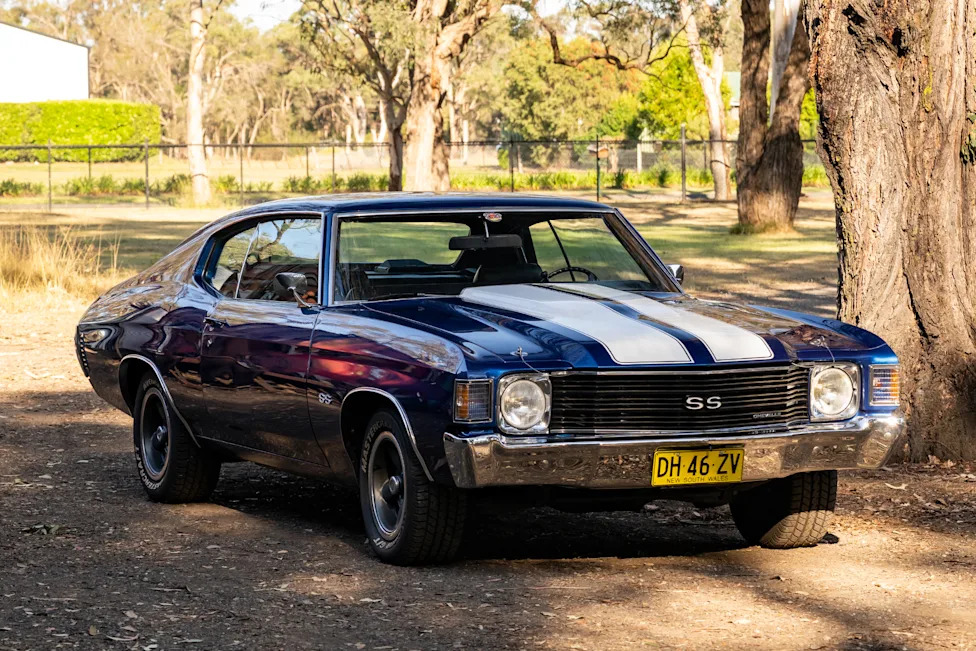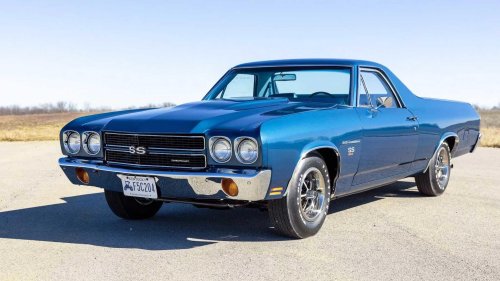
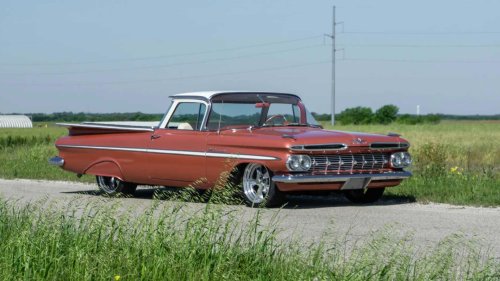
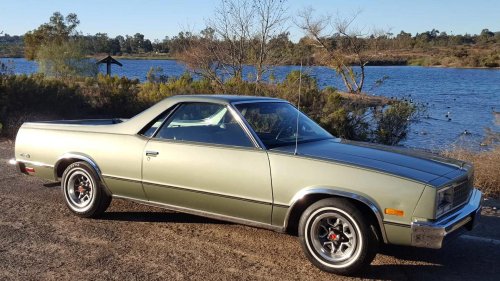
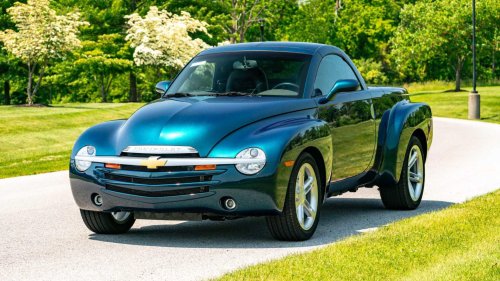
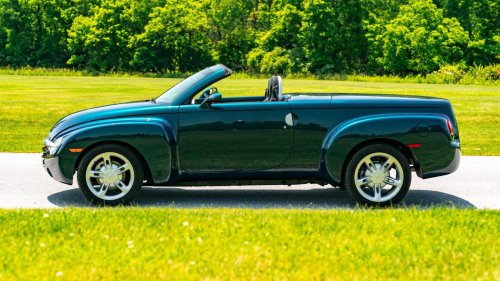
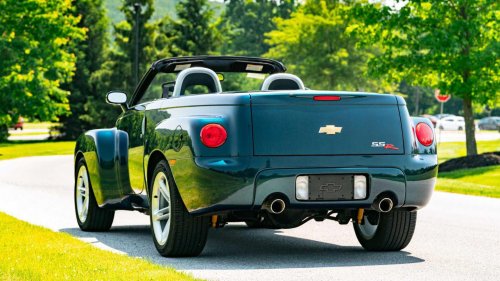
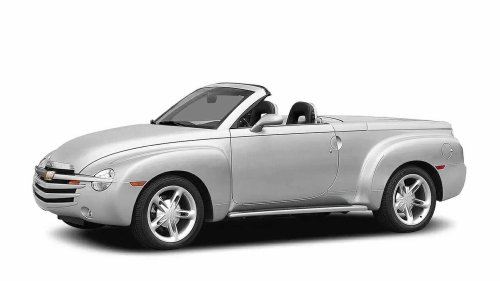
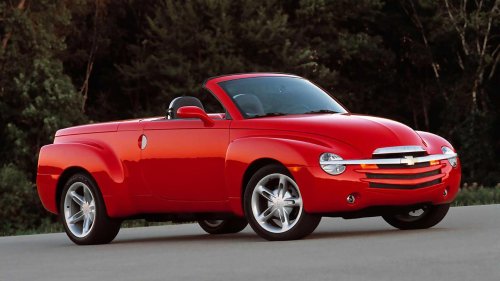
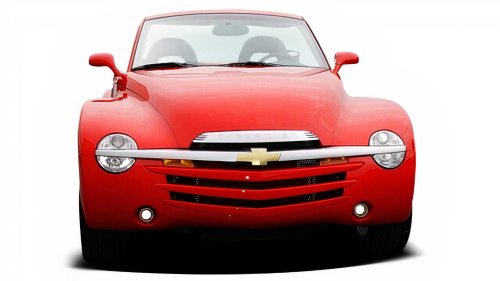
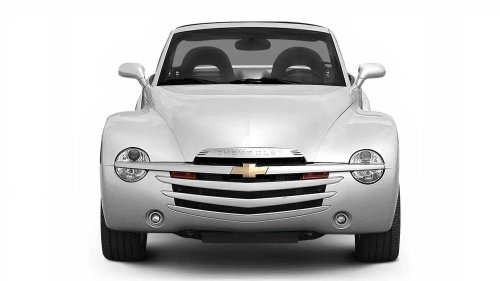



















The ute. Over here, we rarely see one on the road, and if we do, it's because somebody imported one for use on US roadways. However, over in the Land Down Under, the ute is incredibly popular. In essence, a ute is a combination of a pickup truck and a regular car. Think of the Chevrolet El Camino, but instead of it just being a single-model phenomenon, it's a widespread preference that's fulfilled by a number of automakers that operate within Australia.In the early 2000s, Chevrolet tried to bring the ute to the US in a modern way. The model to do so was called the SSR, an acronym that stands for "Super Sport Roadster". It was only on the market for a few years, and it utilized a couple of good ol' V8 engines as its power source. However, despite it being old-school, V8-powered, and a Chevy, folks in the US simply weren't that interested in it, and its existence was quickly called into question. The SSR's Spiritual Ancestor Was Widely Successful BringATrailerBack in the late 1950s, Chevrolet had a wild idea to mate a passenger car with a pickup truck. The original idea was to provide folks with a vehicle that boasted the comfort and usability of a regular car alongside the practicality of a pickup truck with a cargo bed. Not to mention, Ford released its own car-truck called the Ranchero in 1957, and it was proving to be moderately popular. Chevy wanted a piece of that action, and so the El Camino was designed, built, and introduced in time for the 1959 model year.RM Sotheby's In its very first year on the market, the El Camino managed to outsell Ford's Ranchero. Interestingly, though, Chevy pulled the El Camino from the market following the 1960 model year, which, of course, allowed Ford to retake the sales lead. However, come 1964, the El Camino was brought back into the fold using Chevy's intermediate Chevelle A-Body platform, wherein it quickly snatched the sales crown from the Ranchero once again, never to surrender it until the Ford's eventual axing in 1979.Throughout the mid and late 1960s and 1970s, the El Camino was well-liked and popular in the US. A high-performance "SS" version was introduced in 1968. By 1970, the El Camino SS produced up to 450 horsepower and 500 pound-feet of torque, thanks to its use of the LS6 454 CID V8, which it shared with its platform mate, the Chevrolet Chevelle SS. Once the classic American muscle car era ended in the mid 1970s, the El Camino continued its life with a more luxurious look, shedding some of its former sportiness.Bring a Trailer By the mid 1980s, the El Camino's popularity had begun to wane significantly. Some reasons behind its fall from grace included its unfriendly fuel economy, maximum seating capacity of three people, and the fact that compact pickups like the Chevy S-10 and the Ford Ranger were eating into its sales in a major way. Because of that, the Elco was canned following the 1987 model year. The introduction of the SSR was, in effect, the El Camino's implicit successor. The SSR Itself? Not So Much Bring A TrailerThe first whispers of the SSR's existence began to circulate in the very-late 1990s. At the time, Chevy wanted to introduce a new and unique halo vehicle, and chose the classic pickup trucks from the 1940s and 50s as inspiration for its design. The project was put under the direct control of Bill Davis, a then-senior designer at Chevy.A rough mock-up was produced, which then progressed into a rolling concept model. In 2000, that concept was shown to the public at the 2000 North American International Auto Show in Detroit, Michigan, where it was reportedly well-received enough to inspire Chevy to order mass-production.Bring A Trailer Some more final details were fleshed out, and the SSR was finally ready for production in late 2002, just in time for the 2003 model year. It used the GMT386 platform, based on the GMT360 platform, which was shared with models like the Chevrolet TrailBlazer, the GMC Envoy, and the Buick Rainier. Every single production-grade SSR sported a removable hardtop roof and a covered four-foot cargo bed. Under the hood sat a 5.3-liter "LM4" V8, which was also shared with other GMT360 platform mates. At first, no manual transmission was offered.Bring A Trailer It was thrown up for sale with a $42,000 MSRP in 2003 which, in today's money, equates to roughly $76,015, a steep price for a Chevy that isn't a Corvette. Because of this – and its rather divisive styling on the whole – the SSR quickly fell behind in actual sales versus projected. Less than about 9,000 units were sold in its first year, roughly 3,000 short of Chevrolet's initial projections. This was a major deficit, and hinted at what was to come for the SSR. Second-Gen Update ChevroletCome 2005, Chevrolet decided to give the struggling SSR a little bit of a facelift. However, the fruits of the facelift had nothing to do with its actual exterior appearance. Instead, Chevy swapped out the 5.3-liter V8 for a much more powerful 6.0-liter LS2 V8 mill. This caused its horsepower and torque ratings to jump to 395 and 400 respectively. In addition, its removable hardtop was revamped with new seals, its rear axle was swapped out for a more robust unit that could handle the increase in power, and an all-new, Tremec six-speed manual transmission was offered as an option. Want One? Here's What You'll Pay ChevroletIf you're a fan of its retro-futuristic, bubbly looks and its V8 heart, and you fancy yourself in one, you're in luck. Typically, you can find a few for sale at any given time for a reasonable amount of money, and its average sale prices have consistently lowered over the past year or so.While gambling on what sort of cars will be future classics and which won't can be risky, the SSR does have the makings of one. For starters, it's got a V8 which, as we've seen recently, is becoming more and more rare. It also has an extremely rare look to it for a modern car, and many of you know that some style fads hit unexpectedly, meaning the SSR could find itself in the middle of a popularity renaissance.Chevrolet Take a look below to see how its average sale price has behaved over the last five years. Currently, the SSR's average value of $27,138 is falling according to Classic.com: The US Simply Didn't Want Its Own Ute ChevroletIt's hard to argue with sheer rejection.Some philosophers will tell you that you can't force anyone to do anything they don't want to. Even by marketing an old-school car-truck combo that combines both the iconic look of Chevy's 40s and 50s trucks with the symbolism and freedom of the El Camino, the brand simply couldn't sell the SSR enough to justify keeping it around. By the end of 2006, Chevrolet had only sold about 24,000 examples of the model, far below its projected 48,000 units over four years. Because of this, the plug was pulled, and the SSR quietly faded into automotive oblivion.Will it enjoy a resurrection, or maybe just a surge in popularity spurred on by nostalgia? Only time will tell, but it seems now might be a good time to pick one up, whether it's for investment purposes, or simply to tootle around in.