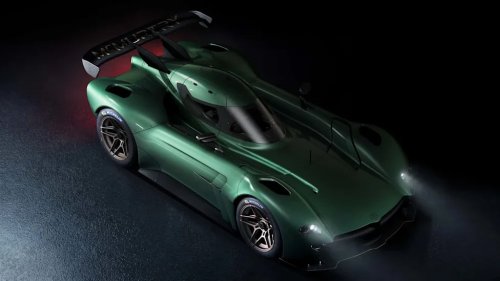
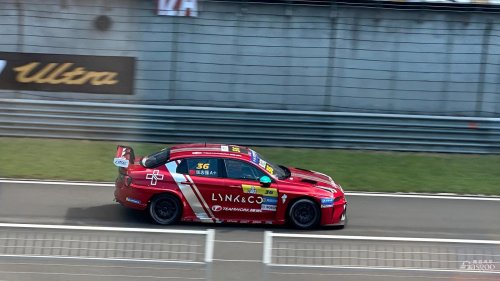
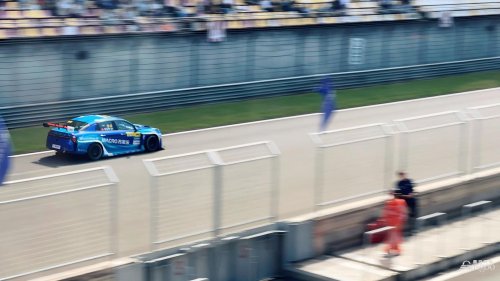
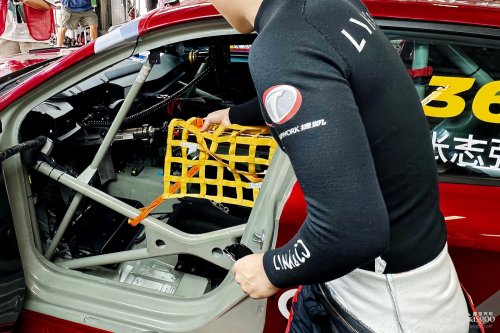
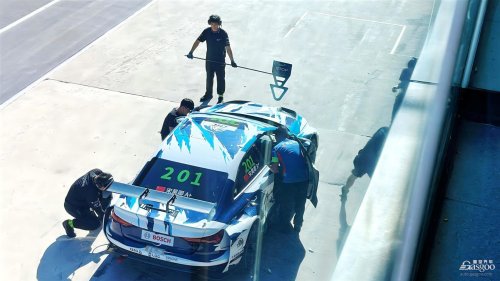
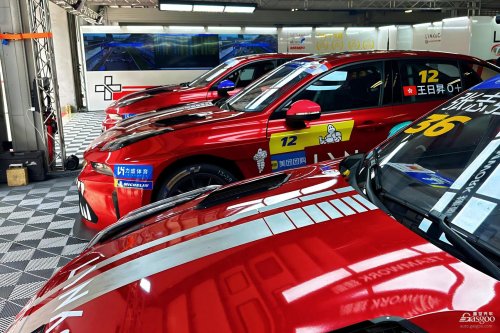
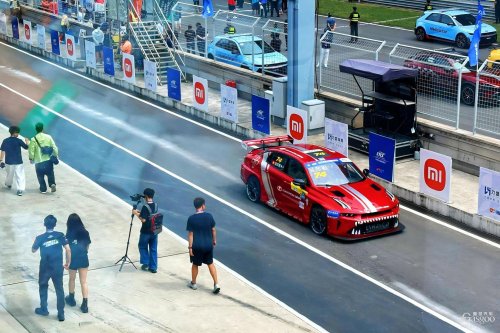
Gasgoo Munich-September 13, Shanghai International Circuit.The entry list for the TCR China Shanghai round featured nine Lynk & Co 03+ TCRs. Five belonged to the Lynk & Co Teamwork Motorsport, with the remaining four driven by Pan Dejun, Li Guanghua, Fu Guxiang, and Wang Tao.Those four share another common identity: they are owners of the 03+ TCR race car.The official sticker price for this machine: 1.4 million yuan.During a break in the action, Gasgoo caught up with Lynk & Co Teamwork Motorsport driver Zhang Zhiqiang in the paddock. The No. 36 car he was piloting that day was, naturally, an 03+ TCR."It's the exact same car you can buy," Zhang said. According to him, there's no fundamental difference between the factory race cars and the versions delivered to customers—save for minor tweaks tailored to a driver's personal habits.That is perhaps the most intuitive aspect of customer racing.Spend 1.4 million yuan, buy a race car identical to what the pros drive, and go racing.But once you actually step into the paddock, the reality quickly becomes far more complex than the price tag suggests.How should the car be tuned for different tracks? Where was time lost in the last lap? Who fixes it when it crashes? Can the car be rebuilt in time for the next session?For a regular road car, these are after-sales concerns. For a race car, they determine whether the vehicle can even continue to compete.So, the real story with the 03+ TCR isn't whether 1.4 million yuan is expensive, or how many units sold in the first batch.The question is: after an automaker sells a race car to a customer, how does it keep that business alive?Race cars have long been for sale; the shift is in who buys themLynk & Co didn't just start selling race cars in 2026.When the first-generation 03 TCR launched in 2018, Geely Group's motorsport division made it clear: this car was for global customer teams. In the years since, the 03 TCR has found its way into customer teams across various countries and regions.By the time the new generation arrived in 2023, Lynk & Co's TCR customer racing program had already been running for years.In other words, the narrative of "Chinese brands starting to sell race cars" isn't a new phenomenon this year.What makes this time different is that race cars are shifting from B2B products bought by professional teams toward becoming clearer end-user consumer goods.The 03+ TCR comes with a clear price tag of 1.4 million yuan including tax, a public deposit scheme, and a sales structure that bundles racing training, engineering guidance, and technician support.This past April, the first batch of 10 units was delivered at the Shanghai International Circuit, immediately preceding the TCR China season opener. At the time, Lynk & Co clarified that the factory team and customer teams use cars of identical specification.At the Shanghai round, nine 03+ TCRs took to the track together, with four drivers explicitly listed as car owners.This proves at least one thing: these cars are no longer just handed to professional teams that decide who drives them. The actual users are starting to become the buyers themselves.Of course, this group of buyers is far from your average consumer.Fu Guxiang, driver of the No. 94 03+ TCRLi Guanghua has already claimed a TCR China Challenge championship; Pan Dejun has campaigned on domestic and international touring car circuits for years; Fu Guxiang is a veteran of national-level events; and Wang Tao has competed in the CRC, China GT, TCR China, and CEC.They are racing participants first, and consumers second.That is also why, despite having a price tag and purchase channel that increasingly resemble a standard consumer product, the 03+ TCR cannot simply be understood as something a "performance car owner can just buy to play around with."You can buy the car, sure. But the racing doesn't start the moment the purchase is complete.Racing licenses, event entries, transport, crew, engineers, technicians—every single piece has to fall into place afterward.The 1.4 million yuan only solves the most visible part of the equation.Buying isn't hard; keeping it running isThe best place to understand customer racing at the track isn't the starting grid—it's the paddock.There, a race car rarely remains in the state it was in when purchased.Take the same 03+ TCR from Shanghai to Ningbo, then on to Zhuzhou: track characteristics change, so vehicle settings must naturally follow. Tire pressure, ride height, suspension, brake balance, and tire condition all affect lap times.TCR also features Balance of Performance (BoP) and Compensation Weight (CW) regulations, meaning a car's weight and power output may be adjusted based on event organizers' decisions.At the Shanghai round, for instance, the car driven by Zhang Zhiqiang was required to carry an additional 20kg of ballast.This work is routine for professional teams; for customers buying cars to race, it represents a very real barrier to entry.Zhang Zhiqiang told Gasgoo that 03+ TCR owners receive support from the team, including video analysis, vehicle data, and parameter settings.To put it bluntly, owners don't need to turn themselves into half a race engineer just to qualify to drive fast.They can focus on driving.How to set up the car, how to read the data, and exactly where time was lost in a lap—that is unpacked for them by the engineering team back at base.This is one of the biggest distinctions between customer racing and ordinary high-performance road cars.When a regular consumer buys a car, the manufacturer hands over the product, and the usage pattern is basically set. A race car, however, always requires a group of people working behind the scenes.Even during a race, repairing the car isn't a simple matter of "after-sales service."Zhang Zhiqiang noted that the Lynk & Co Teamwork Motorsport can currently complete an engine swap in about two hours; in the event of severe damage from a crash, the team is capable of restoring the car to race-ready condition within roughly 24 hours.The hardest part of race car repair is never whether it can ultimately be fixed, but whether it can be done in time.On-site repairs during a race (not a Lynk & Co 03+ TCR)Crash in the first race on a Saturday afternoon, and there's qualifying the next morning. Break down on Saturday, and you're fighting for points on Sunday. A difference of a few hours can mean the distinction between "continuing to race" and "ending the weekend early."However, these figures cannot be directly equated with every 03+ TCR owner receiving the same level of guarantee.First and foremost, it proves the repair and engineering capabilities the Teamwork Motorsport already possesses.If a customer is not directly operated by the Teamwork Motorsport, or takes the car to race in other regions in the future, whether engine swaps, crash repairs, and parts allocation can maintain the same efficiency—and how services are specifically charged—has not yet been fully disclosed.This is crucial.Because this is where the true difficulty of customer racing lies.It is not hard for a factory team to repair a car.The challenge is transforming capabilities accumulated over years by the factory team into a set of services that customers can reliably access no matter where they race.Spare parts must be in stock, engineers must understand the vehicle, technicians must be familiar with repair procedures, and components must arrive according to the rhythm of the race.If these elements exist only within the factory team, the race car remains just a race car.Only when they can be replicated, purchased, and delivered does Customer Racing have a true commercial foundation.After 1.4 million yuan, there's a long list of billsFrom this perspective, the 1.4 million yuan isn't even the most complex calculation in customer racing.As long as the race car keeps running, the expenses keep piling up.Tires, brakes, consumables, transport, engineering services, crash repairs—these costs span the entire season.The same applies to the manufacturer.Once the cars are sold, spare parts inventory cannot be withdrawn, technical staff cannot be disbanded, and someone must be available to answer the phone when customers encounter issues during a race.This logic is vastly different from the business of mass-production vehicles.Mass-market cars rely on scale.With hundreds of thousands of units spreading out R&D, production, and after-sales costs, the business model is relatively clear.Race cars, by contrast, have no such scale.Selling a few dozen units of a customer race car a year is already a significant number. But as long as those cars continue to compete, the manufacturer must maintain an engineering and spare parts system for those few dozen—or even a few hundred—cars over the long term.The fewer the customers, the harder it is to amortize costs.The heavier the service, the greater the manufacturer's investment.Yet, once engineering, repair, and parts prices are pushed too high, it directly raises the barrier to entry for customers.This is actually the most difficult balance to strike in customer racing.It is also why "selling out the first batch" only proves there are people willing to buy; it is far from proving that this business is viable.How are engineering services for the 03+ TCR priced beyond the car itself? How many races does a customer run on average in a year? How much revenue do crash repairs, consumables, and spare parts contribute? And how large a team and inventory must the manufacturer maintain?None of this data is currently public.But for judging whether Customer Racing can run independently, they may be more important than the 1.4 million yuan sticker price.Of course, for an automaker, this calculation isn't just about the profits of the racing business itself.Racing also brings brand exposure, user engagement, a performance image, and technical accumulation.Therefore, even if a customer racing program does not chase profit scale like a standard vehicle business, there may still be reasons to continue investing.But once Customer Racing begins to be viewed as an independent business, it will eventually have to answer one question: without brand marketing budgets, can it survive on its own?In this market, latecomers have no shortage of rivalsIn the global TCR market, customer racing is nothing new.Brands like Honda, Hyundai, CUPRA, Volkswagen, and Audi have all established relatively mature product and customer networks.Some programs have been running for years, building their own spare parts systems, engineering teams, and customer bases around their cars.Lynk & Co is not starting from a blank slate, either.The first-generation 03 TCR entered the customer racing market in 2018, giving the brand years of TCR development and operational experience before the 03+ TCR even launched.But as customers extend from professional teams to individual owners, the tests actually become greater.Professional teams have their own engineers, technicians, and a wealth of racing experience.Individual customers rely far more heavily on the manufacturer's service system.At this point, when customers choose a race car, they aren't just looking at lap times.With BoP in play, the absolute performance gap between different cars is inherently limited.For an owner, the answer to whether a car is worth buying is often hidden in the details:If a control arm breaks, how long does it take to arrive?If the car crashes, how much does a repair cost?If racing in another country, can an engineer come along?Three years down the line, are spare parts still easy to buy?When upgrading to a new car, is there a secondhand market for the old one?These things take time to build.A car can prove it is fast in a single race.But a customer racing system takes many seasons to convince customers that "buying it won't be a mistake."This is also the hardest part for the 03+ TCR to catch up on as a latecomer.It's not horsepower, and it's not lap times, it's time.The hardest part isn't selling it, but what happens five years laterThere is another easily overlooked issue in customer racing: automakers change their own strategic directions.The Volkswagen Golf GTI TCR once delivered over 100 units to customer teams, making it a fairly successful product in the TCR market. But as the group's racing strategy shifted, production of the Golf GTI TCR ultimately ceased.Audi Sport Customer Racing took it even further.Starting with the entry of the R8 LMS into the GT3 market in 2009, Audi later expanded customer racing to GT4 and TCR, building a massive installed base of race cars and a customer network.After the 2023 season, Audi ceased strategic investment in its Customer Racing program and stopped advancing new customer racing products.But those cars that had already been sold kept on racing.By 2026, customer teams globally will still be competing with Audi's GT and TCR cars, and Audi along with its regional partners will still need to provide parts and related services.This actually illustrates the unique nature of customer racing quite well.A manufacturer can decide not to build the next generation of race cars, but the customers of the previous generation cannot be left stranded at the track the next day.Cars will still break, parts will still wear out, and accidents will still happen.After a race car is sold, the relationship between manufacturer and customer often outlives the model generation itself.This is also a question the 03+ TCR cannot answer with a single race right now.Selling a certain number of units this year isn't the hardest part. The hard part is ensuring that three or five years from now, these cars can still reliably obtain parts and support; that when the next generation race car appears, old customers continue to be cared for; and that when customers take their cars overseas, the service system can follow.These things don't look as flashy as "first batch sold out," nor do they appear in podium photos, but they are exactly what determine whether a Customer Racing business ultimately survives.Over the past few years, Lynk & Co has already proven it can build race cars and win races.Now, a slower, longer race has just begun. It is not about how fast a lap is, but about how long the manufacturer can keep running alongside the customer after the car is sold.The real business of customer racing is not on the day of delivery.It only becomes clear after many seasons.



















 +44 others