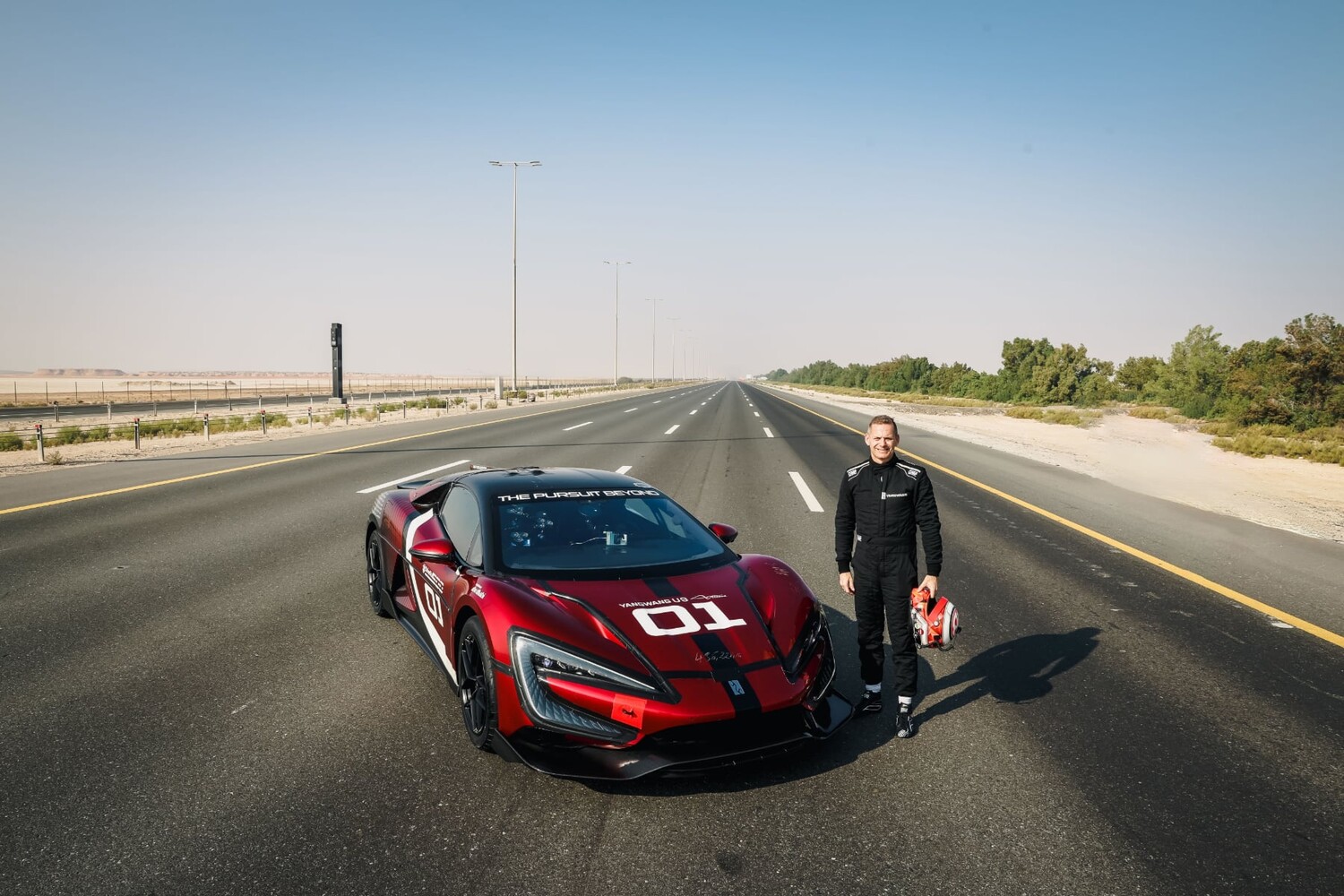
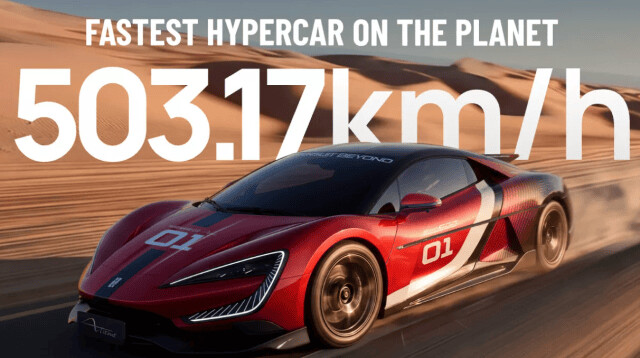
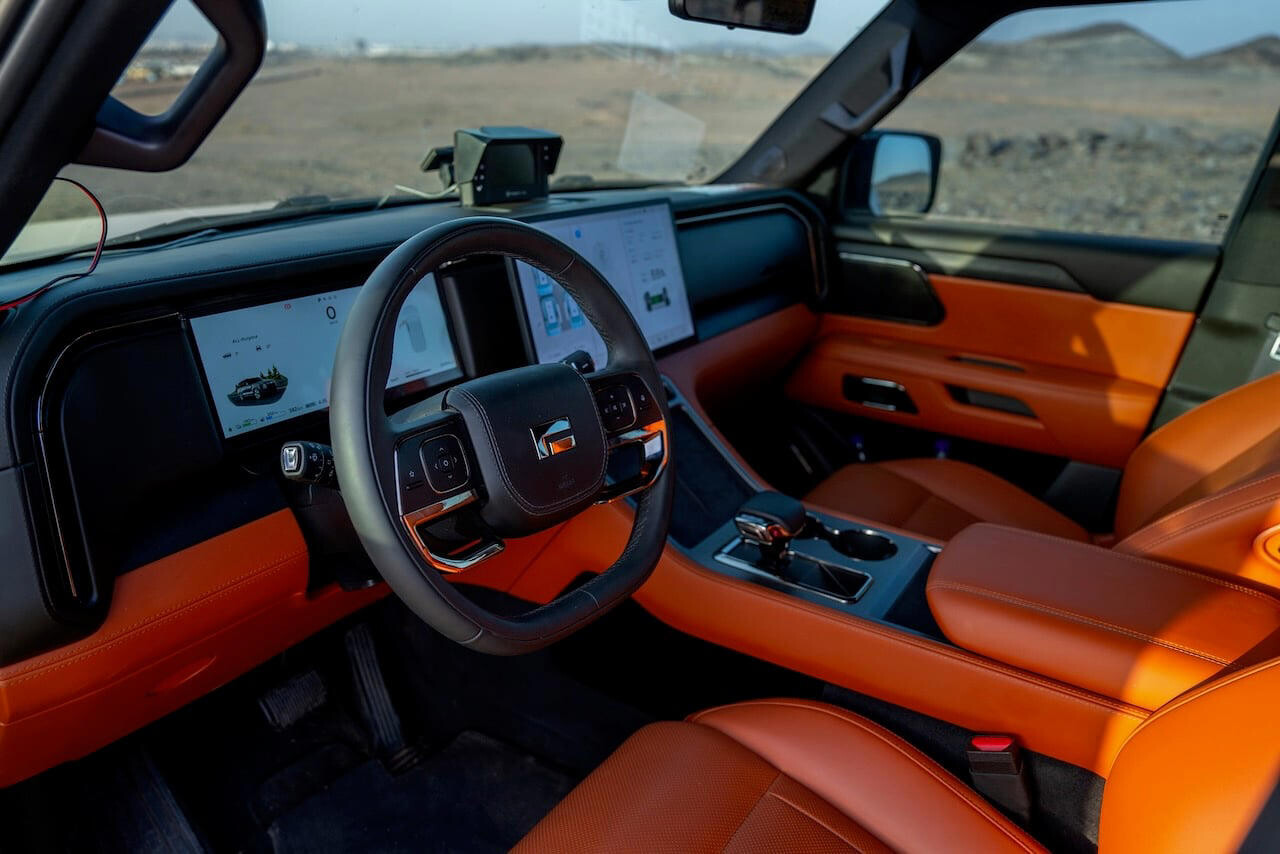
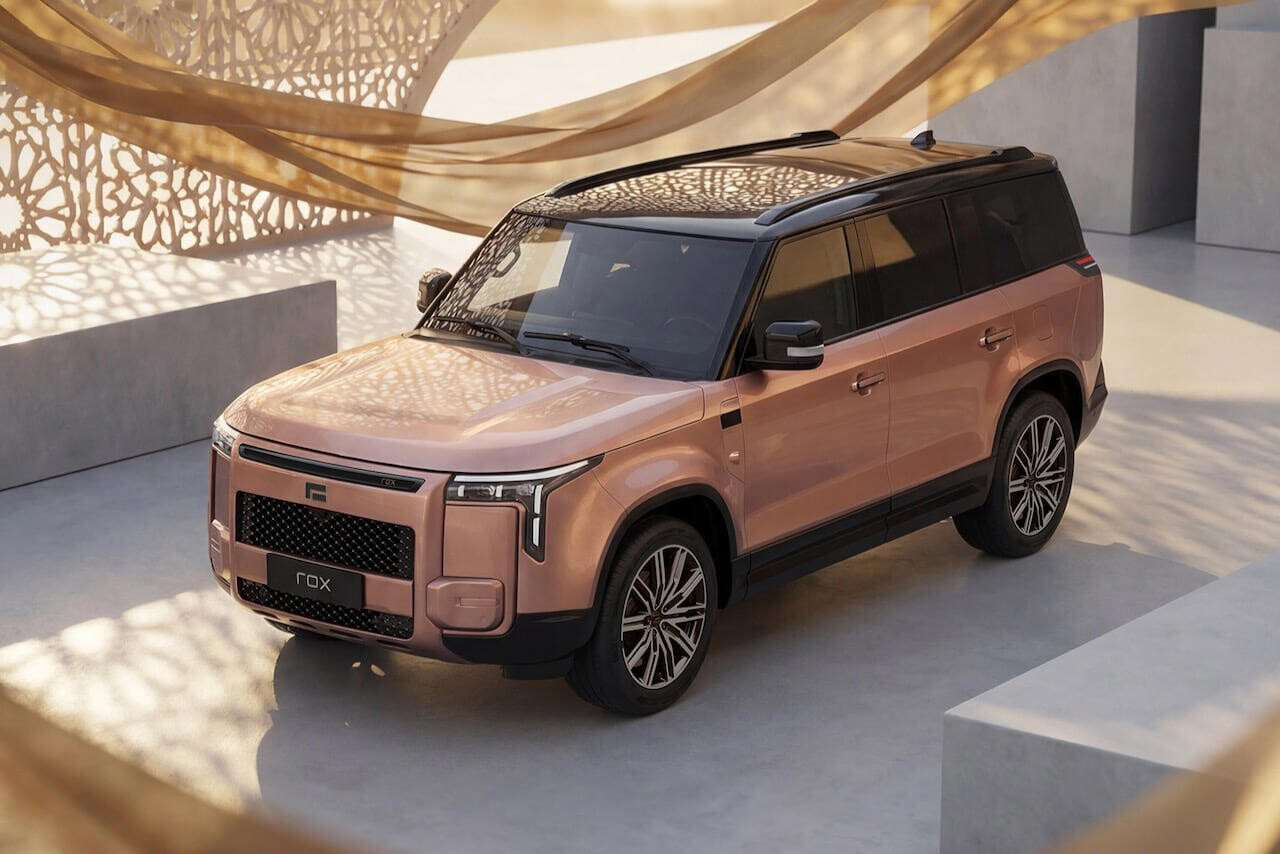
There are speeds at which one might still reasonably debate whether they offer any practical benefit in everyday life. 503.17 km/h is probably not one of them – unless your everyday life involves seven kilometres of closed road in Abu Dhabi, four electric motors, and an urgent need to write a number starting with a five on the spec sheet. However, that is exactly what Yangwang has now achieved. On 1 November, the U9 Xtreme reached 503.17 km/h on a closed section of the E11 in the Al-Dhafra region. Behind the wheel once again was German racing driver Marc Basseng. The FIA has confirmed the speed, and Guinness World Records lists it as the highest speed for a production car and an electric production car in a single-direction run. This distinction is important. Traditional speed records are typically determined from two runs in opposite directions to account for factors such as wind and gradient. In the case of Yangwang’s record, it is explicitly a “single-direction run”. This improves on the BYD subsidiary’s previous record of 496.22 km/h, which the U9 Xtreme set in September 2025 at the Papenburg test track in Lower Saxony. Crossing the 500 km/h threshold thus represents an increase of just 6.95 km/h. However, achieving these additional seven kilometres per hour required considerable fine-tuning. Four motors and over 3,000 HP The record attempt spanned two days. On 31 October, the maximum speed achieved was initially 490 km/h. Overnight, the engineers adjusted parameters such as battery temperature, motor temperatures, the rear wing angle, suspension software, and tyre pressures. On the second run the following day, the speedometer finally registered 503.17 km/h. The foundation for this performance is an uncompromising powertrain. The U9 Xtreme features four electric motors that together deliver over 3,000 HP. According to Yangwang, each motor can reach up to 30,000 rpm and up to 555 kW. The power-to-weight ratio is stated as 1,217 HP per tonne. This is complemented by a 1,200-volt architecture, whereas the standard U9 operates at 800 volts. The system is said to support currents of up to 1,000 amperes. The LFP-based Blade Battery achieves a discharge rate of up to 30C, according to the manufacturer. Even at 20 per cent state of charge, it is claimed to deliver up to 1,800 kW of power. Yangwang states the regenerative braking power as exceeding 700 kW. At such speeds, the chassis and aerodynamics naturally play a more significant role than questions like whether another suitcase fits in the frunk. The active DiSus-X suspension can intervene individually at each wheel. Combined with the torque vectoring of the four motors, it is designed to stabilise the body even at extremely high speeds. Specially developed semi-slick tyres from Giti Tire are also intended to prevent the tyres and rims from shifting relative to each other under the enormous forces. The U9 Xtreme also already holds the lap record for electric production vehicles on the Nürburgring Nordschleife. With a time of 6:59.157 minutes, the vehicle stayed under seven minutes – according to Yangwang, in the same specification used for the recent top-speed attempt. However, the U9 Xtreme will not enter series production as a future high-volume model: Yangwang plans to build only 30 units. The first customers have already finalised their individual configurations and are in the contract or production planning phase. The company has not disclosed a price in its current announcement. Thus, the U9 Xtreme is probably not the answer to any specific mobility challenge. But sometimes, technological progress simply means crossing a boundary that no one seriously claimed needed to be crossed. The 500 km/h mark, at least, is now behind us.