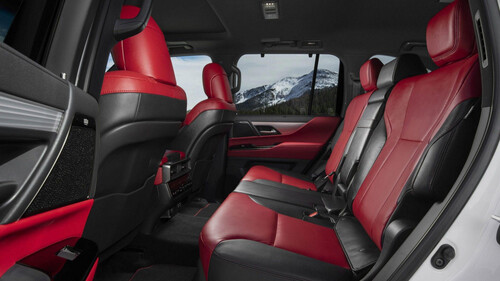
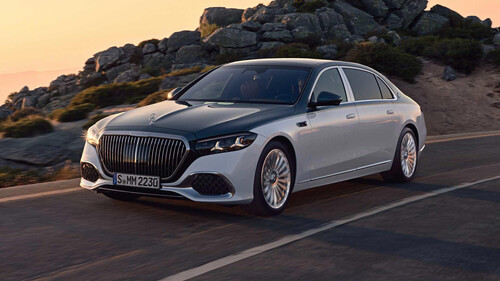
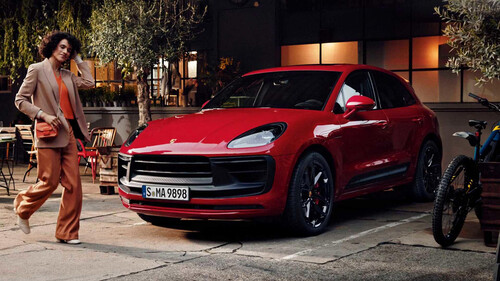
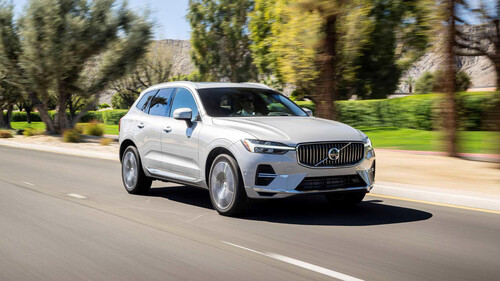
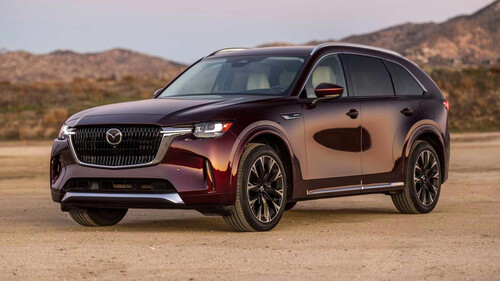
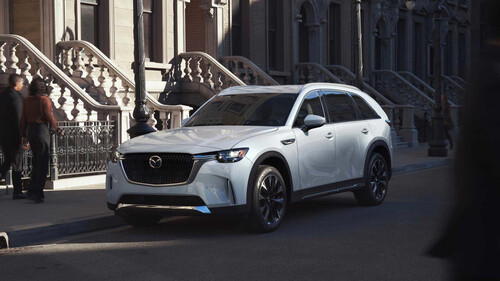
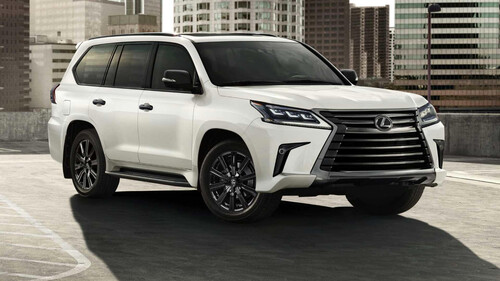
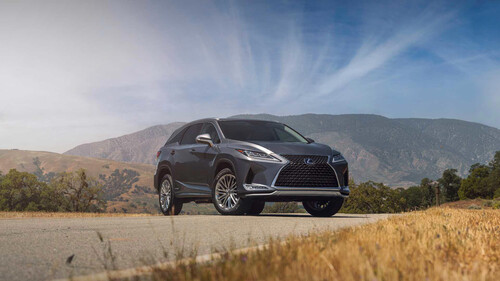
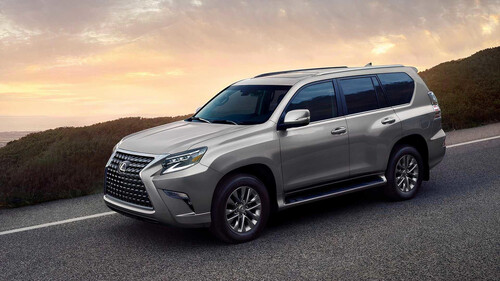
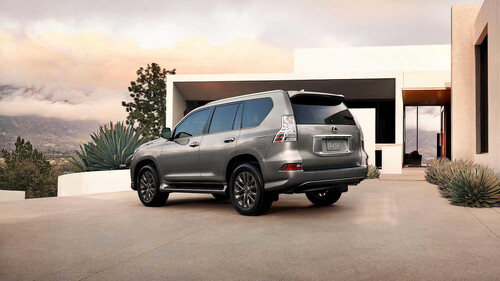
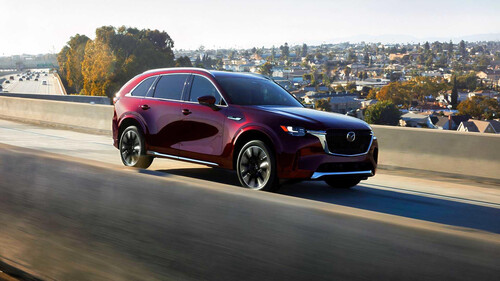
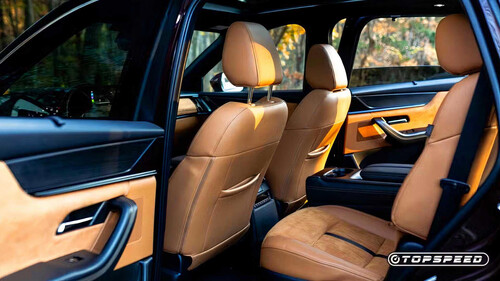
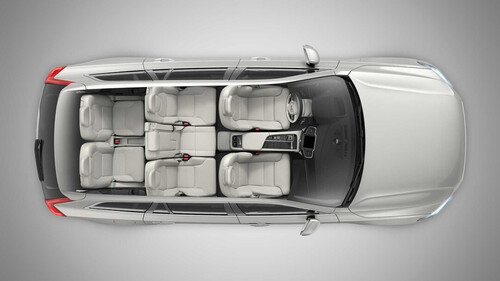
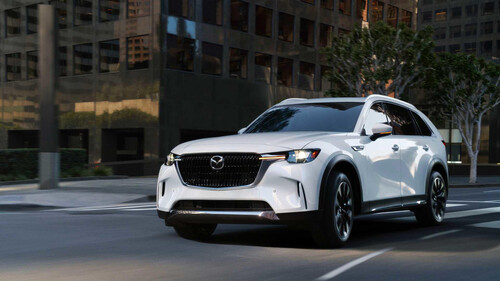
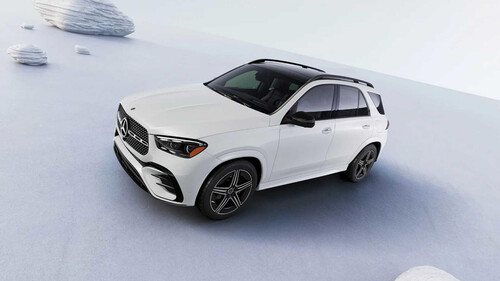
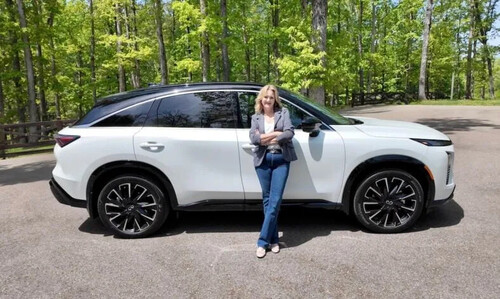
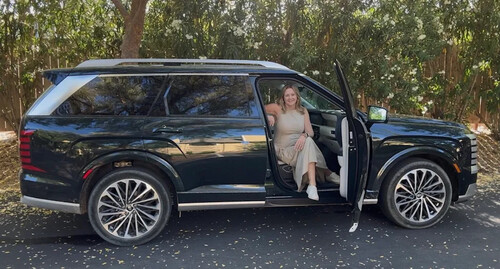
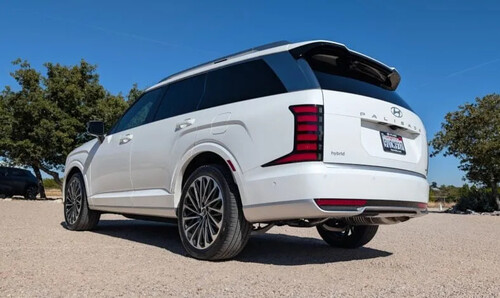
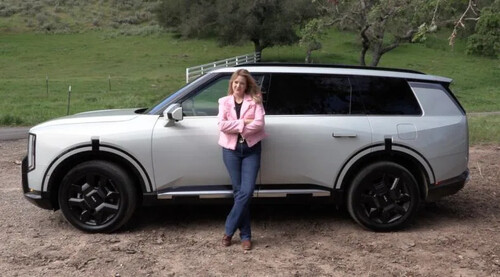
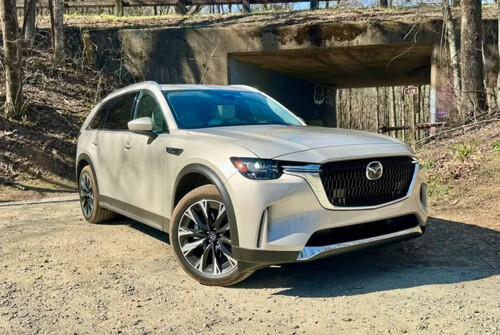
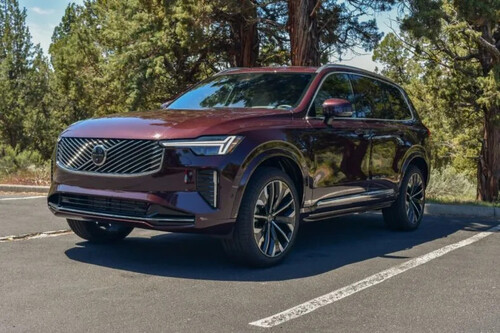
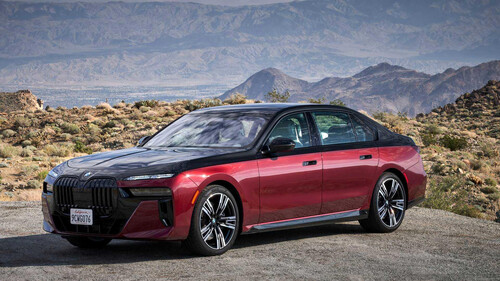
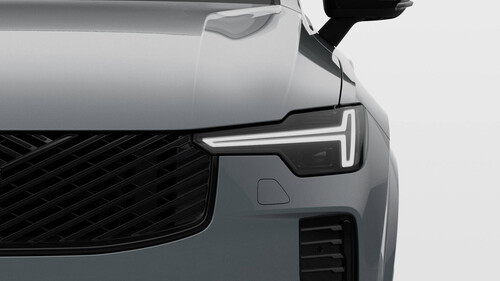
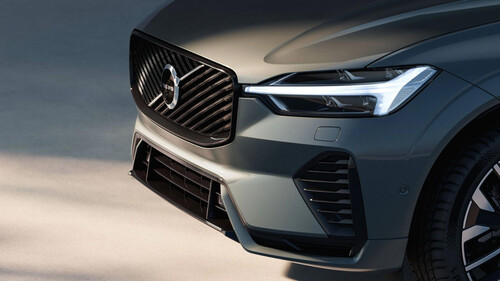
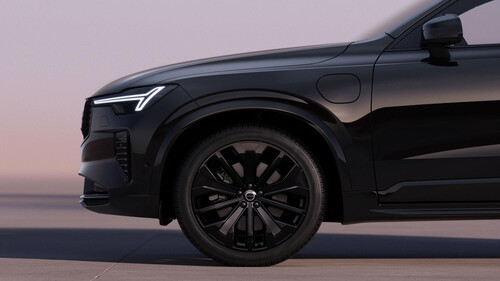
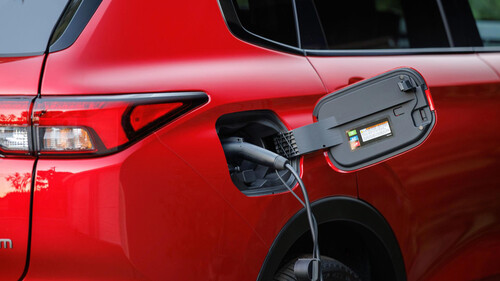
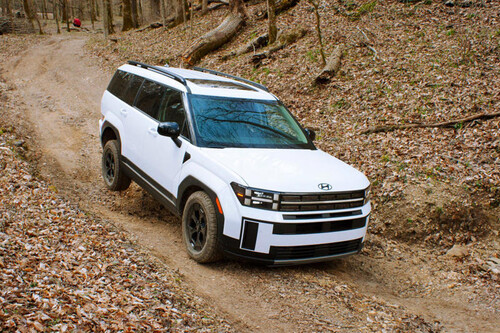
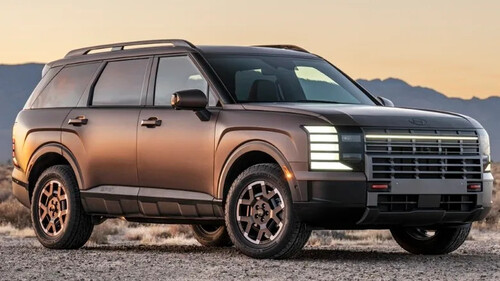
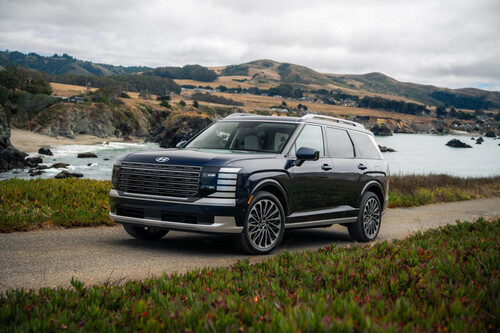
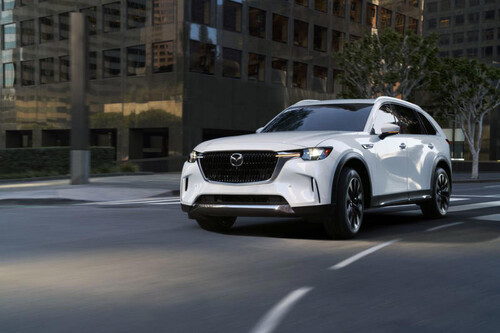
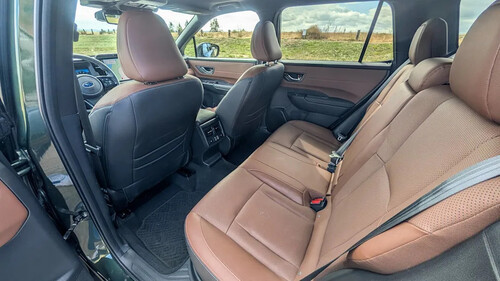
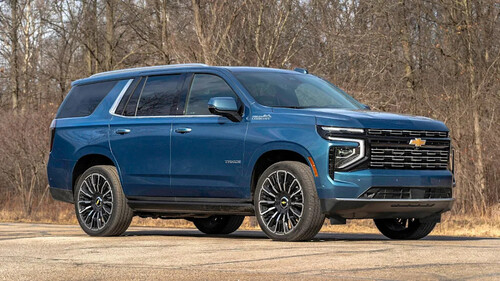
Best Midsize Hybrid SUVs for 2026 | CarBuzzThe only type of car more popular in the US than a pickup truck is an SUV. More people are buying crossovers and SUVs than ever before, and since they come in all shapes and sizes, there’s something for every type of lifestyle and budget. For those who want a sensible car that doesn’t break the bank at the pumps, it makes sense that they shop in the hybrid midsize SUV segment. Hybridization bolsters the otherwise mediocre fuel economy figures while still offering the versatility and practicality of this body style. This is a list of the best midsize hybrid SUVs for 2026 in the USA.Vehicles are assigned a BuzzScore in relation to their direct segment competitors, and as such, vehicles in this list, while similarly scored, do not necessarily compete directly against one another. Find out more about how the BuzzScore ratings work here. These lists are continuously updated with the latest BuzzScores and vehicles as they become available. Hyundai Palisade Hybrid The redesigned Hyundai Palisade makes a claim for the best midsize hybrid SUV. For those requiring a proper hybrid midsize SUV, Hyundai has finally replaced the thirsty outgoing powerplant with an electrified powertrain. This move plants the Palisade among the top hybrid midsize SUVs for families who require high efficiency without sacrificing towing capacity. As a highly capable midsize hybrid SUV with vast interior volume, the Palisade undercuts the best midsize hybrid SUVs on price while over-delivering on heavy-duty engineering.The Palisade is a more traditional hybrid electric vehicle that operates with a 1.65-kWh lithium-ion battery. Performance off the line is smooth rather than sudden, but the SUV’s additional mass because of the hybrid system results in a slightly leisurely 0-60 mph sprint of under 8 seconds. However, the Palisade’s real metric is a fuel return of 34 mpg combined for front-wheel drive (FWD) configurations. Mazda CX-90 Plug-In Hybrid The Mazda CX-90 PHEV remains a solid option if you want an electrified crossover with legitimate rear-wheel drive (RWD) characteristics. Typical Mazda, even with the electrification of the power system, there is still a great emphasis on tactile steering engagement over sheer thermodynamic efficiency. Because even with three rows of seating, it still considers the driver who considers both family comfort and handling dynamics when taking command of this SUV.Drawing power from a 17.8-kWh battery pack, the CX-90 PHEV’s electric-only range is sufficient for short urban commutes. From a performance standpoint, the CX-90 benefits from strong low-end torque for a more urgent off-the-line acceleration, aiding it in reaching 60 mph from standstill in under 6 seconds. Drivers, who value taking their families along on the ride, are likely to appreciate the chassis tuning, well-weighted steering, and taut body control. Lexus RX Plug-in Hybrid Lexus practically invented the luxury hybrid crossover segment, and the Lexus RX lineup remains a sales leader in 2026. While multiple electrified variants exist, the RX 450h+ plug-in hybrid (PHEV) is the definitive flagship of the range, offering opulence, structural rigidity, and high efficiency.Unlike the performance-oriented RX 500h F Sport, the 450h+ is tuned strictly for maximum thermal efficiency and a comfortable ride quality. Equipped with an 18.1-kWh lithium-ion battery pack, it achieves a highly competitive zero-emission all-electric driving range. Once the battery is exhausted, it operates as a standard hybrid, returning an impressive 35 mpg combined. Performance is brisk and the RX 450h+ manages the 0-60 mph dash in an estimated 6.2 seconds. Befitting a Lexus, power delivery is exceptionally linear, and a silent, vibration-free driving experience is favored over sharp throttle response. And just to make sure it’s that level above the competition, the cabin is a masterclass in acoustic isolation. Porsche Cayenne E-Hybrid Even Porsche went the hybrid/EV (electric vehicle) route with its vehicles, and the Cayenne ensures that Porsche’s motorsport heritage is honored while adhering to modern emissions compliance. This is an SUV that perfectly illustrates how plug-in hybrid technology can be weaponized to enhance dynamic capability rather than merely turning a vehicle into a forced, eco-conscious compromise.The Cayenne E-Hybrid draws energy from a recently upsized 25.9-kWh battery pack that delivers a highly usable electric-only range - perfect for stop-go driving scenarios. Aided by the instantaneous torque of the electric motor filling in the lower rev range before the turbocharger fully spools, the E-Hybrid sprints from 0-60 mph in 4.6 seconds. Despite weighing just over 5,300 lbs, the Cayenne E-Hybrid benefits from Porsche’s active suspension management and sophisticated torque vectoring systems, which masks the weight pretty well. BMW X5 Hybrid The BMW X5 xDrive50e is currently one of the definitive benchmarks for premium plug-in hybrid SUVs. It boasts an impressive all-electric range, while still giving owners the silky-smooth inline-six power from the 3.0L engine we’ve come to love and appreciate. Truthfully speaking, it is a fundamentally over-engineered machine, but it excels in every measurable driving metric.A high-density 25.7-kWh battery pack (with 19.2 kWh of usable capacity) gives the X5 xDrive50e a class-leading electric-only range. Thanks to the immediate torque delivery from the electric motor and the high-revving nature of BMW's legendary B58 engine, the xDrive50e launches from 0-60 mph in just 4.6 seconds. Drivers and occupants are unlikely to feel the transition between EV mode and internal combustion power, which just showcases BMW's mastery of the hybrid software. It remains an exceptionally composed, highly capable, and fiercely fast sport utility vehicle. Volvo XC90 Plug-In Hybrid The Volvo XC90 recently received extensive architectural and aesthetic updates, yet its core philosophy remains rooted in Scandinavian minimalism and uncompromising safety. As a flagship offering, the electrified XC90 continues to prove that a luxury SUV can be sustainable, without compromising three-row practicality.The XC90’s powertrain architecture creates an effective electronic all-wheel drive system (eAWD). Equipped with an 18.8-kWh battery pack, the XC90 T8 offers a commendable electric-only range for daily drives, and it’s relatively rapid in a straight line. The immense 523 lb-ft of torque propels this luxurious SUV from 0-60 mph in 5.0 seconds, but the chassis is tuned for occupant comfort rather than dynamic engagement. The available active air suspension absorbs road imperfections with a soft, forgiving damping curve. Mazda CX-70 Plug-In Hybrid The Mazda CX-70 utilizes the exact same longitudinal architecture and powertrains as the larger CX-90. And while the two-row CX-70 delivers identical mechanical specifications, it packages them in a slightly more aggressive, darker-themed aesthetic.The 17.8 kWh battery architecture is carried over as is from the larger CX-90. Because the CX-70 does not significantly drop weight compared to its three-row sibling (the third-row removal saves only a marginal amount of mass), performance figures are practically identical, so expect a 0-60 mph sprint of around 6 seconds. Where the differences come in is on the CX-70’s slightly retuned suspension and more aggressive torque vectoring software, which, theoretically, make it feel marginally more agile and planted. Hyundai Santa Fe Hybrid The retro-futuristic Hyundai Santa Fe is a radical departure from its predecessor. Underneath the polarizing, boxy exterior design, it employs a straightforward hybrid architecture.As a traditional hybrid without plug-in capabilities, there is no dedicated electric-only range, but the small onboard battery pack captures kinetic energy through regenerative braking to constantly assist the petrol engine. The impact of this is seen on the fuel return, with the Santa Fe Hybrid returning roughly 36 mpg combined in FWD configuration. The 1.6L turbo setup prioritizes smooth, efficient cruising over outright acceleration, pushing the Santa Fe from 0-60 mph in about 8.5 seconds. BMW XM Hybrid The BMW XM is a polarizing SUV, but a brutal exercise in excessive automotive engineering. It is the first standalone M vehicle since the legendary M1, and it utilizes plug-in hybrid technology to generate Earth-shattering levels of kinetic force. This is not an SUV built to save the planet; if anything, it represents the absolute extreme of the hybrid SUV spectrum.Drawing power from a massive 29.5-kWh battery pack (with 25.7 kWh of usable capacity), the XM manages a respectable electric-only range for the daily grind. However, it prioritizes performance and is unequivocally violent. The XM Label is the only model available and hits 60 mph from standstill in 3.6 seconds. Despite carrying a curb weight exceeding 6,000 lbs, active roll stabilization, rear-wheel steering, and an M Sport differential allow the XM to actively defy physics. Characteristics Of Midsize Hybrid And Plug-In Hybrid SUVs Almost every automaker has something to offer in the segment, and they each bring something different, specifically in line with their brand’s identity. However, there are still a few qualities that vehicles of this size and type usually share: They are large enough for a family and their stuff They prioritize passenger safety and comfort They include all the essentials in terms of driver assists and infotainment They are reasonably priced and offer improved fuel economy They come with extensive warranty cover for hybrid components What To Consider When Buying A Midsize Hybrid SUV Medium-sized SUVs are already extremely versatile, and adding a hybrid powertrain helps overcome their few weaknesses. Even so, they may not be the perfect type of vehicle for everyone, so it is still important to balance the pros and cons before coming to a decision. Pros Highly practical Often comes with superb safety ratings Comfortable and easy to drive Improved fuel economy over regular models Plenty of options to choose from Plug-ins have a useful all-electric range Cons More expensive than regular gas models Not as efficient as the increasingly popular EV variants Heavier due to hybrid components Sources: Audi, BMW, Hyundai, Lexus, Mazda, Porsche, Toyota, Volvo