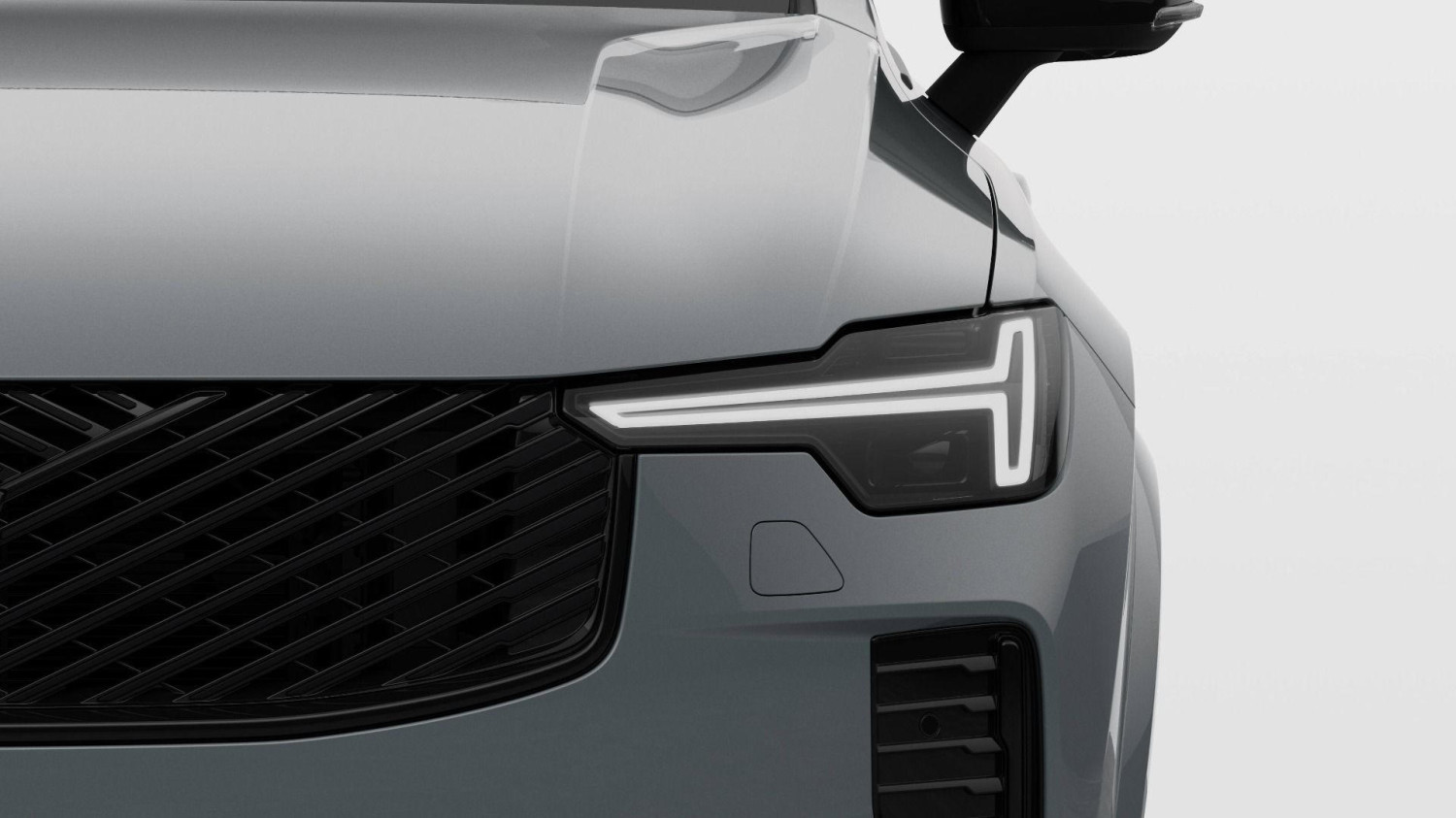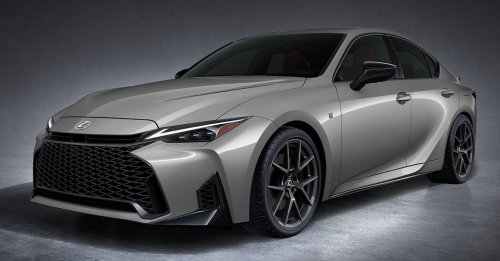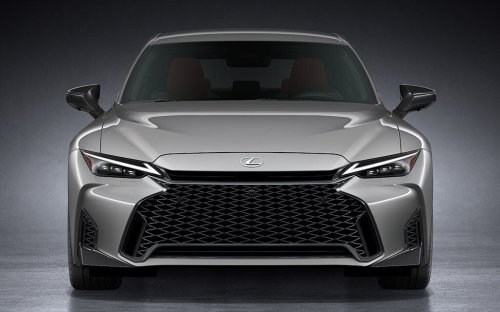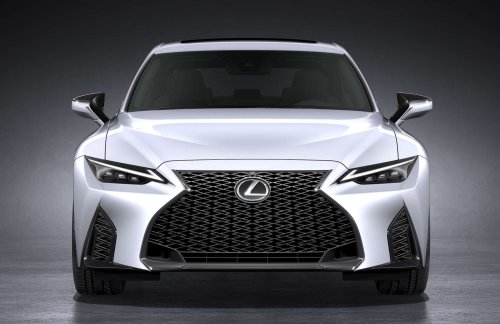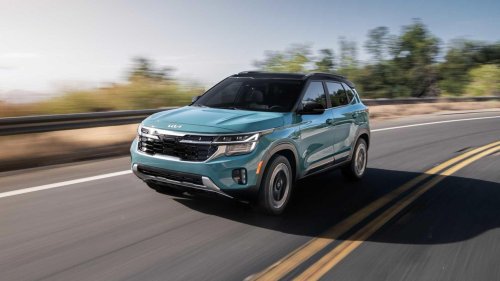



















Best Crossovers | 2026 New CUVs Ratings | CarBuzzOther than pickup trucks, the best-selling vehicle type in America is the crossover. You can't go very far without seeing a Toyota RAV4, Honda CR-V, or Tesla Model Y on the road, three of the most popular crossovers in America.With a raised, SUV-style design but the underpinnings of a normal passenger car, crossovers look the part but are comfortable and efficient enough to live with every day. They also offer more interior space than an equivalent sedan or hatchback, and there are a ton of gas, hybrid, and electric models to choose from. These are our best crossovers for the 2026 model year.Vehicles are assigned a BuzzScore in relation to their direct segment competitors, and as such, vehicles in this list, while similarly scored, do not necessarily compete directly against one another. Find out more about how the BuzzScore ratings work here. These lists are continuously updated with the latest BuzzScores and vehicles as they become available. Genesis GV60 Topping this list of the best crossovers is the Genesis GV60. It's a luxurious all-electric model with a handful of great trim levels, and pricing to match. The GV60 starts at $52,525 for the basic rear-wheel drive trim; the other three trims get all-wheel drive via a dual-motor setup. The RWD unit makes 225 horsepower, while the AWD and Advanced AWD trims get 314 hp, and the Performance AWD gets 429 hp. On the inside, the GV60 can seat up to five occupants, with those in the rear seats getting 38.1 inches of headroom and 37.6 inches of legroom. Cargo capacity maxes out at 54.7 cubic feet behind the front row."Between a roomy, stylish, comfortable cabin and driving position, a smooth drive train, and nicely tuned suspension with a trace of old-school spring, the Genesis GV60 is a genuinely pleasant vehicle to drive."- Ian Wright, Senior Road Tester, CarBuzz Volvo XC60 As far as CUV cars (crossover utility vehicles) go, the Volvo XC60 is another stylish, luxurious, and capable option. This model lands in the middle of Volvo's gas lineup with a lower entry price ($49,700 before destination) than its all-electric counterpart that was recently revealed. If you don't feel like waiting for the EV to drop, we recommend the XC60, which rightfully earns a BuzzScore of 8.9 out of 10. Under the hood is either a 2.0-liter turbo inline-4 mild hybrid that makes 247 hp and 258 lb-ft, or a PHEV version of the same engine that makes 455 hp and 523 lb-ft of torque. The interior can seat up to five people, and hold up to 63.3 cubic feet of cargo behind the front row. Lexus NX One crossover CUV with more trims and powertrain options that we know what to do with is the Lexus NX. Buyers can choose a gas-only engine, a regular hybrid, or a plug-in hybrid, with each powertrain available in multiple trim levels. The cheapest version you can buy today is surprisingly a hybrid: the 350h FWD, which starts at $44,175 before destination. We had a chance to drive the 450h+ F Sport, but by the end, we felt as though we'd be better off in a lower trim level. The standard NX can seat five occupants. Those in the rear get 38.5 inches of headroom and 36.1 inches of legroom, while cargo space reaches 46.9 cubic feet behind the front row."The steering is fine for around town and on the freeway, and cabin noise is wonderfully minimal. For everyday driving and road trips, the NX 450h+ F Sport is a pleasure to eat up the miles in and wait out traffic jams with."- Ian Wright, Senior Road Tester, CarBuzz Mazda CX-90 CUV models come in a range of sizes - on the larger end is the Mazda CX-90. This family-hauler bridges the gap between affordability and luxury. It has smooth, modern styling inside and out, with an upscale interior and plenty of comfort features. The CX-90 is the brand's largest model, but it's still not that expensive on the low end; this top-rated crossover SUV starts at $38,800. Under the hood is a 3.3-liter turbocharged inline-6 that makes 280–340 horsepower and 332–369 lb-ft of torque, depending on the trim level. Interior space leaves room for eight occupants, and cargo capacity reaches 75.2 cubic feet behind the front row."Mazda has entered a new era with the CX-90, one that bridges the gap between a mainstream and luxury automaker. Though it isn't faultless, this is the most premium Mazda we've ever driven..."- Jared Rosenholtz, Editor-At-Large, CarBuzz Ford Mustang Mach-E Another sporty electric vehicle to make the top five crossover SUV rankings is the Ford Mustang Mach-E. At this point, discourse has passed about whether it's a real Mustang or not - all we have to say is that it's fantastic for what it is. This model starts at $37,795 for the Select trim level with 300 miles of range. Output ranges between 264 horsepower from a single motor on the rear axle and 480 horsepower from a dual-motor AWD setup. All trims are five-seaters, with those in the rear getting 38.2 inches of headroom and 38.1 inches of legroom. Up to 59.7 cubic feet of cargo fits behind the front row, not including the extra 4.7 cu. ft. of space in the frunk. Hyundai Ioniq 5 Electric vehicles continue to dominate this list of crossovers with the Hyundai Ioniq 5. While the sportier Ioniq 5 N is all the rage, the standard variants are just as good. They lack the aggressive styling and lightning-fast acceleration, but we still hold them in high regard. The most basic version you can buy is the SE Standard Range for $35,000. You can also choose the off-road oriented XRT trim for $46,275, which comes with unique styling, all-terrain tires, and more. All trims seat five people, with those in the second row fitting into 38.7 inches of headroom and 39.4 inches of legroom, and cargo capacity maxing out at 58.5 cubic feet behind the front row."The Ioniq 5 has always had good performance and that doesn’t change. It’s a fun EV that is aggressive if you mash the pedal, but mild-mannered if you’re into a more leisurely or long-distance drive. The instant torque is perfect for darting through traffic or merging when space is limited. It’s an easy, everyday vehicle that’s not too sporty."- Nicole Wakelin, Senior Road Tester, CarBuzz Nissan Leaf The new Nissan Leaf is more impressive than you might imagine. Our road testers explain how it's everything the original Leaf was supposed to be and more. It's still a cheap EV, so don't expect a supremely luxurious experience and loads of comfort features, but that's the point: it's affordable while staying respectably comfortable. The Leaf starts at $29,990 for the S+ trim level, and the most expensive version stays under $40k before destination. All three versions can seat up to five occupants, while cargo space reaches 55.5 cubic feet with the second row folded down."Nissan didn't make this car particularly sporty, but the low center of gravity contributes to decent road holding, and smooth but relaxed power delivery makes the Leaf feel eager to gain speed. It's a pleasant commuter that can be fun-ish when you want, and it's not too loud on the highway if you want to take a road trip."- Jared Rosenholtz, Editor-At-Large, CarBuzz Porsche Cayenne For those of you with deeper pockets, the Porsche Cayenne is hard to beat. It's everything you can expect from a luxury crossover SUV. The original Cayenne was surprisingly capable off-road; the 2026 model can handle some dirt, but it's better off as a family-hauler or, in some variants, it can handle well on the track. Engine options include a 3.0-liter turbo V6 and a 4.0-liter twin-turbo V8, with the former making 348 hp and the latter 468 hp. Hybrid and all-electric models are also available, as is a coupe body style. The standard SUV variant can comfortably fit five people inside, or up to 60.3 cubic feet of cargo in gas models."The ride is smooth, but the chassis is reactive and keeps the Cayenne stable for when you take the long and winding way home from work on a Friday. It's fast, but it's also a consummate cruiser, even on recently deteriorated roads from the recent heavy rains in California. The steering is just as well tuned as the suspension, which is fantastic at low speeds and when pushing the Cayenne through the corners."- Ian Wright, Senior Road Tester, CarBuzz Tesla Model X We're just as shocked as you are about Tesla killing off half of its lineup, but the Model X is still one of our favorite crossover SUVs. It's had the same minimalist styling forever, enough features to keep you comfortable, and currently has two variants. The standard Model X starts at $99,990, and the Model X Plaid starts at $114,990. If you can order one before the cutoff date, you'll be rewarded with seating for up to seven people, horsepower between 670 hp and 1,020 hp, and range between 335 and 352 miles. Cargo space maxes out at 85.1 cubic feet behind the front row. Kia Seltos Our last model takes us back to a more grounded, reasonably-priced model that most people could find themselves in. The Kia Seltos is a budget-minded small crossover SUV. There are four trims to choose from, including the LX for $23,790 to kick it off, and the SX that tops the lineup at $31,490 before destination. The first three trims get power from a 2.0-liter inline-4 that makes 147 hp and 132 lb-ft of torque, while the SX gets a 1.6-liter turbo inline-4 that makes 190 hp and 195 lb-ft. All four versions get five seats, and up to 62.8 cubic feet of cargo space. Passengers in the second row have 38.4 inches of headroom and 38 inches of legroom."The majority of the driving experience is great. The steering is accurate, tightening more in sport mode, and the ride is compliant on bumpy roads. We drove the Seltos on the highway for over three hours, and the Bose audio system has no trouble drowning out the minimal road noise, even at a medium volume."- Jared Rosenholtz, Editor-At-Large, CarBuzz Characteristics Of The Top-Rated Crossovers Even as new crossovers hit the market in greater numbers, the differences between each model are not as big as you may think. These are vehicles designed to fill a specific niche, so they naturally need to tick certain boxes. As such, you can expect to see a lot of similarities in any comparison between the top CUVs (crossover utility vehicles). Maneuverability: Naturally, due to their smaller dimensions and lower weight in comparison to SUVs or pickup trucks, the top crossovers are generally easier to drive. Affordability: With less emphasis on towing or hardcore off-roading, crossovers are more affordable than true body-on-frame SUVs. However, there are a number of larger luxury crossovers that cost far north of $50k. Customization: As one of the fastest-growing segments in the world, it should come as no surprise that there are numerous crossover models on offer. This gives buyers a great deal of choice when it comes to customizing their purchases. Furthermore, most automakers aim to hit as many different demographics as possible, so they present each model in a wide array of trims. Safety: High-riding sport utility vehicles are among the safest cars on the road, and while they may not be as bulky, crossovers inherit much of this peace of mind. They do still suffer from slightly poorer rollover scores, due to their height, but their added weight over sedans ensures that crossovers keep their footing and their crumple zones are top-notch. Furthermore, since these vehicles are largely targeted at families, almost all new models come equipped with a whole slew of advanced driver-assistance features as standard. What To Consider Before Buying A Crossover Despite their popularity, crossovers are not perfect. Just like any other body style, they have certain strengths and flaws that you should be aware of. Even models at the top of our crossover ratings share many of these qualities. So, before you commit yourself to five to seven years behind the wheel of one, carefully weigh the pros and cons: Pros Affordable compared to body-on-frame SUVs Better-than-average mpg figures Nimble around town More practical than a sedan Comfortable, feature-packed cabins that are easy to live with Cons Limited towing capacities Some cheaper options have lower-quality interiors Lack the utility and versatility of larger SUVs What is the difference between a crossover and an SUV? It all comes down to the frame. Traditional SUVs are built on pickup truck platforms, which explains their ruggedness, high weight, and ability to go just about anywhere. Crossovers, on the other hand, make use of sedan platforms, which means they have a much smaller footprint and handle better. Each has its own strengths and weaknesses. What are the best crossover brands on the market? Multiple automakers have strong crossover lineups. It's hard to look past legacy brands like Toyota and Honda for sheer reliability, while the Germans produce some of the best luxury crossovers. What are the top-rated 2026 crossovers? The Genesis GV60 and Volvo XC60 are currently our top-rated crossovers for the 2026 model year.Sources: Genesis, Volvo, Lexus, Mazda, Ford, Hyundai, Nissan, Porsche, Tesla, Kia