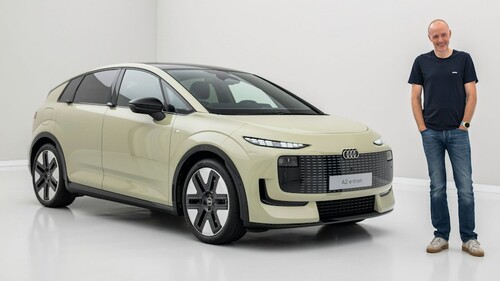
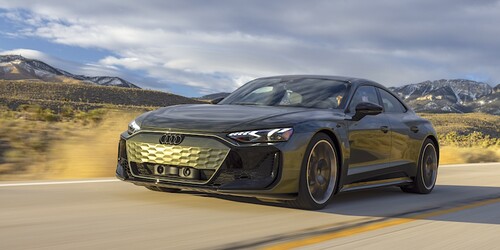
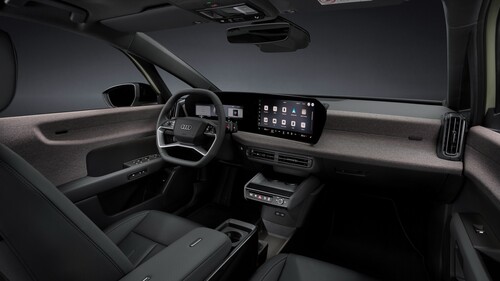
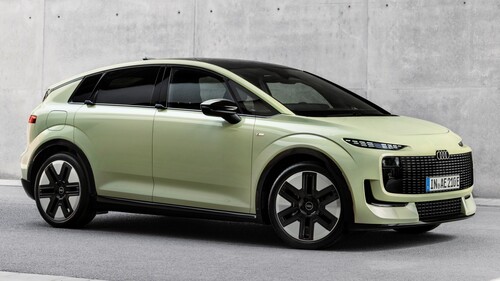
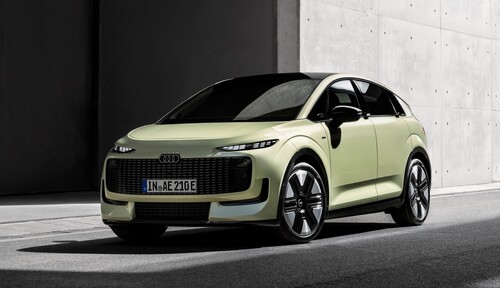
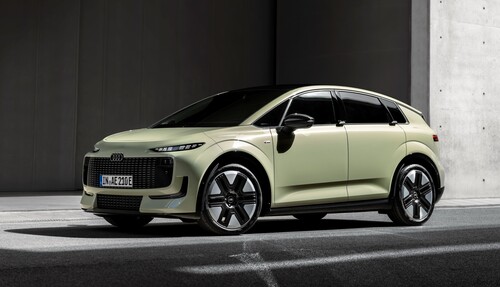
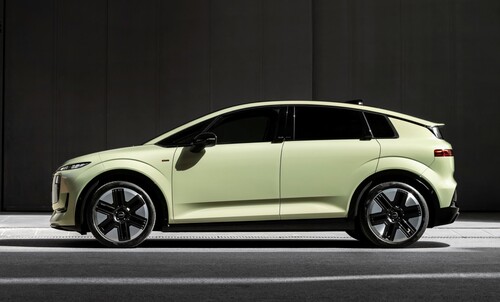
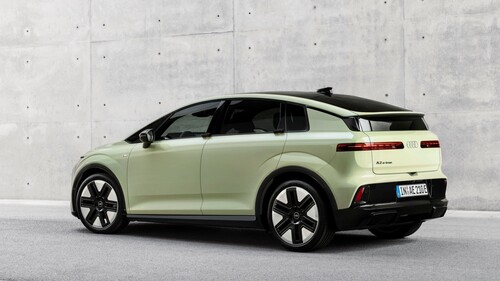
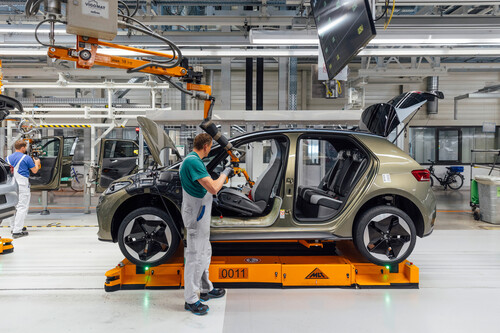
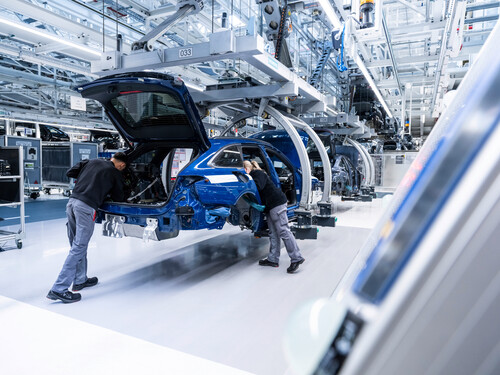
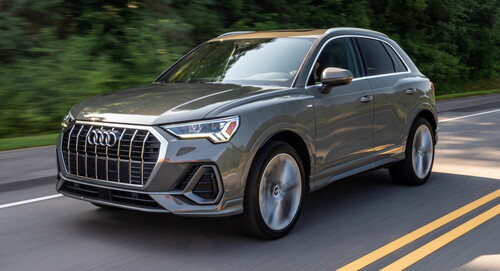
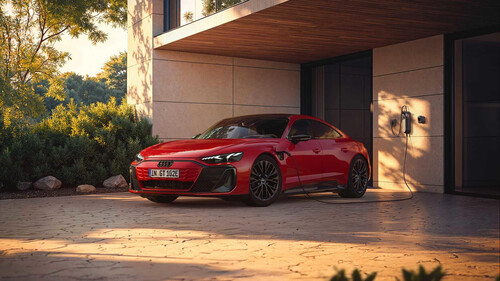
If you bought a 2024 or 2025 Audi Q4 e-tron for its range, you've just lost about a fifth of it until further notice. Volkswagen Group of America has filed a safety recall report covering 9,048 Q4 e-tron and Q4 Sportback e-tron SUVs whose high-voltage batteries could catch fire. Until engineers work out why, the advice is to keep the charge at 80% or below.
The numbers
The campaign is NHTSA recall 26V698, and Audi calls it 93SK. It covers 7,040 Q4 e-trons built Dec. 4, 2023, through April 24, 2025, and 2,008 Sportbacks built Nov. 30, 2023, through April 22, 2025. The suspect part is high-voltage battery part number 0Z1.915.599.*, supplied by SK Battery Manufacturing Kft. of Komárom, Hungary.
The filing contradicts itself on dates. Elsewhere it says vehicles produced through June 2025 are included, which doesn't match the April end dates. If your Q4 was built in May or June 2025, don't assume you're clear. Run your VIN.
Audi's description of the problem is short: above an 80% state of charge, "thermal propagation" may start inside the pack. That's the engineering term for a failing cell heating its neighbors until the fault spreads through the battery. NHTSA's official recall summary puts it more plainly: the battery "may fail and cause a fire."
The reassuring part: Audi estimates only 0.1% of the population is actually defective, which works out to roughly nine vehicles. And it reports no known claims, crashes, fires, injuries or deaths tied to the defect. NHTSA has not issued a park-outside or do-not-drive warning.
Audi's battery wasn't the one that burned
On Sept. 21, 2026, Audi's Product Safety Committee learned of battery thermal events in other Volkswagen Group vehicles that use the same type of pack. Three weeks of data review followed. On Oct. 14, the committee confirmed that the same battery and production traits existed in a defined group of Q4s, "the majority of which had been produced for the North American market," and ordered the recall as a precaution.
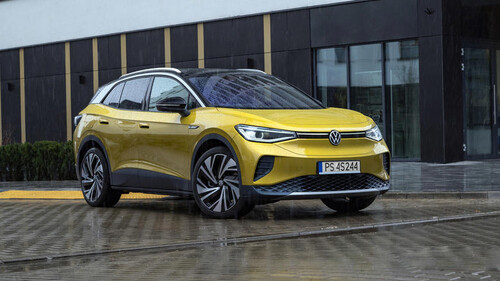
The obvious sibling is the ID.4, which shares the Q4's MEB platform. Weeks earlier, VW recalled 22,524 ID.4s from the 2023–2026 model years with the same 80% cap. That ID.4 filing lists 23 U.S. claims between January 2024 and August 2026. It also names a different supplier plant: SK Battery America in Commerce, Georgia.
So the problem appears tied to a cell design or production process shared across SK plants, not to one bad factory. If you drive another SK-supplied MEB car, run your VIN too.
No remedy, and letters come later
The root cause is still under investigation, and the final fix is "under development." Dealers were notified on Oct. 23, and VINs became searchable on NHTSA's site the same day. But the interim letters explaining the risk to owners aren't scheduled to be mailed until Dec. 18. A second round of letters will go out once a remedy exists, and the filing gives no date for it.
That leaves nearly two months in which an owner who doesn't follow recall news could keep charging to 100% without knowing there's a problem. Don't be that owner. Look up your VIN at NHTSA's recall site or call Audi at 1-800-253-2834.
The filing describes a triage process. Vehicles whose battery diagnostic data shows nothing concerning need no interim measures. Vehicles with missing data, or data that flags a concern, get the 80% cap plus an extra battery diagnostic at an Audi dealer. NHTSA's public summary tells all affected owners to cap at 80%. Until a dealer tells you otherwise, follow NHTSA.
What the cap costs you
California lists the dual-motor Q4 55 e-tron at 258 miles of EPA range. Stopping at 80% puts you around 205 miles, give or take weather and speed. The rear-drive Q4 45 drops from roughly 288 to about 230.
For commuting, you'll barely notice. On road trips, it hurts less than it sounds, because DC fast charging slows sharply above 80% anyway. Most experienced EV drivers already unplug there. The real loss is the full charge at home before a long drive. Plan one extra stop.
Set the limit in the charging menu or the myAudi app, and check that it sticks after software updates and charger changes.
Buying, selling and insuring
Federal law bars dealers from selling new vehicles with an open recall until they're fixed. With no remedy available, any affected 2025 Q4 still on a lot is stuck there. Used vehicles aren't covered by that rule, so private and used-car buyers need to check the VIN themselves.
Expect resale pressure. An open recall with no fix, on an EV whose biggest selling point is its battery, makes buyers nervous no matter how small the 0.1% figure is. If you're shopping for a used Q4, use the recall as leverage on price, and get written confirmation of the battery diagnostic results.
As for insurance, recalls usually don't change premiums. But if your car ever has a battery-related claim, records showing you obeyed the 80% advisory would strengthen your position with the insurer. Ignoring it would weaken it. Charge to 80% and wait for the fix. If you own a Q4, did Audi tell you, or did you read it somewhere first?