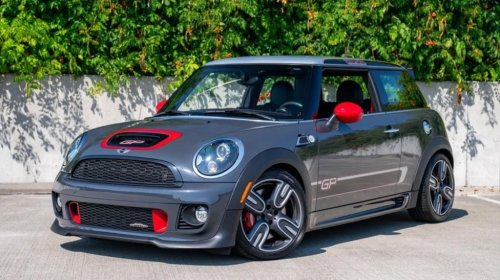
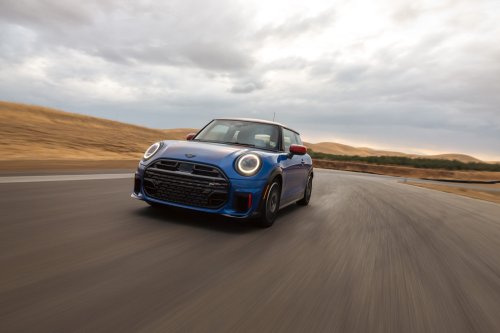
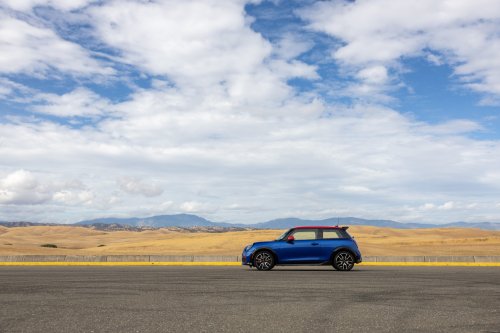
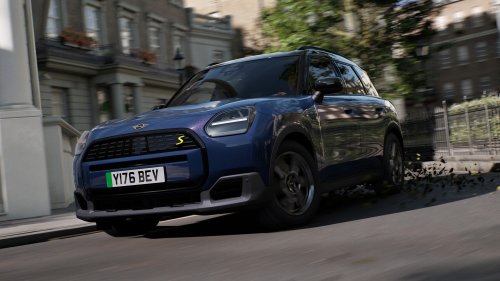
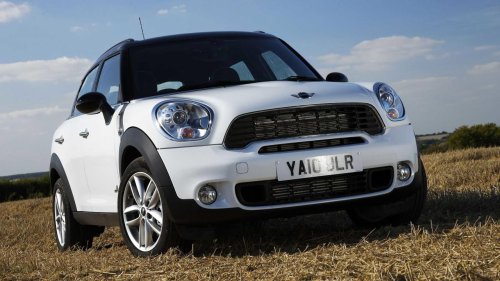
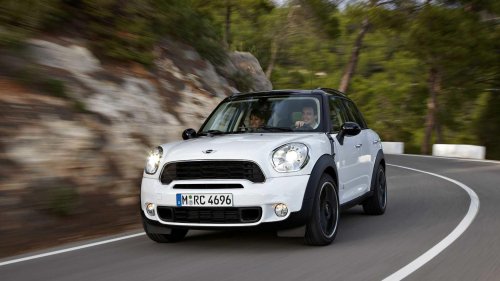
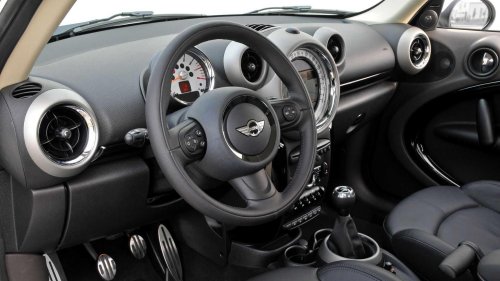
BMW must have been particularly pleased with its early efforts to re-float the iconic Mini. Designers really hit the mark with this rebirth and created something that was a great niche car for a certain sector of the market. However, BMW also wanted to expand the Mini brand's appeal and needed to create something that was still Mini-like but more appropriate for modern-day consumer appetites. The Countryman was among the company's first attempts to mature the Mini, with a larger footprint, four doors, a higher driving position, and enough space to enter any family car conversation.Sadly, the company didn't get everything right though, and people weren't so happy with the vehicle's extra weight, fidgety ride, and they struggled to get to grips with its clutch. BMW tinkered with the menu to try and make the Countryman more appealing, and somewhere in that shuffle it came up with a version that quietly made the whole concept click. The Weird Spec That Suddenly Made Sense BMW GroupIn 2011, Mini launched the Cooper S Countryman ALL4 with a six-speed manual box. Initially, the idea raised some eyebrows as some felt that adding a manual gearbox to one of the heaviest Countrymans of all was counter-intuitive. After all, this new version was basically an S with the ALL4 all-wheel drive system on top. And many compact crossovers elsewhere came with smooth and inoffensive automatics, while some reviewers worried that this version of a Cooper would just be bulky and cumbersome without the nimble trademark feel.However, the ALL4 system turned out to be a revelation. Its smart approach treats the car like a front-wheel drive machine in normal conditions but has a propshaft that’s always spinning. And this means that the system can send a large share of torque to the rear through an electromechanical multi-plate clutch if needed and in certain situations. Apparently, the system can send as much as half of the engine's torque to the rear axle in some situations, with the aim of keeping the front in line. So, if the driver leans too much on the throttle in certain circumstances or if the turbo really comes on song at an unfortunate moment, the ALL4 system can take over and diffuse any unwanted drama.The S engine also turned out to have a broad torque plateau and when you paired that with an effective six-speed gearbox, you suddenly had a Countryman that was quite effective and not just a tall caricature of an original Mini. You’d get usable traction out of most tight corners and the driver wouldn't need to tug as hard at the wheel under hard acceleration. Crucially, this drivetrain made the Mini feel fast and responsive and more like a proper hot hatch than a crossover family car. The ALL4 Manual By The Numbers BMW Group The 2011 to 2013 Cooper S Countryman ALL4 manual came with a 1.6-liter direct-injected twin-scroll turbo four-cylinder engine. This turned out 181 hp and 177 lb.-ft of torque in US spec, and it also had an over-boost feature that could bump the torque up into the low 190 lb.-ft range in overtaking or hard acceleration situations. The peak torque arrived low down in the rev range and didn't disappear, to give drivers plenty of mid-range shove for most situations.Much of the vehicle’s magic came down to that ALL4 system, which turned out to be a revelation even though it added roughly 150 lbs. to the weight of a typical front-drive S Countryman. This put the S ALL4 curb weight at about 3,200 lbs. while sitting on a wheelbase of about 102.2 inches. Yes, this was certainly stretching the Mini formula, especially with an overall length of about 162 inches and width of about 70, but it was still somewhere in between the footprint of a big hatch and a true SUV.As relatively heavy as the S Countryman ALL4 may have been, it was still quite sprightly in its six-speed manual version. You could get to 60mph in around seven seconds, which wasn't far off a comparable front-drive S hatch from that time. And the Countryman also performed quite well in other acceleration and braking tests to make it far more of a hot hatch pretender than a soft roader.On board the Countryman you now had family-size dimensions and the appeal of a grown-up Mini. You could fit adults in the back with sufficient headroom and legroom, and the cargo space behind the rear seats was certainly acceptable, even though it may not have been class-leading for crossovers. If you folded the rear seatbacks down, you could turn the Countryman into a flat-pack furniture hauler or add enough luggage for a believable long weekend away. And in every case, the Countryman's design represented a serious upgrade over a regular Cooper with those token space offerings. The Drivetrain That Fixed The Countryman's Biggest Flaws BMW Group Early versions of the Countryman didn't go down too well due to its harsh ride, inaccurate handling, and an oddly unpleasant manual clutch. Drivers may have loved the quick steering ratio and initial response but felt that the overly tall body now rolled way too much. They also didn't like the run-flat tires and felt that firm suspension tuning made their everyday journeys feel far more dramatic than they needed to be. The clutch was widely panned, with people criticizing its vague friction point and snatchy engagement. It was very difficult to smoothly launch your Countryman, and owners would frequently complain about chatter, shudder, and particularly bad wear, which wasn't very impressive given the Mini's driver-oriented history.Still, the all-wheel drive hardware helped to save the Countryman by tackling torque steer and traction loss head-on. Now you wouldn't have to hold on for dear life when leaning into turboboost in lower gears. Competent drivers would be able to steer the car neatly through tight corners with the throttle instead of expecting it to drift wide. And, as both axles were sharing the load, the chassis felt far more settled in such situations. It wouldn't necessarily scramble for grip everywhere, and instead, drivers could experience a more neutral and almost rear-assisted push. The manual gearbox also seemed well calibrated and better than the automatic system, which occasionally felt as if it was caught between ratios.Yes, certain ride and noise penalties remained, and a combination of firm ride, short sidewalls and run-flat tires may not have been ideal. But when you have a powertrain that works with you instead of against you, and when you can confidently control your torque steer instead of fear it, some of those other issues turn out to be bearable. What It’s Like Living With This Car Today BMW Group The 2011 to 2013 Mini Cooper S Countryman ALL4 manual is a strange sort of enthusiast secret. It's certainly quite rare, as most buyers in the US opted for the front-wheel drive layout and those early clutch horror stories might have pushed cautious shoppers towards simpler FWD cars instead. But if you can find one, you may uncover a driving experience that's almost impossible to find in a new vehicle.It may also be an excellent choice for those who live in the colder north where a set of winter tires, that ALL4 system and a stick could convert this car into a viable year-round machine. And it also delivers respectable fuel economy considering it's a turbo AWD crossover, with figures in the mid-to-high twenties in mixed driving conditions. On board, you'll discover an upright driving position and plenty of glass, which means that the Countryman never feels claustrophobic in traffic, unlike some of its ancestors.You still need to be aware of potential clutch issues here, but much will depend on the previous owner. Many early manuals tended to eat their clutches sooner than you might expect, but careful drivers might still run on an original clutch system well into the six-figure mileage range. Mini also updated some of its clutch components and engagement tuning part way through the vehicle's production run, which may make later candidates more appealing.Putting some of these issues aside, this car does score particularly well on several fronts. It finally makes the Countryman concept feel honest and workable and is an acceptable compromise somewhere in the middle of the small SUV market. It's certainly not the crisp little hatch that the original Cooper was, but it's also not the type of anonymous small SUV that you’ll frequently find elsewhere either. Instead, this crossover turns out to be a compact and genuinely useful all-wheel-drive Mini that rewards a good driver and doesn't particularly punish an average one. And it may be just perfect for a driver who loves the idea of using a third pedal and leaning on a chassis that finally responds like it should.



















 +18 others