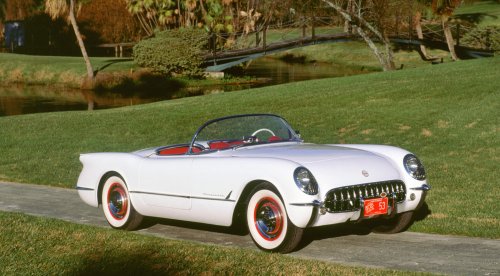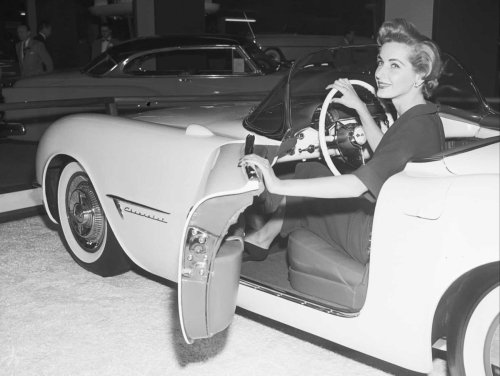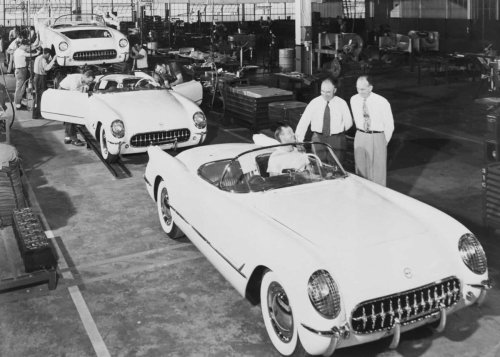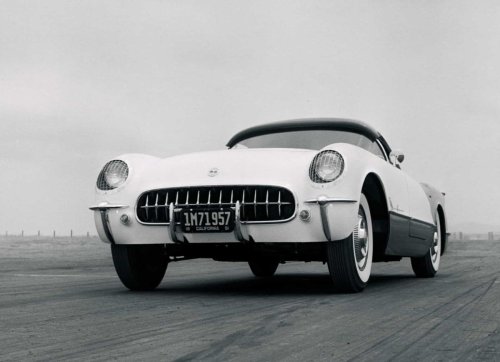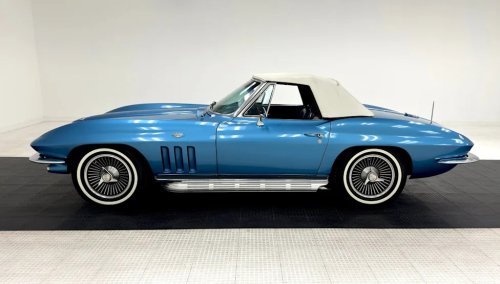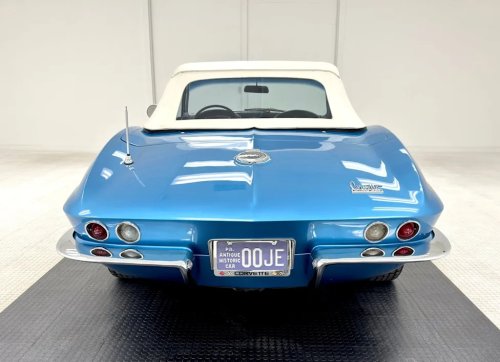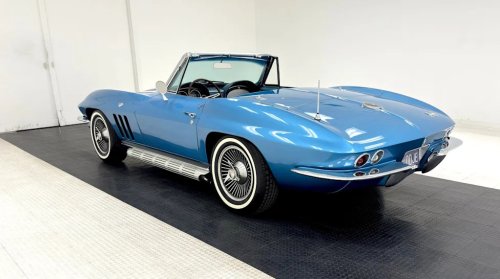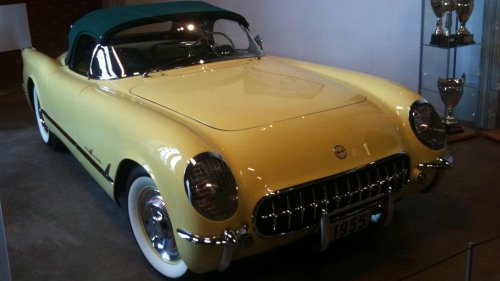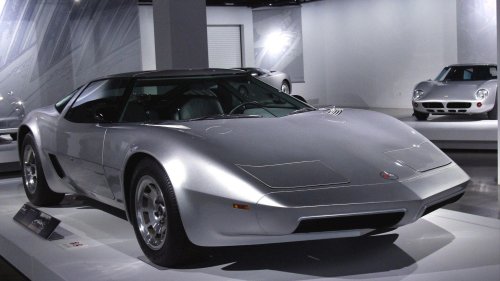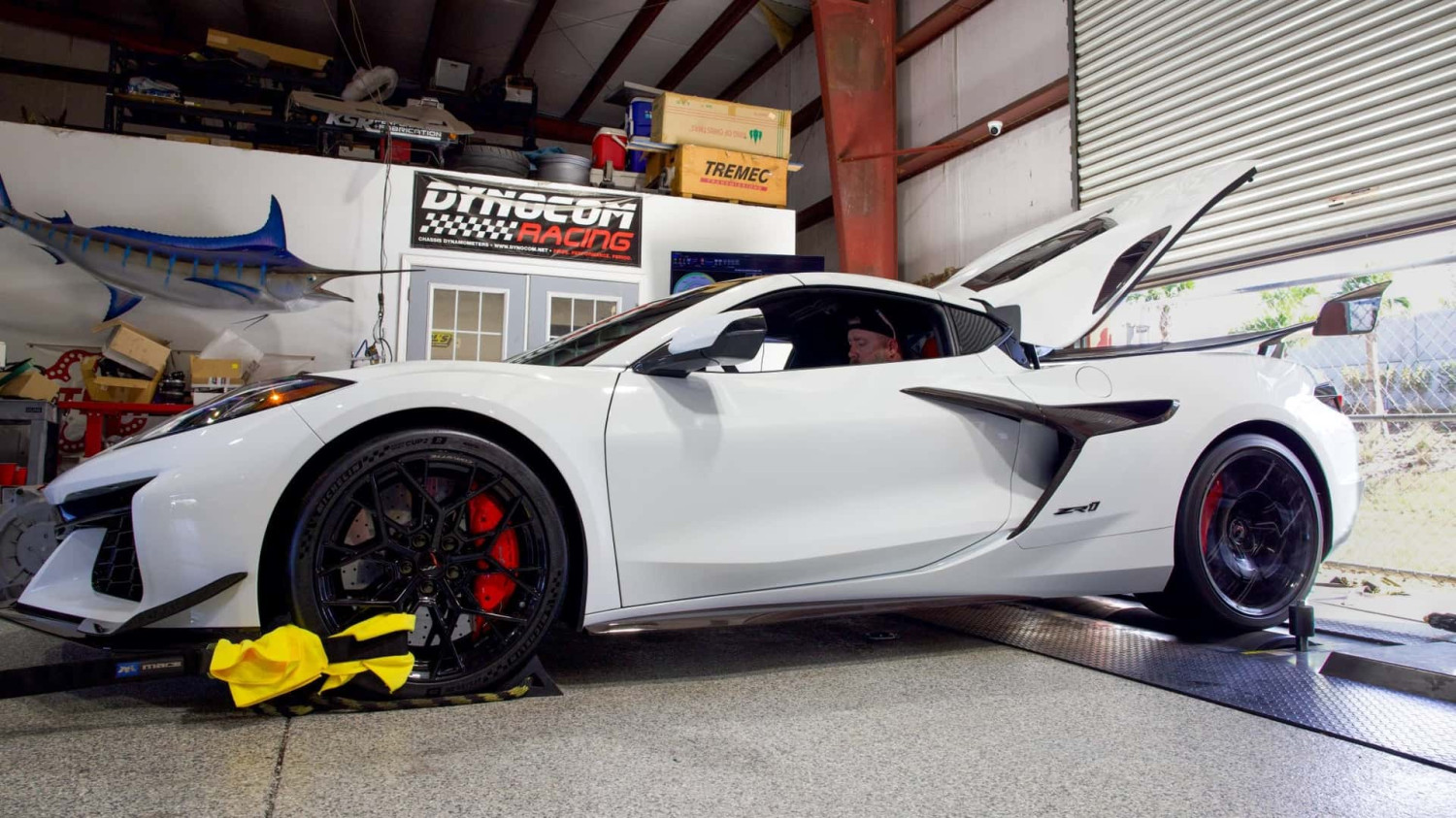
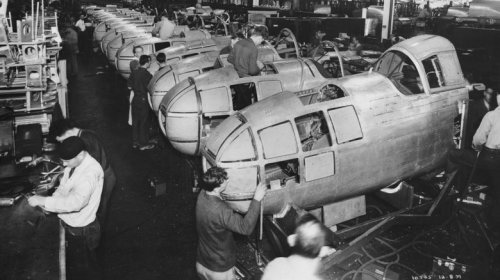
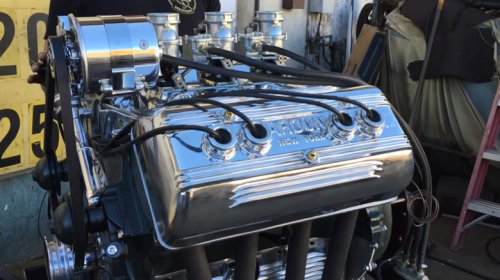
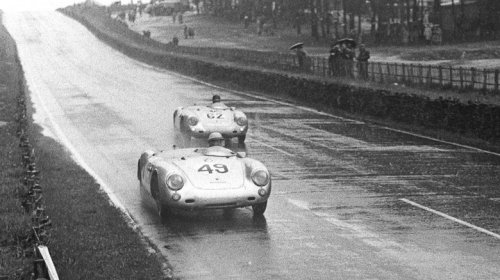
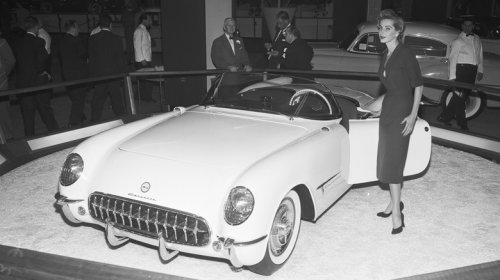
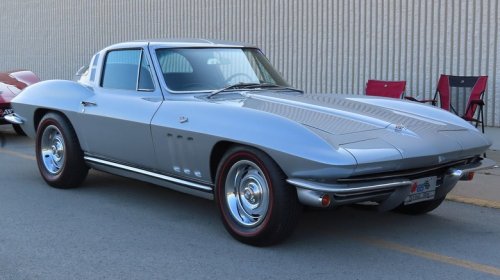
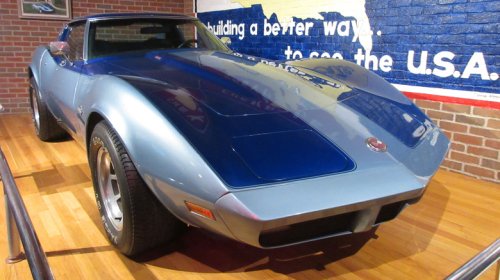
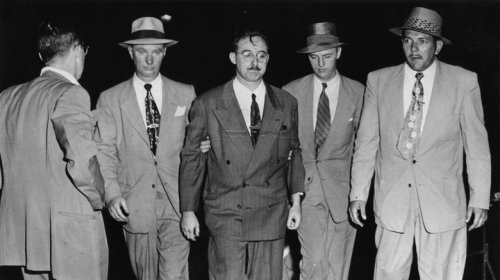



















Detroit Public Library Add Jalopnik on Google: Google Discover While Republicans found a way to blame immigrants for making traffic worse, today we're going to remember one who made driving much better. That would be Zora Arkus-Duntov, best known for helping transform the Chevrolet Corvette from a boulevard cruiser into America's homegrown supercar. Yet despite his indelible connection with American muscle, Arkus-Duntov was born in Brussels, Belgium, in 1909, grew up in Russia, and spent his early adult years in Europe during the time leading up to World War II. And for what it's worth, we'll further point out that he found his biggest success working for a brand named after another immigrant — the Swiss-born Louis Chevrolet. Now, Arkus-Duntov didn't actually invent the Corvette. But he did recognize its potential and was able to convince folks at Chevrolet to follow his vision. His influence is still being felt today, too, as he was one of the first people to propose a mid-engined Corvette. That alone might be enough to make Arkus-Duntov worth remembering, yet it was actually just one — admittedly large — chapter of his story. The Father of the Corvette lived to the age of 86, and below are just some of the many factoids about Arkus-Duntov's incredible life. Zora-Arkus Duntov fought against Nazi Germany in World War II Archive Photos/Getty Images Arkus-Duntov's parents were both Jewish, and he was known for his disdain for the Nazi regime. He even spent a short stint as a tail gunner in the French Air Force during World War II. When France fell, Arkus-Duntov was stationed in Toulouse, while his wife was in Paris, and it was only after she made a nerve-wracking four-day journey from the capital that she was able to rejoin him. Elfi Arkus-Duntov must have been a born gearhead as well, since she reportedly made the trip along the back roads of the country in her pre-war MG roadster. They would eventually work their way to Lisbon, joined by Zora's brother Yura Arkus-Duntov at the end of 1940, where all three had secured passage on a refugee ship bound for New York. Zora was then back doing his part for the war effort soon after leaving Ellis Island by scoring a contract to provide munitions to the military. The company he founded for the task with his brother Yura, Ardun Mechanical, would grow to have as many as 300 employees. Perhaps just as important is the fact that Arkus-Duntov began getting involved in the American performance-car scene while at Ardun. It wasn't for Chevrolet, however. He engineered high-performance cylinder heads for Fords Torque Talk/YouTube Arkus-Duntov had already shown his car enthusiast credentials before the war, racing in some minor-league events while hoping to someday move up the ladder. He also spent time at the University of Charlottenburg in Berlin, where he added technical knowledge to his practical experience by studying mechanical engineering. His need for speed was rekindled as the war was winding down, when he had time to begin taking his talents in another direction. Among his company's non-munitions projects were cast-aluminum cylinder heads designed to improve performance in Ford's flathead V8 of the era. In its original configuration, the engine's valves were typically located beside the cylinders, which limited airflow and prevented the engine from reaching its full power potential. The key change with the Ardun units was that they basically "unflattened" the cylinder heads to make room for overhead valves and a hemispherical combustion chamber. The thing is, the Ardun heads may have been a bit ahead of their time. They were introduced when most nascent hot rodders were still overseas, so Ardun primarily sold them to truck fleets at first. It wasn't until the end of the war, when the auto industry got back in gear and young drivers were building a new American car culture, that the Flathead V8 became an icon of hot-rod history. He won his class at Le Mans in a Porsche, while working for GM Bernard Cahier/Getty Images Arkus-Duntov wasn't giving up on his racing career. He attempted to qualify a pre-war Talbott for the Indianapolis 500 in 1946 and 1947, and drove the same car on AAA-sanctioned dirt tracks around the same time. But when Ardun Mechanical closed due to money issues, Arkus-Duntov moved to London to work for Sydney Allard, who had been building British sports cars at the time. Their relationship grew strong enough that when Allard was ready to compete at Le Mans in 1952 and 1953, Arkus-Duntov became one of his drivers. And while those efforts did come up short, Arkus-Duntov's track skills caught the corporate eye of Porsche's factory racing team, which signed him up. He rewarded that decision the very next year, piloting a Porsche 550 to a class victory — and a 14th-place finish overall — in the 1954 Le Mans. He also helped Porsche rise to 13th place overall in 1955. The problem was that Arkus-Duntov had been hired, in some relatively unexpected circumstance we'll discuss later, by General Motors early in 1953. Needless to say, not all GM execs thought it was a good idea to let Arkus-Duntov race for the competition while being on the company's payroll. But by then, Arkus-Duntov had already found a new passion project anyway. Arkus-Duntov wrote the letter that led to today's Corvette University Of Southern California/Getty Images There seem to be a few different versions of exactly how Arkus-Duntov came to work at Chevrolet, and here's one that seems to make sense: After racing at Le Mans in 1952, he tried to catch on at Chevrolet by sending a letter to Ed Cole, the brand's chief engineer at the time. Cole would play a big part in the Corvette's history as well, even supporting a rotary-powered version of the car. Yet his reply to Arkus-Duntov was lukewarm at first, so Duntov ended up at Fairchild Aviation on Long Island. The location — combined with his passion for automobiles — drew him to see GM's Motorama when it opened in New York City in January 1953 with the Corvette as a highlight. Intrigued by the Corvette and its potential for improvement, Duntov again reached out to Ed Cole. On May 1, 1953, the folks at Chevrolet seemed to have finally gotten serious about hiring Duntov for his general engineering prowess and met his salary demands. However, it was only after he was hired that he sent the famed "Duntov letter" to GM's then-director of R&D, Maurice Olley. The three-page missive, written in December 1953, focused on the rise of "hot-rodding" and "hop-upping," and it detailed how Chevrolet could use the Corvette — backed by V8 power — as a foundation for getting into the game. The rest is automotive history. Duntov's favorite Corvette was the 1965 model MercurySable99/Wikimedia Commons Arkus-Duntov died in 1996, meaning he was only alive to see the first four generations of the Corvette. Though, given the timing, it wouldn't be a surprise if he had also gotten a peek at the C5, even if it wasn't shown to the public until 1997. That means Arkus-Duntov was around for close to 35 years' worth of Corvettes — and out of all of them, his favorite was reportedly the second-generation 1965 'Vette. He once called this machine the most refined Corvette ever built, specifically singling out the car's Ramjet fuel-injection system as a benefit. What makes that stand out is that 1965 was actually the final year for this Ramjet setup — it was simply lacking in the bang-for-the-buck department. Opting for the fuel-injected Corvette in 1965 did provide access to 375 horsepower, but it cost you an extra $538 — at a time when the base Corvette's MSRP was only a bit more than $4,000. Meanwhile, that mill was bracketed on the lower side by a carbureted small-block V8 displacing 327 cubic inches, that could belt out 365 ponies as a $129 option. On the high side, Chevy offered the 396-cubic-inch big block, good for 425 ponies and also with a carb, at $292. He only ever owned one Corvette Zombieite/Wikimedia Commons You read that right — Zora Arkus-Duntov personally owned just a single Corvette, which he received in 1975, although it's not entirely clear how he got it. Some sources indicate he bought it when he retired from Chevy, and others say it was a parting gift from the brand. For example, the National Corvette Museum gave both accounts, in separate releases, when the Arkus-Duntov Corvette was donated after his death. To be clear, Arkus-Duntov had sold his Corvette to a private buyer in 1989, and that was the person who gave the car to the Museum. As for the car itself, it was a 1974 Corvette Stingray — not Sting Ray, as there's a difference — and it came packed with a big-block 454-cubic-inch Chevy V8 and a loaded spec sheet. The bottom line was a car that combined 270 net horsepower and niceties such as air conditioning, an automatic transmission, aluminum wheels, and power steering and brakes. The list of options, and his deciding to eventually part with the car, may also be evidence the Corvette was a gift. Consider: Given Arkus-Duntov's apparent focus on performance, why would he buy a sports car with a slushbox? Further, why would he purchase the car in Dark Green only to have it repainted with a blue two-tone finish afterward? And remember, he was on record saying his favorite version was the 1965 model. Julius Rosenberg was Arkus-Duntov's customer Keystone/Getty Images As we already insinuated earlier, Zora wasn't an only child. His brother, Yura, sort of tagged along during Zora's rise to pre-Corvette prominence, and that included the two working together at the Ardun munitions company mentioned above. This, in turn, led to him meeting Julius Rosenberg. The name should be familiar, as Rosenberg was tried and executed along with his wife in 1953 for passing atomic-bomb secrets to the Russians. Nowadays, our country's nuclear weapons can be readily found right out on the road. But before then, in 1946, Rosenberg had been just some customer who came to Ardun to have some metal-grinding work done. That was enough for the FBI to pull Yura in for questioning. The bureau considered bringing in Zora, too, but that didn't happen due to Yura's testimony. It came out that Rosenberg had met with Yura several times — and with Zora once — but it seemed to be mostly business-related. That said, after the grinding contract was done, Rosenberg continued to visit Ardun, ostensibly as a way of picking up work for his own business. Yura, though, admitted it was possible he was being "pumped" for technical information at the time. The FBI didn't follow up with the Arkus-Duntovs, but that could have put a mighty crimp in the Corvette's future.