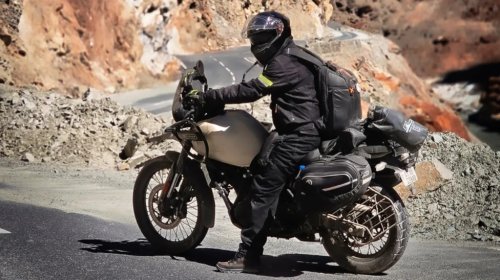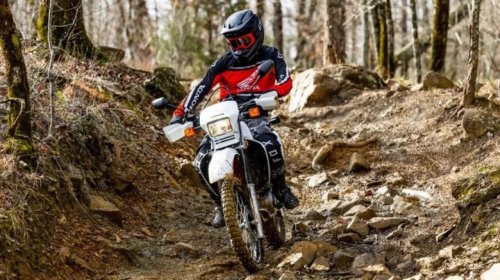
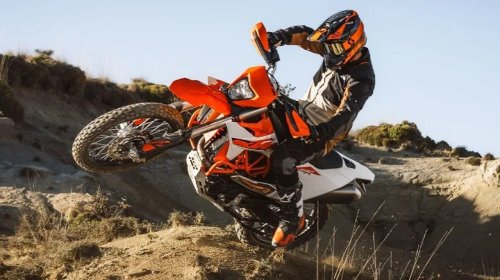
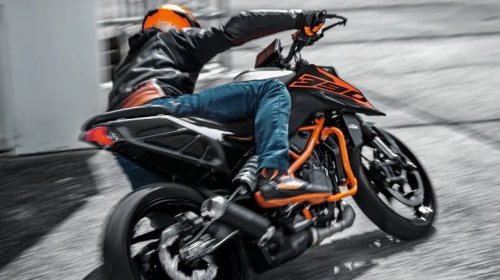
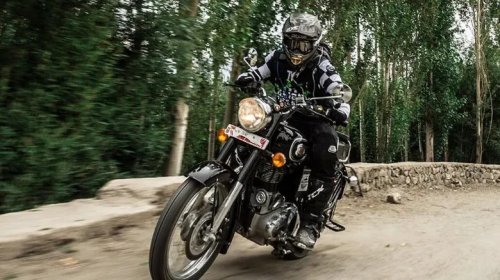
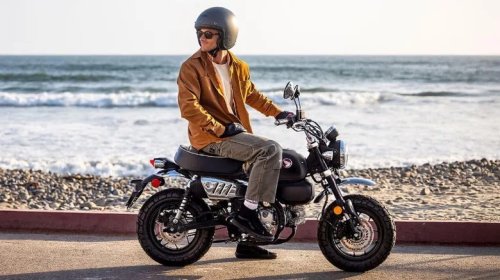
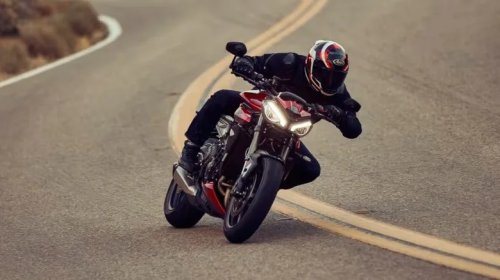



















HondaOne of the first things that most people look at when choosing a motorcycle is the displacement. The amount of fuel moving through a bike in each revolution has a direct correlation to the amount of torque and horsepower that the bike is able to produce. But you should also consider the number of pistons and their orientation. Different motorcycle engine design types can have a direct impact on power, performance, and other factors like fuel economy. One of the simplest engine designs is the humble single cylinder. This has one piston inside a single chamber that powers the entire bike.There are a lot of great motorcycles powered by a single-cylinder engine, as there are several advantages to the design. Single-cylinder engines are cheaper to manufacture, which brings down the cost of the motorcycle. They typically offer more torque and low-end performance and are highly fuel-efficient, which makes them particularly great for dirt bikes and urban commuters. They are also one of the most affordable engine types to maintain, as there are fewer components involved in their design. This simpler layout also makes maintenance significantly easier and allows the motorcycles that use them to be much lighter and more maneuverable.That said, there is a reason that other, more complex designs have flourished over the years. Single-cylinder engines are far from perfect, and there are several drawbacks that you might want to consider before you head down to the lot and pick one up.Lower high-RPM performanceKTMOne of the greatest strengths of the single-cylinder design is its low-end power. These bikes can jump off the starting line when you first start to accelerate, so they can climb steep slopes with ease. This advantage is a big part of the reason they're so popular for dirt bikes. That excess of low-end torque and power allows them to dominate rough, uneven terrain, go over hills, and hit jumps with minimal space to build up speed. But this power comes at a cost.Single-cylinder motorcycles struggle to generate high-end power. The physical mass of the reciprocating parts that is required to hit a given amount of displacement limits the speed at which the engine can safely spin. So, once the engine's RPMs hit a certain point, you get diminishing returns on power and speed. In practical terms, this means that the bike's ability to accelerate is reduced the faster you go, making single-cylinder motorcycles much less suited to highway travel than other engine types. This is the opposite of inline-4 motorcycles, which have a disadvantage when it comes to low-to-mid-range torque, but which excel at higher speeds.Single-cylinder bikes can get up to the speed of traffic, but it takes longer to accelerate. Merging into high-speed traffic and passing other vehicles often requires motorcycles to quickly speed up and maneuver around larger vehicles. Having a single-cylinder engine means that you'll need to ensure you have plenty of road length to get by them. It also, unfortunately, means that you'll be spending more time in the car or truck's blind spot. This is doubly true regarding small displacement single-cylinder bikes, as they have less power overall.The ride can feel a little roughKTMIf you've ever taken a ride on a single-cylinder motorcycle, then you're probably already familiar with the intermittent pulsing that rattles through the frame any time you fire it up. This can be particularly uncomfortable on longer rides. These kinds of engines rattle a lot because of both the mass and the balance of the cylinder. In order to achieve the same amount of displacement as a multi-cylinder engine, a single cylinder must be large enough to handle roughly two, three, or four times the displacement of each cylinder in its multi-cylinder counterpart. This means that it also needs a much larger piston to fit it.One of the key benefits of multi-cylinder engines is that each cylinder can be timed to alternate their firings, creating a consistent, balanced, and overall lower amount of vibration. Because each cylinder is smaller, the combustion phase that takes place in each is proportionately small and produces less concussive force for the bike to absorb. A single cylinder has only one large combustion that happens intermittently, making a much more noticeable shockwave.Additionally, because there is one large cylinder instead of multiple smaller ones, there is a lot more mass moving up and down during the compression, ignition, combustion, and exhaust phases. The constant movement of this larger, heavier mass slamming up and down causes additional vibration.They're noisyRoyal EnfieldThose same pulsing combustions that cause the bike to intermittently shake can also make a fair amount of noise in the engine and tail pipe. Many riders who own a single-cylinder motorcycle likely have noticed that their bike makes a rapid beating noise as combustion drives the piston and it cycles back. It sounds a bit like a jackhammer pounding the pavement, or a drummer rolling on the snare. It's a rapid, concussive beat that picks up pace as the RPMs climb. You've probably heard something similar if you've ever used a gas-powered push mower. This sound is why these engines are often referred to as "thumpers," as it is a distinctive signature of the engine type that you're not likely to hear anywhere else.Some people actually like the sound, as it has a classic feel and an undeniably rugged quality about it. This choppy, low-frequency pulse is very different from the screaming buzz of an inline four or the steadier rumble of a parallel twin. That said, anyone who's looking for a smooth ride with a steady sound will definitely want to look elsewhere.They offer limited displacementHondaAnother consequence of the single cylinder design is that there is a much lower limit on how much the total engine's displacement can be. Engine displacement refers to the total volume of air and fuel mixture that an engine's pistons are able to sweep through in a single cycle, and it has a direct impact on the amount of power the engine can produce. The amount of air and fuel comes down to the cumulative volume of every available cylinder. This is measured in cubic centimeters (cc) or cubic inches (ci). A single cylinder engine needs that cylinder to be twice the size of a parallel-twin or V-twin engine cylinder in order to generate the same amount of displacement.Unfortunately, there are limits to how large an individual motorcycle engine cylinder can get, which is why you don't see a lot of high-displacement single-cylinder bikes out there. "A combustion chamber with an inner diameter of about 10 cm is the practical limit for a gasoline engine," claims Yamaha. "Since the combustion process begins from the place closest to the spark plug, it takes a certain amount of time for the entirety of the air-fuel charge in the chamber to combust. The larger volume of the combustion chamber, the longer full combustion takes, which makes the engine less practical for motorcycle use."This is why most of the single-cylinder models that you'll find are less than 400ccs. There are a handful of midsized singles out there, such as the KTM 690 Enduro R and the Honda XR650L, but these are the exception rather than the rule and they're not that big compared to the larger sizes offered by most other engine types.Not a lot of street optionsTriumphThe fact that single-cylinder engines have so much low-end torque makes them great for dirt bikes, but they aren't quite as optimized for street riding as they can struggle to keep up with traffic at higher speeds. This makes a lot of manufacturers less inclined to produce single-cylinder street bikes. There are a handful of urban commuters out there that take advantage of the low-end grunt and exceptional fuel economy for city and backroad riding, such as the Triumph Speed 400, the KTM 490 Duke, and the Honda GB350S. It's more common for these engines to be used in retro-inspired models that seek to take advantage of the classic feel and sound that the single-cylinders can produce. There are even a handful of mid-sized options, like the Royal Enfield Bullet 500 and Husqvarna 701 Vitpilen that push the limits of how much power these engine types can produce to make them as road ready as possible.Even so, if you have your heart set on a street bike with a single cylinder engine, know that modern options will be severely limited. If you don't like, don't have access to, or can't afford one of the few options out there, then you will probably have to turn your eyes to the used market. There are several older models that are no longer in production if you have the patience to hunt for one in good condition, or the time, money and skill needed to restore one.