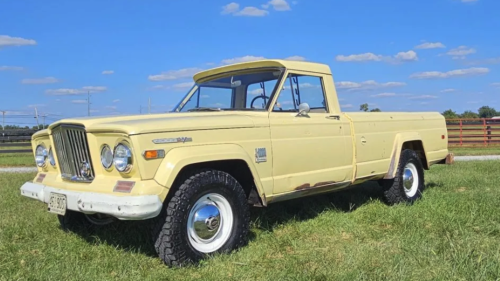
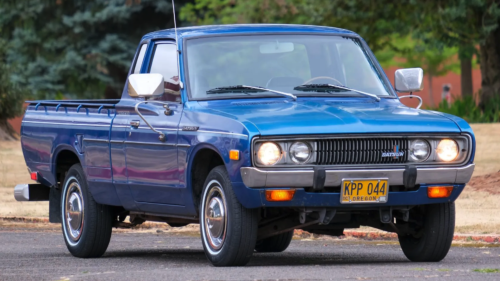
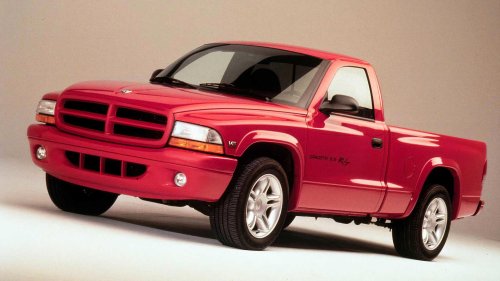
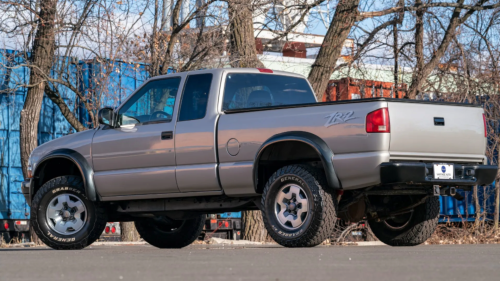
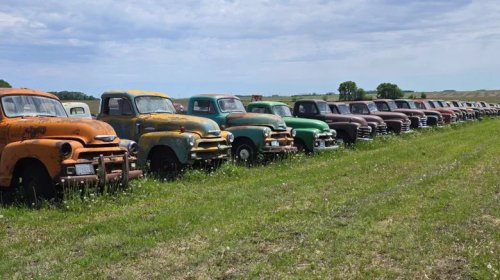
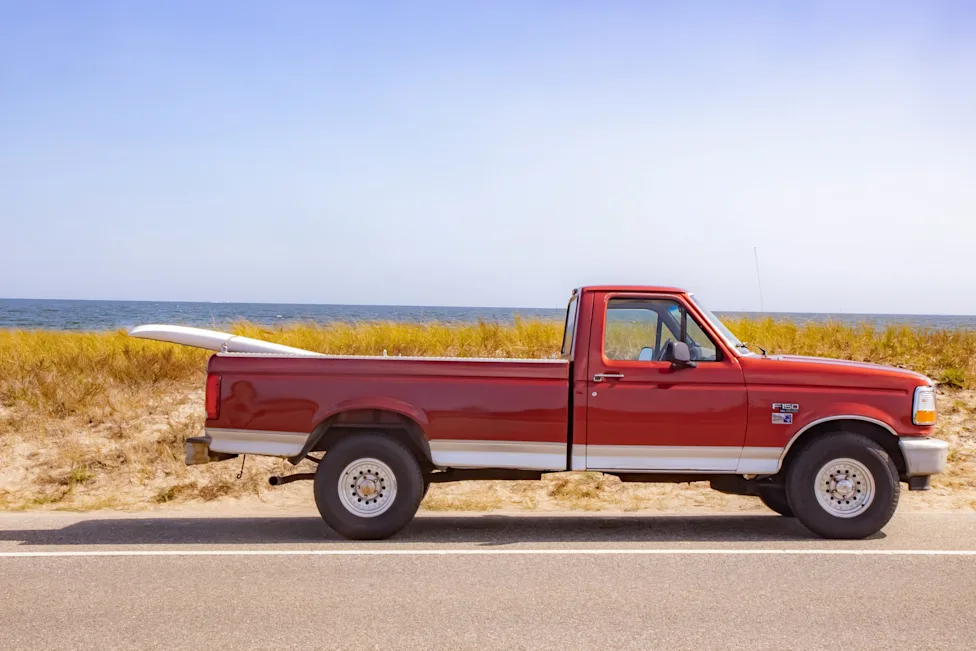
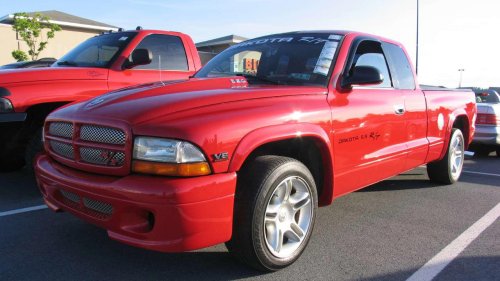
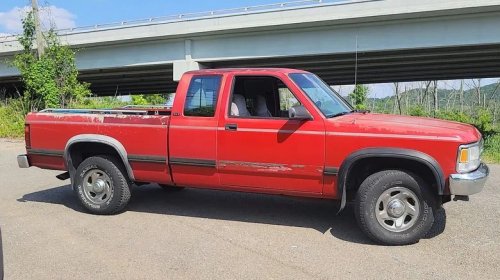
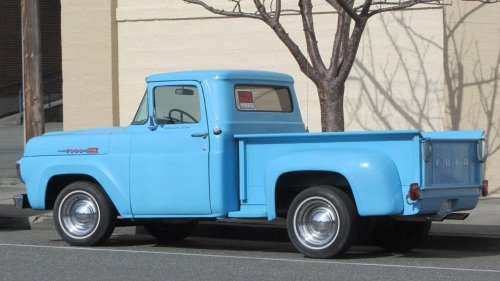
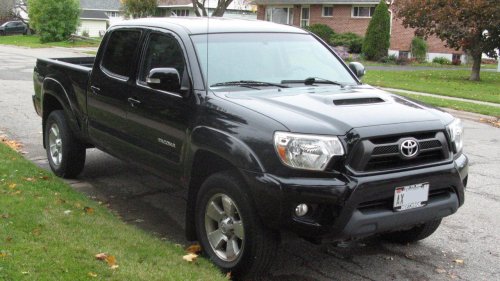
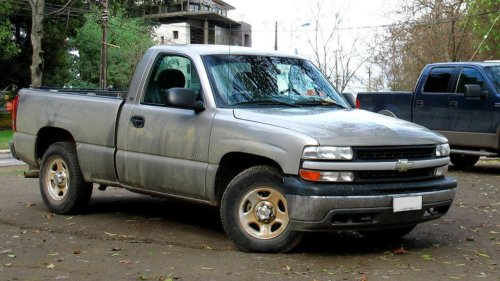
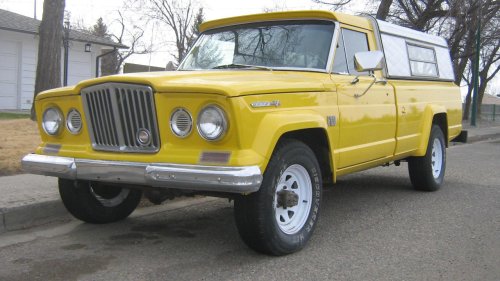
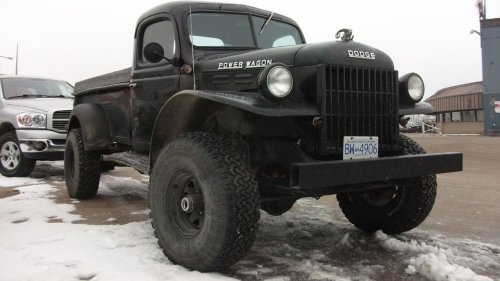
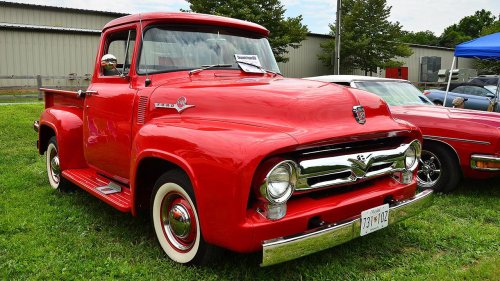
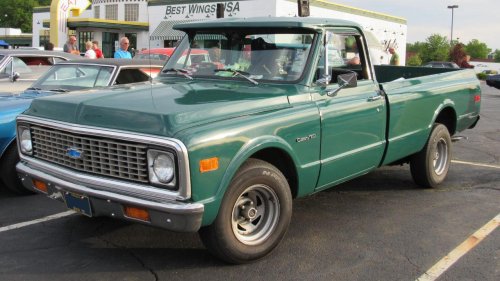
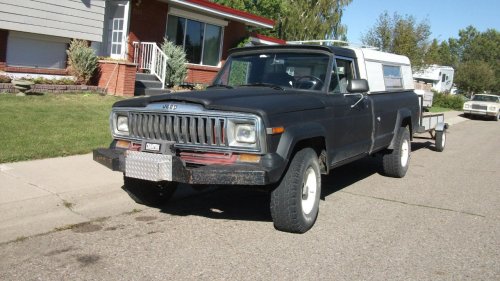
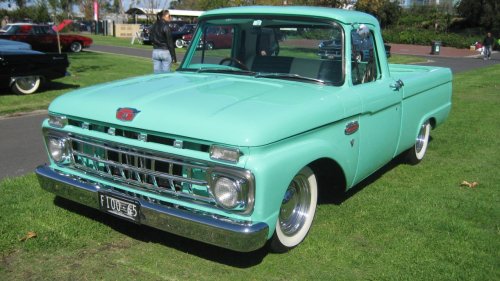
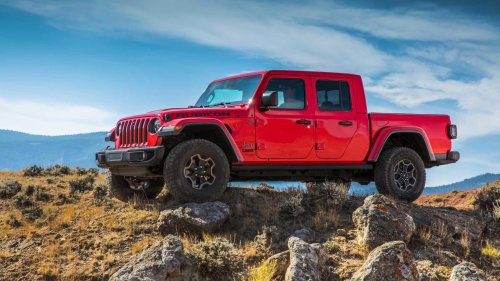
Old pickup trucks exude a certain kind of Western Americana cool. It also helps that they're pretty practical. Though automakers made hundreds of thousands of the most popular models every year, their survival rates are incredibly low. That's because trucks were used, and often abused. By the time most trucks reached their third or fourth owners, they had been relegated to implement status.Yet trucks are surging in popularity. Look at any major collector-car auction site or valuation tool, and you'll see an upward trend for just about any pickup truck that's at least 40 or 50 years old. You know you want one — we all do, after all. Here's a look at 10 trucks that are still good value on the used market and are likely to keep rising.As it can be somewhat tricky to find reliable information on older trucks, we've largely consulted the long out-of-print Standard Catalog of American Light Duty Trucks. The copy we used was printed in 1986. For later models, we consulted period brochures as well as Consumer Guide Auto print guides. Jeep Gladiator The original big Jeep. Jeep Gladiator pickup in yellowThe Gladiator was unlike any Jeep to have come before. It lacked the square-shouldered looks of the military-inspired Civilian Jeeps (or CJs, as you probably know them), and yet it was plenty tough and rugged. The Gladiator with its upright, slightly forward-canted grille and its car-like dashboard — at least by early 1960s standards — was a distinctive truck. Jeep offered this model beginning in 1963, initially in a dizzying array of configurations with downright confusing alphanumeric names. Buyers could pick between two wheelbases and four bed configurations, all initially with a six-cylinder engine.A V8 came later, and, coinciding with AMC's acquisition of Jeep, the lineup was renamed J-Series. Amazingly, these trucks stayed in production into the mid-1980s in the U.S., though they were discontinued well before the Grand Wagoneer's 1991 demise. Datsun 620 The original durable import. 1978 Datsun 620 in blueDatsun had the edge when it came to imported pickup truck sales in the 1970s, mostly due to the model officially marketed as the 620. This simple, yet stylish truck featured decent four-cylinder power and a very low price point, but it was more than just a cheap, basic truck. Innovations like an extended-cab configuration made it highly practical.While Datsun sold a ton of these small trucks, they're definitely tough to find today. They were used — and eventually used up — as rugged implements. Dodge Dakota A mid-size muscle truck. 1997-2004 Dodge Dakota Front Angle ViewThe original Dodge Dakota was remarkably mostly for its size: it was bigger than the Chevrolet S-10 and the Ford Ranger models offered at the time, meaning the Dakota basically invented the mid-size pickup segment that remains very strong today. A redesign for 1997 brought mini-Ram looks, as well as the availability of a high-output 5.9-liter V8 that helped turn the Dakota into a serious performer. So zippy was the Dakota that Dodge even offered an R/T package for much of the model's lifespan with beefier anti-sway bars and a performance-tuned suspension with a lower ride height.The Dakota is also a practical choice, at least as far as quarter-century-old pickups go. The four-door Quad Cab version has a roomy back seat. Chevrolet S-10 ZR2 The square-shoulder off-roader 2003 Chevrolet S-10 ZR2 rear 3/4The broad-shouldered Chevrolet S-10 ZR2 was one of the first off-road-oriented compact pickup trucks when it bowed in the early 1990s. To create the ZR2 package (which was also briefly offered on the GMC Sonoma), Chevrolet widened the standard C-10's track, bolted on Bilstein shocks, added taller springs, and covered everything with beefy fender flares. The S-10 ZR2 looked the part, and it was quite an off-road performer as well. Mercury M-Series For Canadians only, mostly. 1951 Mercury M-3 front 3/4Mercury, the perennially confused in-betweener Ford Motor Company that last built a car in early 2011, was once a big producer of pickup trucks. Hang on; we should clarify. Mercury-badged versions of Ford pickup trucks were sold in the Canadian market for more than 20 years. Up in Canada, Ford used to separate its Ford division from Lincoln-Mercury (and Meteor, a long defunct Canadian division) dealers, leaving many franchises without a lucrative truck to sell. The situation wasn't all that different from Chevrolet and GMC.Mercury models differed little from their Ford siblings, aside from some minor styling tweaks. Given the harsh Canadian climate, not too many have survived — though it's not that hard to find one that has migrated its way south over the last 50 to 75 years. Toyota Hilux Several generations worked their way toward Toyota's dominance today. 1 Stout 2Just about everyone knows about Toyota's Tacoma and Tundra pickups, but their Hilux grandparents remain something of an enigma to many Americans. They shouldn't; these trucks helped cement Toyota's reputation for building trucks that can withstand just about anything. They're remarkably undervalued, all things considered. The first generation that arrived in the U.S. in the late 1960s replaced the too-small Toyota Stout. Remarkably, these trucks were partially assembled in the U.S.; to skirt hefty import tariffs, their beds were constructed in California and then bolted on at ports of entry across the country.We can't forget about later Hilux models, too; by the mid-1980s, the truck was now simply called "Toyota Pickup" in the U.S., though it was a Hilux everywhere else. Off-roaders have long used (and to their fullest extent, if we're frank) the 1984-1986 models with their solid front axles. Drivers after a vintage truck with a modern feel may want to look for the 1987-1988 models that have a high-tech independent front suspension that gives them surprisingly adept handling. Chevrolet/GMC "Square Body" For many, GM's quintessential pickup. 1973 Chevrolet C-10 front 3/4 viewIntroduced for 1973, the so-called "square body" version of the Chevrolet and GMC C/K trucks (that's C for rear-wheel drive and K for four-wheel drive) lasted into the late 1980s. For many car enthusiasts, these are the quintessential GM pickup trucks; they looked modern in the 1970s and were just as handsome when they were replaced by a more streamlined model for 1988. Not only was the '73 truck good-looking, but it was capable and reasonably comfortable to boot. No wonder GM made them for so long.Your best bet here is to look for one with the classic small-block V8, which is renowned for its durability. And, besides, if anything goes wrong, every auto parts store in the entire country practically stocks enough parts to rebuild one. Ford F-Series "Dentside" The F-Series gets a dose of style. 1977 Ford F-Series front 3/4Ford wasn't always a pickup truck leader. In the early 1970s, the automaker's sales figures trailed Chevy and GMC. That all began to change with the sixth-generation models, which feature a pronounced curve just below the beltline that gives them their "dentside" nickname.Introduced in 1973, the dentside F-Series trucks could be outfitted with a ride range of six- and eight-cylinder power, and Ford also offered rear- or all-wheel drive. A year into production, Ford introduced the lineup's first extended-cab option (which it called SuperCab, a term it still uses today), which paved the way forward for ever more spacious pickup trucks. Ford Ranger Splash Ford's first effort at a sporty Ranger. 1993 Ford Ranger Splash side profileAside from the fact that it saw few major changes through the 1990s and early 2000s, the Ford Ranger was a somewhat unremarkable compact pickup — unless, that is, it was outfitted in quirky Splash trim. This underappreciated truck came exclusively with a regular cab and a stylish, if slightly less practical, flareside box out back. Its suspension was lowered to give it a zippier stance, too. These rare trucks have long flown under the radar, though they're creeping their way into collector-vehicle auctions.Ford briefly brought back the Splash nameplate for its Ranger lineup in 2022, though that model was more of an exclusive paint color and graphics dress-up package than a sportier ride. Subaru Baja Amazingly, it wasn't Subaru's first pickup. 2003 - 2006 Subaru Baja - front fascia If any pickup truck can be a modern classic, it's the Subaru Baja. Based on the contemporary Subaru Outback, the Baja was a crew-cab pickup truck with a small bed. Standard all-wheel drive and a choice between naturally aspirated or turbocharged power made it typical for a Subaru, but its positioning and styling were well out of the automaker's wheelhouse. To be fair, Subaru did briefly offer a single-cab pickup called the BRAT (for Bi-Drive Recreational All-Terrain Transporter, of course!), though it was arguably even weirder than the Baja.The Baja could be fitted with a bed extender that allowed a pair of upright mountain bikes to be stowed out back (with their front wheels removed). Inside, it had seating for just four passengers; the rear bench from the Outback was revised to include a small storage bin and a pair of cup holders where the middle seat normally sat.