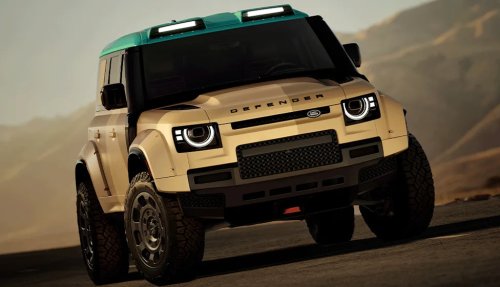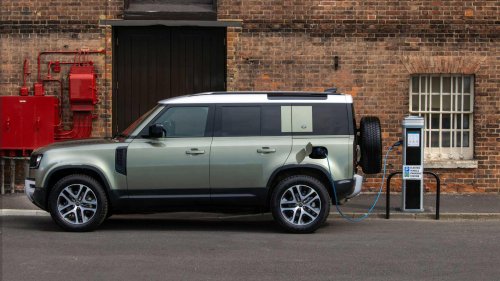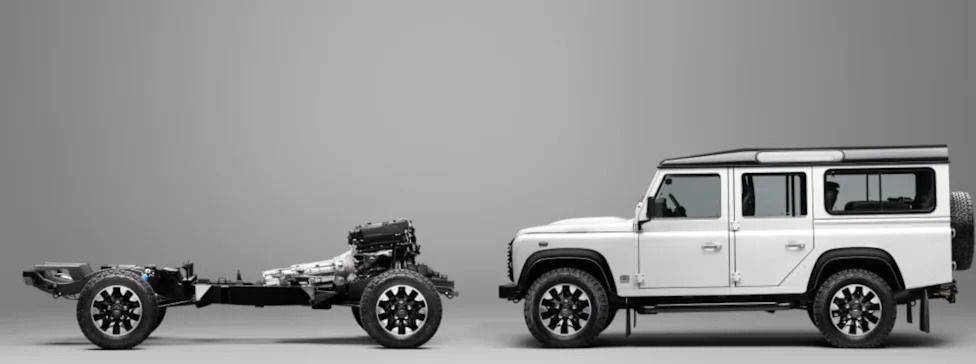


















Your Puma Defender Can Now Get a Factory V8: What It Costs, What ChangesBackfire NewsEve NowellSat, September 26, 2026 at 3:11 PM UTCAdd us on GoogleYour Puma Defender Can Now Get a Factory V8: What It Costs, What ChangesFor most of the last decade, the only way to get a factory-sanctioned V8 in a Defender built before the current model was to buy one Land Rover had already finished. That changed this week. JLR's Classic division has opened a programme that lets owners of Puma-era Defender 90s and 110s buy factory-engineered upgrades for the truck already in their driveway, from wheels and brakes up to a full Works V8 transplant.The V8 grabs the attention. The fine print is where the story actually lives.Who's eligible, and who isn'tThe overall programme covers L316 Defender 90 and 110 models produced between 2007 and 2016 with the Puma diesel. The V8 conversion is narrower: it's offered exclusively for 2012 to 2016 trucks.AdvertisementAdvertisementJLR doesn't explain the 2012 cutoff, but the calendar offers a strong hint. That model year is when an EU5 2.2-litre diesel replaced the 2.4, gaining a particulate filter in EU5 markets along the way. Our reading is that the later trucks share enough wiring, packaging and specification for Classic to engineer one conversion recipe rather than two. That's inference, not a JLR statement, so if you own a 2010 and feel left out, ask the question directly.Related ArticlesA Factory Rothmans Porsche 962 Is Running Again, and the Rarest Part Wasn't a PartFernando Alonso's New Bugatti Veyron Isn't Painted Silver. It's Machined Aluminum.Even an eligible build year isn't a guarantee. Every candidate gets a comprehensive suitability assessment before any work begins, and JLR says eligibility, final spec, pricing and timing are all confirmed after assessment. Translation: a crusty, heavily modified or poorly documented truck may simply be turned away.What the V8 conversion actually involvesThe engine is Land Rover's naturally aspirated 5.0-litre petrol V8, rated at 405 and 515Nm of torque, which works out to about 380 lb-ft. It drives through an eight-speed ZF automatic.AdvertisementAdvertisementA small unit wrinkle is worth flagging. The press release lists the output as 405hp, while the conversion's own product page lists 405PS. Those aren't the same number. 405PS converts to roughly 399 horsepower. The 2018 Works V8 was also rated at 405PS and 515Nm, so the metric figure is almost certainly the correct one. Either way, it's more than triple the stock diesel's 122PS and 360Nm.The most interesting line in the spec sheet isn't about the engine. The conversion's chassis enhancements start with a new chassis, followed by Bilstein dampers, Eibach springs, anti-roll bars, links and bushes. Anyone who has put a Defender on a lift knows why that matters. The ladder frame is the part of these trucks that corrodes, and bolting a V8 and eight-speed onto a tired, rust-weakened frame would be engineering malpractice. Starting fresh removes the single biggest variable in the donor vehicle.Stopping duty goes to Alcon four-piston calipers at all four corners, with 335mm vented front discs and 300mm rears. That's about 13.2 inches front and 11.8 inches rear, and it matches the brake spec published for the 2018 Works V8.Inside, the automatic requires a redesigned transmission tunnel and a new gear selector, plus Works V8 badging. Standard wheels are 16-inch steels, with 18-inch alloys optional.The diesel options are the sleeper storyMost owners won't spend V8 money, and JLR knows it. The more accessible tiers are sold individually or bundled.AdvertisementAdvertisementBrake upgrade: The same Alcon system as the V8, plus high performance pads.Suspension upgrade: The Bilstein and Eibach package from the V8 programme.Wheel upgrade: Options include 16-inch Wolf steels and 18-inch Sawtooth and Bowler alloy wheels.Dynamic upgrade: Wheels, brakes and suspension combined.Performance upgrade: Everything above, plus an ECU calibration for the Puma diesel. It lifts output to 155PS and 400Nm, about 153 hp and 295 lb-ft, and starts from £17,118.Two details deserve a raised eyebrow. First, that £17,118 figure is only a starting point, and JLR says website prices exclude tax and fitting. Second, JLR won't say what the remap does to acceleration. Its FAQ states: "We do not quote performance figures for the power-tuned vehicle." The stated reason is that results vary with the age and mileage of the base truck, which is fair for an engine that could be anywhere from ten to fourteen years old. But it also means you're buying 33 extra PS on faith.Where the work gets doneWheel, brake, suspension and Dynamic packages can be bought through the Classic Parts site for self-fitment or installed by an authorised retailer. Any package can also be fitted at Classic Works facilities in Coventry and Essen. The V8 conversion is handled by Classic Works technicians only.JLR says the brake components and wheels earned TÜV certification after independent testing. That matters more in Germany than anywhere else, because modifications there generally need paperwork to stay road-legal. Warranty coverage is JLR's standard parts warranty, with regional details left to local retailers.Paperwork, insurance and the legal fine printJLR's own FAQ says road-legality may vary by market and advises owners to tell their insurer. Take that seriously. Tripling your output is a material change, and failing to declare it is the fastest way to have a claim denied. On the V8, also expect the insurer to ask about agreed value, because a Classic Works-converted truck won't be valued like a standard 2014 110.AdvertisementAdvertisementUK owners should read the DVLA's radically altered vehicles points system. Keeping the original registration requires eight points, five of which must come from an original or new, unmodified chassis supplied direct from the manufacturer. A replacement engine and gearbox forfeit their points, so what the conversion leaves untouched, particularly the axles and steering, will matter. JLR hasn't published that breakdown, so ask Classic Works how it handles registration before you sign anything.For American readers, the news is mostly academic for now. The programme is available only in selected markets, and JLR mentions no US availability. A vehicle not originally built to US safety standards generally has to be at least 25 years old to import without conforming, measured from its date of manufacture. That puts the earliest eligible 2012 trucks in 2037. NHTSA has also warned in a Land Rover case that extensive rebuilding with new parts can create a "new" vehicle in the agency's eyes. A new-chassis V8 conversion could be the kind of rebuild that complicates a future import, so don't treat one as a loophole.The market mathWhen Land Rover launched the original Works V8 in 2018, it was a run of up to 150 70th Edition trucks, priced from £150,000 for a 90. JLR hasn't published a conversion price yet. Supplying the donor vehicle yourself should theoretically shave something off that figure, but a new chassis, a V8, an eight-speed automatic and a hand-built interior rework aren't cheap, and pricing is set only after assessment.Related ArticlesVenuum's Voltoro V1 Swaps the Revuelto's Active Wing for a Fixed One, and Lamborghini Already Set the BarMansory USA Dressed a Ferrari 12Cilindri in Forged Carbon and Left the V12 AloneAdvertisementAdvertisementThe bigger implication for the market is scarcity. Until now, a factory V8 Defender was a finite collectible. By turning customer trucks into Works V8s, JLR is quietly expanding that supply. Whether that dilutes the original 150 or simply creates a separate "converted" tier with its own values is something the auction results will settle over the next few years. Anyone buying a converted truck secondhand should insist on Classic Works documentation, because the badge alone will be the easiest thing to fake.The takeawayIf your Puma Defender's frame is healthy and you mostly want it to ride and stop like a modern vehicle, the Dynamic package is the sensible buy. The diesel remap is a tougher sell without published performance data. The V8 conversion is for owners who have an emotional attachment to one specific truck and the budget to keep it forever. For them, a fresh chassis and a factory V8 from the people who built it is about as good as Defender ownership gets.Images Via: JLR Media